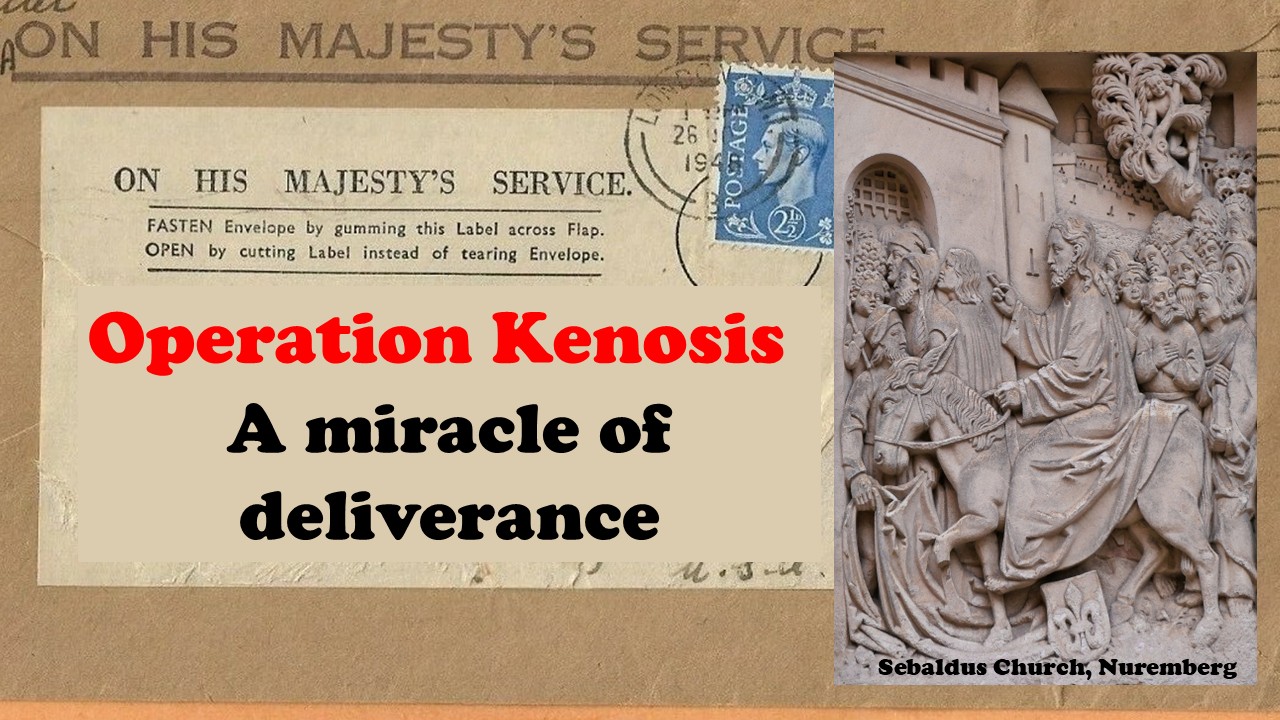
“Rejoice greatly, O Daughter of Zion! Shout, Daughter of Jerusalem! See, your king comes to you, righteous and having salvation, gentle and riding on a donkey, on a colt, the foal of a donkey.” (Zechariah 9:9)
This Sunday is Palm Sunday. We remember Jesus on a journey into Jerusalem. He, like many Jews, was on a pilgrimage to Jerusalem from his home region of Galilee. Yet, he chose to arrive in Jerusalem deliberately announcing to the crowds that he was coming to be made king. He rode on a donkey in fuflilment of the prophecy in Zechariah.
The crowds, many of whom had witnessed his amazing preaching and astonishing miracles, responded by praising him and laying down branches along the path, symbolically welcoming him as their king. Yet, remarkable as this was, difficult questions remained. How could Jesus be enthroned when he was not welcomed by the temple authorities? (They were jealous of his popularity and angry at his criticism of them). And how could Jesus overthrow the military power of the Romans who occupied the city?
Yet, within a week, Jesus was crowned and declared to be king. At his crucifixion, a crown of thorns was placed on his head and a placard placed above him declaring him to be, “King of the Jews.” To most this looked like the authorities mocking his claims, but the deeper reality was that his claims were becoming true in ways people could not comprehend. On the cross Jesus became king of God’s eternal Kingdom, as his subsquent resurrection proved.
Operation Kenosis
Matthew 21:1-11
In his famous ‘we shall fight them on the beaches’ speech of June 1940, Winston Churchill described the safe evacuation of 338,000 Allied troops from France under enemy bombardment as a ‘miracle of deliverance, achieved by valour, by perseverance, by perfect discipline, by faultless service, by resource, by skill, by unconquerable fidelity’.1 The assembly of a flotilla of little ships at Ramsgate, and their setting out for the other side of the English Channel to ferry soldiers from the beaches of Dunkirk to the larger naval vessels which were unable to come closer than a mile from shore – this was part and parcel of this valour and discipline, and the beginning of that miracle. It was remembered last year in the return of many of those same little ships to Ramsgate Harbour, and the little ships are returning again in a couple of months’ time. The British Government’s code name for this undertaking was ‘Operation Dynamo’. You don’t need to be a language scholar to guess that the Greek word ‘dunamis’, from which we get the word ‘dynamo’, translates as ‘power, might, strength, or force’.
In Matthew chapter 21, we hear about the beginning of another, much greater miracle of deliverance, which I am going to call ‘Operation Kenosis’. The Greek word ‘kenosis’, as it is used in the New Testament, could be regarded as the opposite of ‘dunamis’, because it means ‘emptying oneself out’. This is what we see in the so-called triumphal entry of Jesus into Jerusalem, as described in Matthew chapter 21. This was not a display of power, might, strength, or force. Instead, Operation Kenosis was a threefold miracle: a miracle of planning, a miracle of humility, and a miracle of love.
- A Miracle of Planning
As they approached Jerusalem, and came into Bethphage on the Mount of Olives, Jesus sent two disciples, saying to them, ‘Go to the village ahead of you, and at once you will find a donkey tied there, with her colt by her. Untie them and bring them to me. If anyone says anything to you, tell him that the Lord needs them, and he will send them right away’ … The disciples went and did as Jesus had instructed them. (Matt. 21:1-3,6).
Some people have understood this to be a miracle of foreknowledge, or possibly even a miracle of mind control, as if Jesus exercised an impersonal force from a distance over the responses of the donkey’s owner, in the same weird way that Obi-Wan Kenobi took over the minds of inquisitive Imperial Stormtroopers in the first Star Wars film. But I think that this is far more likely to have been a miracle of planning on the part of Jesus.
Imagine my sister had made arrangements to fly from Australia to visit me, but for whatever reason I wasn’t able to meet her at the airport. Now imagine I said something like this to her: ‘Once you get through passport control and into arrivals, turn left and out through the doors towards the carpark. To your right you will see a little unit with distinctive car hire branding, and a Nissan Micra will be parked close by. If the unit is closed, open the postbox to the right hand side, and you will find a set of keys for the Micra. If the unit is staffed, or if anyone asks you what you are doing, give them my name and the booking reference 561-561. Then use the satellite navigation app on your phone to drive to my house’.
In circumstances like those, my sister would be unlikely to say to me, ‘What mysterious power do you have to know and to control the outcome of all these things?’ She would be more likely to think that I had arranged car hire for her, and had chosen the least expensive car I could find. It would be a miracle of planning on my part, rather than a miracle of foreknowledge or mind control.
I think this is the most likely way of understanding what is going on in the first few verses of Matthew chapter 21: as a miracle of planning, rather than as a display of power, strength, might, or force. To be clear, it’s not that I think that Jesus could not have exercised such power if he wanted to. However, I don’t think that there are any clear examples in the Gospels of him performing miracles purely for self-serving reasons. The miracles of Jesus that are recorded in the Gospels tend to be displays of mercy at least as much as they are displays of power.
‘Your sins are forgiven, take up your mat and walk’ – these are supreme acts of mercy as well as authority. ‘I need a free ride on a donkey, and I’m prepared to hypnotise its owner to get it’ – that would speak of self-interest above all. Self-interest does not describe how Jesus operated. Rather, he emptied himself out, to take on the form of a slave to others (cf. Philippians 2:7). This was the first step in Operation Kenosis: not a flashy sci-fi miracle of mind control, I don’t think, but more likely a humble servant-like miracle of planning.
Please note that understanding things in this way doesn’t make what happened any less of a miracle. Verse 4 of our Bible reading hints at how far the planning stretched back: hundreds of years, at least to the days of the prophet Zechariah:
This took place, Matthew tells us, to fulfil what was spoken through the prophet, ‘Say to the daughter of Zion: See, your king comes to you, gentle and riding on a donkey, on a colt, the foal of a donkey’.
Some scholars trace the planning even further back, to the first book of the Bible, Genesis, chapter 49, verses 10 and 11:
The sceptre will not depart from Judah … until he comes to whom it belongs, and the obedience of the nations is his. He will tether his donkey to a vine, his colt to the choicest branch; he will wash his garments in wine, his robe in the blood of grapes.
Matthew mentions Zechariah, not Genesis, but that is enough for us to know that the choice Jesus made for his transport, for the 900 metres or so from Bethphage to Jerusalem, was not accidental. There is a clear link here between the plans he laid down and the hope expressed by the prophets of the Old Testament for a new ruler who would ‘proclaim peace to the nations’, in the words of Zechariah, one who is ‘righteous, and has salvation’ (Zechariah 9:9,10).
2. A Miracle of Humility
The entry Jesus made into Jerusalem has been compared and contrasted with the Roman ritual of the military triumph, in which conquering Roman generals were paraded through Rome past cheering crowds, with slaves standing in the chariots behind them whispering, ‘Remember that you are mortal’, in case they forgot. The journey Jesus made from Bethphage to Jerusalem, would not have looked like this. There was a crowd, certainly, but they would have appeared to others to be a motley crew of fishermen, tax collectors, women of dubious reputation, and street people. As props for the procession, they had to make do with whatever lay to hand: branches off trees, their own clothing. There was someone at the centre of it all, but that person was riding an absurd animal as if he was at the seaside. This was not a Rolls Royce affair, it was the Nissan Micra of processions. It was a display of poverty and weakness, not of wealth and strength.2 It must have looked unimpressive, if not ridiculous – possibly even suspect. If the city of Jerusalem was in uproar about it, it could have been simply because they didn’t want that kind of riff-raff on the streets.
I call this a miracle of humility, because true humility is one of those things that cannot easily be faked, and it is vanishingly rare. The person at the centre of it all was genuinely gentle and humble in heart, who did nothing out of selfish ambition or vain conceit, but instead put the needs of others before his own (cf. Matthew 11:29, Philippians 2:3). Humility was not an act for Jesus. It was his very nature. He really did come not to be served, but to serve (Matthew 20:28). And yet, remember that he is immortal, with power to lay down his life, and power to take it up again (cf. John 10:18).
Remember how his actions at the Last Supper are described in the Gospel of John? He knew that the Father had put all things under his power, that he had come from God and was returning to God (John 13:3). So what did he do? He got up from the meal, took off his outer clothing, wrapped a towel around his waist, poured water into a basin and began to wash his disciples’ feet (John 13:4-5). That is divinity and humility going hand in hand.
Likewise, at his triumphal entry, he accepted the praise of the crowd at face value: Hosanna to the Son of David! Blessed is he who comes in the name of the Lord! Hosanna in the highest! (Matthew 21:9). Yet he did not let their praise go to his head. He did not entrust himself to them, because he knew what was in the human heart (cf. John 2:24-25), and what was coming.
- A Miracle of Love
In thinking about what was coming, we must realise that what I am calling Operation Kenosis was, above all, an outright miracle of love. A bride-to-be, setting off on her walk up the aisle, has a pretty clear idea what to expect at the other end of the aisle, and her walk is motivated by love. For Jesus, the path to Jerusalem represented something rather different. He went not up to joy but first he suffered pain, and entered not into glory but first he was crucified. But his journey was likewise motivated by love, even more so because he knew what it was to entail. No doubt those who set out from Ramsgate to sail their little ships to Nazi-occupied France as part of Operation Dynamo knew the risks they would be running. How much more did Jesus know what would be involved in turning his face towards Jerusalem!
Every one of the Gospels records how Jesus spent years deliberately avoiding Jerusalem, and he did so for good reason. The city was full of his enemies. Each Gospel also records the time that came, when he told his disciples of his intention to go up to the city, where he would be betrayed and crucified before being raised from the dead. At the very moment of him saying this, he was tempted to avoid the cross and act in his own self-interest by the words of Simon Peter: Never, Lord! This shall never happen to you! (Matthew 16:22). That temptation to self-interest returned in the mockery of the chief priests, the teachers of the law, and the elders on Good Friday, as Jesus hung on the cross: ‘He saved others’, they said, ‘but he can’t save himself! He’s the King of Israel! Let him come down now from the cross, and we will believe in him’ (Matthew 27:42).
Jesus could have exercised his power in this way if that is what he had wanted. But, as we know, he did not perform miracles for self-serving reasons. He came not to be served, but to serve (Matthew 20:28). His refusal to come down from the cross was a miracle of love, because it enabled the greatest miracle, the miracle of deliverance. His was the valour, the perseverance, the discipline, the service, the resource, the skill, and the unconquerable fidelity. He came to give his life as a ransom for many (Matthew 20:28), and he achieved what he set out to do. He made himself nothing … and being found in appearance as a man, he humbled himself, and became obedient to death – even death on a cross! (Philippians 3:7-8).
Operation Dynamo gave the Allies an opportunity to regroup and continue to resist the spread of National Socialism across Europe. Operation Kenosis gave Jesus the authority to say ‘Your sins are forgiven’ to a broken, needy, and repentant humanity; and not just to say these words, but to actually bring into effect the state of affairs they describe.
Operation Dynamo was a display of power and might, strength and force. Operation Kenosis was an emptying out on the part of Jesus, a demonstration of apparent weakness that has become the power of God for the salvation of everyone who believes (cf. Romans 1:16).
Bethphage was the starting point for what I have been calling Operation Kenosis. There was no turning back once the fateful journey Jesus made that day had started. It led directly to the cross, the grave, and from there through to life eternal.
1 http://winstonchurchill.org/resources/speeches/1940-the-finest-hour/we-shall-fight-on-the-beaches/
2 Cf. Fleming Rutledge, The Undoing of Death (Eerdmans, 2002), p. 30, and p. 339, n. 26.
 St. George's Church Ramsgate