
Welcome in Christmas Day in the beautiful setting of St. George’s church decorated for the Christmas Tree festival. The service starts a 11:30pm, with carols, Holy Communion, readings and a reflection.
Carol Service at St. George’s
Join us this evening (Wednesday 21st) at 7pm for our Christmas Services. Traditional hymns and readings, the creation of a crib scene and all in the setting of a beautiful church decorated for the Christmas Tree festival. Mince Pies and mulled wine afterwards.
The Great Invitation
“When the angels had left them and gone into heaven, the shepherds said to one another, ‘Let’s go to Bethlehem and see this thing that has happened, which the Lord has told us about.’”
(Luke 2:15)
Musica Antiqua – Baroque Concert
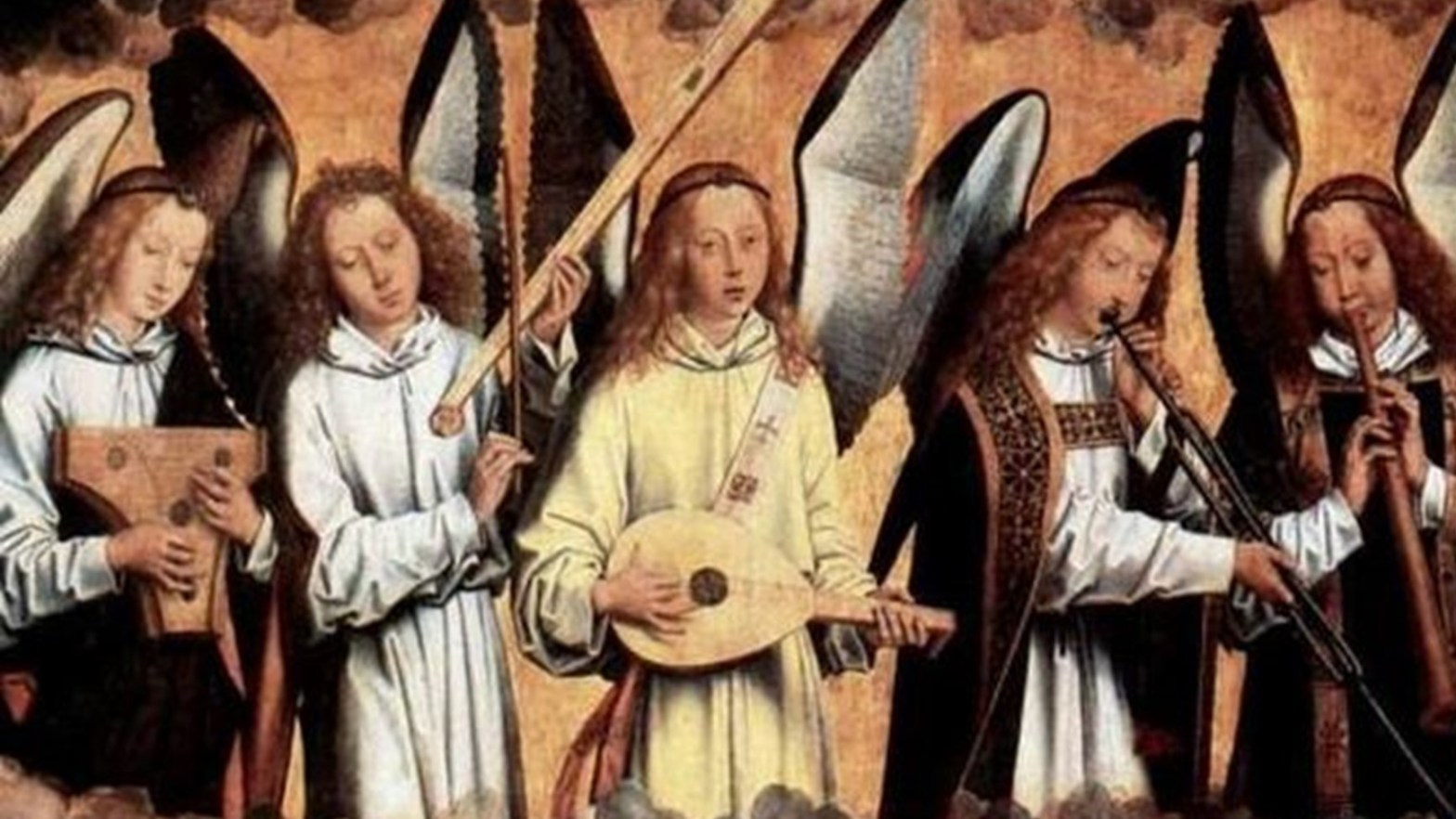
Last year our Christmas Baroque concert was a fantastic event. Once again, our main organist, Petra, gathers other musicians for this musical journey through the 17th and 18th Centuries, with an extravaganza of Christmas tunes of Bohemian Baroque and other pieces. This all takes place in the beautiful setting of St. George’s church decorated for our Christmas Tree festival.
St. George’s Church, Church Hill, Sunday 18th December at 7pm.
Featuring: Tom Shelley on the Cello, Tom Hewitt on the trumpet, Rudolf Balazs on the violin and Petra Hajduchova on the harpsichord.
Tickets £8 online or £10 on door. Under 18s are free.
New Life! New Joy! (Isaiah 35:1-10)

As Christians we look forward to our ultimate homecoming to be with God in joy forevermore. But how can we be confident that we can make it there?
Football’s Coming Home?
‘Football’s coming home!’ It’s the slogan of one of the most popular football songs, written by David Baddiel and Frank Skinner for the 1996 European Cup.
The song is full of hope that England might once more win a major international competition and so bring the game, ‘home’ to the country where football first began.
This hope is against a backdrop of despair that with one exception our national team have never won and international competition. Two lines in the song sum this up:
“No more years of hurt
No more need for dreaming…”
Of course football did come home once when England won the world cup in 1966, but it ‘hasn’t come home’ since then and after last night’s result it may not ever return home. There are no guarantees that we will ever win another World Cup or even European Cup.
Driving Home for Christmas
Chris Rea sung the song, Driving Home for Christmas,
It’s a song about someone looking forward to being with his family at Christmas time, but stuck in his car in a traffic jam.
The lines say,
“It’s gonna take some time but I’ll get there
Top to toe in tailbacks
Oh, I got red lights all around
But soon there’ll be the freeway, yeah
Get my feet on holy ground”
I guess this Christmas, with all the train strikes, “Driving Home for Christmas” may be harder than ever, but in the song it’s the hope of returning that keeps him going. He wants to have his feet on, ‘Holy ground’, presumably referring to being home with the family as a kind of sacred space. He also looks forward to the freeway, the open road, where he will be out of the traffic jams and on his way!!
The Christian Life as a Journey
The Christian life is often likened to a journey or a pilgrimage. Indeed, in our reading from Isaiah, the last verse is all about the joyful return of the people of God:
“…and the ransomed of the LORD will return. They will enter Zion with singing; everlasting joy will crown their heads. Gladness and joy will overtake them, and sorrow and sighing will flee away.!” (Isaiah 35:10)
This will be far greater than arriving home for Christmas or winning the world cup, this is the ultimate glorious homecoming that will bring about everlasting and ultimate joy.
Yet, there is still a journey to be had to get there and we may be so daunted by the journey, that we may feel we will never make it. For some of you it may be that you long to have that wonderful eternal hope promised by Christ, but you are not sure you can keep cope with living as a Christian in the meantime. Following Christ can at times feel too difficult and it may be that you are even thinking of giving up. But Isaiah says in verse 3,
“Strengthen the feeble hands, steady the knees that give way!” (Isaiah 35:3)
So how does this chapter in Isaiah encourage us to keep going with the Christian faith as we head for our eternal home?
Focus on the Saviour – 35:1-7
Firstly, it reminds us that it is God who saves us, it is not we who save ourselves. This is clearest in verse 4, where the sense is of God rescuing his people from their enemies, the ones who are oppressing them and are keeping them from their home.
Just as to bring football home, another team has to lose if we are to win, so if we are to be saved, whatever or whoever is oppressing us needs to be defeated, if we are to be freed from its clutches.
This looks back to the time of the Exodus, where the Egyptian Pharaoh refused to let God’s people go. God responded by sending a series of Ten Plagues, that forced Pharaoh into releasing the people. The judgement of Pharaoh and the Egyptians went hand in hand with the salvation of the Israelites – just as the defeat of the Russians in Ukraine goes hand in hand with salvation for the people of Ukraine.
For Isaiah that was ancient history. In his time, it was the Assyrians, who had come and invaded the land and taken away many of God’s people and in the next chapter threaten Jerusalem itself. Yet, Isaiah is clear, that although the Assyrians in his time seemed to hold the winning hand, although they seemed unstoppable, God would bring victory against them just as he had against Pharaoh.
In Isaiah’s time the temptation was to give up and just accept the Assyrian rule and ways and forget about the true God of Moses and the Bible. Isaiah is clear, though, Assyria will face the vengeance of God – as they do if you read on in chapters 36 and 37.
Yet, in Isaiah, there is already a step beyond the historical problems of his time, to a greater vision of God acting for his people. Isaiah 35 does not specify the enemy or the oppressor, because the enemy or oppressor does not matter. It is whoever or whatever takes away our life and our health. What Isaiah 35 is clear about, is that God is the one who can overcome anything that causes death and illness, our God is the God who brings life.
That is the beautiful picture in the first few verses. Although, our lives may feel like desert places, dried up and dead from whatever it is that is oppressing us, Isaiah describes blossoms springing up in the desert. Something that happens when the rains come. Yet, here the new life is not caused by the coming of rain, but by the coming of God. It is seeing the glory of God that brings this new and beautiful life. This also extends to new life for humanity, it is when God comes, that the eyes of the blind are open, the ears of the deaf are unstopped , the lame leap like a deer and the mute tongue shouts for joy. All this happens, when God is there, he comes to save and give us life!
When John the Baptist was locked up by Herod and in jail. He began to have doubts about Jesus. Was Jesus the Saviour, God with us, the promised one of God or were they to wait for God to send someone else. Jesus responded to the messenger that John sent to ask this question with these words:
Jesus replied, “Go back and report to John what you hear and see: The blind receive sight, the lame walk, those who have leprosy are cured, the deaf hear, the dead are raised, and the good news is preached to the poor. Blessed is the man who does not fall away on account of me.”” (Matthew 11:4-6)
They are words that echo Isaiah 35 and other similar Old Testament passages. Has God come to save us – yes he has in the person of Jesus.
And Jesus came to save us not from the Assyrians, the Romans, the Russians or whoever. He came to save us from our ultimate enemies, our sin and death. Those enemies were judged by God in Jesus’s death on the cross and his resurrection to eternal life. When we put our trust in Jesus, we become the redeemed, those whom God has rescued by paying the price of the death of his son.
So, if we think we might struggle on the way to God’s eternal home, then remember that God has already acted to save us and bring us life from death. We are redeemed not by our efforts, resilience or strength, but by the saving life-giving work of God in Jesus Christ.
Follow the Way – 35:8-9
Second, if we are to have courage to stick with God and come to the eternal home, then we need to follow the way. This idea also links back to the time of Moses. Once the people had escaped the clutches of Pharaoh, they found themselves in the inhospitable wilderness. How were they going to survive on a journey through such a place? The answer was that God was with them and God provided. He brought water out of stone and rained down manna from heaven. They had all they needed.
Again the idea of the Exodus is behind the imagery in Isaiah. The journey of the Christian life can sometimes feel a bit like travelling through the wilderness, but God is with you and he can make the wilderness spring to life.
More than that, though, Isaiah says, God will build a ‘highway’ for his people to travel. In the ‘Driving Home for Christmas’ song, the writer, longs for the ‘freeway’ so that he will be out of the traffic jam, so Isaiah looks to a highway, a specially constructed raised up road, that protects you from the threats and difficulties of travelling through the wilderness. There are two things that he stresses about this highway.
Firstly, it will be a place of safety and security. No wild animals or human bandits will be on it. You may fear that other people or other things can stop you on your journey to God’s eternal home. But God will ensure your absolute safety and protection:
“No temptation has seized you except what is common to man. And God is faithful; he will not let you be tempted beyond what you can bear. But when you are tempted, he will also provide a way out so that you can stand up under it.” (1 Corinthians 10:13)
Secondly, this is a Way of Holiness, which means it is restricted. Only the redeemed will journey on it. In other words, to travel on this way, you need to have been saved by God, you need to have chosen to follow Jesus and embrace his ways and the truth he shows us. As Jesus says:
“I am the way and the truth and the life. No-one comes to the Father except through me.” (John 14:6)
So, as long as we have set our hearts on following Jesus as the Way, we can be confident that God will provide a safe highway for us to travel to his glorious and eternal home. So, we need to fix our eyes on that wonderful destination as Isaiah does at the end of the chapter.
Fix your Eyes on the Destination – 35:10
The home is called, Zion, which is another name for Jerusalem.
Just as the people led by Moses at the Exodus, looked forward to entering the Promised Land, in Isaiah’s time, it was the city of Jerusalem that became the focus of what it meant to return home.
His was a hope that those who had been taken away by the Assyrians would return home to Jerusalem, the city of their king. A 100 years later, when the Babylonians came and conquered and destroyed Jerusalem, this came to be a forlorn hope, but God did something amazing and brought his people back to Zion. One of the Psalms picks up the joy they felt when that happened:
“When the LORD brought back the captives to Zion,
we were like those who dreamed.” (Psalm 126:1)
In the Old Testament, Jerusalem and Zion are seen as the home of God and the place from which his king reigns. It says in Psalm 2:
“”I have installed my King on Zion, my holy hill.” (Psalm 2:6)
As Christians, we now know Jesus to be the true king, appointed by God. His home is not in the earthly Jerusalem, but at God’s right hand in God’s eternal home. So for us the Zion we look to coming to is God’s eternal home, the home that in a very real sense has become our home, because we are adopted as children of God.
In the song, ‘Football’s coming home’ there is a longing for a celebration of victory. In Isaiah there is a longing for the eternal joy, when all the enemies of God including sin and death are completely destroyed. This is not a temporary celebration until the realities of the struggles of life reassert themselves over the joy of winning a game of football, but an eternal joy, because sorrow and sighing will flee away after all is defeated by God.
And it is more than a joy of returning home to a loving family at Christmas – because we will be at home with our perfect heavenly family, where we will see our Father face to face and be welcomed home by Jesus as our brother.
No matter how well we do in the football or how much you are looking forward to seeing family at Christmas, fix your eyes on the ultimate destiny we have as Christians, confident that God in Jesus has saved you for it and that he will provide a safe and secure highway to his heavenly home!
New Life, New Joy!
“…and those the LORD has rescued will return. They will enter Zion with singing; everlasting joy will crown their heads. Gladness and joy will overtake them, and sorrow and sighing will flee away.”
(Isaiah 35:10)
Christmas Tree Festival Open

Thank you to all those who have contributed a Christmas Tree to our Christmas Tree festival this year. The church is looking lovely!
Do come and have a look at the trees and vote for your favourite. Entry is free, but donations to the church restoration are welcome! The church is open 2-5pm every day from Friday 9th to Sunday 18th December.
New Life! New Hope! (Isaiah 11:1-10)
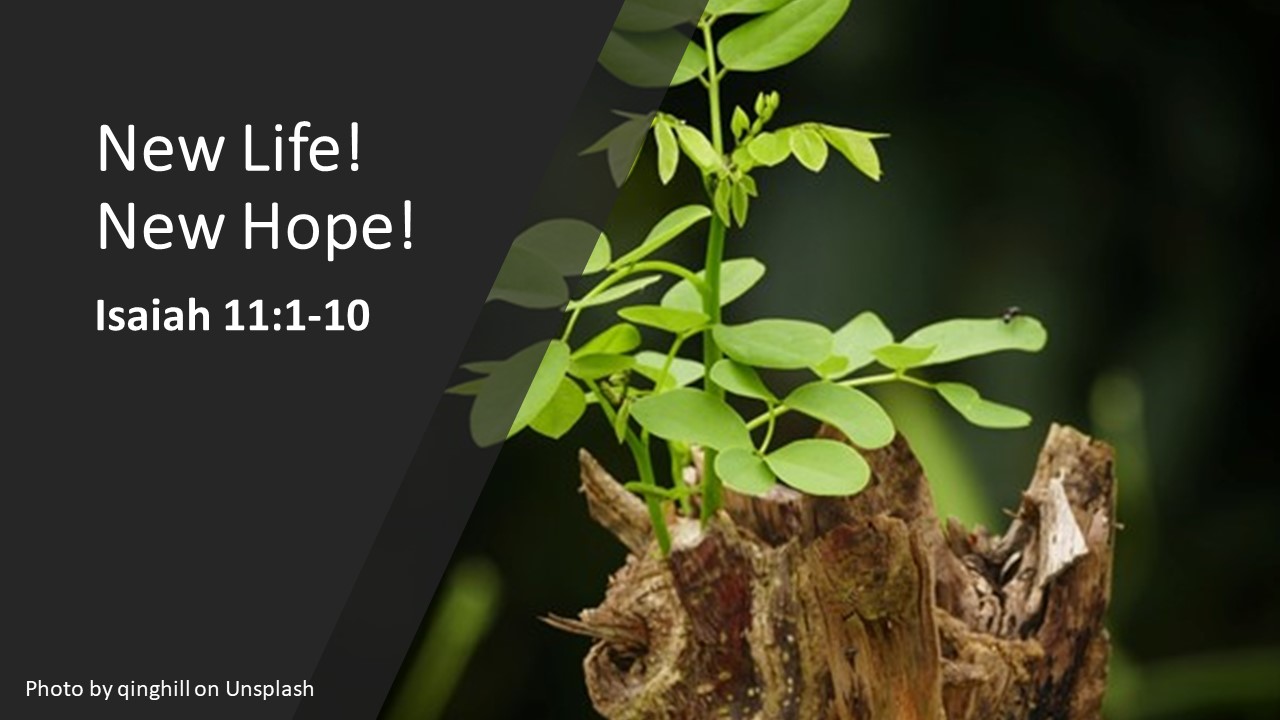
Are we still a Christian nation? Do we want to be a Christian nation? What is a Biblical vision for Christian rule? Isaiah 11 helps to answer these questions.
Are we a Christian nation?
Last year a census was taken and the results are only just coming out.
This week the data on religion and ethnicity were released and the results hit the headlines. One of the key results was perhaps shocking. For the first time less than half the population put down their religion as ‘Christian,’ many instead opting for ‘no religion.’
This once again sparked a debate over whether you can call our country a Christian country. In many ways the answer to this question is, “Yes, we are a Christian country.” After all our new monarch will be crowned in a Christian ceremony in a Christian church. We have a national church and Bishops in the House of Lords. Perhaps more fundamentally, though, Christianity has been the dominant religion since England as a nation was conceived for well over 1,000 years. The values and outlook we take for granted are far more deeply influenced by our Christian faith than many people realise. For example, the idea that every human being is of equal value and worth arises from the Biblical idea that we are all made in the image of God. We take that idea for granted, but it would have been alien to many of the ways of thinking that existed in cultures before the influence of Christianity. So, yes, in many ways we are a Christian country.
Yet, on the other hand there are many reasons to answer, ‘No!’ to that question. After all, less than half the population would now even call themselves Christians and worse than that a very small minority could be called, ‘active Christians’, who attend and support a local church or want to grow in their understanding of faith or a relationship with God. Christianity or faith is hardly ever spoken about in the news or national discussions. In short people’s knowledge of God in this country has shrunk massively. All these facts suggest that we are no longer a Christian nation.
But perhaps we need to ask ourselves a more important question. Do we want to be a Christian nation? And if so, what do we mean by that? What might a Christian nation look like?
Isaiah’s Vision: A Better nation
Isaiah lived 700 years before Jesus. His was not a Christian nation, but it was meant to be a nation that worshipped the same God of the Bible. In a sense it was clearly, God’s nation, there was the temple, the Priesthood and kings, who could track their ancestry back to the great King David, the Son of Jesse.
But there was a growing trend to abandon this faith. Isaiah is critical of the ‘religion’ of his age, that had become focussed only on the ritual and abandoned God’s call to right living. Worse than that there was a move to embrace some of the more fashionable gods of the age alongside or instead of the God of their ancestors. Increasingly, Isaiah’s nation, Judah, seemed to be drifting away from God.
And Isaiah as a prophet, regularly warns of God’s judgement on the nation for this. Indeed, they were facing one of their greatest challenges, the rapid rise of the Assyrian empire, who were successfully invading many of the neighbouring nations.
Yet, he also gives great visions of a better future for the nation, an idealisation of the kind of nation that would come about, if the rulers and people were to truly follow their God and a vision of what God would one day achieve in bringing about.
Chapter 11 is one of these visions. So, let’s look at what kind of better nation Isaiah says God will bring about.
A nation of hope not despair – 11:1
Firstly, it is a nation of hope not despair. The image at the start is of a shoot coming out of a stump, the stump of Jesse. Jesse was David’s father and so this stump stands for the dynasty of kings that came after David and the nation they ruled.
Because of the threat of the marauding Assyrians, it was a nation in deep despair, a nation and kingship that felt itself as good as dead, things were going from bad to worse.
But Isaiah says, just as sometimes a dead stump, suddenly produces a green shoot, so God will give Judah new life and a better future. It may feel like nothing can be done about the Assyrians, but somehow God will save them. There is hope and this hope will be linked with a better king.
We too live in times, where the challenges seem to be mounting up and things seem to be going from bad to worse. Yet, the same God is still there. He controls the future and he promises that in the end he will bring us to a far better future. If you are feeling like a dead stump now, trust in the Lord, to bring about new shoots of life.
In such times, don’t we want to be a nation of hope not despair? This is what being a Christian nation means. Isn’t that something we long for?
A nation of justice not corruption – 11:3-5
Secondly, Isaiah’s vision of a better nation is of one of justice rather than corruption. A country, where those in charge make sure that the poor are cared for and looked out for and where wickedness is punished.
To be a Christian nation is to stop corruption and to make sure the poor are cared for. The truth is this is what our Christian heritage has on the whole helped us to bring about. Bribery and corruption are relatively rare compared with many parts of the world. The poor are pretty well supported, through benefits, the National Health Service and so on.
Yet, at the same time as we are moving away from a focus on Christian faith, that these things are beginning to slip away, as we hear of corruption in giving contracts for PPE, the increased reliance on food banks and a chronically underfunded NHS. Don’t we want these values to be reinforced? Surely, they are part of what it means to be a Christian nation.
A nation of peace not conflict – 11:6-9
Thirdly, Isaiah’s vision is of a nation that has peace not conflict. Perhaps this was particularly pertinent in a world where the Assyrian Empire were causing so much war and bloodshed.
The imagery he uses to describe this new state is really beautiful. Animals that would normally hunt and tear apart their prey, being no threat, but living in peaceful co-existence. This is a place with no harm or destruction, where little children can play in utter safety!
Our world seems to be increasingly full of conflict and harm. Marriage and relationship break ups are all too common, we have become increasingly aware of terrible abuse carried out against children. Our national debates seem to be become more vicious and critical and there is talk of culture wars. And internationally of course we are faced with an horrific war in Europe.
Isn’t Isaiah’s vision of a truly Christian nation something that we long for and want?
Isaiah’s Solution: The Knowledge of the LORD
So how can such a vision come about? Isaiah’s answer seems to be ‘the knowledge of the LORD’, which he mentions in verse 2 and verse 9. Let’s look a bit more closely at what he says will bring this about.
A Spirit Filled Ruler – 11:2
Firstly, Isaiah says in order to have this kind of nation, you need a ruler who is filled with the Spirit of the LORD. The emphasis here is not on any spiritual experience or miraculous powers, but on a Spirit that gives the ruler, wisdom, understanding and knowledge and fear of God. It is of a ruler whose heart is to delight in doing what God wants, who prays earnestly and seriously, ‘Your Kingdom come’, ‘Your will be done.’
In Isaiah’s lifetime, such a ruler did come about. After Ahaz was Hezekiah, one of the godliest kings in Jerusalem. He encouraged people to live according to his laws and when it looked like Assyria was going to conquer Jerusalem, he cried out to God and God rescued Jerusalem from the siege. Because of his rule, the kingdom continued under the rule of a Davidic king for another 100 years.
Yet, Hezekiah, only partially fulfilled this prophecy. When Jesus came, he brought an even greater fulfilment as the ultimate Son of David, the one who would rule at God’s right hand. The Spirit of the Lord rested on him and he taught his followers the knowledge of the LORD in an even more profound way and gave us the good news of God’s Kingdom that was open to all when they turned back to Jesus.
A Knowledge Filled Earth -11:9b-10
Jesus came not just to Jerusalem, but he sent his followers to preach the good news, the gospel, the knowledge of God revealed in and by His Son to the whole world. And they went. The reason England has been Christian for over 1,000 years is because that gospel came here. And the gospel is still going out throughout the world, bringing transformation and change to nations that value hope, justice and peace.
Isaiah’s vision was more than a vision for a better nation, it is a vision for a transformed world. It is an international vision. Indeed, it says the nations will rally to the banner of the root of Jesse to Jesus. His Kingdom is both not of this world, yet it is for this world. It is both the hope of a perfect future that he will bring about when he returns and a vision for a better world now that we can work towards as his followers. But all this comes about through the growth of the knowledge of God, brought about in and through Jesus.
Can we achieve Isaiah’s Vision without Isaiah’s solution?
So, do we want a nation of hope, justice and peace or are we happy to slip into a state of despair, corruption and conflict? Most people would long for the former rather than the latter, yet Isaiah would say that we can only have these things, if we embrace the knowledge of God.
We live in a nation that has many benefits from its Christian heritage, but where the present reality is that the knowledge of God is fading away.
The danger is that as we lose the knowledge of God, we will gradually lose the benefits of our Christian heritage. Increasingly, people live for today and don’t care about the future, because they have lost hope. They live for themselves without caring about others because they don’t take God’s judgement seriously. And they are increasingly angry with others, because they have lost touch with the God of grace.
As those who do take the knowledge of God seriously, who have met with the root of Jesse, Jesus Christ, let’s play our part and pray for the spread and reception of the knowledge of God in our nation, that we may truly become a Christian nation in every sense of the word!
New Life, New Hope!
“A shoot will come up from the stump of Jesse;
from his roots a Branch will bear fruit.“
(Isaiah 11:1)
Christmas Tree Festival

Come and visit St. George’s church decorated with lovely Christmas Trees from Friday 9th December to Sunday 18th December. The church will be open for viewing between 2-5pm. Entry is free. Donations towards St. George’s Restoration Fund.

