Life in Tudor Ramsgate – Saturday, 16th October

An illustrated talk by Margaret Bolton

An illustrated talk by Margaret Bolton looking at:

  • What it was like to go to school here
  • The work of a local housewife
  • The jobs people did
  • Visits by important people
  • Experiences of family life

Based on parish records, wills and inventories and including music from the period, this talk will explain how people lived here in the past.


St George’s Church

Saturday 4th October at 3pm

Tickets £5 including refreshments

All proceeds to the church restoration fund

This Easter – 19th April

“But Stephen, full of the Holy Spirit, looked up to heaven and saw

the glory of God, and Jesus standing at the right hand of God.”

Acts 7:55

This week, the sections of the email are:

  • Opening Reflection: George and the Dragon
  • This Sunday: A Joint Service at St. George’s Church at 11am, no Livestream! Find out more about all that is happening on Sunday…
  • Key notices: Electoral roll, Help on Sundays, Life Groups, Can you help with a tour?
  • Coming Up: Romp through the Old Testament, Men’s Goup Snack and Watch, Life in Tudor Ramsgate
  • Interesting Blogs: Two blogs on the Bible and its use today…
  • Weekly Calendar
  • Online Forms: Event application, Submit a notice, maintenance report, access Safeguarding training

Scroll on…

Opening Reflection

The story of George and the Dragon is a great story. George comes across a village, where the people are having to offer a human  each day to  the dragon to placate him. He offers to help and despite the princess pleading with him to save himself from the dragon, he goes into battle, kills the dragon and rescues the princess and village.

Although the story is fantasy, it presents George as a great example of service. He does not ignore the problem or the village’s suffering, but offers to help, to do what he can to aid the village. But, it is also a great act of courage, because he risks his life to fight a dragon that no-one else dares to stand up to. In the story, George survives the dragon, but the real St. George was killed as part of the persecution of the Christians by the Roman Emperor Diocletian in 303AD.

George was not the first Christian martyr. Many died for their faith and still do. The first Christian martyr was Stephen, who died at the hands of a Jewish mob upset at his teaching about Jesus.

Stephen had been selected as one of seven to be a Deacon in the church. This was a new role created to serve the poor by ensuring that the distribution of food to the widows was done effectively and fairly. So, Stephen was initially selected to serve, but he soon showed great courage. He also became a great preacher and powerful advocate for the Christian faith in Jerusalem in the early days of the church. No-one it seemed, could argue against him, so in frustration they hauled him before the Jewish leadership on trumped up charges. Stephen’s response was to give a courageous speech, which so upset the listeners that they took him outside and stoned him.

The real Saint George was an example of  great courage. Stephen was an example of both service and courage.

                                                Paul Worledge

This Sunday

The Service starts at 11am!

There is lots happening at St. George’s. Lots of fun and a great opportunity for us as a church to connect with the wider town community and show our desire to serve the town.

                11am     Joint All Age Service at St. George’s Church

                12pm    Mumming Play of St. George and the Dragon outside church, 12pm

12:30pm St. George’s Day parade setting off.

1:20pm A lunch and Pride in Place presentation in the Church.

Pride in Place funding is an exciting opportunity for Ramsgate to develop and flourish with a £20 million fund to help improve our town.

Key Notices:

Electoral Roll: Please fill in a form if you aren’t yet on it!

The electoral roll is a list of church members who have the right to vote at our annual meeting. Last year we had to create a new roll, and many people would have joined the electoral roll then. If you did not join last year or have started coming more recently, then you can now join the new roll, if you are 16 or over, have been baptised and have either been attending for six months or live in the parish. Please pick up a form at the back of church and return to Mark or fill in the online form. Forms must be completed by 3rd May. The Annual meeting is on Sunday 31st May after church.

Helping on Sundays

Making everyone feel welcome on Sundays and ensuring things run smoothly is an important task – as well as a privilege. Ahead of the Annual Meeting on 31 May, let’s renew and expand the list of : those who set out books and greet worshippers; those who read aloud, those who lead intercessions; those who open up and set up the church. Simple written guidance is available for each of these, and you’d be part of a team. Please consider being one of them and speak to Paul Worledge or Mark Ogden if interested.

Life Groups

Will you dare to share the Christian life with others? Life groups are a great way to meet together regularly with a small group of other Christians, for mutual support, to share in reading God’s word and to pray for one another.

Please see Paul if you are interested in joining one. There are now more groups available! They meet at the following times:

  • Monday evening (two groups)
  • Tuesday afternoon
  • Wednesday morning
  • Wednesday evening
  • Thursday morning

There is also a youth life group on a Sunday afternoon.


Can you help run a tour?

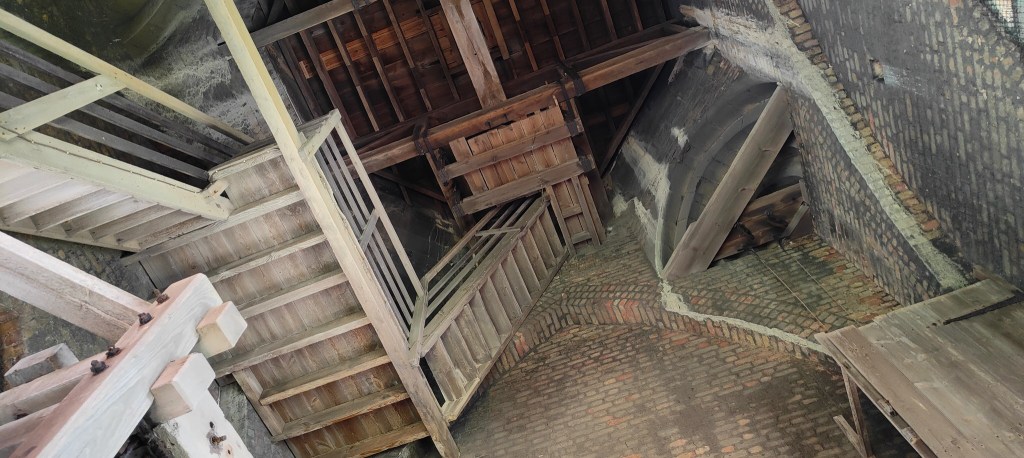
We are hoping to offer tours of St. George’s tower and crypt on Saturdays through the tower. This not only allows locals and tourists to experience the wonders of the building but also raises money for the church. If you are interested in being part of a team to run these tours, then please contact Jemima (07971782477 or regenerationofficer@stgeorgechurchramsgate.uk).

Coming Up:

Romp through the Old Testament

An interactive day of exploration, new insights and fun with Rev. Dr. Sue Woan. Free! (donations welcome) Bring your own lunch – drinks provided. Saturday 18th April, 9.30am – 3.00pm. Newington Free Church, St. John’s Avenue, Ramsgate. To book a place contact Robin Plant: robin.plant@protonmail.com.

Men’s Group Snack and Watch

Hot soup and snacks, and a chance to watch the acclaimed film on dementia, The Father. £5. For more information contact Bruce Stokes, 07708 682464, bruce.stokes@btinternet.com .

Life in Tudor Ramsgate

On Saturday 16th May, 3pm, Margaret Bolton will be giving a talk about Tudor Ramsgate. It will include insights into school life, the work of a housewife, the jobs people did, visits by important people and the experiences of family life. Tickets will be £5 with all proceeds going to the St. George’s Restoration fund.

Interesting Blogs to Share:

The most overlooked evangelistic tool?

Phil set to reading the Bible alone. Within just a few weeks, he understood how Jesus’ death and resurrection offered him the forgiveness and hope he was seeking. Many people are requesting Bibles… Read more (5 mins)

Troubling Jesus – how non-Christian young people make sense of Scripture

What they shared was sometimes deeply uncomfortable, unsettling interpretations we may be overly familiar with and offering fresh perspectives on God and Jesus.  Read more (10 mins)

Weekly Calendar

Sunday 19th April – Third Sunday of Easter

Joint Service (St. George’s Church) Acts 7:54-60 – 11:00am

Tuesday 21st               

Prayer Meeting (St. George’s Church) – 9:30-10:00am

Community Meal (St. George’s Hall) – 5:30-7:00pm

Wednesday 22nd      

Community Soup (St. George’s Church) – 12:00-2:00pm

Thursday 23rd

Prayer Meeting (St. Luke’s Church) – 9:30-10:00am

Saturday 25th               

Prayer Meeting (St. George’s Church) – 9:30-10:00am

Community Soup (St. George’s Church) – 12:00-2:00pm

Sunday 26th – Fourth Sunday of Easter

Eucharist (St. George’s Church) Romans 12:9-21 – 9:30am

Online Forms:

Under the ‘Contact’ tab on the website, there are now three forms that you can use to help us in managing the church:

  • Events Application Form. Use this if you are organising a church event that needs a church room booked, advertising or ticketing.
  • Submit a Notice. Use this if you want to ask us to include a prayer request or other notice in the church notice sheet or email.
  • Maintenance Reporting Form.Use this to report any non-urgent issues with our buildings or grounds.

Safeguarding Training

If you volunteer in anyway at church the national authorities are strongly encouraging you to take at least the Basic Module in safeguarding training once every three years.

If you have not completed the training in the last three years, then the module can be completed online and takes about ninety minutes. You can access the training by following this link. You will need to first register, to access the training. Once the training is completed, you will be sent a certificate. Please forward that certificate to James (office@churchramsgate.org), so that we can keep records of who has done the training.

Finally, let’s live lives of service and courage.

Yours in Christ

Paul Worledge

(Priest in Charge, St. George’s Ramsgate)
Doubting Thomas (John 20:19-31)

“Then Jesus said to Thomas: “”Because you have seen me, you have believed; blessed are those who have not seen and yet believe.””” (John 20:29)

This week we continue the Easter resurrection theme and look at the part Thomas played.

As recorded at St. Luke’s

John 20:19-31

19 On the evening of that first day of the week, when the disciples were together, with the doors locked for fear of the Jewish leaders, Jesus came and stood among them and said, “Peace be with you!” 20 After he said this, he showed them his hands and side. The disciples were overjoyed when they saw the Lord.

21 Again Jesus said, “Peace be with you! As the Father has sent me, I am sending you.” 22 And with that he breathed on them and said, “Receive the Holy Spirit. 23 If you forgive anyone’s sins, their sins are forgiven; if you do not forgive them, they are not forgiven.”

24 Now Thomas (also known as Didymus), one of the Twelve, was not with the disciples when Jesus came. 25 So the other disciples told him, “We have seen the Lord!”

But he said to them, “Unless I see the nail marks in his hands and put my finger where the nails were, and put my hand into his side, I will not believe.”

26 A week later his disciples were in the house again, and Thomas was with them. Though the doors were locked, Jesus came and stood among them and said, “Peace be with you!” 27 Then he said to Thomas, “Put your finger here; see my hands. Reach out your hand and put it into my side. Stop doubting and believe.”

28 Thomas said to him, “My Lord and my God!”

29 Then Jesus told him, “Because you have seen me, you have believed; blessed are those who have not seen and yet have believed.”

30 Jesus performed many other signs in the presence of his disciples, which are not recorded in this book. 31 But these are written that you may believe that Jesus is the Messiah, the Son of God, and that by believing you may have life in his name.

St George’s Spring Parade

Ramsgate residents are invited to the biggest St George’s Day Spring Parade yet, powered by a new community partnership.

Great British Carnival, St George’s Church, and the Ramsgate Neighbourhood Board join forces for a spectacular community celebration – where everyone is welcome – and the official  celebration of the town’s ambitious ‘Pride in Place’ 10-year regeneration programme .

St George’s Church and Great British Carnival are joining forces with the Ramsgate Neighbourhood Board to bring a spectacular St George’s Day Spring Parade and the ‘Pride in Place’ celebration to our beautiful town. We are calling out to Ramsgate residents to come and join in. Now in its fourth year, this popular and fun parade has even more to offer. There are Easter Holiday workshops, suitable for all ages and abilities, to make helmets, swords, shields, hearts, hobby horses, dragons, crowns, running daily (not weekends) from Tuesday 7 April,  1.30-3.30pm in St George’s Church.

Final parade preparations will take place in St George’s Church on Saturday 18 April from 12 til 3pm.The Parade will form up in the Churchyard from 12 noon on Sunday 19 April after the St George’s Day Church Service at 11am. Paraders will be entertained by a short traditional mumming play, ‘St George and the Dragon’ and the Parade will move off at 12.30pm. The route is down the pedestrianised High St to the Gates at the bottom of Harbour St, where the Parade about turns and heads back to the Church.

The event will be followed by a free community lunch in St George’s Church, leading straight into the  celebration of Ramsgate securing  ‘Pride in Place’ funding, which is £20m over a 10-year period. The church will be transformed to showcase the results of the ‘Bring It to Life’ creative grants, bringing the town’s new vision to life through the eyes of different local Ramsgate people and organisations. There will be local community art, audio displays, film, music and performances. Residents are invited to meet the Ramsgate Neighbourhood Board to hear about the new community vision and plan built following the engagement sessions hosted last year. There will be an opportunity to share ideas on how the investment can have the most impact on the five Ramsgate Pride in Place Programme priorities: Open it Up; Clean it Up; Light it Up; Raise it Up and Join it Up.

Jemima Brown, Regeneration Officer for St George’s Church said, “Now in Year 4 of Project 200, our 5-year regeneration project, the Church and Hall continue to be the focus for lots of activity which brings the community together, with the shop and the weekly meal putting St George’s at the heart of the community in the Town Centre. The primary purpose of Project 200 is to ensure that residents and visitors from all walks of life can enjoy St George’s for multiple uses. We want to throw the doors open wider to people of all faiths and none. Last year’s parade was a lovely event, bringing people together to enjoy themselves. We have a beautiful Church in the centre of the Town and so we are excited to work with GB Carnival again and the Ramsgate Neighbourhood Board to celebrate St George and his special place in our Town”.

photo Vicki Couchman

Teresa Askew of Great British Carnival said “We are delighted to work with St George’s Church again to help create another St George’s Day Spring Parade event for the town. Teaming up with the Ramsgate Neighbourhood Board makes this year even more special as we help celebrate the new Pride in Place vision. .

St George’s Day is celebrated throughout the World. In England, he became a symbol of bravery. In Portugal and Malta, people looked to him for protection. In Lithuania and Ukraine, he is honoured as a strong and protective saint and in Spain, especially in Catalonia, people celebrate him with books and roses every year. In Georgia, his name and story are deeply respected. He stands for courage, kindness and standing up for others. By welcoming all ages, faiths, and backgrounds, we are celebrating St George as a shared emblem of courage, care, and collective belonging for everyone in our town.”

Bernie Morgan, Chair of the Ramsgate Neighbourhood Board said: “We are thrilled to celebrate  Ramsgate’s Vision and Plan alongside such a joyful, community-led event. The Pride in Place Programme funding is all about backing our local community, and by partnering with St George’s and GB Carnival, we are demonstrating what active, visible inclusivity can be for our town. We want residents to come along, enjoy the celebrations, see the amazing ‘Bring it to Life’ creative projects, and talk to us about how we can work together to shape Ramsgate’s future.”

Across the world, different people chose St George for the same reason, because courage and standing up for others matters everywhere, so we are delighted Ramsgate’s Ukrainian community are coming to parade with us. Expect Giants, horses, dragons, princesses and, of course, St George himself. Following the parade, all residents are warmly invited back to St George’s Church to enjoy the free community lunch, view the ‘Bring it to Life’ creative showcases, and help shape Ramsgate’s future with the Pride in Place programme.

photo Frank Leppard

Easter Sunday (Matthew 21:1-11)

“Go quickly and tell his disciples: “He has risen from the dead…” (Matthew 28:7)

The Easter Story is an emotional rollercoaster. It takes us from the depths of human cruelty and agony to the highs of the most incredible and hope-giving miracle and for many, this story is the most important moment in history. Why not join us this Easter and discover afresh what it means and why it matters so much?

As recor5ded at St. Luke’s

He is Alive!

The Indestructible Son

How do you destroy the sun? (pictures – tear them up…)

Blow it out – You’d have to blow so strongly it would take 10^41 Joules – If you had all the energy produced in the world saved up for the lifetime of the universe, you would still only have a miniscule amount of the energy needed to blow out the sun!

Water – like throwing petrol on a fire… the sun runs on fusion reaction and Hydrogen is the fuel.

Nuclear missile – like throwing a match onto a bonfire.

Humanity despite all its advances, is still puny in terms of power. We are excited about going to the moon again, but shouldn’t we be more excited about the one who made the sun, the moon and the Trillions of other stars and planets?

Yet, when Jesus, the Son of God, did come, it wasn’t as people expected or wanted. He did not behave according to human ways but challenged people to change and live according to God’s ways. Although, some enthusiastically followed him, many rejected him. They wanted to stay in control and did not want to bend to God’s ways.

It is a ridiculous idea to think you can destroy the sun. But is it not even more ridiculous to think you can destroy the one who made the sun?

Yet, on Good Friday, they tried to destroy the Son of God.

Destroying the Son (Red background)

Mocked by the Soldiers and Leaders (Crown of Thorns)

The Roman soldiers mocked Jesus, by dressing him up as the King.

They put a scarlet robe on him, put a staff in his hand and a crown of thorns on his head. Then they bowed down and cried out, “Hail, King of the Jews.” They were showing that although, Jesus was meant to be the all-powerful one, they were the ones really in power and control. Like bullies throughout history, they exerted their power by beating up their victims. So they hit Jesus around the head and spat on him. Then they led him away to nail him to a cross.

And on the cross, people continued to mock Jesus. The Chief Priests and Teachers of the Law, who had arranged for Jesus to be killed, mocked him saying:

“He trusts in God. Let God rescue him now if he wants him, for he said, ‘I am the Son of God.” (Matthew 27:43)

They thought, they were being proved right. Jesus’ death showed that God did not care for him, that he was not the King of the Jews. That they were in control after all.

Disciples Scattered (terrified)

For the disciples, Jesus’ closest friends, Jesus’ crucifixion and death must have been an utterly terrifying moment. Jesus had already said to them what would happen:

Then Jesus told them, “This very night you will all fall away on account of me, for it is written: “‘I will strike the shepherd, and the sheep of the flock will be scattered.'” (Matthew 26:31)

But imagine how they would have been feeling early on that Sunday morning. Their best friend, leader and teacher had been brutally mocked, beaten and crucified in front of their eyes. They would have been sad for him and heartbroken at losing him.

 Yet, he had also represented all that they had hoped for. That God was going to make things better, that the Kingdom of God was coming and that they would have a key place in God’s new kingdom with Jesus in charge. With Jesus’ death, their hopes were shattered, their dream destroyed.

They now felt utterly powerless, in the face of the brutal power of the leaders and Romans. It was a terrifying place to be.

… But things were about to change.

Some women followers of Jesus, eager to do the little they still could for Jesus were heading for his tomb to anoint his body with spices. As they approached something amazing happened.

The Angel: Terror for the Soldiers (Angel with sword)

At the grave, there were some soldiers guarding, the tomb, so that no-one tried to steal Jesus’ body and make any claims that he had indeed come back to life. The leaders were still asserting their power and control, even over a dead Jesus. But what happens next makes a comic mockery of their power and control.

An angel appears! He appears demonstrating God’s power, causing an earthquake and rolling the heavy stone away from the tomb. Suddenly, the might of the leaders represented by the guards becomes useless in the face of the power of God:

“The guards were so afraid of him that they shook and became like dead men.” (Matthew 28:4)

The angel comes with all the majesty of God and mortals cannot stand before him. This is comedy. The ones set to guard the dead, themselves appear dead. Whilst the one who was dead is now alive.  Just one angel was enough to terrify the guard at the tomb. But Jesus had said when he was arrested,

“Do you think I cannot call on my Father, and he will at once put at my disposal more than twelve legions of angels?” (Matthew 26:53)

Twelve Legions of angels is around 60,000.

When the authorities were told what had happened, they did not want to accept that they had not been in control, that they were powerless to destroy Jesus. So, they paid the soldiers lots of money to keep quiet about it and told them to say that Jesus’ body had been stolen.

The Angel: Hope for the Disciples (Angel with smile)

The angel is a terror to the guards, but to the women, who are still desperate to serve Jesus, he has powerful news.

They don’t need to be afraid of him. Rather he has come as a messenger, to give them a message for others. He shows them that the tomb is empty and explains why: Jesus is alive!

Then he says,

Then go quickly and tell his disciples: ‘He has risen from the dead and is going ahead of you into Galilee. There you will see him.’ Now I have told you.” (Matthew 28:7)

Why the emphasis on Galilee? Perhaps this is to fulfil what was said in Isaiah:

“Nevertheless, there will be no more gloom for those who were in distress. In the past he humbled the land of Zebulun and the land of Naphtali, but in the future he will honour Galilee of the Gentiles, by the way of the sea, along the Jordan– The people walking in darkness have seen a great light; on those living in the land of the shadow of death a light has dawned.” (Isaiah 9:1-2)

The disciples who were all Galileans, had been in a moment of great darkness, but now with Jesus alive again, the light was dawning. It may have seemed for a moment, that the Son of God had been destroyed, but man cannot destroy the Son of God. God’s power is undefeatable.

So, the women go, and we are told they are both afraid and joyful. The mixed emotion of joy and fear – is natural given the circumstances.

 Let’s think a bit more about these two emotions…

Fear: We are not in control!

For the women after hearing that Jesus was alive, fear was a natural response. This was beyond their comprehension or experience. People don’t rise from the dead. How can this be possible? When the impossible starts happening, things become scary. We are out of control, none of the old assumptions are true anymore.

We all like to be in control. To think that we have power to make things go exactly as we want them to. To be able to choose the course of our lives. But, we have to accept that there is so much we cannot control. There is so much that is beyond our power.

To accept the resurrection of Jesus, is to accept that God is ultimately in control. His power is indestructible, the worst that humans can do, is powerless to overcome God. People tried to kill Jesus, the Son of God, but God raised him from the dead.

Perhaps this Easter as you contemplate the resurrection, you need to accept that God is in control and you are not. To do so, is an ultimately freeing experience.

Joy: Disciples can know the power of God

It is freeing, because it enables us to discover the joy of those women on that first Easter Sunday. They were coming to realise that God has power over even death itself. There is hope that they will see the crucified Jesus again and before they know it they meet him on the way.

But it is also joy, because it means that to be one of Jesus’ followers, is to know this same power at work in our lives. A power over even death itself.

It is not our power to control, but it is God’s power to use for our benefit. And when we realise that Jesus, the Son of God, loves us so much that he died for us, but also has the power of the resurrection at his fingertips, then no matter how bad things become, no matter how powerless we feel, we can trust in God’s power for our ultimate salvation.

Perhaps a good way to end is with the words of Paul from Ephesians:

“I pray also that the eyes of your heart may be enlightened in order that you may know the hope to which he has called you, the riches of his glorious inheritance in the saints, and his incomparably great power for us who believe. That power is like the working of his mighty strength, which he exerted in Christ when he raised him from the dead and seated him at his right hand in the heavenly realms,” (Ephesians 1:18-20)

This Easter – 2nd to 12th April

“Go quickly and tell his disciples: “He has risen from the dead…”

(Matthew 28:7)

This week, the sections of the email are:

Please note this email covers two weeks, there will not be an email next week.

  • Opening Reflection: The Easter Story
  • The Easter Services
  • Key notices: Electoral roll, Can you help with a tour
  • Coming Up: Romp through the Old Testament, St. George’s Day Service and Parade, Life in Tudor Ramsgate
  • Interesting Blogs: Peace in times of war, Christians in the age of Hitler
  • Weekly Calendar
  • Online Forms: Event application, Submit a notice, maintenance report, access Safeguarding training

Scroll on…

Opening Reflection

The Easter Story is an emotional rollercoaster. It takes us from the depths of human cruelty and agony to the highs of the most incredible and hope-giving miracle.       At the political level, there is injustice perpetrated by those meant to promote God’s laws and enforce the Roman legal system. At the personal level there are statements promising great courage, followed by moments of utter cowardice.

At the centre of it all is Jesus. On show is both his humanity and his divinity. He is clear about his divine mission, preparing his followers for the traumas to come and interpreting the events beforehand through the means of a simple meal. As he approaches the climactic moment, he struggles in prayer between his human desire to flee all pain and suffering and the divine command to sacrifice himself for the human race. In the end he submits with the simple, but powerful words, “your will be done.”

After his arrest, he faces the unjust trial with great courage, not defending himself, but making his clearest claim to be the Messiah, just at the moment it would cause him the most harm. Beaten, ridiculed and crucified, he remains true to his calling and compassion, asking forgiveness for his executors, offering hope to one of those being executed with him and arranging support for his family. Then he dies, with a great cry of triumph: “It is finished!”

His great work of sacrifice, was complete, but Jesus was not finished. Incredibly, on the third day, God raised him from the dead. Jesus did what no-one had done before or since: He conquered death. In so doing he gives us hope that death need not be the end.

For many, this story is the most important moment in history. Why not join us this Easter and discover afresh what it means and why it matters so much?

                                                Paul Worledge

The Easter Services:

Maundy Thursday – 2nd April (Tonight!)

  • Holy Communion (St. George’s 6:30pm) – remembering the very first meal in remembrance of Jesus’s death for us.

Good Friday – 3rd April (Tomorrow!)

  • The Easter Story (St. Luke’s, 10:30am) – an interactive telling of the events of Easter for families and small children. Like a ‘Crib Service’ but for Easter.
  • Churches Together Service (Ramsgate Salvation Army, 10:30am)
  • Churches Together – Good Friday witness (Town Centre, 12 noon)
  • Good Friday Meditation (St. George’s, 1:00-3:00pm) – reflecting on the Song of the Suffering Servant (Isaiah 53). Come for one or more 30 minute slots starting at 1pm, 1:30pm, 2pm, 2:30pm.

Easter Sunday – 5th April

  • All Age Holy Communion and Celebration (St. George’s, 9:30am) – Celebrating the resurrection of Jesus and the hope of life it brings. Matthew 28:1-10.

Key Notices:

Electoral Roll: Please fill in a form if you aren’t yet on it!

The electoral roll is a list of church members who have the right to vote at our annual meeting. Last year we had to create a new roll, and many people would have joined the electoral roll then. If you did not join last year or have started coming more recently, then you can now join the new roll, if you are 16 or over, have been baptised and have either been attending for six months or live in the parish. Please pick up a form at the back of church and return to Mark or fill in the online form. Forms must be completed by 3rd May. The Annual meeting is on Sunday 31st May after church.


Can you help run a tour?

We are hoping to offer tours of St. George’s tower and crypt on Saturdays through the tower. This not only allows locals and tourists to experience the wonders of the building but also raises money for the church. If you are interested in being part of a team to run these tours, then please contact Jemima (07971782477 or regenerationofficer@stgeorgechurchramsgate.uk).

Coming Up:

Romp through the Old Testament

An interactive day of exploration, new insights and fun with Rev. Dr. Sue Woan. Free! (donations welcome) Bring your own lunch – drinks provided. Saturday 18th April, 9.30am – 3.00pm. Newington Free Church, St. John’s Avenue, Ramsgate. To book a place contact Robin Plant: robin.plant@protonmail.com.

St. George’s Day Service and Parade

On Sunday 19th April we will have a joint service at St. George’s church to celebrate St. George’s day at 11am. This will be for All Ages and will be followed by a Parade through town, which will this year include both a giant St. George and a giant dragon. After the parade, there will be lunch in St. George’s church, where the Pride in Place board will be launching the next phase of their engagement in working out how to spend the £20 million assigned to Ramsgate by the government. We hope as many as possible can join with some or all element on this day.

Life in Tudor Ramsgate

On Saturday 16th May, 3pm, Margaret Bolton will be giving a talk about Tudor Ramsgate. It will include insights into school life, the work of a housewife, the jobs people did, visits by important people and the experiences of family life. Tickets will be £5 with all proceeds going to the St. George’s Restoration fund.

Interesting Blogs to Share:

Peace in Times of War

In this reflection, Stuart Ford from the Bible Society s the hope of peace that comes through the resurrection of Jesus. Read more (5mins)...

Christians in the Age of Hitler

In this article, the writer reviews a book that argues that our culture has been formed in the anti-Nazi rhetoric of the post war world. Important as that is, it is not enough to sustain a lasting positive culture. Read more...

Two-Weekly Calendar

Sunday 5th April – Easter Sunday

Eucharist (St. George’s Church) Matthew 28:1-10 – 9:30am

Confirmation Follow Up (St Luke’s Vicarage) – 5:00-6:30pm

Tuesday 7th              

Prayer Meeting (St. George’s Church) – 9:30-10:00am

Community Meal (St. George’s Hall) – 5:30-7:00pm

Wednesday 8th        

Community Soup (St. George’s Church) – 12:00-2:00pm

Thursday 9th  

Prayer Meeting (St. Luke’s Church) – 9:30-10:00am

Saturday 11th               

Prayer Meeting (St. George’s Church) – 9:30-10:00am

Community Soup (St. George’s Church) – 12:00-2:00pm

Sunday 12th – Second Sunday of Easter

Eucharist (St. George’s Church) John 20:19-31 – 9:30am

Monday 13th              

Prayer Meeting (St. Luke’s Church) – 9:30-10:00am

Tuesday 14th              

Prayer Meeting (St. George’s Church) – 9:30-10:00am

Community Meal (St. George’s Hall) – 5:30-7:00pm

Wednesday 15th        

Community Soup (St. George’s Church) – 12:00-2:00pm

Thursday 16th 

Prayer Meeting (St. Luke’s Church) – 9:30-10:00am

Saturday 18th               

Prayer Meeting (St. George’s Church) – 9:30-10:00am

Community Soup (St. George’s Church) – 12:00-2:00pm

Sunday 19th – Third Sunday of Easter

Joint Service (St. George’s Church) Acts 7:54-60 – 11:00am

Confirmation Follow Up (St Luke’s Vicarage) – 5:00-6:30pm

Life Groups

Will you dare to share the Christian life with others? Life groups are a great way to meet together regularly with a small group of other Christians, for mutual support, to share in reading God’s word and to pray for one another.

Please see Paul if you are interested in joining one. There are groups at the following times:

  • Monday evenings
    • Tuesday afternoons
    • Wednesday mornings
    • Wednesday evenings

Online Forms:

Under the ‘Contact’ tab on the website, there are now three forms that you can use to help us in managing the church:

  • Events Application Form. Use this if you are organising a church event that needs a church room booked, advertising or ticketing.
  • Submit a Notice. Use this if you want to ask us to include a prayer request or other notice in the church notice sheet or email.
  • Maintenance Reporting Form.Use this to report any non-urgent issues with our buildings or grounds.

Safeguarding Training

If you volunteer in anyway at church the national authorities are strongly encouraging you to take at least the Basic Module in safeguarding training once every three years.

If you have not completed the training in the last three years, then the module can be completed online and takes about ninety minutes. You can access the training by following this link. You will need to first register, to access the training. Once the training is completed, you will be sent a certificate. Please forward that certificate to James (office@churchramsgate.org), so that we can keep records of who has done the training.

Finally, let’s keep on celebrating the amazing resurrection of Jesus.

Yours in Christ

Paul Worledge

(Priest in Charge, St. George’s Ramsgate)
Palm Sunday (Matthew 21:1-11)

“Rejoice greatly, O Daughter of Zion! Shout, Daughter of Jerusalem! See, your king comes to you, righteous and having salvation, gentle and riding on a donkey, on a colt, the foal of a donkey.” (Zechariah 9:9)

This Sunday is Palm Sunday. We remember Jesus on a journey into Jerusalem. He, like many Jews, was on a pilgrimage to Jerusalem from his home region of Galilee. Yet, he chose to arrive in Jerusalem deliberately announcing to the crowds that he was coming to be made king. He rode on a donkey in fuflilment of the prophecy in Zechariah.

The crowds, many of whom had witnessed his amazing preaching and astonishing miracles, responded by praising him and laying down branches along the path, symbolically welcoming him as their king. Yet, remarkable as this was, difficult questions remained. How could Jesus be enthroned when he was not welcomed by the temple authorities? (They were jealous of his popularity and angry at his criticism of them). And how could Jesus overthrow the military power of the Romans who occupied the city?

Yet, within a week, Jesus was crowned and declared to be king. At his crucifixion, a crown of thorns was placed on his head and a placard placed above him declaring him to be, “King of the Jews.” To most this looked like the authorities mocking his claims, but the deeper reality was that his claims were becoming true in ways people could not comprehend. On the cross Jesus became king of God’s eternal Kingdom, as his subsquent resurrection proved.

As recorded at St. Luke’s

Operation Kenosis

Matthew 21:1-11

In his famous ‘we shall fight them on the beaches’ speech of June 1940, Winston Churchill described the safe evacuation of 338,000 Allied troops from France under enemy bombardment as a ‘miracle of deliverance, achieved by valour, by perseverance, by perfect discipline, by faultless service, by resource, by skill, by unconquerable fidelity’.1 The assembly of a flotilla of little ships at Ramsgate, and their setting out for the other side of the English Channel to ferry soldiers from the beaches of Dunkirk to the larger naval vessels which were unable to come closer than a mile from shore – this was part and parcel of this valour and discipline, and the beginning of that miracle. It was remembered last year in the return of many of those same little ships to Ramsgate Harbour, and the little ships are returning again in a couple of months’ time. The British Government’s code name for this undertaking was ‘Operation Dynamo’. You don’t need to be a language scholar to guess that the Greek word ‘dunamis’, from which we get the word ‘dynamo’, translates as ‘power, might, strength, or force’.

In Matthew chapter 21, we hear about the beginning of another, much greater miracle of deliverance, which I am going to call ‘Operation Kenosis’. The Greek word ‘kenosis’, as it is used in the New Testament, could be regarded as the opposite of ‘dunamis’, because it means ‘emptying oneself out’. This is what we see in the so-called triumphal entry of Jesus into Jerusalem, as described in Matthew chapter 21. This was not a display of power, might, strength, or force. Instead, Operation Kenosis was a threefold miracle: a miracle of planning, a miracle of humility, and a miracle of love.

  1. A Miracle of Planning

As they approached Jerusalem, and came into Bethphage on the Mount of Olives, Jesus sent two disciples, saying to them, ‘Go to the village ahead of you, and at once you will find a donkey tied there, with her colt by her. Untie them and bring them to me. If anyone says anything to you, tell him that the Lord needs them, and he will send them right away’ … The disciples went and did as Jesus had instructed them. (Matt. 21:1-3,6).

Some people have understood this to be a miracle of foreknowledge, or possibly even a miracle of mind control, as if Jesus exercised an impersonal force from a distance over the responses of the donkey’s owner, in the same weird way that Obi-Wan Kenobi took over the minds of inquisitive Imperial Stormtroopers in the first Star Wars film. But I think that this is far more likely to have been a miracle of planning on the part of Jesus.

Imagine my sister had made arrangements to fly from Australia to visit me, but for whatever reason I wasn’t able to meet her at the airport. Now imagine I said something like this to her: ‘Once you get through passport control and into arrivals, turn left and out through the doors towards the carpark. To your right you will see a little unit with distinctive car hire branding, and a Nissan Micra will be parked close by. If the unit is closed, open the postbox to the right hand side, and you will find a set of keys for the Micra. If the unit is staffed, or if anyone asks you what you are doing, give them my name and the booking reference 561-561. Then use the satellite navigation app on your phone to drive to my house’.

In circumstances like those, my sister would be unlikely to say to me, ‘What mysterious power do you have to know and to control the outcome of all these things?’ She would be more likely to think that I had arranged car hire for her, and had chosen the least expensive car I could find. It would be a miracle of planning on my part, rather than a miracle of foreknowledge or mind control.

I think this is the most likely way of understanding what is going on in the first few verses of Matthew chapter 21: as a miracle of planning, rather than as a display of power, strength, might, or force. To be clear, it’s not that I think that Jesus could not have exercised such power if he wanted to. However, I don’t think that there are any clear examples in the Gospels of him performing miracles purely for self-serving reasons. The miracles of Jesus that are recorded in the Gospels tend to be displays of mercy at least as much as they are displays of power.

‘Your sins are forgiven, take up your mat and walk’ – these are supreme acts of mercy as well as authority. ‘I need a free ride on a donkey, and I’m prepared to hypnotise its owner to get it’ – that would speak of self-interest above all. Self-interest does not describe how Jesus operated. Rather, he emptied himself out, to take on the form of a slave to others (cf. Philippians 2:7). This was the first step in Operation Kenosis: not a flashy sci-fi miracle of mind control, I don’t think, but more likely a humble servant-like miracle of planning.

Please note that understanding things in this way doesn’t make what happened any less of a miracle. Verse 4 of our Bible reading hints at how far the planning stretched back: hundreds of years, at least to the days of the prophet Zechariah:

This took place, Matthew tells us, to fulfil what was spoken through the prophet, ‘Say to the daughter of Zion: See, your king comes to you, gentle and riding on a donkey, on a colt, the foal of a donkey’.

Some scholars trace the planning even further back, to the first book of the Bible, Genesis, chapter 49, verses 10 and 11:

The sceptre will not depart from Judah … until he comes to whom it belongs, and the obedience of the nations is his. He will tether his donkey to a vine, his colt to the choicest branch; he will wash his garments in wine, his robe in the blood of grapes.

Matthew mentions Zechariah, not Genesis, but that is enough for us to know that the choice Jesus made for his transport, for the 900 metres or so from Bethphage to Jerusalem, was not accidental. There is a clear link here between the plans he laid down and the hope expressed by the prophets of the Old Testament for a new ruler who would ‘proclaim peace to the nations’, in the words of Zechariah, one who is ‘righteous, and has salvation’ (Zechariah 9:9,10).

2. A Miracle of Humility

The entry Jesus made into Jerusalem has been compared and contrasted with the Roman ritual of the military triumph, in which conquering Roman generals were paraded through Rome past cheering crowds, with slaves standing in the chariots behind them whispering, ‘Remember that you are mortal’, in case they forgot. The journey Jesus made from Bethphage to Jerusalem, would not have looked like this. There was a crowd, certainly, but they would have appeared to others to be a motley crew of fishermen, tax collectors, women of dubious reputation, and street people. As props for the procession, they had to make do with whatever lay to hand: branches off trees, their own clothing. There was someone at the centre of it all, but that person was riding an absurd animal as if he was at the seaside. This was not a Rolls Royce affair, it was the Nissan Micra of processions. It was a display of poverty and weakness, not of wealth and strength.2 It must have looked unimpressive, if not ridiculous – possibly even suspect. If the city of Jerusalem was in uproar about it, it could have been simply because they didn’t want that kind of riff-raff on the streets.

I call this a miracle of humility, because true humility is one of those things that cannot easily be faked, and it is vanishingly rare. The person at the centre of it all was genuinely gentle and humble in heart, who did nothing out of selfish ambition or vain conceit, but instead put the needs of others before his own (cf. Matthew 11:29, Philippians 2:3). Humility was not an act for Jesus. It was his very nature. He really did come not to be served, but to serve (Matthew 20:28). And yet, remember that he is immortal, with power to lay down his life, and power to take it up again (cf. John 10:18).

Remember how his actions at the Last Supper are described in the Gospel of John? He knew that the Father had put all things under his power, that he had come from God and was returning to God (John 13:3). So what did he do? He got up from the meal, took off his outer clothing, wrapped a towel around his waist, poured water into a basin and began to wash his disciples’ feet (John 13:4-5). That is divinity and humility going hand in hand.

Likewise, at his triumphal entry, he accepted the praise of the crowd at face value: Hosanna to the Son of David! Blessed is he who comes in the name of the Lord! Hosanna in the highest! (Matthew 21:9). Yet he did not let their praise go to his head. He did not entrust himself to them, because he knew what was in the human heart (cf. John 2:24-25), and what was coming.

  1. A Miracle of Love

In thinking about what was coming, we must realise that what I am calling Operation Kenosis was, above all, an outright miracle of love. A bride-to-be, setting off on her walk up the aisle, has a pretty clear idea what to expect at the other end of the aisle, and her walk is motivated by love. For Jesus, the path to Jerusalem represented something rather different. He went not up to joy but first he suffered pain, and entered not into glory but first he was crucified. But his journey was likewise motivated by love, even more so because he knew what it was to entail. No doubt those who set out from Ramsgate to sail their little ships to Nazi-occupied France as part of Operation Dynamo knew the risks they would be running. How much more did Jesus know what would be involved in turning his face towards Jerusalem!

Every one of the Gospels records how Jesus spent years deliberately avoiding Jerusalem, and he did so for good reason. The city was full of his enemies. Each Gospel also records the time that came, when he told his disciples of his intention to go up to the city, where he would be betrayed and crucified before being raised from the dead. At the very moment of him saying this, he was tempted to avoid the cross and act in his own self-interest by the words of Simon Peter: Never, Lord! This shall never happen to you! (Matthew 16:22). That temptation to self-interest returned in the mockery of the chief priests, the teachers of the law, and the elders on Good Friday, as Jesus hung on the cross: ‘He saved others’, they said, ‘but he can’t save himself! He’s the King of Israel! Let him come down now from the cross, and we will believe in him’ (Matthew 27:42).

Jesus could have exercised his power in this way if that is what he had wanted. But, as we know, he did not perform miracles for self-serving reasons. He came not to be served, but to serve (Matthew 20:28). His refusal to come down from the cross was a miracle of love, because it enabled the greatest miracle, the miracle of deliverance. His was the valour, the perseverance, the discipline, the service, the resource, the skill, and the unconquerable fidelity. He came to give his life as a ransom for many (Matthew 20:28), and he achieved what he set out to do. He made himself nothing … and being found in appearance as a man, he humbled himself, and became obedient to death – even death on a cross! (Philippians 3:7-8).

Operation Dynamo gave the Allies an opportunity to regroup and continue to resist the spread of National Socialism across Europe. Operation Kenosis gave Jesus the authority to say ‘Your sins are forgiven’ to a broken, needy, and repentant humanity; and not just to say these words, but to actually bring into effect the state of affairs they describe.

Operation Dynamo was a display of power and might, strength and force. Operation Kenosis was an emptying out on the part of Jesus, a demonstration of apparent weakness that has become the power of God for the salvation of everyone who believes (cf. Romans 1:16).

Bethphage was the starting point for what I have been calling Operation Kenosis. There was no turning back once the fateful journey Jesus made that day had started. It led directly to the cross, the grave, and from there through to life eternal.

1 http://winstonchurchill.org/resources/speeches/1940-the-finest-hour/we-shall-fight-on-the-beaches/

2 Cf. Fleming Rutledge, The Undoing of Death (Eerdmans, 2002), p. 30, and p. 339, n. 26.

This Sunday – 29th March 2026

“Rejoice greatly, O Daughter of Zion! Shout, Daughter of Jerusalem! See, your king comes to you, righteous and having salvation, gentle and riding on a donkey, on a colt, the foal of a donkey.”

(Zechariah 9:9)

This week, the sections of the email are:

  • Opening Reflection: Palm Sunday
  • Key notices: Clocks going forward, Easter Services, Can you help run a tour?
  • Coming Up: Romp through the Old Testament, St. George’s Day Service and Parade, Life in Tudor Ramsgate
  • Interesting Blogs: The Quiet Revival: One Year on, Sarah Mullally’s Politics of Dignity
  • Prayer Requests
  • Weekly Calendar
  • Online Forms: Event application, Submit a notice, maintenance report, access Safeguarding training

Scroll on…

Opening Reflection

On Wednesday, Sarah Mullally was enthroned in Canterbury Cathedral as the first female Archbishop of Canterbury. This was the official launch for her into her new role as leader of the Anglican church in England, a big moment for her, for the church she will lead and for women’s rights. As part of her preparation, she also chose to walk a 72 mile pilgrimage from St. Paul’s, Cathedral in her previous Diocese of London, to the Cathedral church of her new Diocese in Canterbury. One thing she didn’t do was ride a donkey!

This Sunday is Palm Sunday. We remember Jesus on a journey into Jerusalem. He, like many Jews, was on a pilgrimage to Jerusalem from his home region of Galilee (about twice as far as the Archbishop walked). Yet, he chose to arrive in Jerusalem deliberately announcing to the crowds that he was coming to be made king. He rode on a donkey in fuflilment of the prophecy in Zechariah.

The crowds, many of whom had witnessed his amazing preaching and astonishing miracles, responded by praising him and laying down branches along the path, symbolically welcoming him as their king. Yet, remarkable as this was, difficult questions remained. How could Jesus be enthroned when he was not welcomed by the temple authorities? (They were jealous of his popularity and angry at his criticism of them). And how could Jesus overthrow the military power of the Romans who occupied the city?

Yet, within a week, Jesus was crowned and declared to be king. At his crucifixion, a crown of thorns was placed on his head and a placard placed above him declaring him to be, “King of the Jews.” To most this looked like the authorities mocking his claims, but the deeper reality was that his claims were becoming true in ways people could not comprehend. On the cross Jesus became king of God’s eternal Kingdom, as his subsquent resurrection proved.

                                                                Paul Worledge

Key Notices:

Clocks going forward

Don’t forget that this Sunday morning, the clocks go forward by an hour. Don’t be late for church!

Can you help run a tour?

We are hoping to offer tours of St. George’s tower and crypt on Saturdays through the tower. This not only allows locals and tourists to experience the wonders of the building but also raises money for the church. If you are interested in being part of a team to run these tours, then please contact Jemima (07971782477 or regenerationofficer@stgeorgechurchramsgate.uk).

Easter Services

Grab a flier from the back of church and encourage others to come. There are also specific fliers for the Easter Story on Good Friday morning aimed especially at children and young families. You can also share the publicity from the websiteon your social media.

Coming Up:

Romp through the Old Testament

An interactive day of exploration, new insights and fun with Rev. Dr. Sue Woan. Free! (donations welcome) Bring your own lunch – drinks provided. Saturday 18th April, 9.30am – 3.00pm. Newington Free Church, St. John’s Avenue, Ramsgate. To book a place contact Robin Plant: robin.plant@protonmail.com.

St. George’s Day Service and Parade

On Sunday 19th April we will have a joint service at St. George’s church to celebrate St. George’s day at 11am. This will be for All Ages and will be followed by a Parade through town, which will this year include both a giant St. George and a giant dragon. After the parade, there will be lunch in St. George’s church, where the Pride in Place board will be launching the next phase of their engagement in working out how to spend the £20 million assigned to Ramsgate by the government. We hope as many as possible can join with some or all element on this day.

Life in Tudor Ramsgate

On Saturday 16th May, 3pm, Margaret Bolton will be giving a talk about Tudor Ramsgate. It will include insights into school life, the work of a housewife, the jobs people did, visits by important people and the experiences of family life. Tickets will be £5 with all proceeds going to the St. George’s Restoration fund.

Interesting Blogs to Share:

The Quiet Revival: One year on…

It now turns out, that YouGov have admitted that the research carried out behind the original Quiet Revival report a year ago was flawed and probably exaggerated the extent to which young people were turning to faith. Yet, that does not mean there are not important signs of a greater openness to faith today. Find out more…

Sarah Mullally’s Politics of Diginity

Andrew Atherstone, who has written a biography of the new Archbishop outlines what motivates her political engagement in this 5 minute read. Read more…

Weekly Calendar

Sunday 29th March – Palm Sunday (Clocks go forward)

Eucharist (St. George’s Church) Matthew 21:1-11 – 9:30am

Confirmation Follow Up (St Luke’s Vicarage) – 5:00-6:30pm

Monday 30th     

Prayer Meeting (St. Luke’s Church) – 9:30-10:00am

Confirmation Follow Up (St Luke’s Vicarage) – 7:30-9:00pm

Tuesday 31st             

Prayer Meeting (St. George’s Church) – 9:30-10:00am

Community Meal (St. George’s Hall) – 5:30-7:00pm

Wednesday 1st April       

Community Soup (St. George’s Church) – 12:00-2:00pm

Maundy Thursday 2nd

Prayer Meeting (St. Luke’s Church) – 9:30-10:00am

Holy Communion (St George’s Church) – 6:30pm

Good Friday 3rd

The Easter Story for families (St Luke’s Church) – 10:30-11:15am

Churches Together Service (United Church, Hardres Street) – 10:30am

Open Air Witness (Town Centre) – 12noon

Meditation (St George’s Church) – 1:00-3:00pm

Saturday 4th               

Prayer Meeting (St. George’s Church) – 9:30-10:00am

Community Soup (St. George’s Church) – 12:00-2:00pm

Sunday 5th – Easter Sunday

Eucharist (St. George’s Church) Matthew 28:1-10 – 9:30am

Life Groups

Will you dare to share the Christian life with others? Life groups are a great way to meet together regularly with a small group of other Christians, for mutual support, to share in reading God’s word and to pray for one another.

Please see Paul if you are interested in joining one. There are groups at the following times:

  • Monday evenings
    • Tuesday afternoons
    • Wednesday mornings
    • Wednesday evenings

Online Forms:

Under the ‘Contact’ tab on the website, there are now three forms that you can use to help us in managing the church:

  • Events Application Form. Use this if you are organising a church event that needs a church room booked, advertising or ticketing.
  • Submit a Notice. Use this if you want to ask us to include a prayer request or other notice in the church notice sheet or email.
  • Maintenance Reporting Form.Use this to report any non-urgent issues with our buildings or grounds.

Safeguarding Training

If you volunteer in anyway at church the national authorities are strongly encouraging you to take at least the Basic Module in safeguarding training once every three years.

If you have not completed the training in the last three years, then the module can be completed online and takes about ninety minutes. You can access the training by following this link. You will need to first register, to access the training. Once the training is completed, you will be sent a certificate. Please forward that certificate to James (office@churchramsgate.org), so that we can keep records of who has done the training.

Finally, let’s look to Jesus as our amazing king.

Yours in Christ

Paul Worledge

(Priest in Charge, St. George’s Ramsgate)
Easter 2026

At the heart of the Christian faith is the death and resurrection of Jesus. Jesus died for our sins on the cross, bringing us peace with God. He rose from the dead giving us hope of eternal life. Join us to celebrate all that Jesus did for us and achieved and find peace and hope for today.

Maundy Thursday – 2nd April

  • Holy Communion (St. George’s 6:30pm) – remembering the very first meal in remembrance of Jesus’s death for us.

Good Friday – 3rd April

  • The Easter Story (St. Luke’s, 10:30am) – an interactive telling of the events of Easter for families and small children. Like a ‘Crib Service’ but for Easter.
  • Churches Together Service (Hardres Street United Church, 10:30am)
  • Churches Together – Good Friday witness (Town Centre, 12 noon)
  • Good Friday Meditation (St. George’s, 1:00-3:00pm) – reflecting on the Song of the Suffering Servant (Isaiah 53). Come for one or more 30 minute slots starting at 1pm, 1:30pm, 2pm, 2:30pm.

Easter Sunday – 5th April                

Holy Communion (St. George’s, 9:30am) – Celebrating the resurrection of Jesus and the hope of life it brings.

Peace (Philippians 4:2-9)

“Blessed are the peacemakers, because they will be called children of God.” (Matthew 5:9)

When Paul writes about ‘the peace of God’, he does so in the context of urging Christians in the Philippian church to stop arguing (Philippians 4:2-3). In other words, Paul recognises that it is easier to find peace with each other, when we have first grasped the peace of God in our lives. Indeed, relationship breakdowns and even wars often arise out of contexts of deep anxiety.

To be a peacemaker, is to follow Christ’s example. He came to die for us, so that we could have peace with God. But also to be a peacemaker requires us to be free from anxiety, to not just have peace with God, but also the peace of God in our lives. Out of that God given peace we are equipped to work for peace.

As recorded at St. Luke’s

Peace (Fruit of the Spirit, Philippians 4:2-9)

The loss of Peace

It’s now just over three weeks since the beginning of the US and Israeli strikes on Iran. Suddenly the world was plunged into a new conflict, even when war continues to rage in Ukraine, Sudan and many other parts of the world.

We are also seeing that war has a devastating impact beyond the actual fighting. War with Iran means major disruption to the world’s supply of oil, which means the cost of fuel goes up and ultimately the cost of everything goes up. Everyone becomes worse off. Lack of peace leads to lack of prosperity.

In turn this leads to increased levels of anxiety. The fear of our country being sucked into the war and the fear of the economic consequences, take away our inner peace.

What is peace?

We are going through the different characteristics of the fruit of the Spirit. The attitudes and behaviours that the Holy Spirit forms in us, so that our character is increasingly aligned with that of God’s. So that we look more and more like the children of God should look.

We’ve already considered, the first two characteristics, love and joy, and now we come to the third one: ‘peace’.

But what is meant by ‘peace’ in the Bible? Is it a state of mind, an absence of war or conflict or something more than that?

The Old Testament word for ‘peace’ is ‘Shalom.’ It meant more than an absence of war, it referred more to a state of blessing or wellbeing, to life as God has designed it to be.

We see that in the famous blessing, that the High Priest was to give:

“The LORD bless you and keep you;

the LORD make his face shine upon you and be gracious to you;

the LORD turn his face towards you and give you peace.”

(Numbers 6:24-26)

‘Peace’ is the word, that sums up the whole blessing. It indicates a close relationship with God, himself, with his face shining on us and towards us. It talks of a kind of wellbeing, rooted in the graciousness of God, a wellbeing that includes a good state of mind, prosperity and harmony in all our relationships. It is not just an absence of war, but an absence of all the problems that war causes!!

So, how can we find this peace as Christians in a world that is becoming increasingly unpeaceful? How can we develop it as a characteristic of the Fruit of the Spirit?

I have three headings:

Peace is the work of Christ

Peace is the way of Christ

Peace is the word of Christ

Peace is the work of Christ

The message of the whole Bible, is that because we have rejected God as God in our lives, the world is fundamentally messed up. There is no peace, because ultimately we have ruined our relationship with God, by turning away from him.

In Colossians Paul sums up the situation like this:

“Once you were alienated from God and were enemies in your minds because of your evil behaviour.” (Colossians 1:21)

There was no peace between us and God. When our most important relationship, our relationship with God is broken, then everything else is broken.

But, God was not happy with the situation. He sent Jesus to mend this fundamental relationship, to make it possible for us to receive the gift of peace with God. Talking about Jesus, Paul says,

“For God was pleased to have all his fulness dwell in him, and through him to reconcile to himself all things, whether things on earth or things in heaven, by making peace through his blood, shed on the cross.” (Colossians 1:19-20)

Jesus’ death on the cross, was the ultimate act of peace-making, the  greatest work of reconciliation. Peace is the work of Christ.

As Christians we can be confident that we have peace with God and from that truth much else follows. Just as war destroys prosperity and inner peace, reconciliation enables prosperity and inner peace to flourish.

During World War II, the European nations tore themselves apart and left the continent in ruins and poverty. However, from then on the nations of Western Europe worked hard to create a new order of peace and co-operation, that led to the flourishing of prosperity across the Western continent.

In the same way, because of Christ’s work in winning us peace with God, we can reap the benefits of a peaceful relationship with him. We can rejoice in Christ, no matter what the circumstances of life and when anxieties arise, we now have someone to turn to for help:

“Do not be anxious about anything, but in everything, by prayer and petition, with thanksgiving, present your requests to God. And the peace of God, which transcends all understanding, will guard your hearts and your minds in Christ Jesus.” (Philippians 4:6-7)

Personally, I have always found this verse a deep encouragement. How do we find inner peace in a world of turbulence and change, a world where so much can seem wrong and unfair?

We focus on that most important relationship – our relationship with God. We bring all that is wrong to him, whilst also acknowledging that there is much to give thanks for. In doing so, we know that he is there for us, he cares for us, he knows and understands what we are going through. In that way, we find peace, a deep mystical peace that provides us with an inner security, because It guards our hearts and minds.

Because we have peace with God, we can seek an inner peace through prayer.

That is not always easy. If your state of mind means you find it difficult to pray – and to be honest, I sometimes find my mind is distracted in all kinds of ways, that make it hard to focus on prayer, then there are ways to pray that can help.

One idea is to write the prayers down. That can help you to focus your thoughts more clearly. Another idea is to ask others to pray with or for you. A third idea is to use the Psalms as words for prayer. They powerfully express a whole range of different emotions and difficulties that people face. Even if you can’t find the Psalm which expresses the things you are struggling with, just reading the attempts of others to come to God in prayer can be helpful.

In short, Peace comes from the work of Christ. He wins us peace with God, so that we can find peace in a fuller sense through prayer.

Peace is the way of Christ

But, peace is not just the work of Christ, it is the way of Christ. By that I mean, it is the way of life, the attitude that Christ calls us to in our relationships with one another and the world.

Paul, in his letter to the Ephesians, talks of the work of Christ, as not just creating peace with God, but peace with one another. Paul had grown up as a Jew and despised all non-Jews or Gentiles. It was very much “them” and “us.” Yet, when he became a Christian, he campaigned strongly for the church to accept non-Jews as equal members of the church. Why? Because he believed that Christ had come not just to bring us peace with God, but peace with one another in the world. He writes in Ephesians about the hostility between Jew and Gentile:

“His purpose was to create in himself one new man out of the two, thus making peace, and in this one body to reconcile both of them to God through the cross, by which he put to death their hostility.” (Ephesians 2:15a-16)

When it comes to ‘peace’ being a characteristic of the fruit of the Spirit, it may be talking about the inner peace we have through being reconciled to God, but it is more likely to do with living a life of peace with others in the world. I say that, because the fruit of the Spirit is contrasted with the works of the flesh, and many of the things Paul lists as the works of the flesh are to do with things that destroy peaceful relationships:

“The works of the flesh are…

hatred, discord, jealousy, fits of rage, selfish ambition, dissensions, factions…” (Galatians 5:20)

And the New Testament is clear in many places, that as Christians we are called to seek peace in our relationships with others, in imitation of Christ’s work of bringing about peace.

So, Jesus himself says:

“Blessed are the peacemakers, for they will be called sons of God.” (Matthew 5:9)

Paul writes:

“Let us therefore make every effort to do what leads to peace.” (Romans 14:19a)

And in Hebrews it says:

“Make every effort to live in peace with all…” (Hebrews 12:14a)

We are called to follow the way of Christ, and the way of Christ is peace, so we must seek to bring about peace in our relationships.

This is deeply challenging. Churches can very easily slip into factions or groups, with one group judging or looking down on another. Are we working for peace within our church communities and perhaps especially between St. Luke’s and St. George’s as we dare to share more deeply with one another? Or do we slip back too easily into the kind of factional thinking that is the work of the flesh, rather than the fruit of the Spirit?

Are we working for peace with our work colleagues? Or indeed, are we someone who seeks to be a peacemaker in the work place when colleagues fall out?

Are we working for peace in our families as best we can? It is sad that so many families have breakdowns in relationship, that mean they don’t even speak to each other or see each other. Are there things you can do to help create peace within your family?

None of this is easy and the Bible recognises that peace is a two-way thing. Paul recognises, that it cannot always be achieved if the other person won’t co-operate. He writes:

“If it is possible, as far as it depends on you, live at peace with everyone.” (Romans 12:18)

As Christians, though, if we are truly those who have the fruit of the Spirit, then we will want to follow the way of peace.

Peace is the word of Christ

So, peace is the work of Christ and the way of Christ, but it is also the word of Christ.

When we bring people the good news of Jesus, we are offering them peace. Peace with God and through that the opportunity to find inner peace and peace with others.

In Isaiah it associates the proclamation of good news, with the proclamation of peace:

“How beautiful on the mountains are the feet of those who bring good news, who proclaim peace, who bring good tidings, who proclaim salvation, who say to Zion, “Your God reigns!”” (Isaiah 52:7)

In Ephesians, Paul also talks about the gospel as a message of peace. He says that Jesus:

“…came and preached peace to you who were far away and peace to those who were near.” (Ephesians 2:17)

And later on when talking of the armour of God he says:

“and with your feet fitted with the readiness that comes from the gospel of peace.” (Ephesians 6:15)

I wonder if seeing evangelism or sharing the gospel as a work of peace-making, changes your attitude to evangelism and the way you go about it?

As Christians, we are not trying to persuade someone to our way of thinking, we are seeking to show them that there is a way back to God, a way back to that core relationship with our maker. It is more like setting a friend up with their perfect partner than recruiting them to a cause.

And if the message is one of peace, then it needs to be shared in a way that promotes peace. We are not out to win an argument or prove that we are right and they are wrong, we are out to draw someone to share with us in the family of Christ. So, the way we share the message is just as important as the message we share. It will involve treating them with gentleness and respect, listening as much as speaking and showing them the love that we are called to show all people in practical support in life.

People of Peace?

Jesus lived during the age of the Roman Empire. At the time they often spoke of Pax Romana, because in conquering such a vast area, the Romans had created a kind of peace, which was at least a cessation of war. Yet, their “peace” was brought about through much bloodshed and at times bloody oppression of those who dared to rise up against Rome’s power.

Christ came to bring a deeper and fuller peace. Not won through the power of the sword, but the sacrifice of the cross. Not enforced by the armies of an empire, but the transformation of relationships. Not imposed on the unwilling, but welcoming all who will come.

Our call today, in a world, where war and division seems to be increasing, it to be a true people of peace, trusting that Christ has done the work of peace, following in his way of peace and holding out his word of peace.