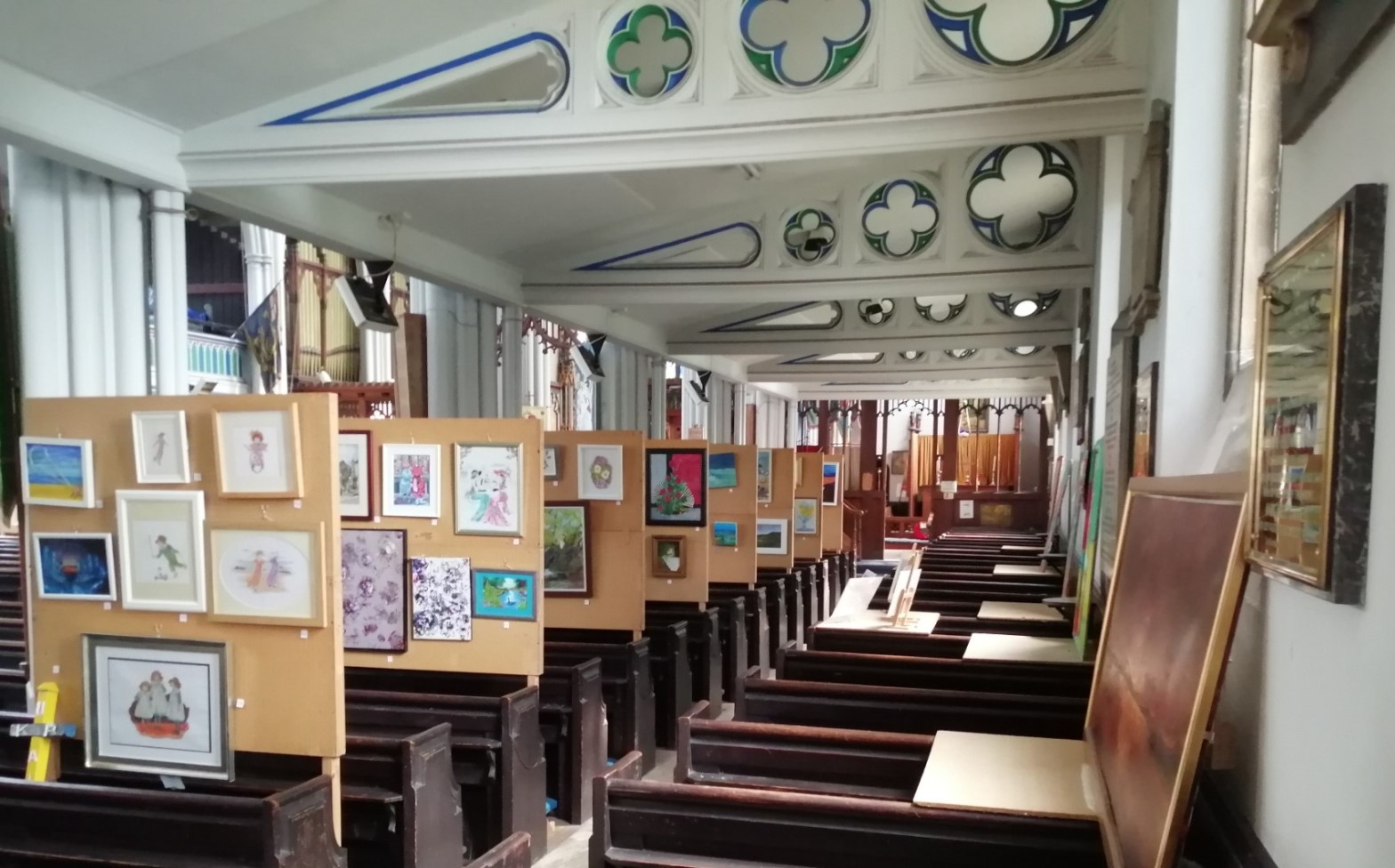
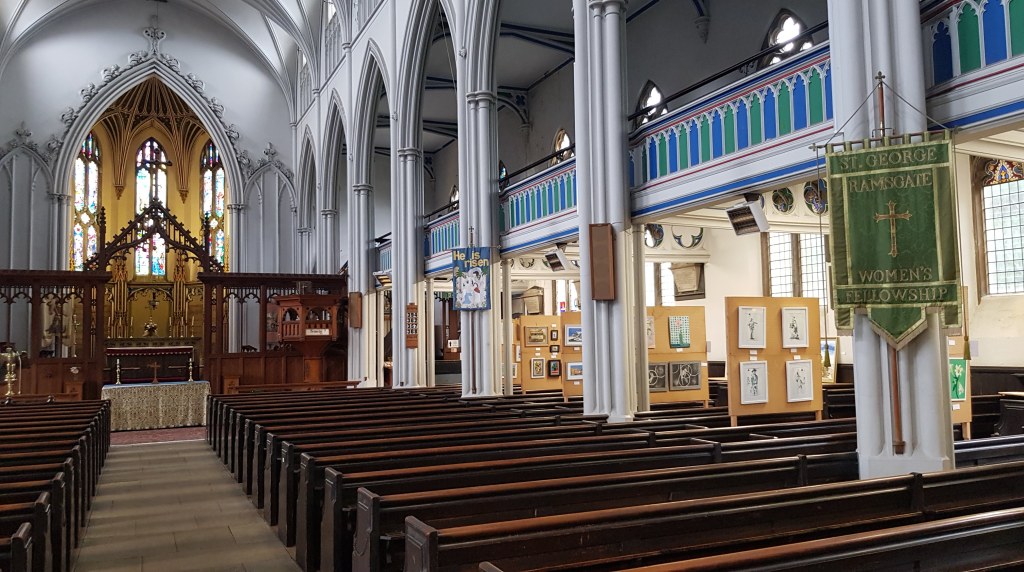
The Friends of St George’s Restoration Appeal are holding their annual summer Art Exhibition in St George’s Church, Ramsgate . The Friends will open the Church to display the wonderful variety of art works to the public for them to appreciate and possibly buy if they choose to.
The Art Exhibition will be displayed in the historic grade 1 Listed Church between 2-5 pm ( from 12 pm on Saturday ) from the 4th to the 13th of July. Light refreshments will be available . All donations to St George’s Restoration Appeal are greatly appreciated to maintain the beautiful church.
“We remember before our God and Father your work produced by faith, your labour prompted by love, and your endurance inspired by hope in our Lord Jesus Christ.” (1 Thessalonians 1:3)
Why do you do what you do? It is not an easy question to answer. We all have mixed motives for our actions in life, but some will be more important to us than others.
So, what drives your life? A desire to seek pleasure or comfort for yourself? A belief that life will be much better and more secure if only you had more money? Wanting to please others? To look good in front of the crowd? To please a loved one, a boss or someone you admire? Perhaps it is a desire to feel that you have made a success of your life or that you have achieved something meaningful or lasting?
As Paul writes to the baby church in Thessalonica, he starts by giving thanks for what is driving their actions: faith, love and hope. These new Christians have found a new reason for living: Jesus Christ. Knowing that they have been saved through his death and resurrection, they have re-oriented their lives to live for God and to live like Jesus. Their faith has not just changed the way they think it has led to a life of action that is prepared to put in the hard graft and to keep going despite the challenges.
For us this raises two questions: “Does our faith lead to action?” and “Are our actions motivated by our faith?” The more we can honestly say, ‘Yes’ to both these questions, the closer we are to being true disciples of Christ.
Is there enough evidence to convict you for being a Christian?
C.S. Lewis once asked, “Is there enough evidence to convict you of being a Christian?” It’s a challenging question. But what evidence would you look for. What do you expect to see a Christian doing?
The Letter to the Thessalonians
Today, we are beginning a series on Paul’s letter to the church in Thessalonica, which was an important Roman city at a key crossroad in what is now Northern Greece but was then part of the region of Macedonia.
He starts his letter as most letters with a thanksgiving. Paul is clearly delighted with what God has done in this brand-new church that Paul, Silas and Timothy had planted. But, in thanking God for what is good he is also setting expectations of what a true disciple of Christ looks like, in the hope that he may encourage them to live up to those expectations more and more. If you want to know what kind of evidence shows someone to be a Christian, here is a good place to look.
The Triad of Inner Change
But before we look for outward evidence, we need to remember that true discipleship is about inward change. Paul starts by giving thanks for three inner attitudes of the heart in the new Christians: faith, love and hope. Then at the end of the thanksgiving he gives three inner changes that have happened to the Thessalonians. I think these triads are linked:
Faith = comes from turning from idols to God – vs. 9a
Firstly, faith is what you put your trust in. We all have faith in something. But the key question is: what is the object of your faith? In verse 9, Paul says that the Thessalonians had turned from idols, to the true and living God. The object of their faith had changed. To become a Christian does not mean just adding Jesus to a list of possible people or things to guide your life. A true disciple puts Jesus as the ultimate person to trust, recognising that he is the living and true God and all the other things people trust are ultimately dead and false.
Love = comes from a desire to serve God – vs. 9b
Faith trusts that Jesus will save us and lead us in the best way. But, when we have truly understood that that salvation comes about through Jesus’ deep act of service, his death on the cross, then we will want to respond with a desire to serve God. But Jesus served us because he loved us. Christian love is not ultimately about nice feelings, but a desire to serve.
Hope = waiting for Christ’s return – vs. 10
Finally, there is hope. Hope is forward looking. It believes that even though things may be tough now, one day they will be a lot better. Christian hope is based on the promise of Christ’s return, a promise underlined by Jesus’ resurrection. For Christians there is hope for life beyond death, there is hope for our world that one day God will restore all things and make them good. To hope means to wait for something better, to wait for Christ’s return.
The Triad of Outward Action
So, we should expect to see these three inner attitudes growing more and more in a true disciple of Christ. Except you can’t see inner attitudes. But what you can see is the result of those inner attitudes, the outward action that flows from them. And this is what Paul gives thanks for in verse 3. But what is the work of faith, the labour of love and the endurance of hope?
Faith – sharing the good news – vs. 8
If faith is believing the good news that Jesus has died for us, risen again and will one day return and that he is the true and living God, far better than all the dead and false things people normally trust in, then isn’t the work of faith sharing the good news we believe in?
That is what the Thessalonians were doing. Paul puts it powerfully in verse 8:
“The Lord’s message rang out from you not only in Macedonia and Achaia–your faith in God has become known everywhere. Therefore we do not need to say anything about it,” (1 Thessalonians 1:8)
True disciples don’t hold on to the good news for themselves, they share it.
Love – loving others because God loved us – 4:10
If love is a desire to serve God, then it will include prayer in its broadest sense: praising God, listening to God, asking for God’s help. It will include sharing the good news so that God is glorified. But it will also include caring for others. Love for God should lead to love for others.
This is what the Thessalonians were doing. Later in the letter Paul says:
“And in fact, you do love all the brothers throughout Macedonia. Yet we urge you, brothers, to do so more and more.” ( 1 Thessalonians 4:10)
Hope – enduring suffering with joy – vs. 6
Finally, there is hope. Hope leads to endurance. If you know that God will see everything right in the end, then you can keep going even while things are tough – you can endure. More than that you can endure with joy. Before coming to Thessalonica, Paul and Silas had been arrested, flogged and thrown into jail in Philippi. Their response was to sing hymns of joy to God as they were chained in their cell.
In turn the Thessalonians were following their example:
“You became imitators of us and of the Lord; in spite of severe suffering, you welcomed the message with the joy given by the Holy Spirit.” (1 Thessalonians 1:6)
Triad of Questions:
Paul gives thanks for the Thessalonians for these attitudes not because they were perfect, but to encourage them to grow in the inner attitudes of faith, love and hope and to live them out more and more in their lives.
So, what is the evidence of our discipleship? To help you reflect on that, a triad of questions for you to consider:
This week we are looking at a time when Elijah, a prophet, falls into deep despair and depression. After the high of seeing God’s incredible power at work but then the low of Queen Jezebel threatening his life causing him to flee, it is fair to say he has hit rock bottom, spiritually, mentally, emotionally and physically. He tells God that he has had enough, not just of the situation but of life, and lays down to sleep under a broom tree.
The beauty of this story isn’t in Elijah’s sadness, though, but in the restoration, transformation and encouragement that God provides for Elijah. God helps Elijah through food, water, shelter, sleep, purpose and legacy. God is able to do all this for Elijah because he is a present God, who knows Elijah and the plans he has for him and comes alongside him in his difficulties. By the end of the passage Elijah is ready to continue on his journey and we see God work through him in more incredible ways.
From this passage we too can take hope in a God who cares for us and seek to help other in the ways God helped Elijah, with food, water, shelter, sleep, purpose and legacy all whilst being a present comfort to those around us. As we go ahead into this next week, let’s be looking out for where God has blessed us and ways in which we can bless others, and let’s call out in prayer, just as Elijah did, to tell God how we are struggling, and keep an ear open to hear if he gently whispers.
This week we are looking at a time when Elijah, a prophet, falls into deep despair and depression. After the high of seeing God’s incredible power at work but then the low of Queen Jezebel threatening his life causing him to flee, it is fair to say he has hit rock bottom, spiritually, mentally, emotionally and physically. He tells God that he has had enough, not just of the situation but of life, and lays down to sleep under a broom tree.
The beauty of this story isn’t in Elijah’s sadness, though, but in the restoration, transformation and encouragement that God provides for Elijah. God helps Elijah through food, water, shelter, sleep, purpose and legacy. God is able to do all this for Elijah because he is a present God, who knows Elijah and the plans he has for him and comes alongside him in his difficulties. By the end of the passage Elijah is ready to continue on his journey and we see God work through him in more incredible ways.
From this passage we too can take hope in a God who cares for us and seek to help other in the ways God helped Elijah, with food, water, shelter, sleep, purpose and legacy all whilst being a present comfort to those around us. As we go ahead into this next week, let’s be looking out for where God has blessed us and ways in which we can bless others, and let’s call out in prayer, just as Elijah did, to tell God how we are struggling, and keep an ear open to hear if he gently whispers.
Beth Keenan
Key Notices:
Dare to Pray – This Saturday, 9:30-10:30am, St. George’s Church
Please join us for our new monthly prayer meeting as we gather together to share how our vision is developing and pray for God to work. Our Vision 2030 covers a number of developments including re-organising administration and buildings, setting up new worshipping communities, celebrating our churches upcoming anniversaries and developing our youth work. You may not be certain about every aspect of the vision, but we would love you to join us to pray for God to work to bring about a truly flourishing church in Ramsgate. We will be meeting at St. George’s church on the third Saturday of each month form 9:30-10:30am. Will you dare to pray?
Planned Giving Review and Vision 2030 – Update
Please if you have not yet responded, even to say you cannot increase your giving, please send or give your response to Nicky Galer as soon as possible.
We are providing some spare planned giving letters at the back of church in case you have lost yours!
Please also respond to the request to take part in one of our workstreams. So far, we have had just seven responses. To find out more and or show interest in volunteering for one of the Vision 2030 workstreams use this form.
Christianity Explored – Pilot Group
A group of us will be meeting on the next few Thursdays at 11am to trial an early version of the new Christianity explored course. If you would like to join us please speak to Paul.
Vicarage BBQs
We are planning to hold vicarage BBQs on 5th and 26th July, 5-8pm. Please grab your personal invite from the back of church and sign up to say on which date you are planning to come.
Beth’s Ordination as Priest, 28th June, 2:30pm & 5pm
Beth will be being ordained as Priest at Canterbury Cathedral on Saturday 28th June at 2:30pm. People are welcome to come to the Cathedral to support Beth.
After the service we will have a celebratory Bring & Share BBQ in the church field at St. Luke’s from 5pm. Please use the sign-up sheets at the back of church to indicate: a. whether you will be attending (meat for BBQ will be provided); b whether you will bring food to share; c. whether you can help with the setting up or running of the event.
Thanet Light Orchestra Concert, Sunday 29th June, 3pm, St. Luke’s
Join Thanet Light Orchestra for an afternoon of Summer Music from musicals, opera and dance. Featuring a new composition by an Afghan refugee. Tickets are £10 on the door and £8 online, under 18s are free. Buy online tickets.If anyone can help with offering refreshments or welcoming people to the concert, then please let Paul know.
Women’s Share and Care:
A few dates for your diaries:
4th July at Beth Keenan’s. Fun and games , nibbles and drinks. Bring and share. Evening.
12th July at Beth Patterson’s. Pimms and food in the garden. 6.30 to 8.30. Bring and share food and a garden chair if you have one.
Opportunities to Serve:
CAP Debt Centre Manager Job
Some local churches are sponsoring a new Thanet Christians Against Poverty Debt Centre and they are looking to hire a new Centre Manager. If you are interested check out this job description: Job Description
Can you help with tours of St. George’s tower and crypt?
Tours of St. George’s crypt and tower are proving very popular. If you can help as part of a team with these tours, then please contact Jemima Brown: regenerationofficer@stgeorgechurchramsgate.uk . The planned tours coming up are 11am to 3:30pm on Saturdays 8th June, 5th and 12th July, 9th August and 13th and 20th September.
Volunteers for the Community Meal
Can you join a superb team of helpers on some or all Tuesday afternoons and evenings to help serve the Community Meal at St. George’s Church Hall to 30 to 50 guests? The meal runs between 5:30-7pm, but volunteers need to be available from 5pm and if possible to help cook or set up earlier on Tuesday afternoon. If you are interested, then please see Tonya and Brenda.
Interesting Blogs to Share
Interview with Louise Perry
In this 15 minute video, Glen Scrivener has a fascinating interview with Louise Perry, who wrote The Case Against the Sexual Revolution. Louise says she is convinced that Christianity is ‘sociologically true,’ but is unsure about its supernatural truth. Watch 15 minute video.
Assisted Dying and Religious Objections
More on Assisted Dying. Nick Spencer argues that opposing interventions from believers on dishonesty grounds is a sinister development in public debate. Read more…
World Council of Churches on Israel and Iran
Read the World Council of Churches statement about Israel’s attack on Iran. Read more…
Finally, let’s keep coming to God for blessing in our despair and learn to bring blessing to others who are struggling too.
What’s On – a page which lets you know what is happening this week and gives information about upcoming events.
Notices – You can read the latest notices on this page.
Sermons – Read a transcript of a recent sermon or watch the YouTube version recorded at St. Luke’s. There are now videos for all the sermons over the summer.
Safeguarding Training
If you volunteer in anyway at church the national authorities are strongly encouraging you to take at least the Basic Module in safeguarding training once every three years.
If you have not completed the training in the last three years, then the module can be completed online and takes about ninety minutes. You can access the training by following this link. You will need to first register, to access the training. Once the training is completed, you will be sent a certificate. Please forward that certificate to James (office@stlukesramsgate.org), so that we can keep records of who has done the training.
Romans 12:12: “Be joyful in hope, patient in affliction, faithful in prayer.”
This Sunday is Trinity Sunday. Many Christians do not like to think too much about God as Trinity, because it feels impossible to understand how God can be one and yet three persons. This is part of the mystery of God and we should not be surprised that the nature of the Creator of the Universe is beyond our comprehension when we are still struggling to figure out his creation! We will be looking at how the different persons of the Trinity work together to bring us hope.
A God in heaven commanding orders from a distance?
This seems to be the most prominent view of God in the Old Testament.
advantage: he is above and over the world.
disadvantage: he seems distant and uninvolved in our lives
In other religions, perhaps the Muslim view of God is most like this form of God.
Superhero God:
A God who jumps into our world and acts to help us in impossible ways?
This perhaps reflects the perspectives of the Gospels and Jesus.
advantage: we can relate to this god and be grateful for his work
disadvantage: he is too much like us and has no ultimate control
In other religions, perhaps this conception of God matches the old Greek gods or Hindu myths. Indeed, in some recent Blockbuster films, there has been a fusing of the superhero and Greek gods.
Spiritual God:
A God who is felt in our inner being.
This reflects the stories in Acts, where people are spoken of as filled with the Spirit.
advantage: we can know this god personally in our hearts
disadvantage: it can feel very subjective and not based in objective reality
In other religions, perhaps this conception can be more associated with the meditative approach of Buddhism.
None of these are the Christian conception of God. None reflect what we know of God from the Bible. God is far superior to any of these ideas of God. In fact the God of the Bible combines all these three ideas of God in one. The unique conception of the Christian God is that He is Trinity.
The Essential Trinity and the Economic Trinity
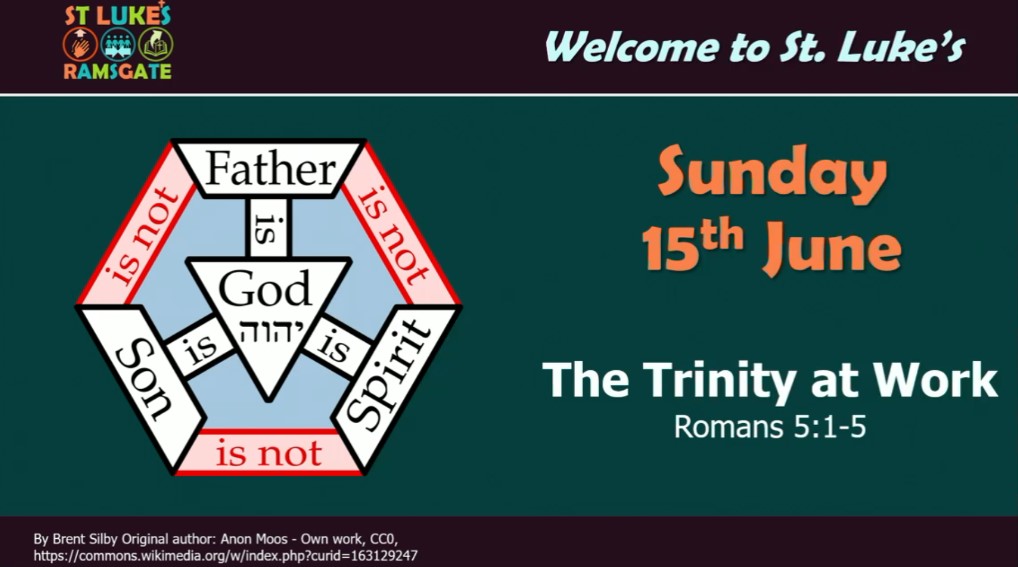
As Christians we describe God as Trinity. Three distinct persons, but one God. This is God’s essential nature. He is Father, Son and Holy Spirit. The Persons are distinct: The Father is not the Son or the Spirit, The Son is not the Father or the Spirit and the Spirit is not the Father or the Son. And yet, they are all one, sharing in the Divinity and sharing in one another’s work. This is what God is like in eternity. It is his essential nature. We call this conception of God, ‘the Essential Trinity.’
But, we do not see God’s essential nature. How can we know God is Trinity?
If you are being interviewed for a job, you can say that you are for example a team player, but it is much more persuasive and gives the interviewers a much better demonstration of your character if you can give an example of how you have worked with others in a team.
In the same way we come to know God is Trinity, through the way he works for our salvation. And it is God at work that we see in the Bible. We call this conception of God as Trinity, ‘the Economic Trinity’, the way God acts as three-persons for our salvation.
And when we look at the work of God in the Bible, we see that our salvation happens at the Father’s initiative, because he from his throne in heaven commands that things are done, by the Son’s Work, because he comes as a kind of superhero into our world to act to bring about our salvation and by the Spirit’s application, because the Spirit is sent into our hearts to bring the reality of God’s salvation to bear.
In this way, each of the three persons has their own kind of role within the economy of our salvation and yet they are united in purpose, relate to each other as persons and share with and through each other the one mission of God and the attributes of God.
The Godhead at Work:
Let’s turn to the book of Romans to see how this plays out with two examples: ‘love and peace.’
Love
We are told in 1 John, that ‘God is love.’ In other words, God values us deeply and cares about our needs. But how do we know that? How can we know that when life becomes tough and we face all kinds of problems? Let’s look at how the three persons of God work together to demonstrate the love of God to us.
The Father’s initiative – Romans 5:8a
Firstly, there is the Father’s initiative. He wanted to show us how much he loves us. The fact He loves us from heaven is good news. This is a secure, eternal love that cannot be taken away. God is faithful to his promises, he is faithful to his commitment to us, he is unchangeable in his loving commitment.
But to demonstrate his love for us, he does not just shout, ‘I love you’ from heaven, or put a big love heart in the sky, he takes the initiative to demonstrate his love.
In Romans 5:8 it says:
“But God demonstrates his own love for us in this:
While we were still sinners, Christ died for us.”
How do we know that the Father loves us, because as it says in John 3:16, he gave us his only Son. He took the initiative to act for our salvation. But the initiative meant sending his Son to work.
The Son’s Work: demonstration of love – Romans 5:8b
So, how do we know God loves us? Because His Son, Jesus Christ died on the cross for us. This was Jesus doing the work, entering into our world, living our life and making a once and for all powerful sacrifice. Dying for us. As Jesus says in John 15:13
“Greater love has no-one than this, that he lay down his life for his friends.” (John 15:13)
The cross is the great moment in history that demonstrates the love of God for us. It is an objective and powerful fact in history that we can relate to and understand. That is the moment we remember when we take the bread and the wine later on, we are reminded of the cross and so the love of God is demonstrated to us once more.
The Spirit’s application of love – Romans 5:5
But, God’s action is not just an initiative from heaven and a moment in history, it is applied to our hearts. Look at Romans 5:5:
“…God has poured out his love into our hearts by the Holy Spirit, whom he has given us.” (Romans 5:5)
As Christians we have the Holy Spirit in us, that takes the initiative and action of God the Father and the work of God the Son and pours it into our hearts, so that we can know intimately the reality of God’s love for us.
Do you see how the three persons of the Trinity, work together as one for our good? The Father’s initiative, the Son’s work and the Spirit’s application.
Peace
Let’s take another example: ‘Peace’.
In Romans 5:1 it says,
“…we have peace with God through our Lord Jesus Christ,”
The Father’s Initiative: Rom. 3:25
The book of Romans begins by emphasising that we have lost peace with God. In fact, Paul’s main argument begins:
“The wrath of God is being revealed from heaven against all the godlessness and wickedness of men who suppress the truth by their wickedness,” (Romans 1:18)
This sounds more like a situation of war, than a situation of peace. It stresses our natural state as God’s enemies, because we are all sinners.
Paul then considers whether we can change this situation by obeying the Law of God. i.e. trying to be good enough to be friends with God again. But he concludes:
“…for all have sinned and fall short of the glory of God,” (Romans 3:23)
That is the bad news: we cannot take the initiative to bring peace with God. But the good news is that God has taken the initiative.
A couple of verses later it says:
“God presented [Christ Jesus] as a sacrifice of atonement, through faith in his blood.” (Romans 3:25a)
The word atonement here means, a sacrifice to turn aside God’s wrath, taking away sin. Again, God took the initiative of sending His Son as a sacrifice to bring about peace.
Donald Trump claimed in his election campaign that he as President of the USA would bring peace to the war torn parts of the world. So far his promise is proving rather lame.
However, the fact that God’s initiative for peace came from the eternal throne of heaven, from the King of Kings, who has power far beyond that of Donald Trump, gives it an authority to say that this is peace that will last. A peace we can be confident about.
Christ’s work of reconciliation – Rom. 5:10
God the Father took the initiative, but God the Son carried out the work. The work of Christ in bringing about this peace or reconciliation with God is underlined even more a bit later in Romans 5:10:
“For if, when we were God’s enemies, we were reconciled to him through the death of his Son, how much more, having been reconciled, shall we be saved through his life!” (Romans 5:10)
Over the last few days, we have seen the terrible eruption of war between Israel and Iran. Israel attacked Iran, fearing the threat of the development of nuclear weapons, but Iran cannot let such an attack go, it needs to respond to show that such a disregard for its Sovereignty from Israel cannot stand. Israel in turn has responded to say it will punish any attacks from Iran, to show that their own people should not be attacked. The ‘sin’ of missile strikes cannot go unpunished without leaving the impression that the country is weak and so inviting attacks from others as well. Each country needs to show their ‘wrath’ at the other. In so doing, peace seems to disappear.
On the cross, Jesus sorted out the problem, by taking the wrath of God on himself. So that the justice of God was satisfied, so that peace between us and God could be possible.
Again, as we consider the cross, the work of Christ in human history, we see not only the love of God, but also the seriousness of our sin. But we also see that God’s judgement against our sin has been dealt with. So, as it says later in Romans:
“Therefore, there is now no condemnation for those who are in Christ Jesus,” (Romans 8:1)
The Spirit’s Application – Rom. 8:6
But Romans 8, goes on to tell us about the work of the Spirit in helping us to know the peace of God and to live as those at peace with God:
“The mind of sinful man is death, but the mind controlled by the Spirit is life and peace;” (Romans 8:6)
So, again the reality of the peace initiated by the Father and achieved by the Son is applied by the Spirit into our hearts and minds.
That means that to deal with the sin in our lives, we need to reflect on the work of Christ and allow the Spirit to get to work in us and ‘put to death the sin within us’:
“For if you live according to the flesh, you will die; but if by the Spirit you put to death the misdeeds of the body, you will live,” (Romans 8:13)
So, the Spirit works in our hearts to bring about the true transformation made possible by the work of Christ.
The Father’s initiative, the Son’s work and the Spirit’s ongoing application brings us peace. The Trinity at work.
What do you think God is like?
I started off by asking what you think God is like?
If your conception is focussed more on a director God, then perhaps you need to see how he works through the Son and by the Spirit, so that you can deepen your understanding of God’s activity in history and in your own heart.
If your conception is focussed more on a superhero God, then perhaps you need to remember the initiative of our heavenly Father, which can give a greater confidence of God’s power and authority, as well as the application of the Spirit and look to see how God might work in transforming your heart.
If your conception is focussed more on the spiritual God, then perhaps you need to work to make sure your faith is more grounded in the objective reality of what Christ has done and the initiative of the Father.
Let’s boast in God, as Trinity. Father, Son and Holy Spirit and rejoice more and more in what he has done for us.
This Sunday is Trinity Sunday. Many Christians do not like to think too much about God as Trinity, because it feels impossible to understand how God can be one and yet three persons. This is part of the mystery of God and we should not be surprised that the nature of the Creator of the Universe is beyond our comprehension when we are still struggling to figure out his creation!
Yet, just because we cannot fully grasp something, does not mean we should not seek to understand as much as we can. If we truly love God, then surely we will want to know him better. And to know God better includes reflecting on his nature as Trinity.
It is particularly helpful to reflect on how we relate to God as Trinity. The Father is the source of all our blessings, the Son the one who works to bring them about and the Holy Spirit who applies them to our inner being. So, for example, we are joyful in hope because the Father loves us and has ordered things for our eternal salvation, because the Son has acted in history to deal with our sin on the cross and defeat death through his resurrection and because the Holy Spirit brings assurance to our hearts (Eph. 1:13-14).
Similarly we can be patient in afflictions. This is because we know that the Father is in control and ‘in all things … works for the good of those who love him” (Rom. 8:28). We also know that the Son understands our sufferings since he has faced them too by sharing in our human nature (Heb. 4:14-16) and because we know the Holy Spirit ‘helps us in our weakness … and intercedes for us through wordless groans.’ (Rom. 8:26).
In prayer, too we also relate to God as Trinity. We pray to the Father, through the Son, by the Holy Spirit. The Trinity is not just an incomprehensible idea, it is fundamental to the way we relate to our God.
Paul Worledge
Key Notices:
Planned Giving Review and Vision 2030 – This Sunday!!
A big thank you to those who have taken the time to respond to our Planned Giving Review last Sunday. We have had 7 response forms so far but are hoping for around 20 responses. The total extra money committed so far is £320 in one off gifts and an increase of £300 per year in regular giving.
To start giving to St. George’s using the Parish Giving Scheme, click here.
In addition, if you are interested in helping out with one of the five workstreams, then please do fill in the online form or speak to Paul asap.
To show interest in volunteering for one of the Vision 2030 workstreams use this form.
You can access an online version of the flier about the plans here.
Dare to Pray: Saturday 21st, 9:30am, St. George’s
Our vision to develop a flourishing church in the centre of Ramsgate will not happen without prayer. So, we are setting up a new monthly prayer meeting on the third Saturday of each month to feedback on and pray for our Vision.
Christianity Explored – Pilot Group
A new version of Christianity Explored is being prepared to be published next year. We have the opportunity to trial a draft version of the course, but we need to do it over the next few weeks. If you would like to join Paul in this, then please see Paul today. Ideal for those interested in learning more about the faith, or those who want to be involved in running courses in the future.
Upcoming Events:
Orchestra for Everywhere – 15th June, 7:30pm, St, George’s
An orchestra of professional musicians from around the world who have chosen to make Britain their home. They come from Syria, Iran, Hongkong, Palestine, Brazil, Africa, France and India, and some of them are refugees who had to leave their country. The orchestra plays music from their own cultures as well as new music that they have created and play together.Find out more and buy tickets…
Next Men’s group event – Lawn Bowls, 6:15pm, 18th June
See one of the fliers at back of church for more details or speak to Trevor Kenney: 07792 828097; trevorkenney1@gmail.com
Women’s Share and Care:
A few dates for your diaries:
18th June at Tina Gilham’s “what are you reading”. Bring a book and enjoy each other’s company over a cuppa and a biscuit. 10.30 to 12.00
4th July at Beth Keenan’s. Fun and games , nibbles and drinks. Bring and share. Evening.
12th July at Beth Patterson’s. Pimms and food in the garden. 6.30 to 8.30. Bring and share food and a garden chair if you have one.
Beth’s Ordination as Priest, 28th June, 2:30pm & 5pm
Beth will be being ordained as Priest at Canterbury Cathedral on Saturday 28th June at 2:30pm. People are welcome to come to the Cathedral to support Beth.
After the service we will have a celebratory Bring & Share BBQ in the church field at St. Luke’s from 5pm. Please use the sign-up sheets at the back of church to indicate: a. whether you will be attending (meat for BBQ will be provided); b whether you will bring food to share; c. whether you can help with the setting up or running of the event.
Join Thanet Light Orchestra for an afternoon of Summer Music from musicals, opera and dance. Featuring a new composition by an Afghan refugee. Tickets are £10 on the door and £8 online, under 18s are free. Buy online tickets.If anyone can help with offering refreshments or welcoming people to the concert, then please let Paul know.
Vicarage BBQs
We are planning to hold vicarage BBQs on 5th and 26th July, 5-8pm. Please pick up your invite from the back of church.
Opportunities to Serve:
CAP Debt Centre Manager Job
Some local churches are sponsoring a new Thanet Christians Against Poverty Debt Centre and they are looking to hire a new Centre Manager. If you are interested check out this job description: Job Description
Can you help with tours of St. George’s tower and crypt?
Tours of St. George’s crypt and tower are proving very popular. If you can help as part of a team with these tours, then please contact Jemima Brown: regenerationofficer@stgeorgechurchramsgate.uk . The planned tours coming up are 11am to 3:30pm on Saturdays 8th June, 5th and 12th July, 9th August and 13th and 20th September.
Volunteers for the Community Meal
Can you join a superb team of helpers on some or all Tuesday afternoons and evenings to help serve the Community Meal at St. George’s Church Hall to 30 to 50 guests? The meal runs between 5:30-7pm, but volunteers need to be available from 5pm and if possible to help cook or set up earlier on Tuesday afternoon. If you are interested, then please see Tonya and Brenda.
Links to Share:
Week of Prayer for Refugees and Displaced People
Conflict, economic hardship and natural disasters (often caused by climate change) are forcing millions of people around the world to flee from their homes. But, as they go, God journeys with them. And we can walk alongside them by partnering in prayer. Find out more about the week of prayer with Tearfund.
Why don’t Suicide Prevention Groups speak out on Assisted Dying?
In this challenging article, James Gillies, questions why suicide prevention groups are not speaking out against a law which allows the encouragement of what is in effect, suicide. Read more… (5 minutes)
What’s On – a page which lets you know what is happening this week and gives information about upcoming events.
Notices – You can read the latest notices on this page.
Sermons – Read a transcript of a recent sermon or watch the YouTube version recorded at St. Luke’s. There are now videos for all the sermons over the summer.
Safeguarding Training
If you volunteer in anyway at church the national authorities are strongly encouraging you to take at least the Basic Module in safeguarding training once every three years.
If you have not completed the training in the last three years, then the module can be completed online and takes about ninety minutes. You can access the training by following this link. You will need to first register, to access the training. Once the training is completed, you will be sent a certificate. Please forward that certificate to James (office@stlukesramsgate.org), so that we can keep records of who has done the training.
Calling all Artists and Art Lovers! The St George’s Church Ramsgate Annual Summer Art Exhibition opens soon.
4th -13th July 2025 Art Lovers: Exhibition open to the public 4th -13th July daily 2 -5pm. Take this great opportunity to see (and maybe even purchase) some stunning art in our spectacular church building. Light refreshments available.
Artists: This is an open exhibition – paintings, prints, drawings, mixed media, photography all welcome. You are welcome to draw, paint and work in the church throughout the exhibition. Assist with stewarding if you can. (A great opportunity to talk about your work!)
Artwork to be delivered on 2nd/3rd July 12-4pm and unsold works collected 4-5 pm on Sunday 13th July. Hanging fee just £1 per item. Up to six items. Entry forms are available from GINY bimlowis@gmail.com or phone JANET on 01843 852780 to discuss other ways to register your artworks. PLEASE REGISTER BY 21st JUNE LATEST.
Acts 2:4: “All of them were filled with the Holy Spirit and began to speak in other tongues as the Spirit enabled them.”
This week it is Pentecost, when we remember the coming of the Holy Spirit on the church for the first time and the preaching of the gospel in tongues people from all nations could understand. It is also our special gift day, and we encourage regular members to bring their response forms to the Planned Giving Review.
This week, we are looking together at The Story of the Tower of Babel in Genesis 11:1-9 and the events of Acts 2, where the Holy Spirit comes on the day of Pentecost. Both of these events demonstrate the great power of human unity and God’s response to it, but in very different ways.
In Genesis 11:1-9, the story of the Tower of Babel shows how humans were united, but united through pride and rebellion. They wanted to use their Unity to avoid the covenant God had with them for them to Be Fruitful and multiply and fill the earth (Gen 9:1). God responded by confusing their language and in that way God scattered them all over the world.
In contrast, Acts 2 describes how, on the festival of Pentecost, the Holy Spirit descended upon believers, uniting people from many nations and languages. The people speaking all different languages were able to hear each other speaking in their own native language and learn about all the wonderful things God had done. This Spirit-led unity did not erase or avoid diversity; instead, it celebrated it. Pentecost affirms that diversity is a divine blessing, and the Spirit enables genuine community where differences are celebrated rather than divided.
We are engaged in spiritual warfare, as Ephesians 6 reminds us, against forces seeking to sow division. The Spirit’s work at Pentecost restores true diversity, transforming fear and prejudice into harmony rooted in God’s love. This power enables us to stand firm in our faith, be guided by the Spirit, and build an authentic community where we can love ourselves, love God, and love each other.
Let’s embrace the Spirit’s call to unity. Not to be united in things that cause division or ‘othering’ but a unity of openness, diversity, love and faith centered on God. As we pray, worship, and serve together in our differences, we participate in God’s victory over division. Our unity testifies to the world that God’s kingdom is a diverse family, united in Christ’s love.
This week, we are looking together at The Story of the Tower of Babel in Genesis 11:1-9 and the events of Acts 2, where the Holy Spirit comes on the day of Pentecost. Both of these events demonstrate the great power of human unity and God’s response to it, but in very different ways.
In Genesis 11:1-9, the story of the Tower of Babel shows how humans were united, but united through pride and rebellion. They wanted to use their Unity to avoid the covenant God had with them for them to Be Fruitful and multiply and fill the earth (Gen 9:1). God responded by confusing their language and in that way God scattered them all over the world.
In contrast, Acts 2 describes how, on the festival of Pentecost, the Holy Spirit descended upon believers, uniting people from many nations and languages. The people speaking all different languages were able to hear each other speaking in their own native language and learn about all the wonderful things God had done. This Spirit-led unity did not erase or avoid diversity; instead, it celebrated it. Pentecost affirms that diversity is a divine blessing, and the Spirit enables genuine community where differences are celebrated rather than divided.
We are engaged in spiritual warfare, as Ephesians 6 reminds us, against forces seeking to sow division. The Spirit’s work at Pentecost restores true diversity, transforming fear and prejudice into harmony rooted in God’s love. This power enables us to stand firm in our faith, be guided by the Spirit, and build an authentic community where we can love ourselves, love God, and love each other.
Let’s embrace the Spirit’s call to unity. Not to be united in things that cause division or ‘othering’ but a unity of openness, diversity, love and faith centered on God. As we pray, worship, and serve together in our differences, we participate in God’s victory over division. Our unity testifies to the world that God’s kingdom is a diverse family, united in Christ’s love.
Beth Keenan
Key Notices:
Planned Giving Review and Vision 2030 – This Sunday!!
This Sunday during the collection we would encourage everyone to give in their response forms from the recent planned giving review letters. Even if you cannot increase your giving or start planned giving letting us know helps us to plan better. To start giving to St. George’s using the Parish Giving Scheme, click here.
In addition, if you are interested in helping out with one of the five workstreams, then please do fill in the online form or speak to Paul asap. To show interest in volunteering for one of the Vision 2030 workstreams use this form.
Please remember to act by this Sunday and bring your response slip to the service.
You can access an online version of the flier about the plans here.
Joint Pentecost Service, This Sunday – 8th June, 5:30 for 6pm
Churches Together in Ramsgate invite you to celebrate Pentecost. An evening of worship, prayer, teaching and fellowship. All welcome (including families, children and youth, who will have their own activities from ACTS).
The event will take place at Royal Harbour Academy (CT12 6FA) on Sunday 8th June at 6pm. Please enter from the New Haine Road side and park in the car parks on the left. There will be refreshments available before the start of the service from 5:30pm.
If people can offer or would like a lift, please talk to Paul after the service.
Upcoming Events:
Orchestra for Everywhere – 15th June, 7:30pm, St, George’s
An orchestra of professional musicians from around the world who have chosen to make Britain their home. They come from Syria, Iran, Hongkong, Palestine, Brazil, Africa, France and India, and some of them are refugees who had to leave their country. The orchestra plays music from their own cultures as well as new music that they have created and play together.Find out more and buy tickets…
Next Men’s group event – Lawn Bowls, 6:15pm, 18th June
See one of the fliers at back of church for more details or speak to Trevor Kenney: 07792 828097; trevorkenney1@gmail.com
Women’s Share and Care:
A few dates for your diaries:
18th June at Tina Gilham’s “what are you reading”. Bring a book and enjoy each other’s company over a cuppa and a biscuit. 10.30 to 12.00
4th July at Beth Keenan’s. Fun and games , nibbles and drinks. Bring and share. Evening.
12th July at Beth Patterson’s. Pimms and food in the garden. 6.30 to 8.30. Bring and share food and a garden chair if you have one.
Beth’s Ordination as Priest, 28th June, 2:30pm & 5pm
Beth will be being ordained as Priest at Canterbury Cathedral on Saturday 28th June at 2:30pm. People are welcome to come to the Cathedral to support Beth.
After the service we will have a celebratory Bring & Share BBQ in the church field at St. Luke’s from 5pm. Please use the sign-up sheets at the back of church to indicate: a. whether you will be attending (meat for BBQ will be provided); b whether you will bring food to share; c. whether you can help with the setting up or running of the event.
More information and ticket sales from next week. This will be at St. Luke’s.
Vicarage BBQs
We are planning to hold vicarage BBQs on 5th and 26th July, 5-8pm. We will give out invites to everyone to one of these in the next couple of weeks.
Opportunities to Serve:
Can you help with tours of St. George’s tower and crypt?
Tours of St. George’s crypt and tower are proving very popular. If you can help as part of a team with these tours, then please contact Jemima Brown: regenerationofficer@stgeorgechurchramsgate.uk . The planned tours coming up are 11am to 3:30pm on Saturdays 8th June, 5th and 12th July, 9th August and 13th and 20th September.
Volunteers for the Community Meal
Can you join a superb team of helpers on some or all Tuesday afternoons and evenings to help serve the Community Meal at St. George’s Church Hall to 30 to 50 guests? The meal runs between 5:30-7pm, but volunteers need to be available from 5pm and if possible to help cook or set up earlier on Tuesday afternoon. If you are interested, then please see Tonya and Brenda.
Links to Share:
How to solve the tragedy of Gaza?
In this article, Graham Tomlin revisits the horrors of what Israel is doing to to the Palestinians in Gaza and compares it to the actions of a Roman Emperor to the Jews in that region in the second century. What are the lessons to be learnt?Read more… (5 mins)
What shaped our Western Culture?
In this video, Glen Scrivener looks at an Atheist’s critique of historian Tom Holland’s claim that the Western mind has been profoundly shaped by Christianity. Much food for thought… Watch (1 hour 10 minutes)
Finally, let’s ask God to fill us afresh with his Spirit,
What’s On – a page which lets you know what is happening this week and gives information about upcoming events.
Notices – You can read the latest notices on this page.
Sermons – Read a transcript of a recent sermon or watch the YouTube version recorded at St. Luke’s. There are now videos for all the sermons over the summer.
Safeguarding Training
If you volunteer in anyway at church the national authorities are strongly encouraging you to take at least the Basic Module in safeguarding training once every three years.
If you have not completed the training in the last three years, then the module can be completed online and takes about ninety minutes. You can access the training by following this link. You will need to first register, to access the training. Once the training is completed, you will be sent a certificate. Please forward that certificate to James (office@stlukesramsgate.org), so that we can keep records of who has done the training.
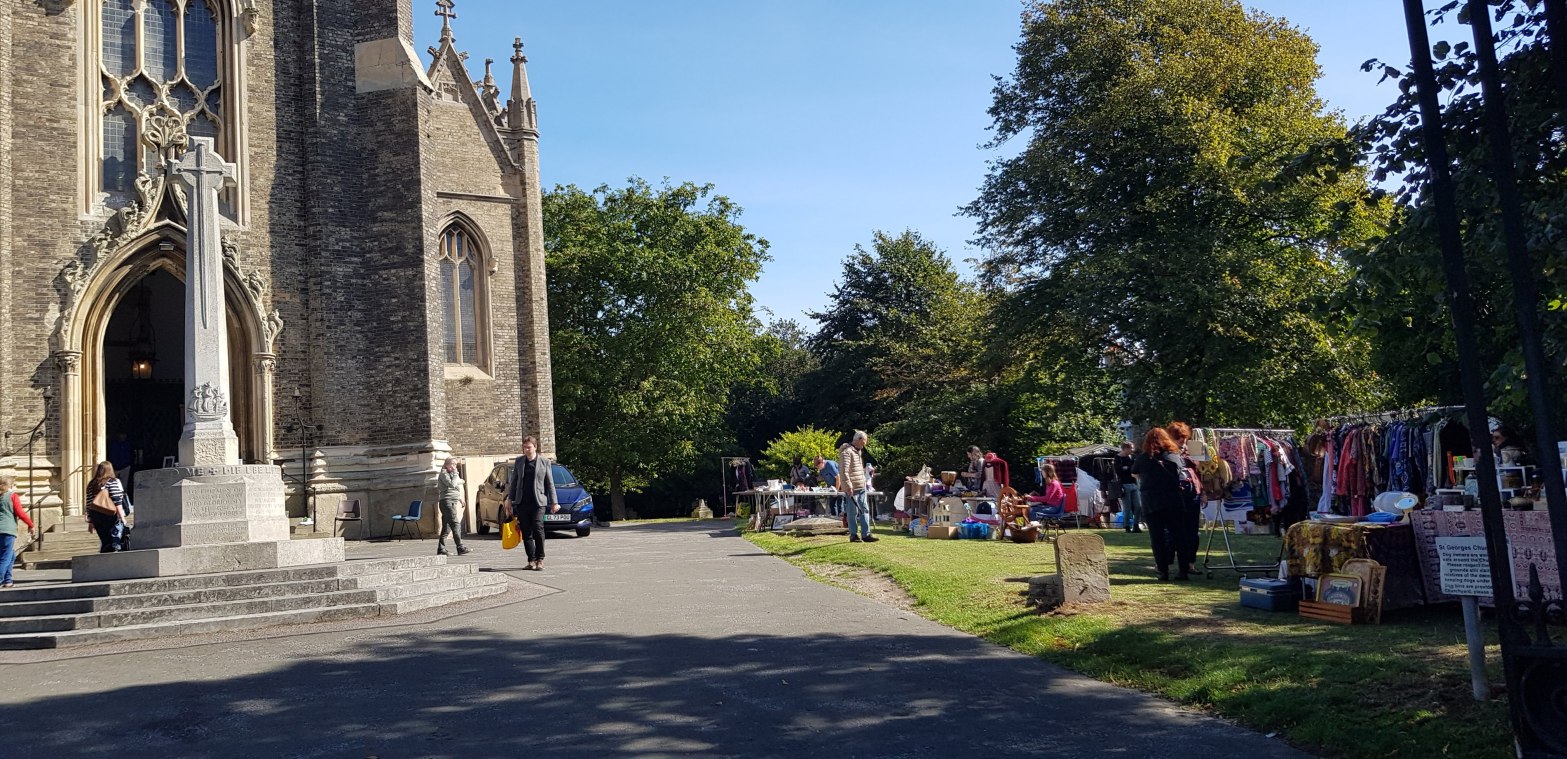
As we go into Summer it’s time to save the dates for our Yard Sales at St George’s on the 2nd Saturdays of every month, 11am til 4pm, throughout the summer on 14th June, 12th July, 9th August (now cancelled) and 13th September Yard Sales will take place in the church yard and stalls can be booked via Jo Mapp on 07724804905 – £12.50 (table supplied) £10 (bring a table)