Summer Fair, 31st August

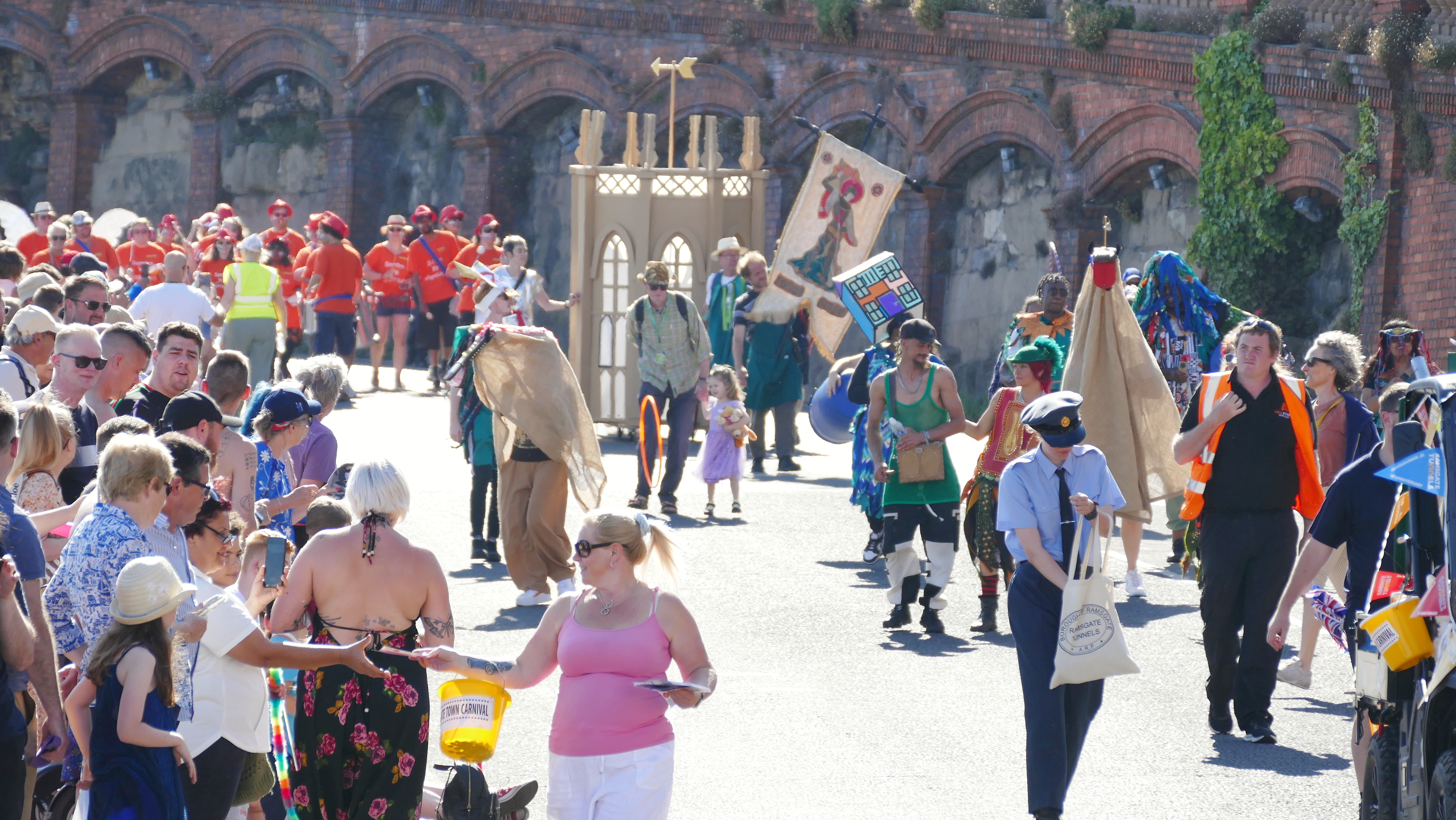
Join us for our joint summer fair at St. Luke’s church from 1pm to 4pm on Saturday 31st August. The fair will take place inside and outside the church on the corner of St. Luke’s Avenue and Hollicondane Road, CT11 7JX. Money raised will go toward St. Luke’s and St. George’s church funds.

cream tea with strawberries
silent aucton
cake stall
book stall
‘pocket money’ stall
games and contests
cards, knitted toys and other crafts.

Free entry and free activities for children.
Tables (£10 each) available to other sellers: contact Charlie: crharley13@gmail.com

Extra Extra Read all about it! (Mark 6:14-29)

Extra extra read all about it!

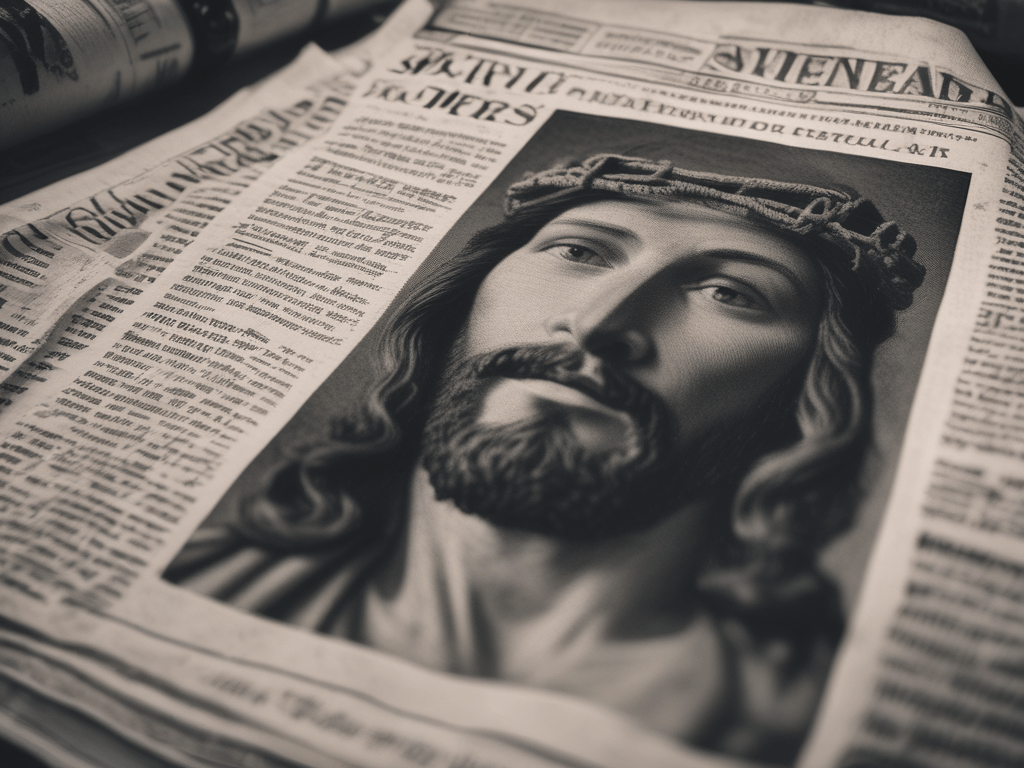
If there had been in existence back in Jesus’ day the Nazareth News or the Galilee gazette, could you imagine the headlines that Mark could have written from chapter 6: 12 nobody’s heal and exorcise , Herod’s ‘killer’ party , Food shortage over. 

Despite there not being newspapers, word was still getting around about Jesus. He was being gossiped about. People were trying to work out what all his antics meant. 

Word of mouth was how info got around and people weren’t shy in sharing. The telling of stories was a deep part of the Jewish culture and heritage. In some ways the written word has robbed us of the need to ‘gossip’ stories. And the skill in doing so. 

Jesus’ activities were being shared. In those communities word often got round to what was going on. The rich to an extent could buy privacy but word still seemed to get out. That’s why Herod heard about Jesus, and Mark seems to have heard about the goings on in Herod’s palace and the beheading of John the Baptist. 

This passage is sandwiched between the sending out of Jesus 12 disciples who healed and cast out demons whilst preaching the good news of repentance and the feeding of the 5000 where it begins with Jesus’ disciples gossiping about all they had experienced when they’d been sent out.  And this theme of preaching the kingdom of God and gossiping about it runs through this meat of the sandwhich in our passage today. Was it the disciples being sent out that meant word finally reached Herod in the palace of all that Jesus was doing?

In the first few verses of our gospel  reading we hear that there was gossip and conjecture going around as to who Jesus is, off the back of the twelve being sent out. It’s presented almost like people have been debating who Jesus could be – drawing from the greats of Jewish history- still not grasping that Jesus was one more powerful than any who had come before. There was something about Jesus that got everyone questioning and thinking – even going as far as thinking he was someone raised from the dead. Funny how that turned out. That Jesus would be the one raised from the dead to bring forgiveness and restoration and the oncoming of the Kingdom of God where all who accepted Jesus as their king would live under his reign. Definitely something to be gossiped about.

When I was working in Central Asia some of my friends developed the skill of gossiping bible stories with their friends of other faiths – they would practise being able to gossip scripture – it always lead to amazement and fantastic conversations. Just as we might share with friends about the latest episode that we’ve watched in great detail or the outcome of a sporting event we witnessed , do we share about what we’ve read about Jesus, or experiences through his spirit, or things we’ve learnt about in church. why don’t we share about the amazing passage of scripture we’ve read this morning? What stops us?

I wonder if there’s a fear of bible bashing , or a loss of our reputation,  or whether it’s linked into that thought : ‘well having faith is a personal decision it’s not my business.’ The private life however is a modern invention. But in the Jewish era and throughout a lot of history there wasn’t so much a concept of private life – in small communities everyone knew each other and everyone knew what was going on in peoples lives. 

 Indeed we read in the bible when one person heard about Jesus and made a commitment to him often the whole household was baptised. Faith wasn’t an individual private thing. It was shared. And it would be a normal thing to share all aspects of life. It would be normal to share encounters with God. To gossip about Him. That’s in effect what the psalms are, people gossiping about what God has done, gossiping about their feelings and experiences. Questioning and expressing.

In our passage the word about Jesus is getting around and they’re questioning who he is. Their questioning isn’t a bad thing – they were trying to work it out. Jesus had got them thinking – gossiping about what they’d seen and heard. Could he be Elijah? Another of God’s prophets ? Even John the Baptist risen from the dead – maybe these miraculous powers in this Jesus are because of that! There was a recognition that something special , extraordinary was going on here and yet it was still not fully grasped. Indeed it caused panic in Herod. Maybe because he was feeling exposed for the decisions and actions in his life.

John was preaching repentance and righteousness in preparation for the one whose sandals he was unworthy to untie. He spoke out against immorality, unlawfulness, and challenged role models behaviour. Herod and Herodias didn’t like this.

People with power and authority are observed – their life is scrutinised – gossiped about. And as Christian’s are we aware that maybe we are being scrutinised and observed too. That that will be gossiped about. That our actions will be seen. There are Christian’s that give God a good name and those that bring his name into disrepute. Praise God is holiness isn’t dependent on us but it gives us food for thought as to how are we living out our lives – are we living as forgiven, seeking repentance and righteousness? How have we responded to the message about Jesus?

When John shared the message of repentance and righteousness Herod had him imprisoned. So he wouldn’t spread it further afield. There was a sense of respect for John. He just didn’t want his reputation tarnished. Herodias it seems Didn’t want to hear it at all and wanted John dead. And so, we get the recounting of this shameful dinner party where probably drink fuelled Herod allows himself to be manoeuvred into granting favour to Herodias’ daughters request. And whispering in her daughters ear Herodias gets what she wants – Johns head. 

John suffered for his gossiping of the gospel. There has been suffering for telling the truth of Gods gospel ever since. Jesus bought about the kingdom of God and the reality is that people don’t like the message of that kingdom. In Tom Wright’s words: ‘The kingdoms of the world are indeed to become the kingdom of God, but those who speak of this in advance are likely to suffer the anger of those who feel their power slipping away from them.’ The power of individualism maybe, the power of selfishness, characteristics that aren’t really of the kingdom – the kingdom which is about the other, equally to ourselves. 

There are possibly a  few reasons why we don’t gossip the bible as much as maybe we could. Maybe we fear to be seen as bringing judgement on the Herod’s and Herodias’ of the world – and even on ourselves? Maybe we’re worried about the dent in our reputation. Maybe there’s concern over having to look more clearly at ourselves.

This interesting passage challenges our attitude to the gossiping of Gods gospel – the good news of who Jesus is. It challenges our pride, our individualistic attitude, maybe even how seriously we take the kingdom of God. 

Tom Wright says: ‘There have always been kingdom prophets to declare God’s judgement on human pride and folly, and to suffer the consequences.’

 It’s a sacrifice maybe in terms of human reputation to put ourselves out there and gossip about what Jesus has done for us but wow what he has done for us is surely worth gossiping about. 

Sermon presented at St. George’s 14th July 2024 by Claire

No time like the present (Mark 6:1-13)

“Jesus said to them, ‘A prophet is not without honour except in his home town, among his relatives and in his own home.'” (Mark 6:4)

It turns out that procrastination until ‘tomorrow’ and nostalgia for ‘yesterday’ are both ways of avoiding the present moment, and the opportunities and the challenges it brings. In living our lives before God, we would be wise to seek the Lord while he may be found, and to call on him while he is near.

As recorded at St. Luke’s

It’s a common saying that ‘there’s no time like the present’. It is also true that circumstances can conspire to obscure that truth. The alarm reminding us that it’s time to wake up sounds at exactly the time we set it last night. We reach out to stop the alarm, or to hit the snooze button, and we begin to calculate just how much longer we can afford to lie there motionless before we absolutely have to get up. Unless the alarm goes again, we may lose track of time, or even doze off again, before we finally accept that there’s no time like the present to be up and about.

The Bible reading we have just heard tells us that there is no time like the present, even though circumstances may conspire to obscure that truth. It tells us this in two stories, which we will consider one after another.

First, we read at the very beginning of the chapter that Jesus ‘went to his hometown’ and ‘began to teach in the synagogue’, where ‘many who heard him were amazed’. The reported speech of the people who heard him is given in verses 2 and 3, and it’s a great example of the way people think aloud and sometimes change their minds halfway through what they’re saying. At the beginning, they’re amazed by him, but by the end, they take offence at him. This is how their words come out in ‘The Message’ transliteration of the Bible: ‘We had no idea he was this good! How did he get so wise all of a sudden, and get such ability? He’s just a carpenter – Mary’s boy. We’ve known him since he was a kid. We know his brothers, James, Justus, Jude, and Simon, and his sisters. Who does he think he is?’ And the way ‘The Message’ gets across the idea that they took offence at him is by saying ‘they tripped over what little they knew about him, and fell sprawling, and they never got any further’.

It is an astonishing turnaround. You could call it a de-conversion. And in response to it, Jesus utters the famous words that ‘only in his hometown is a prophet without honour’. He was owed honour as a prophet, yes, and as more than a prophet, more than his home town knew, he was owed honour as the Messiah and Son of God. And, he being right there in front of them, there was no time like the present to give him that honour. Yet the circumstances were not favourable. The crowd had clutched cynical unbelief from the jaws of faith. They had closed their minds and hearts against him, on the strength of what they thought they knew. And so it is written that ‘he was amazed at their lack of faith’ and ‘could not do any miracles there’, or hardly any.

Sometimes people say, ‘Oh, if only I had lived in Galilee in the first century, and heard Jesus teach, and seen him perform miracles, well then I would certainly have believed – but as matters stand, I don’t live in the first century, and so I can’t believe’. In response to this, and in view of our Bible reading, we may say that actually things are much. much worse than this. Hearing Jesus teach and seeing him perform miracles was no guarantee of believing. There were many living in the first century who heard and saw and yet did not believe. Back then, as it is now, faith is not a virtue which we must nurture, but a gift, the replenishment of which we must pray for daily.

That saying that Jesus ‘could not do any miracles there’ is quite remarkable. In the Gospel of Matthew where the same story is told, we read that Jesus did not do many miracles there because of their lack of faith’ (Matthew 13:58), but Mark dials it up a notch by saying that ‘he could not do any miracles there’ as a result. The best way of understanding this is probably not to stress Jesus’ inability to perform miracles per se, but rather the fact that the exercise of this power in adverse circumstances, where faith was absent, would not be beneficial, and might even be counter-productive.(1) Already in Mark chapter 3, the teachers of the law had accused Jesus of working miracles by the power of the devil. At least if there were no miracles at Nazareth, a similar suspicion would not arise.

This was not the only time the scope and nature of Jesus’ mission placed constraints on his miracle-working activity. In the Garden of Gethsemane, when one of his disciples pulled a sword on the gang who had come to arrest him, after saying that ‘all who draw the sword will die by the sword’, Jesus added ‘Do you think I cannot call on my Father, and he will at once put at my disposal more than twelve legions of angels? But how would the Scriptures be fulfilled that say it must happen in this way?’ (Matthew 13:52-54). So there was no miracle escape that night. Likewise, once Jesus was condemned to death and crucified, those who passed by taunted him by saying ‘Let this Christ, this King of Israel, come down now from the cross, that we may see and believe’ (Mark 15:32). Once again, there was no miracle escape. Once again, the nature of Jesus’ mission placed constraints on his miracle-working.

These minor miracles, if they had taken place, would have done nothing to promote faith of those whose hearts had been hardened against him. These minor miracles had to give way to the greatest miracle of all: Jesus ‘now crowned with glory and honour, because he suffered death, so that by the grace of God he might taste death for everyone’ (Hebrews 2:9) – including the hard-hearted people of Nazareth, and indeed hard-hearted people everywhere. ‘Today, if you hear his voice, do not harden your hearts’ (Hebrews 3:7,15). There is no time like the present for us to give him due glory and honour, because he suffered death for our sake, and in so doing became the greatest miracle-worker of all, which is to say, he became our Saviour from sin and death.

And now in the second story from our Bible reading, we see again that there is no time like the present, even though circumstances may conspire to obscure that truth. The rejection of Jesus at Nazareth ‘is intimately related to the subsequent mission of the twelve’ by the placing of these two stories side by side, according to William Lane, the author of a book on the Gospel of Mark. Both stories feature ‘the tension between faith and unbelief’, and ‘there is a distinct indication’ in the second story ‘that the disciples [may] also experience rejection’.(2)

Jesus gives his disciples some eye-catching directions concerning how to prepare for, and go about, their journey: ‘Take nothing for the journey except a staff – no bread, no bag, no money in your belts. Wear sandals but not an extra tunic. Whenever you enter a house, stay there until you leave that town.’ These are to be understood as instructions to suit the particular set of circumstances in which the disciples might reasonably expect a glad welcome for their message, and should accept hospitality from their willing hosts. If they expected to have to fend for themselves, they would have had to take bread, bags, money, and an extra tunic for warmth during nights spent out in the open. As it was, they did not. Jumping around from one host to another would communicate disdain for the generosity of the first person that opened their home to the guests. That is why they were advised against it.

These instructions should not be understood as holding good for all time and in all places. We read elsewhere in the Gospels that Jesus later called his disciples to him and said ‘When I sent you without purse, bag, or sandals, did you lack anything? But now if you have a purse, take it, and also a bag; and if you don’t have a sword, sell your cloak and buy one’ (Luke 22:35-36). He gave these instructions in view of the coming crisis, when what was written about him would reach its fulfilment (cf. Luke 22:37). It’s not as if he wanted his disciples to use swords to defend him or attack others – as we have already been reminded, that is not the way he rolled. But the circumstances were no longer favourable, and a welcome was no longer likely.

Jesus willingly walked into the eye of that storm for us. If we want to talk about inauspicious circumstances, let’s talk about the Son of God pinned to a cross, defenceless and dying, his life-blood draining away. Yet out of that humiliating defeat came his most glorious victory and vindication. We adore you, O Christ, and we bless you, because by your holy cross and by your life-blood poured out for us, you have redeemed the world.

Even back in Mark chapter 6, a welcome was not guaranteed, and Jesus gives his disciples a steer concerning what to do when they encounter push-back: ‘If any place will not welcome you or listen to you, shake the dust off your feet when you leave as a testimony against them’. It was customary for observant Jews to shake the dust off their feet whenever they returned from travelling in Gentile countries, to ensure that no foreign soil made it into Israel. So to shake the dust off your feet when leaving an Israelite town or village, as a testimony against them, is a confronting thing to do. It is performance art with the sharpest of points.

Such a town or village might benefit from a stark reminder of exactly what it was they were rejecting. We have that reminder near the end of our reading: The disciples ‘went out and preached that people should repent’ – not on the previous day, presumably, nor on the following day, but on the very day they heard the message, they should repent, turn around and go the other way, believe the good news of the coming kingdom, there being no time like the present.

This is a message that will always meet with a degree of resistance, perhaps a high degree of resistance. ‘I will not repent today. I’ve got my pride to think about. I may consider repenting tomorrow, so ask me then. Today you’ve caught me at a bad time.’ Or else, ‘I repented yesterday, and today I have nothing of which I need to repent. Who do you think you are, saying I should turn around and go the other way?’

We are not always in the right mood to repent, and if we wait until we are in the right mood, we may be waiting some time, or who knows, the opportunity may pass completely, never to return. Wherever the gospel is faithfully preached, the call to repentance will be issued in season and out of season. We will not always be here in church to hear and respond to it, and the Spirit of God will not always strive with humankind. Yet here we are in church today, not far from the kingdom of God, and repentance is the open door through which today we are invited to walk. Never mind yesterday or tomorrow, there is no time like the present to lament our many sins and failings, and honour the Son of God who died and rose again to grant us forgiveness and new life.

Have you noticed how much easier it is to get up out of bed when the alarm sounds in the summer, when it is light and warm, than it is in the winter, when it is dark and cold? It’s always true that there’s no time like the present, but sometimes circumstances make it easier, and sometimes circumstances make it harder, to be accepting of this. While we are in season, while it is an opportune time, today if we hear his voice, let us not harden our hearts, but open them to the grace of God in Jesus Christ our Lord.

(1) Cf. William L. Lane, Thegospel According to Mark, p. 204.
(2) Ibid.

This Week’s Notices – 30th June 2024

(Mark 6:4)

As we approach the summer holidays there is a lot going on. Also, at the end two inspiring stories of people finding faith today. Check out this week’s packed email and don’t miss out! Remember prayers and weekly calendar are at the end of the email.

The patience of England football supporters was tested to the limit last weekend, with an early goal from the opposing team, an agonising wait until the 94th minute for the equaliser, and then until extra time for the goal that sent England through to the next round of this year’s Euros. In that 94th minute, there was truly no time like the present for England’s strikers, but up until then, it seemed, they hadn’t played with anything like that kind of urgency.

But then there are times in all our lives when, despite there being no time like the present, we struggle to act accordingly, for whatever reason. That’s human nature for you. Nothing much about it has changed in millennia. Back in the Gospel of Mark, chapter 6, Jesus’ disciples are sent out two by two to call people to repentance – and they are also given instructions for what to do if no-one listens. And no servant is greater than his master. Earlier in that chapter we read about the rejection Jesus experienced in his own hometown. ‘Maybe tomorrow will be the day of our salvation’, the people of Nazareth might as well have said. ‘Or maybe it was yesterday. But not today, Jesus. Not today.’

It turns out that procrastination until ‘tomorrow’ and nostalgia for ‘yesterday’ are both ways of avoiding the present moment, and the opportunities and the challenges it brings. In the end, England kicked a goal when they needed to, and then another one. Good for them! In living our lives before God, we would be wise to seek the Lord while he may be found, and to call on him while he is near.

                                                                                                                Colin Gale

Prayer Breakfast – St. Luke’s – Tomorrow, Saturday 6th July

Saturday 6th July we’re hosting the Churches Together in Ramsgate (CTiR) monthly prayer breakfast in St. Luke’s Hall from 9am to 10am. Do join us as we welcome members of churches from across Ramsgate.

Summer Celebration Service – 21st July, 6:30pm, St. Luke’s

This is an informal contemporary service where we will be using the year of discernment psalm to help us focus on Seeking God and dwelling in his presence. All welcome.

Summer Fair

There is a new date for the St. Luke’s and St. George’s Summer Fair. It will now be on Saturday 31st August, from 1pm to 4pm. See flier for details.

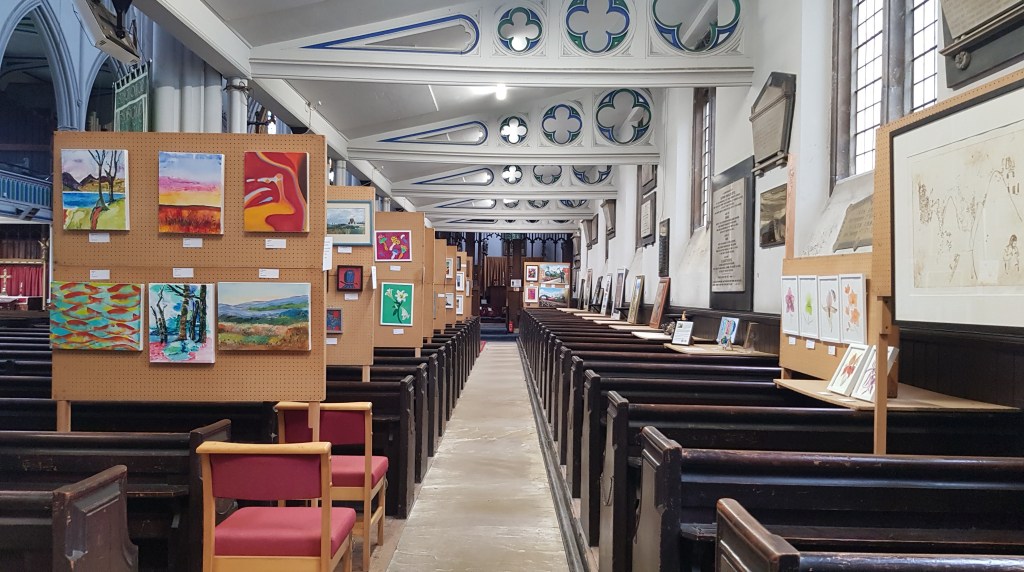
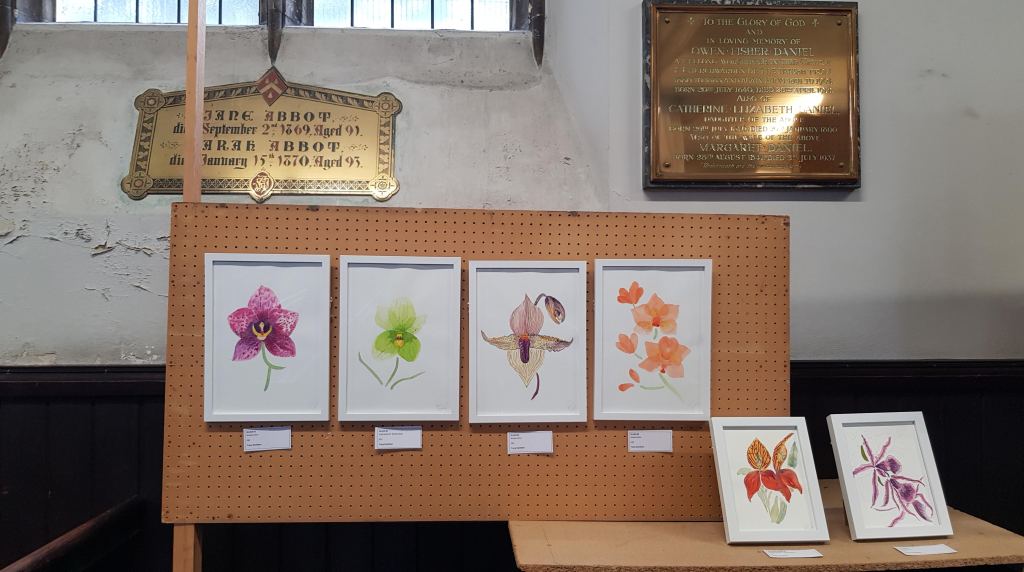
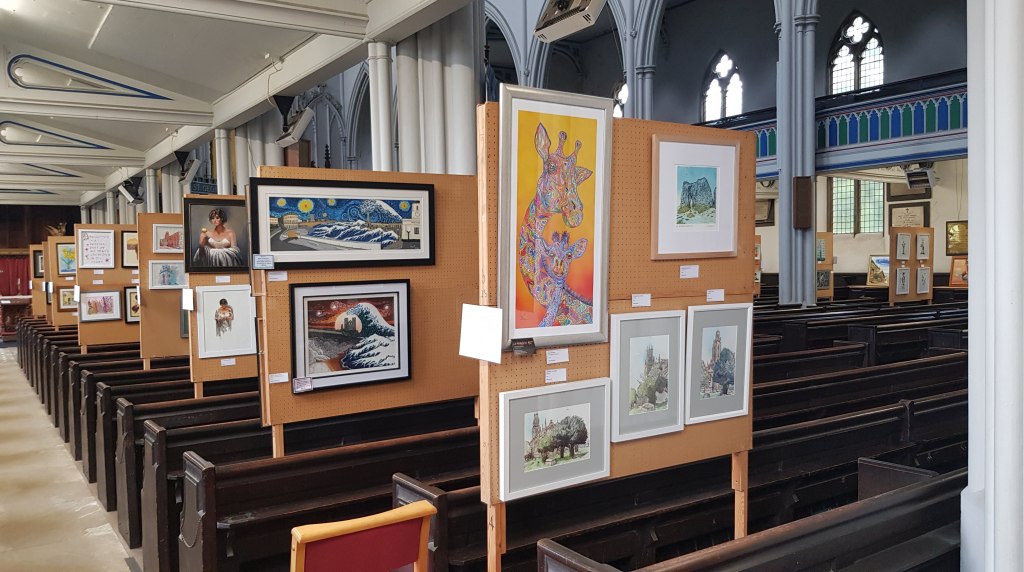
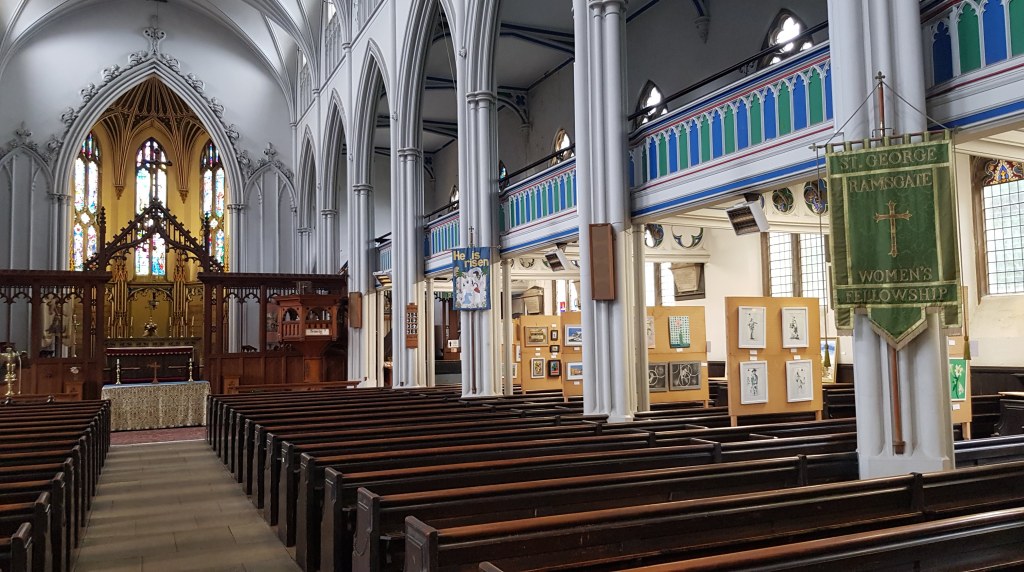
St. George’s Church Art Exhibition

The Annual St. George’s Art Exhibition in aid of the Church Restoration Appeal will taking place in the church from Tuesday 9th July – Sunday 21st July.

Open daily 11am – 4pm.  Over 150 Artworks for sale by local artists.

Links to Share:

This week, two posts about finding faith.

Being noticed, finding faith

In this story from CMS mission partners in Thailand, read about how Narin was noticed and ended up finding faith as a result. Read article. (5 minute read)

Ayaan Hirsi Ali

In this interview, Ayaan Hirsi Ali explains why she has moved from Islam to Atheism and now has become a Christian. A very powerful testimony that encourages us to see the blessings of being a Christian and the importance of its foundation for our society Watch Video (45 mins.)

Yours in Christ

Paul Worledge

(Priest in Charge, St. George’s Ramsgate)

Weekly Calendar

Sunday 7th July – The Sixth Sunday after Trinity

Eucharist (St George’s, 9:30am) – Reading: Mark 6:1-13

Monday 8th         

Prayer Meeting (St. Luke’s Church) – 9:30-10:00am

Craft Group (St. George’s Hall, Soup Kitchen) – 2:00-3:30pm

Study Group (South Eastern Road) – 7:15-9:30pm

Tuesday 9th        

Prayer Meeting (St. George’s Church) – 9:30-10:00am

Coffee Morning (St. George’s Hall) – 11:00am-12:00pm

Study Group (Lyndhurst Road) – 2:30-4:00pm

Community Meal (St. George’s Hall) – 5:30-7:00pm

Wednesday 10th      

Study Group (Langdale Avenue) – 10-12 noon

Study Group (South Eastern Road) – 7:30-9:30pm

Thursday 11th   

Prayer Meeting (St. Luke’s Church) – 9:30-10:00am

Saturday 13th      

Prayer Meeting (St. George’s Church) – 9:30-10:00am

Open Church (St. George’s Church) – 11:00am-1:00pm

Yard Sale (St George’s Church Grounds) – 11:00am-4:00pm

Sunday 14th – The Seventh Sunday after Trinity

Eucharist (St George’s, 9:30am) – Reading: Mark 6:14-29

Sunday School (St George’s, 10:30am)

Online Forms

Under the ‘Contact’ tab on the website, there are now three forms that you can use to help us in managing the church:

  • Events Application Form. Use this if you are organising a church event that needs a church room booked, advertising or ticketing.
  • Submit a Notice. Use this if you want to ask us to include a prayer request or other notice in the church notice sheet or email.
  • Maintenance Reporting Form.Use this to report any non-urgent issues with our buildings or grounds.

St. George’s Website

  • What’s On – a page which lets you know what is happening this week and gives information about upcoming events.
  • Notices – You can read the latest notices on this page.
  • Sermons – Read a transcript of a recent sermon or watch the YouTube version recorded at St. Luke’s. There are now videos for all the sermons over the summer.

Safeguarding Training

If you volunteer in anyway at church the national authorities are strongly encouraging you to take at least the Basic Module in safeguarding training once every three years.

If you have not completed the training in the last three years, then the module can be completed online and takes about ninety minutes. You can access the training by following this link. You will need to first register, to access the training. Once the training is completed, you will be sent a certificate. Please forward that certificate to James (office@stlukesramsgate.org), so that we can keep records of who has done the training.

Faith and Fear (Mark 5:21-43)

“Jesus told the synagogue ruler, “Don’t be afraid; just believe.”” (Mark 5:36)

Both fear and faith can be strong motivators, but they create very different emotions. Fear creates an atmosphere of gloom and despair. Faith produces hope and excitement.

Jesus did tell us to fear hell and the temptations of the devil, but there was a stronger emphasis on faith. He inspired people to trust him, offering a vision of the Kingdom of God, marked by compassion, healing and even victory over death. Surely, his is a message and a performance that can truly inspire?

As recorded at St. Luke’s

This Week’s Notices – 30th June 2024

(Mark 5:36)

What are you more excited about, England in the Euros or the General Election? For many both are proving a turn off. England’s lacklustre performance has not inspired faith that they can do well in the knockout stages of the competition and for many the politicians have also failed to inspire despite the many TV debates. Perhaps both are failing to inspire because their campaigns are based more on fear than faith.

For the England team there are positives and negatives. Positively, they have managed to avoid losing any games and only conceded one goal in three matches. Negatively, they have only won one game and scored two goals! Is England’s uninspiring performance down to a fear of losing? Do they lack faith that they can really achieve?

When it comes to the political campaigns, the emphasis seems to be on stoking up fear rather than inspiring faith. Both Labour and Conservatives warn against the dangers of allowing the other to gain power tell us not to vote for smaller parties, because to do so may allow the other party to win. There seems to me to be a lot less energy and effort to promote a faith that they can offer us a better future.

Both fear and faith can be strong motivators, but they create very different emotions. Fear creates an atmosphere of gloom and despair. Faith produces hope and excitement.

Jesus did tell us to fear hell and the temptations of the devil, but there was a stronger emphasis on faith. He inspired people to trust him, offering a vision of the Kingdom of God, marked by compassion, healing and even victory over death. Surely, his is a message and a performance that can truly inspire?

                                                                                                                Paul Worledge


Wendy Fuller

Wendy Fuller is now recovering from surgery on 24th June and is hoping to return home this weekend. When she is discharged, we want to be able to provide a hot meal for her for the fortnight following her return home. We have set up a meal train account. If you click on this link and sign-up that would be really wonderful.

Hustings

The hustings at St. Luke’s on Monday was a packed event. We had around 140 people in attendance and another 40 watching online. You can still watch the hustings on St. Luke’s YouTube channel. Find out more…

Summer Fair

There is a new date for the St. Luke’s and St. George’s Summer Fair. It will now be on Saturday 31st August, from 1pm to 4pm. See flier for details.

Ordination Service – Livestream

Please pray for Beth being ordained as Deacon at Canterbury Cathedral tomorrow (Saturday 29th June, at 10:30am). The order of service can be found here. You can watch a livestream of the service. Watch livestream.

Thanet Prayer Diary – July

Copies of this are available at the back of church or can be downloaded here.

Links to Share:

A couple of election related posts.

Bible Society Prayer for the Election

Check out this great prayer for people with a Christian heart to be elected. Read the prayer…

Ultra Processed Politics?

Do the parties’ manifestos and political leaders fail to inspire or enthuse? Where might we find real hope and transformation? Read more

Finally, let’s come to Jesus with faith and be inspired for a life of love and hope.

Yours in Christ

Paul Worledge

(Priest in Charge, St. George’s Ramsgate)

 Weekly Calendar

Sunday 30th – The Fifth Sunday after Trinity

Eucharist (St George’s, 9:30am) – Reading: Mark 5:21-43

Monday 1st July        

Prayer Meeting (St. Luke’s Church) – 9:30-10:00am

PCC Meeting (St. George’s Church) – 2:00-4:00pm

Craft Group (St. George’s Hall, Soup Kitchen) – 2:00-3:30pm

Study Group (South Eastern Road) – 7:15-9:30pm

Tuesday 2nd       

Prayer Meeting (St. George’s Church) – 9:30-10:00am

Coffee Morning (St. George’s Hall) – 11:00am-12:00pm

Study Group (Lyndhurst Road) – 2:30-4:00pm

Community Meal (St. George’s Hall) – 5:30-7:00pm

Wednesday 3rd     

Study Group (Langdale Avenue) – 10-12 noon

Depression & Anxiety Self-Help Group (Perry Room) – 6:00-7:30pm

Study Group (South Eastern Road) – 7:30-9:30pm

Thursday 4th   

Prayer Meeting (St. Luke’s Church) – 9:30-10:00am

Saturday 6th      

Churches Together Prayer Breakfast (St. Luke’s Hall) – 9:00-10:00am

Open Church (St. George’s Church) – 11:00am-1:00pm

Sunday 7th – The Sixth Sunday after Trinity

Eucharist (St George’s, 9:30am) – Reading: Mark 6:1-13

Online Forms

Under the ‘Contact’ tab on the website, there are now three forms that you can use to help us in managing the church:

  • Events Application Form. Use this if you are organising a church event that needs a church room booked, advertising or ticketing.
  • Submit a Notice. Use this if you want to ask us to include a prayer request or other notice in the church notice sheet or email.
  • Maintenance Reporting Form.Use this to report any non-urgent issues with our buildings or grounds.

St. George’s Website

  • What’s On – a page which lets you know what is happening this week and gives information about upcoming events.
  • Notices – You can read the latest notices on this page.
  • Sermons – Read a transcript of a recent sermon or watch the YouTube version recorded at St. Luke’s. There are now videos for all the sermons over the summer.

Safeguarding Training

If you volunteer in anyway at church the national authorities are strongly encouraging you to take at least the Basic Module in safeguarding training once every three years.

If you have not completed the training in the last three years, then the module can be completed online and takes about ninety minutes. You can access the training by following this link. You will need to first register, to access the training. Once the training is completed, you will be sent a certificate. Please forward that certificate to James (office@stlukesramsgate.org), so that we can keep records of who has done the training.

Chaos and order (Mark 4:35-41)

Have you ever seen images or film clips of the stock exchange- I think it would be an awfully chaotic environment – there seems to be noise and everyone out for themselves. There’s a similar environment sometimes in political debates in parliament – the speaker of the house on occasions having to cry order, order. 

In our gospel reading Jesus brings order out of chaos. He calms the raging waters. He is not worried by the chaos, he’s asleep . It’s the disciples who seem terrified; first, at Jesus’ is inactivity and then by the fact that he could still the storm. Jesus’ question to them was why are you afraid? Have you still no faith? The disciples response? Who then is this that even the wind and the sea obey him?

It’s not uncommon for storms to whip up on the Sea of Galilee- today in the car parks on the waters edge on the north Coast there are warning signs against what can happen when sudden winds whip up, the waters can come in and damage the vehicles, maybe even put life at risk. Storms are a normal thing.

And as much as we might not want it to be true, metaphorical storms are also true of life. Things come along that can grip us with fear, change our world, knock us off our feet, turn us around. They might affect our confidence, feeling of safety and security and even our relationship with God. Have we ever questioned God why something was allowed to happen, have we questioned if God is there? Have we questioned his apparent inactivity? Being in a relationship with God through Jesus doesn’t exclude us from storms.

Jesus calming the storm is a miracle – demonstrating Jesus’ power over nature but I think it is in many ways also a parable. This miracle follows on from parables about Gods kingdom and is a physical representation of Jesus ushering in this new kingdom. Life, as we’ve discussed, can have a lot of chaos. Jesus, through this miracle, is aligning himself with the Creator God who brings order out of chaos. There is a lot of Old Testament imagery and ideas being used in Mark’s storytelling to demonstrate this.

The first creation account in Genesis 1 shows God in his creativity bringing about order, the rhythmic flow of the first account of the creation story conveys that sense of structure and order – everything has its place.

There are also echoes in this miracle of Jonah – the storm came up as Jonah was escaping his calling – there was a wrestle between the fears and powers at war within Jonah that prevented Gods word from being preached – when Jonah surrendered his life the storm calmed.

In the book of Daniel the sea is where monsters come from. For Jews, the sea came to symbolise for them the dark power of evil threatening to destroy God‘s good creation, God‘s people, God’s purposes. What threatens that in our life – fear? Apathy? thinking we aren’t good enough to share truths about Jesus?

 The Psalms speak of the creator God who rules the raging sea, telling its rough and threatening waves to quiet down.

Psalm 65:7 – you silence the roaring of the seas, the roaring of their waves, the tumult of the people

Psalm 89:9 – you rule the raging of the sea; when it’s waves rise,  you still them 

Psalm 93:3-4 – the floods have lifted up, O lord, the floods have lifted up their voice; the floods lift up their roaring. More majestic than the thunders of mighty Waters, more majestic than the waves of the Sea, Majestic and high is the Lord!

So this miracle account would resonate with the listeners – here is Jesus aligning himself with creator God who calms the seas. ‘Just as in Daniel 7 the monsters have come up from the sea finally put to flight by ‘one like a son of man’ so here Jesus assumes the role of God’s agent in defeating the forces of chaos.’

Jesus’ confidence and trust in God lead to his ability to be asleep in the midst of a storm. ‘The forces of evil, are roused, angry and threatening, but Jesus is so confident of God‘s presence and power that he can fall asleep on a pillow.’

I think we can struggle with Jesus’ words : have you still no faith? They can feel a bit like an admonishment and I think sometimes as Christian’s we can use sentiments like that in a harmful way – if you have more faith then you wouldn’t be experiencing x y or z. I think Jesus’ statement here is much more filled with compassion – longing for their confidence  to be in him that they will weather the storm because he is there with them in it.

Psalm 107:23-30 speaks into this – ‘someone went down to the sea in ships, doing business on the mighty Waters; they saw the deeds of the Lord, his wondrous works in the deep. He commanded and raised the stormy wind, which lifted up the waves of the sea. They mounted up to heaven.; they went down to the depths; their courage melted away in their calamity; they reeled and staggered like drunkards and were at their wits end. Then they cried to the Lord in their trouble and he brought them out from their distress; he made the storm be still and the waves of the sea hushed. Then they were glad because they had quiet and he brought them to their desired Haven.’

The Christian life is not one without hardship. Afflictions come but it is truth of who Jesus is – that he reveals time and time again throughout the gospel – a God of power who brings order out of chaos – that leads to eternal calm and rest.

JC Ryle writes: by affliction he teaches us many precious lessons which without it we should never learn. By affliction he shows us our emptiness and weakness, draws us to the throne of grace, purifies our affections, weans us from the world, makes us long for heaven.

I love v30 of psalm 107: Then they were glad because they had quiet and he brought them to their desired Haven.

Who then is Jesus? He is the one we trust in the storms of life, the one we can question and cry out to in our distress , the one who has power and brings order amongst the chaos – until he brings us to our eternal rest. Let’s hold on to him as we weather the storm knowing he is in the boat.

What are the storms you are experiencing whether in your own life- or because of situations you see in the world around you. What are your questions , doubts and fears ? We can bring them to him. And that’s what we’re going to do right now.

Sermon presented at St. George’s 23rd June 2024 by Claire

This Week’s Notices – 23rd June 2024

(2 Peter 1:3a)

This verse from Peter’s second letter reassures us that by God’s power we have all we need for life. What does that mean? Because when we look at the needs in the world, when we think of organizations like Compassion who are seeking to release children from poverty in Jesus’s name, when we look at the lives of those in our community, we don’t see everyone having what they need for life. Maybe it even causes us to question God’s sovereignty and power. But maybe what it should cause us to question is the part we play in injustices and inequity, rather than distrusting God’s power. How are we living out his kingdom values?

In Mark’s gospel we have seen Jesus demonstrate his power over sickness and evil. In the miracle of the calming of the storm (Mark 4:35-41) we see Jesus demonstrate his power over nature. Nature that appears chaotic and unpredictable, true of life itself. The readers of Mark’s gospel would have been aware of the nature of the Sea of Galilee especially when high winds are present. Car parks on the western shore in modern day have danger signs warning of the conditions that can come about in high winds. The lake can go from dead calm to rough and dangerous very quickly.

The Jews were not known as a people of the sea. Yes, there were fisherman, but sea adventures were had by the neighbouring Phoenicians not the Jews. Tom Wright writes concerning the Jews: “the sea came to symbolize, for them, the dark power of evil, threatening to destroy God’s good creation, God’s people, God’s purposes.” In the miracle of the calming of the sea Jesus triumphs over the chaos and disorder, demonstrating the new kingdom he is to bring in – the image of which has been conveyed in the earlier parables.

As we are members of God’s kingdom our trust in his power is lived out in how we respond to injustices and chaos around us – will we be people of little faith or people who live it out?

                                                                                                                Claire Coleman 


Welcoming Beth and Family

Beth our new curate, husband Tom and son Toby are moving to Ramsgate in the middle of June. They are moving into a different house to Claire!

We want to provide a small welcome pack for when they move in. If you would like to contribute to this, then please give Amanda Ogden a small financial donation on Sunday. (Alternatively bring a non-perishable item of vegan (i.e. non-meat and non-dairy) food). Please also sign the welcome card! Amanda and Charlie from St. Luke’s will then deliver the welcome pack to them when they move in.

Also, check out this Facebook post from the Diocese about Beth. Read more.

Thank You

Thank you to all who contributed to the welcome pack for Beth, Tom and Toby and for Charlie Harley and Amanda Ogden for organising and delivering it. It really helped them to feel very welcome to Ramsgate. See photos of welcome pack.

Hustings at St. Luke’s, 7:30pm Monday 24th June

St. Luke’s will be holding a hustings of some of the local candidates to be MP in the lead up to the General Election, this Monday evening. Thank you to those who have already volunteered to help. It would be good to have a couple more – please see Paul.

Do please come and support the event and pray that it would be a good opportunity for people to be better informed in readiness for the election. For the latest details about the hustings, check out our website.

It is not too late to submit questions, but you must do so by Sunday. Either do this yourself online or if you cannot do that ask someone to help you submit a question online. Submit Questions.

Wendy Fuller

Wendy Fuller is having surgery on 24th June and will be in for a few days. When she is discharged, we want to be able to provide a hot meal for her for the fortnight following her return home. We have set up a meal train account. If you click here and sign-up that would be really wonderful.

Links to Share:

This week some aids to engaging with the Bible. One for small children and another creative way for all ages.

Cheeky Pandas and Story Bible Videos

This new set of videos and resources for young children telling some of the stories about Jesus is now freely available online. Great for families. Watch the promo… (1 min)

Rooted Monthly Journal

The devotional journal from the Bible Society that helps make the Bible available to everyone, everywhere. Rooted takes you deep into the Bible, with reflections, activities, and questions. Your faith will strengthen and grow as you learn about Jesus. Find out more…

Finally, let’s keep trusting in the power of Jesus to bring calm from chaos.

Yours in Christ

Paul Worledge

(Priest in Charge, St. George’s Ramsgate)

Weekly Calendar

Sunday 23rd – The Fourth Sunday after Trinity

Eucharist (St George’s, 9:30am) – Reading: Mark 4:35-41

Monday 24th       

Prayer Meeting (St. Luke’s Church) – 9:30-10:00am

Craft Group (St. George’s Hall, Soup Kitchen) – 2:00-3:30pm

General Election Hustings (St Luke’s Church) – 7:30-9:00pm

Tuesday 25th      

Prayer Meeting (St. George’s Church) – 9:30-10:00am

Coffee Morning (St. George’s Hall) – 11:00am-12:00pm

Study Group (Lyndhurst Road) – 2:30-4:00pm

Community Meal (St. George’s Hall) – 5:30-7:00pm

Wednesday 26th    

Study Group (Langdale Avenue) – 10-12 noon

Study Group (South Eastern Road) – 7:30-9:30pm

Thursday 27th  

Prayer Meeting (St. Luke’s Church) – 9:30-10:00am

Saturday 29th     

Prayer Meeting (St. George’s Church) – 9:30-10:00am

Beth’s Ordination (Canterbury Cathedral) – 10:30am

Open Church (St. George’s Church) – 11:00am-1:00pm

Sunday 30th – The Fifth Sunday after Trinity

Eucharist (St George’s, 9:30am) – Reading: Mark 5:21-43

Online Forms

Under the ‘Contact’ tab on the website, there are now three forms that you can use to help us in managing the church:

  • Events Application Form. Use this if you are organising a church event that needs a church room booked, advertising or ticketing.
  • Submit a Notice. Use this if you want to ask us to include a prayer request or other notice in the church notice sheet or email.
  • Maintenance Reporting Form.Use this to report any non-urgent issues with our buildings or grounds.

St. George’s Website

  • What’s On – a page which lets you know what is happening this week and gives information about upcoming events.
  • Notices – You can read the latest notices on this page.
  • Sermons – Read a transcript of a recent sermon or watch the YouTube version recorded at St. Luke’s. There are now videos for all the sermons over the summer.

Safeguarding Training

If you volunteer in anyway at church the national authorities are strongly encouraging you to take at least the Basic Module in safeguarding training once every three years.

If you have not completed the training in the last three years, then the module can be completed online and takes about ninety minutes. You can access the training by following this link. You will need to first register, to access the training. Once the training is completed, you will be sent a certificate. Please forward that certificate to James (office@stlukesramsgate.org), so that we can keep records of who has done the training.