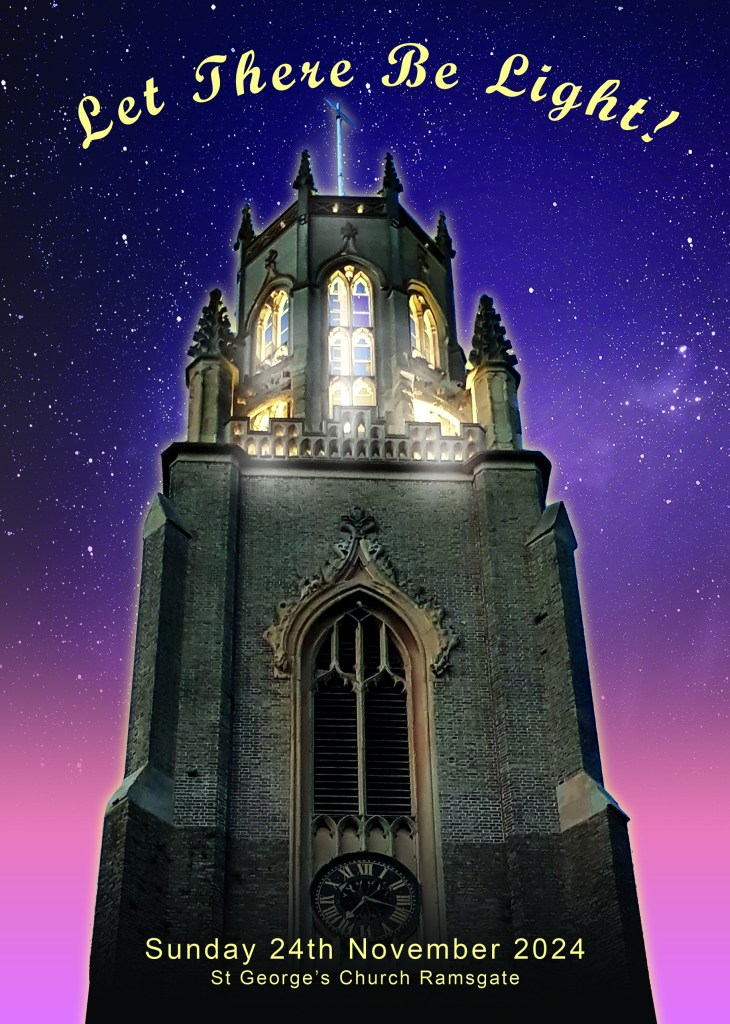
The inaugural Ramsgate Lumiere opens with the Ramsgate Town Christmas Light switch on, Sunday 24th November. After the switch on, follow Samba Ya Wantsum, Ramsgate’s very own Samba Band and their magical lantern procession up the High Street to St George’s. Let There Be Light is a free event, open to all, with music, lightshows and refreshments.
Gadzukes Ukulele band, Thanet Festival Choir and Soul Choir will all be performing on the night and the church will be illuminated by Lumen Studios video projections and lighting by James Brown AV.
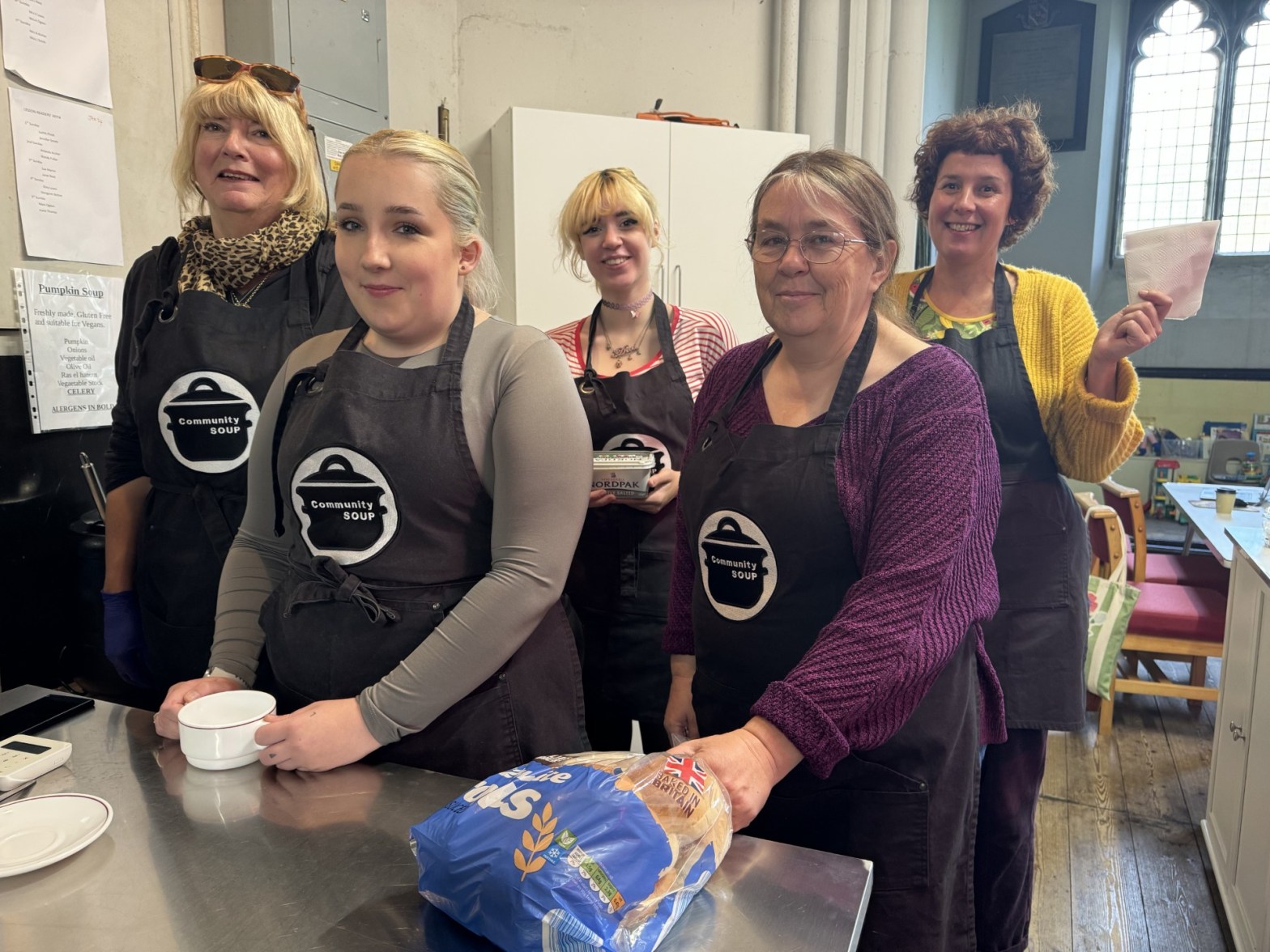
Refreshments including soup, hot drinks and mince pies will be provided for a festive celebration which marks both the beginning of the Christmas period and the end of the 2nd year of Project 200.
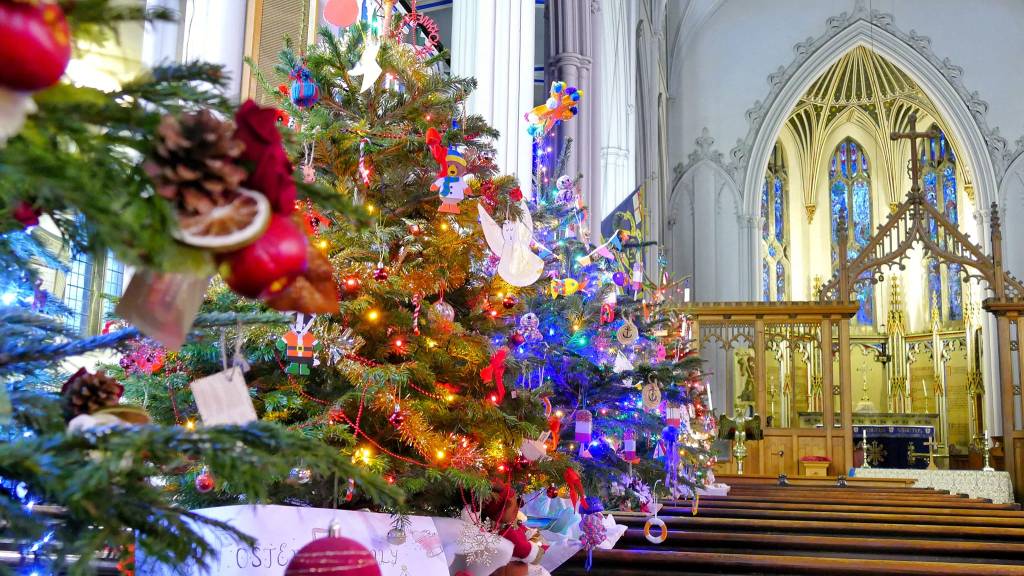
We invite friends, families, schools and organisations, Church Hall users, businesses in the town and those who are in sympathy with the restoration of this beautiful church to exhibit a small decorated tree in the SIXTEENTH CHRISTMAS TREE FESTIVAL and make it the best ever.
photo by Frank Leepard 2021
We feel that a real tree of 3 to 4 feet in height would be suitable. We are able to supply stands and if you would like us to order a tree for us, please indicate on the enclosed form and include a cheque for £25. In previous years, visitors have commented on the lovely sent as well as the magical sight which greeted them as they entered the church.
Suggestions for decoration include Christmas Carol or song, a colour theme or something specifically connected with the exhibitor. We have an electrical supply to plug lights into. For businesses this is an inexpensive way to advertise and also to support the church.
Setting up will take place on Wednesday 11th December and Thursday 12th December between 2-5pm and the Festival will be open to visitors from 13th to 22ndDecember.
Trees remain the property of the exhibitor but most people are happy to leave them in the church throughout the Christmas period. If you want to remove a tree would you tell us so that we can arrange a time.
There will be a small prize for the favourite tree chosen by visitors. Rules for exhibiting in the festival:
Print and return the form below with payment for a tree by Tuesday 26th November to Janet Reid – address details on form.
Ensure you are able to decorate your tree between 2-5pm on either Wednesday 11th or Thursday 12th December.
Decorations will need to be removed by the end of 5th January. The church will be open on that day from 2-5pm to enable that. Please note that any decorations not collected by 5pm on 5th January will be disposed of.
Participants may either take their tree home (by the end of 5th January) or leave it in situ to be disposed of by the church in an environmental way.
Any damage or loss to the trees or decorations during the event is at the participant’s own risk with no liability to the church.
If anyone would like to offer to help sit in the church as a welcomer during the festival please contact Janet Reid and she would be delighted to add you to the rota!
”Do not conform any longer to the pattern of this world, but be transformed by the renewing of your mind. Then you will be able to test and approve what God’s will is–his good, pleasing and perfect will.” (Romans 12:2)
This week we begin a series on the book of Daniel. The book includes some well know Bible stories, such as Daniel in the lions’ den, but also weird dreams and visions similar to those in Revelation.
”Do not conform any longer to the pattern of this world, but be transformed by the renewing of your mind. Then you will be able to test and approve what God’s will is–his good, pleasing and perfect will.”
Please check out everything in this email, lots of information about tomorrow’s service, important upcoming events, news about our mission partners and a link to a video about a comedian, who is performing in Ramsgate tonight! Sorry it’s all slightly later this week.
This week we begin a series on the book of Daniel. The book includes some well know Bible stories, such as Daniel in the lions’ den, but also weird dreams and visions similar to those in Revelation.
Daniel, himself, was born in Judea, and probably grew up in a wealthy and important family in the small Jewish kingdom. Everything changed when the Babylonians came and conquered Jerusalem. He was exiled to the capital and selected to work for the Babylonian civil service, presumably because he was an intelligent young man.
He had grown up and been taught to serve the one true God of Israel. That would have been straightforward living in and around Jerusalem but was it possible to do so working in the courts of the pagan Babylonians? How could Daniel do his job well and stay true to his faith? Could he really dare to stand out as a follower of the Jewish God and reject the idolatry of his co-workers?
The stories in the book of Daniel relate how this question worked itself out in Daniel and his friend’s lives. When they stood for God, God proved himself faithful, even when it felt that the might of great kingdoms was against them. At the same time, the book relates dreams and visions, that ultimately show how the seemingly great kingdoms of the world come and go, but God’s kingdom stands forever.
In the end, Daniel and we can dare to stand out as different and remain firm in our faith, because God’s kingdom is the only one that will be left standing in the end.
Paul Worledge
P.S. If you want to watch an overview of the book of Daniel in preparation for the sermon series, then check out this video. It’s from the Bible Project and less than 10 minutes long.
The Light Party, Thank You!
A big Thank You to all those who made this such a great event on Thursday. We had 27 children and a similar number of adults join us. It was a good mixture of regular church members and families from the local community. Lots of fun and lovely food!
Study Group Notes
This term our small groups are going to be discussing what we have learnt through our sermon series on Daniel. We have groups meeting in the daytime and evening. If you want to join a group for this term, then please see Paul. Printed sheets with discussion questions are available at the back of church for leaders or members to collect.
Remembrance Sunday – Next Sunday
Next Sunday is Remembrance Sunday. We will be welcoming various groups parading, dignitaries for the town’s Remembrance Service. This will begin outside with a moment of silence and laying of wreaths just before 11am, before a service in the church. There will be no service at 9:30am.
What have we discerned?
As we come to the end of the Year of Discernment we want to share, Vision 2030, the plan we think God has for our churches over the coming five years. We will be making a presentation on Monday 11th November at 7:30pm at St. Luke’s church, members from both churches are encouraged to come and hear the plans. There will be opportunities for feedback in the meeting and in the weeks afterwards.
Coming Up: The Big Quiz Night
Tearfund’s The Big Quiz Night is back on Saturday 16th November, 7:30-9:30pm at St. Luke’s Hall. The money this quiz raises will support Tearfund’s Transforming Communities programme, helping local churches around the world lead their communities out of extreme poverty and into a sustainable future. Invite your friends, family and neighbours for some poverty-beating, community-building fun!
Basic Safeguarding Training
If you are involved as a volunteer at St. Luke’s, then you are encouraged to do the Basic Safeguarding training. This can be done online (and if you are working with children or vulnerable adults, you will need to do the online version, so that you can access the next level), but there is also an opportunity on Saturday 23rd November, 10:30-13:00 at St. Mark’s Ramsgate to attend a face-to-face training session led by Kevin Spain. You can access the online training by following this link.
Let there be Light!
On Sunday 24th November, there will be the ‘Let there be light!’ event at St. George’s after the town’s Christmas Light switch on, starting at about 5pm.
Thanet Prayer Diary – November and December
You can download the Thanet Prayer Diary for November and December here.Alternatively pick one up from the back of church.
ACTS Prayer and Thanksgiving Event – 18th November
Join us for an evening of prayer, thanksgiving and updates about the work of ACTS (Active Christianity in Thanet Schools). As well as a time to meet our new workers, Abi and Charlotte, over a cuppa and a slice of cake!
Monday 18th November, St Philips Church, Palm Bay, CT9 3JJ, 7:00pm
Links to Share:
This week a couple of links about well-known comedians.
Milton Jones
Watch this hour-long video with Milton Jones, the comedian as he talks about his career and his faith. Watch now…
Miranda Hart
This is a book review of Miranda Hart’s recently published autobiography. In it she reveals her struggles with ill health as a result of contracting Lyme Disease at 14, but she also speaks of nine treasures, which sound remarkably similar to a list of nine in the Bible…. read more.
Finally, let’s pray that we can stand out for Jesus.
Yours in Christ
(Priest in Charge, St. George’s Ramsgate)
Weekly Calendar
Sunday 3rd November – Fourth Sunday before Advent
Eucharist (St George’s, 9:30am) – Reading: Daniel 1:1-21
Sunday School (St George’s, 10:30am)
Monday 4th
Prayer Meeting (St. Luke’s Church) – 9:30-10:00am
Craft Group (St. George’s Hall, Soup Kitchen) – 2:00-3:30pm
What’s On – a page which lets you know what is happening this week and gives information about upcoming events.
Notices – You can read the latest notices on this page.
Sermons – Read a transcript of a recent sermon or watch the YouTube version recorded at St. Luke’s. There are now videos for all the sermons over the summer.
Safeguarding Training
If you volunteer in anyway at church the national authorities are strongly encouraging you to take at least the Basic Module in safeguarding training once every three years.
If you have not completed the training in the last three years, then the module can be completed online and takes about ninety minutes. You can access the training by following this link. You will need to first register, to access the training. Once the training is completed, you will be sent a certificate. Please forward that certificate to James (office@stlukesramsgate.org), so that we can keep records of who has done the training.
“You will live in joy and peace. The Mountains and hills will burst into song, and the trees of the field will clap their hands!” Isaiah 55:1-12
This Bible Sunday let’s take the call afresh to delight in God’s word, to meditate on it day and night and to enable and pray for the increasing Bible translations.
“There will be no more night. They will not need the light of a lamp or the light of the sun, for the Lord God will give them light. And they will reign for ever and ever.” (Revelation 22:5)
This future vision gives us hope now. The evil in our world is temporary, but what is good has a future and our relationship with God will truly flourish. This is God’s vision for the future, but as well as giving us something to look forward to, it should inform our plans and what we invest in and work for now.
There was a young woman who had been diagnosed with a terminal illness and had been given three months to live. So as she was getting her things ‘in order,’ she contacted her Pastor and had him come to her house to discuss certain aspects of her final wishes.
One of her wishes was surprising: ‘I want to buried with a fork in my right hand.’ This was not a request the pastor had ever had before.
The young woman explained. ‘…In all my years of attending socials and dinners, I always remember that when the dishes of the main course were being cleared, someone would inevitably lean over and say, ‘Keep your fork.’ It was my favourite part because I knew that something better was coming…like velvety chocolate cake or deep-dish apple pie. Something wonderful, and with substance!’
So, I just want people to see me there in that casket with a fork in my hand and I want them to wonder ‘What’s with the fork?’ Then I want you to tell them: ‘Keep your fork …the best is yet to come.’
Visions of a better future:
The best is yet to come. Over the last couple of months, we have been looking at moments where God revealed his plans or vision to key people. Each time it was a vision of a better future. Yes, there may be a painful path to that better future, but the promise is always that the best is yet to come.
We saw that in all the visions given by God to Abraham, Moses, David, Jeremiah and the disciples of Jesus. In their own ways, they were all about bringing blessing to all nations.
But to long for the blessing of a better world, is to accept that the world is not as it should be. To long for a world where some things are no longer the case. For Moses, there was the promise that Israel would no longer be slaves, homeless or godless. For Jeremiah, there was the promise, that the people of God would have transformed hearts, so that they would no longer be disobedient.
I wonder, when you think honestly about the world today, what you see as the big problems? What do you think needs to be no longer there in order for the future to be better.
No Longer…
As we come to the end of the book of Revelation, we are presented in the last two chapters, not just with a better new covenant, but a better new heaven and earth. And one of the features of this new heaven and earth is that the things wrong with the old heaven and earth are no longer there.
Through chapters 21 and 22, a number of things are listed:
There will no longer be any sea, 21:1. This is not meant to be taken literally, rather the sea in the Bible stands for the chaos and unpredictability that leads to unexpected death and destruction. It stands for the horrors of war, natural disasters and pandemics, that all come unexpectedly with horrific consequences.
Then in verse 21:4 we are told that actually there will no longer be any death. People say that death is just part of life. The Bible sees it as humanity’s great enemy. An enemy that will one day be defeated by Christ.
Linked with that the verse also says there will be no more mourning
and indeed, no more pain.
Later on in 21:25, we are told there will no longer be any night, a promise repeated in 22:5. Again ‘night’ is a metaphor parallel to darkness. It is linked with wickedness and evil, but is fundamentally the state of a world divorced from God.
The associated impurity, is itself said to no longer the there in 21:27, as are all those who do what is shameful or deceitful. A warning, that is more explicit in 21:8, that not everyone will share in the glory of the new heaven and new earth, but only those who have come over to God’s side.
Does all this sound like a better world to you? A world where all these things are no longer?
Perhaps all this is summed up in 22:3, where it says:
“No longer will there be any curse.”
But what is the curse being referred to in this last chapter of the Bible? To understand that you need to go back to the first few chapters of the Bible.
The Curse: Cast out of the Garden
In Genesis 2, God creates a beautiful Garden of Eden, full of trees bearing plenty of fruit. He puts Adam, the first man in the Garden, and creates Eve the first woman to join him.
In the Ancient Near East, gardens were often thought of as the place where the gods lived. Indeed, we get our word, ‘Paradise’ from the Persian word for ‘garden.’ In Genesis, Adam and Eve, made in the image of God are living in God’s paradise, in his presence, serving him and ruling over the world for him.
And they can eat from ALL the trees in the garden, including the tree of life. There is only one exception. They must not eat from the tree of the knowledge of good and evil. Perhaps this is symbolic of choosing to decide for oneself what is good and evil, rather than leaving that to God. Perhaps it is symbolic of stepping into God’s role. Whatever it signifies, the one command they had from God was not to eat from that one tree.
Tragically, by listening to the advice of Satan, symbolised by a snake, this is what they did. In disobedience to God they ate the one fruit they were not to eat and faced God’s curse as a result – with tragic consequences.
Relationships broken
Firstly, it led to a breakdown in relationship. At first they hide from God, now too scared to face him, then they are kicked out of the garden, the place of communion with God, and they lose access to the tree of life. But there is also a breakdown in relationships in their family.
Adam and Eve had two sons, Cain and Abel, brothers. But out of jealousy, Cain kills Abel. This event, one brother murdering another illustrates the depths of evil that quickly entered the world, when we turned away from God.
Our world is no better, today in Ukraine, Gaza and Lebanon, the Sudan and many other forgotten places, the children of Adam are still killing one another.
Work becomes toil
Secondly, work becomes toil. Most of us want to work, to be unemployed can be soul destroying. We all need to be achieving something in life, whether it is cleaning pots, or performing surgery we need a role and work to do.
Work is a good thing and God put Adam in the garden to work it and take care of it. But after his disobedience, God curses Adam and tells him: “Through painful toil you will eat food from the ground…”
And we see that today. So often, work becomes toil. It is hard, it is tiring, it is a grind. We struggle to find a good work life balance.
Rule becomes oppression:
Thirdly, power is corrupted, rule becomes oppression.
Again, God created both man and woman to rule over the world. That is clear in Genesis 1. We were meant to do that in submission to God’s perfect rule, so that we ruled the world perfectly.
But, in rejecting God’s rule, human rule has often become oppression, both of the natural world, leading to climate catastrophe, one person over another.
We see that again and again through history, where one nation of people oppresses or enslaves another nation or people. But we also see it at the domestic level.
I think that is what is meant by the curse on Eve, when she is told that the husband will rule over the wife. This is part of the curse. Even in what should be the most beautiful, intimate relationship of marriage, too often there is domestic abuse, another consequence of humanity’s rejection of God’s rule.
The curse that comes from Adam and Eve’s rejection of God, then explains much of what is wrong with our world. But, Revelation 21 and 22, presents a picture of the new earth and new heaven, where the curse is no longer.
Biblical Vision: The Curse is no Longer:
This is the vision of something better. The best that is yet to come.
In part it is a return to the original paradise of the Garden of Eden, but the world has moved on, not everything that humanity has done and achieved is corrupt. In the Garden, there was just a couple, now in the Garden city described at the end of Revelation, all nations come and bring their gifts and achievements into this better world.
So, what is the vision we are shown:
Relationships Restored:
Fundamentally, relationships are restored. Again and again the emphasis is that God is now present with his people. The throne of God and of the lamb are in the city.
The people of God are presented as the beautiful bride of Christ and also as an unimaginably gloriously, beautiful and valuable city.
But, here also are elements from the garden of Eden. A river and a tree, both bringing life, as in the original garden. Relationship with God restored, means life restored.
It also means restoration of human relations. Perhaps that is what is meant by the phrase in verse 2, that the leaves of the tree are for the healing of the nations. Is this a way of saying, that all the wars and conflicts of the past are now over? In this place, Israeli and Palestinian, Ukrainian and Russian, will walk together in peace.
Work becomes service of God:
Secondly, work is restored as true service to God. Eternity, is not like an eternal holiday. We would soon be bored. There will be things for us to do and achieve in service to God himself. Only, then the curse will be lifted and work will no longer be toil. We will have the perfect work-life balance!
Indeed, all the talents and achievements of the past will be brought into this glorious city. What it is good and beautiful now will find its place in heaven. The great music, paintings, art and architecture will all have their place as work done for the service of God.
As it says in Revelation 21:26:
“Glory and honour of the nations will be brought into [the city].”
Rule becomes enlightened:
Thirdly, we will still have power to exercise, a universe to rule. Now, however, we will do it properly, not thinking we know best or from corrupt selfish motives, but enlightened by the light of God.
As the last verse says:
“The Lord God will give them light and they will reign forever…” (21:5)
All of this is yet to come. I hope you catch something of the beauty and the wonder of it. I hope you find hope and courage in the midst of a world full of war, natural disasters, disease, death, mourning, pain, wickedness, impurity and lies, a world of broken relationships, toilsome work and oppressive power that much, much better is yet to come.
I hope when you eventually approach death, you will metaphorically be grasping the fork of trust in Christ, so that you are ready for the better to come.
Relevance to Our Vision:
But, if our future is already promised and guaranteed, what relevance does this have for our vision now?
As church, we are a colony or an outpost of this new heaven and new earth. A place where the Kingdom of God is near. I hope you have seen that this vision of the new heaven and new earth is not divorced from the fundamentals of life now, but a better version of it. We are not just to look forward to this future with hope, but also to look at it for inspiration to make our present world and especially our church community more like this. We are called to work for something better, something closer to this ultimate dream.
So, our vision for a better church, needs to include:
A vision for better relationships, with God and one another.
A vision for our work, both in the world and in service to the church to not be toilsome, but done in joyful service of God.
A vision that any leadership role we take on in the world or in the church is done not selfishly or oppressively, but in the light of God’s revelation and the servant-heartedness of Christ.
Too often the church tries to become like the world as it is now. What it should be doing is grasping the vision of the world that God wants to create and so, help to shape the world as it is now in the light of that vision.
Will you help us to make that vision come to fruition? Who knows perhaps the best is still yet to come for our churches in Ramsgate.
“There will be no more night. They will not need the light of a lamp or the light of the sun, for the Lord God will give them light.And they will reign for ever and ever.”
We finish our series of Biblical Visions, with the last chapter of the Bible. It is the conclusion of Revelation, a book full of visions of the future.
Not that the visions of Revelation are quite as straightforward as some of the other vision statements we have been looking at. Rather, they describe visual pictures that are complex metaphors drawing on Old Testament imagery to describe the future.
The last couple of chapters are concerned with the ultimate future. What the world will be like in the time after Jesus’ returns and we are raised from the dead. They describe a future where the things that are wrong with our present world are ‘no more,’ whilst the things that are right with our present world are glorious and God is with his people in an intimate way.
We see all three of these elements in the verse above. Throughout the Bible, ‘night’ or ‘darkness’ is symbolic of the evil in our world, but in the new heaven and new earth, there is no night. Instead, all is light. Then as fully enlightened beings, we will be able to rule perfectly over God’s creation. Power no longer leads to corruption but is used for God’s good purposes. All of this is linked to God’s imminent presence with his people. His presence is their light.
This future vision gives us hope now. The evil in our world is temporary, but what is good has a future and our relationship with God will truly flourish. This is God’s vision for the future, but as well as giving us something to look forward to, it should inform our plans and what we invest in and work for now.
Paul Worledge
Vacuum Cleaner – Needed!
We need a replacement vacuum cleaner for the St. George’s church hall. Does anyone have a spare device, not needed, which they could donate? Preferably a cylinder style one. Please contact Mark Ogden on 07896 111159.
National Week of Prayer from 12th October
The National Week of Prayer runs from 12th to 20th October. YWAM are organising some local ‘Sphere of Influence’ prayer events:
Fri 18thEducation, (7:30-8:30pm)
Elim Oasis Church, St Peter’s CT10 2TE
Sat 19thFamily & Family of Nations, (4:30pm)
Multi-generationalworship & a HUGE world map to pray on
The Light Party, St. Luke’s, 4:30-6:00pm, 31st October
Our alternative to Halloween. A party event for all ages. This annual event is great fun and a good way to provide a positive alternative to the darkness that is the focus of Halloween celebrations. Do come and encourage both church and non-church friends to come.
If you would like to volunteer to help make this event possible, then please speak to Charlie or Tonya.
What have we discerned?
As we come to the end of the Year of Discernment we want to share, Vision 2030, the plan we think God has for our churches over the coming five years. We will be making a presentation on Monday 11th November at 7:30pm at St. Luke’s church, members from both churches are encouraged to come and hear the plans. There will be opportunities for feedback in the meeting and in the weeks afterwards.
Men’s Group – Meeting this Week
The Men’s Group are going for a Pool and Buffet night at Frames in Margate, this Thursday 24th October, 7:30pm. Cost is £10 payable by 22nd October. Contact Bruce Stokes (07708682464 or bruce.stokes@btinternet.com), if you want to find out more or would like to go.
St. Mark’s Pre-Christmas Fayre
St. Mark’s Pre-Christmas Fayre will be taking place on Saturday 2nd November from 10:00am-12:30pm.
Coming Up: The Big Quiz
7:30-9:30pm, St. Luke’s Hall, 16th November. In aid of Tearfund.
Links to Share:
This week some articles on prayer.
Guide to Prayer Walking
This brief article gives a simple guide to prayer walking, a helpful activity as we think about how to reach and serve our local area. Read more…
Five prayer ideas for the home
This simple resource gives five creative prayer ideas for use by families in the home. See the resource
Finally, let’s give thanks for the hope of a new heaven and a new earth.
Yours in Christ
Paul Worledge
(Priest in Charge, St. George’s Ramsgate)
Weekly Calendar
Sunday 20th – The Twenty-first Sunday after Trinity
What’s On – a page which lets you know what is happening this week and gives information about upcoming events.
Notices – You can read the latest notices on this page.
Sermons – Read a transcript of a recent sermon or watch the YouTube version recorded at St. Luke’s. There are now videos for all the sermons over the summer.
Safeguarding Training
If you volunteer in anyway at church the national authorities are strongly encouraging you to take at least the Basic Module in safeguarding training once every three years.
If you have not completed the training in the last three years, then the module can be completed online and takes about ninety minutes. You can access the training by following this link. You will need to first register, to access the training. Once the training is completed, you will be sent a certificate. Please forward that certificate to James (office@stlukesramsgate.org), so that we can keep records of who has done the training.
A great alternative to Halloween, for all ages. Food, fun and treats (no tricks). Fancy dress, please (but not scary). Children must be with an adult at the party.
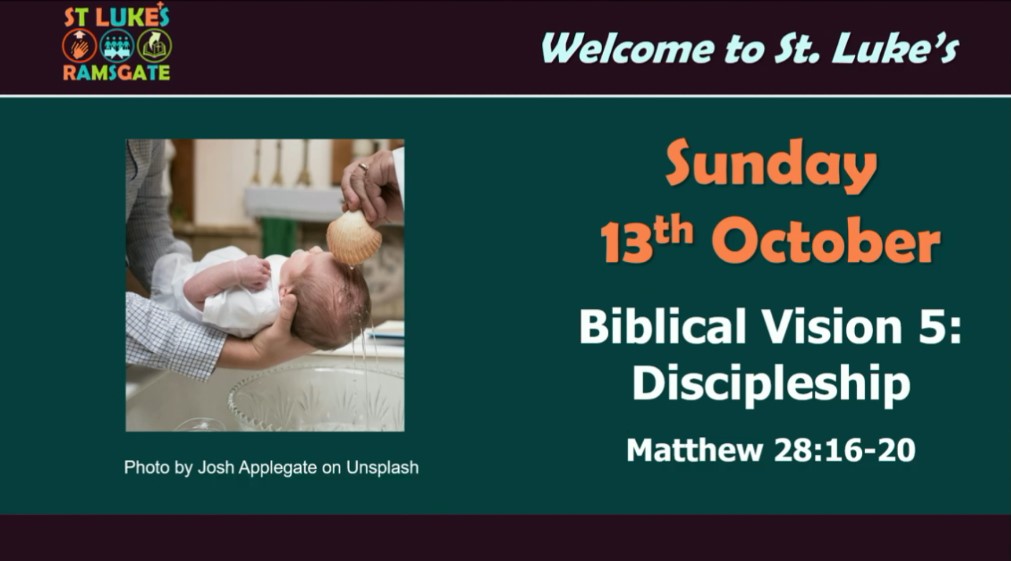
“Therefore, go and make disciples of all nations, baptising them in the name of the Father, the Son and the Holy Spirit…” (Matthew 28:19)
The key phrase in this vision is: ‘make disciples.’ The rest elaborates what that means. Disciples are to come from all nations and be given a new identity through baptism as those who belong to the God who is now known as Father, Son and Holy Spirit. They are to be taught to obey all that Jesus had taught and they are to know that Jesus will always be with them. Whatever our vision is, it must have making disciples at its heart.
Who or what influences you? Do you know? Do you care? Does it matter? And if it does matter, why do you allow that person, people or organisation to influence you?
We live in a world of social media and social influencers.
The main platforms that influencers operate on are Instagram, Tik Tok, X (formerly known as Twitter) and YouTube. These platforms enable anyone to write or share video content potentially with vast networks of people around the world.
For example, we will upload this sermon to YouTube and anyone in the world will be able to watch it. But the truth is very few will watch it online. The St. Luke’s YouTube channel has around 219 subscribers and the sermon with the most views has around 250 views.
Compared with the top social media influencers, these numbers are miniscule.
Top of the list is footballer, Cristiano Ronaldo, who has over 800,000,000 followers across all platforms, including over 600,000,000 on Instagram.
Next up is Selena Gomez, a singer song writer, who has over 580,000,000 followers across all the platforms, but mainly on Instagram.
In third place overall, but with the largest number of YouTube Subscribers, is MrBeast, who has 320 million subscribers on YouTube! In case you are wondering what makes MrBeast famous, well it’s not because he is a great sportsman like Cristiano Ronaldo or an amazing singer like Selena Gomez, it’s that he is very, very good at creating YouTube videos that hook you in!
And that is increasingly, how we are fed information and entertainment through the internet. We are led to watch and read that which catches our attention and draws us in. And as we watch all this information we are influenced.
Companies pay the influencers to push their products, so that we are influenced to buy them. But we are also influenced by the people we watch. We aspire to want to become like them, to have their talent, their fame, their wealth. We increasingly think these are the things that matter in life.
To have influence is to have power. MrBeast has even talked about the possibility of running for President of the USA.
Discipled or Influenced?
In the baptisms earlier on we urged both Alby and Pippa, to ‘fight valiantly as disciples of Christ.’ In our reading, Jesus’ great commission to his disciples and by extension to the church is to go and make disciples.
But is to be a disciple to be merely someone who is influenced by Jesus or does it mean more? Is being a disciple of Jesus a bit like being a YouTube follower of Ronaldo, Gomez or MrBeast? Is baptism just like clicking, ‘Subscribe’ on the internet? Or is there more to being a disciple?
First Century Internet?
A related question is about the scope of Jesus’ vision. Just as influencers today, seek to grow a massive worldwide subscriber base, Jesus’ tells his disciples to go and make disciples of all nations.
Except Jesus had to do it without the internet. Now information travels at the speed of light, then it was at the speed of a horse. To become a worldwide influencer today is challenging and only a handful manage it. Then it was impossible.
How could a man in his early thirties living in an occupied country on the edge of the Roman Empire, with no wealth, power or army and just a handful of uneducated followers hope to influence the whole world. Humanly, speaking this was perhaps the most ridiculous vision ever shared.
Yet, today, if being baptised is the equivalent of being a subscriber, then Jesus does not just have 100s of millions of followers, but billions. In fact, it is estimated that there are 2.5billion Christians in the world today, that is over three times the social media followers of Cristiano Ronaldo.
How was it possible for Jesus to create such a vast number of followers with no internet, no army, no money and no power?
The answer was that his disciples were to be the network and to build the network. If they the eleven disciples were to go and make disciples, then the disciples they made were also to be those who would make disciples and so on, until the network of disciples spread throughout the world and the message and influence of Jesus transformed the world.
For this to work, to be discipled had to mean more than to be influenced. You may choose to watch videos of Cristiano Ronaldo, you might even subscribe to his YouTube channel and encourage some of your friends to do the same, but you will probably not see your mission in life to be a part of growing Ronaldo’s internet following.
So, what is different about being a disciple of Jesus? How is it that Jesus’ followers could build a network to share his message that has lasted 2,000 years and created more followers than anyone else in history?
Disciples Recognise Jesus’ Authority
For any normal human being, Jesus’ vision was ridiculous. But Jesus, although, he was fully human like you and me was unique and special in so many ways.
These words of Jesus come at the end of Matthew’s gospel. If you want to see how special Jesus is, you need to read the whole gospel. When you do so, you will see that Jesus was the one that the Jews had been promised by God would come. He was the culmination of God’s plans, not some random bloke who cropped up and said a few interesting things. You will also see that his teaching was powerful, memorable, radical and unique. Not only that, but he performed miracles that showed both amazing compassion for the sick and power over sickness. You will find a man who had such a clarity of vision, that to the incomprehension of his closest friends he allowed himself to be arrested and crucified, stating that his death would be for the redemption of the world and the creation of a new relationship with God. Then most powerfully of all, he did not stay dead, but on the third day rose again and appeared to his followers.
Not surprisingly, at the start of our passage, the eleven disciples are face to face with this Jesus, trying to come to terms with this series of events and particularly His death and resurrection. They didn’t know what to do. Should they worship or doubt that this could all be true?
Then Jesus makes the boldest claim of all:
“All authority on heaven and earth has been given to me.”
Such a claim would be outrageous, if it was not for the fact that Jesus had just risen from the dead! In the mouth of the resurrected Jesus, however, it makes perfect sense.
And not only that it changes everything. If Jesus is the ultimate authority, then it makes sense not just to become a follower in a social media sense, but to dedicate your whole life to him, indeed, to risk your whole life for him.
And this is what his disciples did. Despite the threats and commands of human authorities, the imprisonments, beatings and ultimately executions, they carried on telling people about Jesus and inviting them to become his disciples too. No matter what they sought to obey Jesus’ command.
Disciples Obey Jesus’ Teaching
The word disciple means to be a learner. It is more than being vaguely influenced by someone, because you are interested in them or what they have to say. Rather it is a desire to find out, understand and live out what they teach. It means to orient your life by the direction that Jesus gives.
In today’s world we have so many potential ways to be told how to live and think and what to say. We watch youtube videos, read online article, books, newspapers or listen to podcasts. The internet algorithms can quickly lead us down a rabbit hole of radical ideas that seem to be backed up by one video or article after another.
But do we stop to think, why am I listening to, believing or even obeying this particular person that I am watching? What makes them special? Why should I aspire to be like them? What makes their advice better than anyone else’s?
Jesus’s teaching may be hard to obey – whoever said loving your enemy was easy? But, if Jesus truly was the one who was God’s promised king, the one who loves us so much he died for us, the one who has defeated death and the one who has been given all authority on heaven and earth, then doesn’t obeying him make more sense than obeying anyone else?
And unlike all the modern gurus and philosophers, his teaching has stood the test of time and been accepted by people from all cultures around the world. Surely, it makes more sense to obey him than anyone else? Surely, being his disciple is the best way to go.
Disciples Know Jesus’ Presence
So, disciples recognise Jesus’ authority and obey his teaching, they also know his presence.
In the last verse, Jesus makes a promise. He says,
“And surely I am with you always, to the very end of the age.”
Jesus is not just a historic character. A good teacher whose words are preserved in the Bible. For those who are his disciples, he is with us now, by His Holy Spirit.
Just like the first disciples, we can pray to him and seek his help in this life, both to live for him and cope with life’s challenges. Being a Christian is not just about obeying 2,000 year old teachings, it is about a relationship now with the living God, who is Father, Son and Holy Spirit.
Jesus’ vision was laughable
Jesus’s vision to reach all nations, with a bunch of uneducated powerless men, was laughable then and at times the idea of being a true disciple of Jesus can seem laughable now.
But, when we come to see who Jesus really is, how important his teaching is, and that we can have an ongoing relationship with him now, we can begin to understand why his vision was achieved and is still being achieved and I hope you might also want to become part of that vision.
Perhaps there are some here today, who now realise that in a world full of influencers trying to make you a follower, even though they have nothing worthwhile to offer you. Maybe now is the time to look again at Jesus as the only one worth being influenced by and more than that becoming a disciple of.