In our modern era, Harvest is a time when we particularly remember to be thankful for all that we have. We collect food to donate to our food bank and raise money for the work of Christian aid remembering those who have need of food and support, and wanting to share the good things we have with others
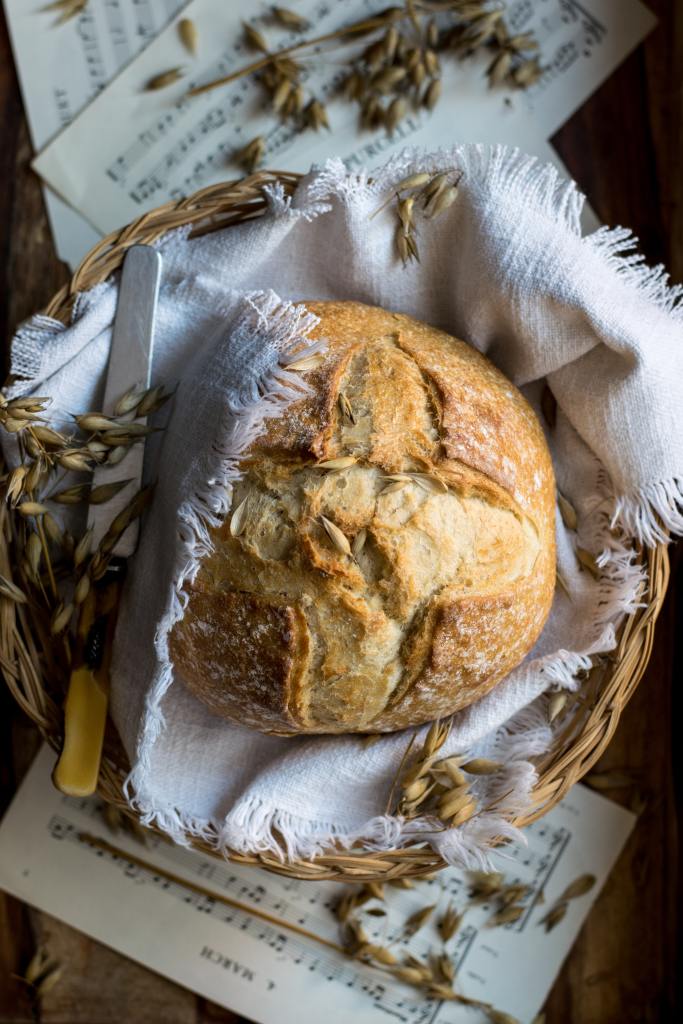
A traditional celebration of harvest often involved a special feast. Bread often featured. A loaf was baked into the shape of a wheatsheaf. To symbolise and celebrate a good harvest. They were traditionally hosted by the farmer who brought together the community of people who’d helped bring in the crops as a way of saying thank you and celebrating a successful growing year
In our bible reading today Jesus tells a story. That involves an invitation to a banquet – really fancy massive dinner party.
Jesus has been invited to the house of the leader of the Pharisees where there is a feast taking place and uses every opportunity to teach them about what being in Gods family is like – being part of Gods kingdom.
He has just told them that being generous to others who cannot return the favour is a mark of being in Gods family and will be rewarded by eternal life in heaven.
The response to Jesus saying this is…. ‘‘Blessed is anyone who will eat bread in the kingdom of God!’
Which makes Jesus tell another story. The story we just heard read. This is a story that tells them and us that enjoying the bread of the kingdom of God, having eternal life isn’t by just doing good things although that is important but actually having eternal life, taking part in the eternal heavenly banquet, is about responding to the invitation.
The man in the story had invited his guests to the banquet they said they were coming, and it was normal at that time to send another invite once the banquet was actually prepared.
So the feast was ready he sent out reminders once again. But the invite wasn’t taken, excuses were made. So the invite was extended. Streets and alleys – the undesirables and then further out still to the countryside and surrounding areas.
In the bible God first invited a nation to be his chosen people – who became the Jewish nation but in the bible we can read that they didn’t always obey God, some rejected him completely and so God told them he would open up his family to include non Jewish people too that he would send his son Jesus to make this happen – to offer the invitation of friendship with God to everyone.
The invitation that Jesus is trying to communicate about In This parable is an invitation to be part of God’s family, to know the hope of eternal life, The bible tells us this is possible through knowing Jesus’ love through his death and resurrection and when we know Jesus it makes us to want to follow his example. But we need to respond to the invite to know Jesus.
His example is one where we look out for others who are less fortunate than ourselves. Those on the margins of society.
And so that is why this harvest we want to give thanks for all the things God has given us, we want to share that with others but we can do this as a sign of our thanks to God for the invitation through Jesus to be part of his family.
An invitation we can all accept if we choose and one that changes the way we see the world through Gods loving eyes caring for the poor and marginalised in our community.
Father God Thank you for all the good things you have given us. Thank you for your generosity in sending Jesus Thank you for the example of his life and that being part of your kingdom involves the responsibility for caring for those that have less than us. Help us to keep sharing with and loving others as much as you do. We thank you that through Jesus you have made it possible for everyone to know you. To know your love and to know the hope of eternal life. Thank you that you give us freedom to respond to your invite and to be part of your heavenly banquet.
At St. Luke’s and St. George’s we are introducing a new pattern of weekly meetings, which this week begins with a Joint Prayer meeting on Monday 3rd October in the evening (7:30-9:00pm) and repeated on Tuesday (10:30am-12:00pm) both at St. Luke’s church. This is a great opportunity to gather for prayer and praise, to hear about some of the developments in our church life and to join with others in praying for them and other issues we are all facing.
Then, the week after, we will restart our study groups, which this term will be doing follow up studies on the sermon topics: Luke 16:1-15 on 9th October and Luke 16:19-31 on 16th October. If you have not previously been part of a Study Group, then do consider joining one, they are a great way to get to know both your Bible and other member of St. Luke’s better and so grow in your walk with Christ. More details next week.
Jesus tells great stories, but what is he trying to do with the Parable of the Lost (or prodigal) Son. The clue is in the context in which he tells it. The story both assures those sinners coming to him in repentance and challenges those who criticise him for welcoming them.
The parable of the lost son, the prodigal son, is one that some of you here will be very familiar with, for others here, this might be the first time you’ve heard this parable.
Whether this is the first time you’ve heard this parable or the 99th time it’s good to remember that the Bible itself tells us that the word of God is alive and active sharper than any double edge sword it penetrates even to dividing soul and spirit joints and marrow it judges the thoughts and attitudes of the heart. (Hebrews 4:12)
With that in mind It excites me that as we look at this parable today whether for the first time or for the 99th time we can be assured that Gods holy spirit can be revealing new things to us through it that will challenge us, encourage us and draw us closer to Gods love and to be the people he has called and created us to be. People of his kingdom. Living his way.
Jesus told parables – which are stories with a hidden meaning – to often teach about the kingdom of God. About what it’s like, the responsibilities of those in it, for example.
At face value this is a story that speaks of a Fathers love and forgiveness of a wayward son. And it might not take too much for us to put God in the role of the father in the story and the put us as humanity, in the role of the lost son.
But, when we read God’s word, it’s important to ask first of all what did it mean then to the audience it was written to and then we can draw conclusions about its teaching for us today.
We didn’t just begin with the parable in our reading this morning, we started at the beginning of the chapter. These first few verses set the scene for the parable of the lost son – ‘Now the tax collectors and sinners were all gathering around to hear Jesus. But the Pharisees and the teachers of the law muttered, “This man welcomes sinners and eats with them.” Then Jesus told them this parable.’
And then we read the parable of the lost son
In fact the parable of the lost son is the third parable that Jesus tells in the context of that event where Jesus is being questioned about who he is eating with. Jesus is eating with tax collectors and sinners and yet the Pharisees are muttering and grumbling about Jesus doing this.
It is with this backdrop, in this context that Jesus tells the parable of the lost sheep, the lost coin and then finally the parable of the lost son.
All three parables share a common progression, moving from what a main character has, to its loss, it’s foundness, it’s restoration and the celebration that follows. Precedent is being set that when lost things are found celebration occurs.
The chapters that surround these parables (14 &16) involve Jesus teaching about the importance of welcoming into one’s homes those who live on the margins of society the ‘poor the crippled the lame and the blind’ (14:21 16:20) and seeks to answer the central question raised in chapter 15 – not the question Jesus appears to be responding to, but the one he has for those listening – will the Pharisees and legal experts welcome such persons as tax collectors and sinners, will they will be joining in the heavenly rejoicing at the finding of the lost, celebrating their recovery at the banquet table – an image given for heaven – the eternal banquet, the eternal feast.
The first two parables of ch 15 – shows God’s attitude and love for these ‘sinners’. And firmly establishes that the restoration of the lost and celebration go hand in hand. The third parable builds on this but switches the focus slightly as being an answer to the words that were uttered by the Pharisees at the start.
Through each parable Jesus is wanting to make it really clear, abundantly clear that yes, he welcomes tax collectors and sinners into his company. And that the kingdom of God that he is bringing about is open to all. It welcomes all and does not exclude anyone who turns to God, seeking him and living as part of his kingdom.
In this parable, there are three characters and we need to remember that – there is the father, the younger son and the older son. The older son briefly appears in v11 and then comes back into it in v25.
The younger son in this parable completely disowns his family, his faith, his heritage – in asking for his inheritance he’s saying to his father in effect drop dead.
To add insult to injury, the younger son didn’t just receive his inheritance, he cashed it in and left. The living in ‘a distant country’ suggests he went to a non-Jewish world which is emphasised by the pigs that he eventually ends up looking after. He has turned his back on his heritage and is living with the gentiles.
We’re told he squandered his wealth in wild living and the money is all gone. He’s already penniless when then famine hits making earning even harder – the younger son found himself in an agricultural and economic crisis.
If life couldn’t get any worse he ends up looking after the pigs. This was a big Jewish no no. They were seen as unclean animals.
The state of the younger son was dire. He’d hit rock bottom and then some.
One commentator writes: ‘The young man has been reduced to a level lower than the lowest of unclean animals’
He’s fallen from his status of son of a large landowner to that of unclean and degraded, he’s even thinking about eating the food of the pigs but no one gave him anything, but then they were in the midst of a famine so maybe no one had anything left to give.
It is only at this lowest place that there is a turning point in the story when the son comes to his senses.
We get this internal monologue – self talk.
In comparing his current state to his father’s hired hands he understands the depths to which he has sunk. The hired hands had bread to spare showing his father was generous with wages. He realises that even as a day labour his lot would be desirable when compared to his present condition. So he makes a plan.
He’s gonna get up – go back and say ‘Father, I have sinned against heaven and against you. I am no longer worthy to be called your son; make me like one of your hired servants’
So he does the first step – he gets up and sets out back home.
The younger son returns with his plan to live like a servant to the family he rejected, but this preplanned apology is sandwiched in between actions of the father that demonstrate acceptance and restoration.
We see in these actions the graciousness of this father that far exceeded all expectations.
he is waiting expectanly
Filled with compassion when he sees him
Casts dignity aside and runs to his son
Kissed him
‘The entire range of actions drive home the fathers profound even undignified love for his rebellious child’
A wealthy landowner running down the street of his village would have been extraordinary, then he publically embraces his younger son. The father disregards what others think and is focussed on the returning of his son.
Just as the son launches into his speech about being unworthy – the father cuts him short from what he intended to say and launches into reinstatement and celebration mode .
best robe
New ring
New shoes
Kill the fattened calf
Stating the reason for all this with the words – ‘For this son of mine was dead and is alive again; he was lost and is found.’
The embrace, the kiss and the gifts of robe, ring and sandals are all emblematic of the sons honourable restoration to the family.
The servants were to give him new shoes that symbolises reinstatement as son, not seen as a servant himself.
Then the fattened calf was to be killed – one interpretation of kill it = sacrifice it.
There is a celebration an act of worship giving thanks that the son was lost, thought to be dead, has returned.
It is as if the father had declared – spare no effort, spare no expense! why? because the son who had disgraced his father, the son who would propose to return as nothing more than a day labourer in his fathers fields, is nevertheless seen as this son of mine
And so they celebrate.
Then we get to the second son. The older son.
He’s been out working and on returning hears a party. Instead of going in and finding out what’s going on he asks a servant. His response to news is anger contrasted with the fathers response of compassion.
His anger leads him to refuse to join the celebration, he distances himself from his family and his role as the elder son – he won’t support his father and has adopted an attitude that is different and opposed to his fathers with regard to his brother
But in doing this the oldest son has turned himself into a slave, removed himself from his family’s presence. The Father again goes to meet his son, this time the older one.
But the older brother has a bit of a strop asking in effect ‘Why it is that recklessness and shamelessness are rewarded with celebration when responsibility and obedience have received no recognition?’
This is the fathers response: ‘My son, you are always with me, and everything I have is yours. But we had to celebrate and be glad, because this brother of yours was dead and is alive again; he was lost and is found.’
Jesus tells this parable in response to the Pharisees grumbling about Jesus eating with tax collectors.
It’s not hard to see In this context the Father is God, the younger son are the tax collectors and sinners and the older brother are The Pharisees and legal experts.
Through the parable Jesus is inviting the Pharisees to not only drop their concerns about Jesus but to replicate his behaviour in their own practices. By celebrating that the lost have been found. And welcoming all.
In welcoming the tax collectors and sinners to the table Jesus is demonstrating the expansive grace of God. That Gods love, invitation and kingdom are open to all. It should be celebrated.
The parable is open-ended and so is the invitation – We’re not told whether the Pharisees and legal experts are going to the act in the same way as Jesus joining in the celebration with those that have been lost and yet found. The Pharisees are being invited in following that example of being welcoming too by accepting these sinners as members of the family of God as those whom God accepts. But will they?
What is this parable saying to us today?
Which character did you connect with the most?
The younger son
The father
The older son
This parable made me think – Who today are the equivalent of the tax collectors and sinners eating with Jesus? Do we celebrate when the sinners and tax collectors of our day join our churches and become followers of Jesus? Are we welcoming or do we stick to the people we know the best, people like us?
We have all been made in Gods image to enjoy his presence forever but everyone doesn’t know this and some outright reject. And may seem lost.
It follows that the same passion that Jesus has for the lost ought to characterise his followers. As his followers we should be seeking the same things. If we’re not then in a sense we are like the older brother, the Pharisees and law experts we’re rejecting Gods kingdom living if we don’t accept into our family those who God accepts, and wants to invite into his kingdom, to welcome home. God wants older brother and younger brother alike to be in his kingdom.
It is telling us we can always come back to God; that whenever someone believes in Jesus and invites him into their life we are to celebrate and rejoice no matter who they are.
If we are in need of forgiveness for areas of our lives where we’re not living as part of Gods kingdom, we can know that God is ready with his gift of forgiveness and love.
This parable tells us that God loves us all – no matter who you are and longs for us to enjoy being in his family and part of his kingdom. We have a gracious God who longs for us to have full lives living his way as part of his kingdom. So we do want to welcome people back to church because it’s in this family that we can grow together in faith experiencing Gods love and learning about, obeying and living in Gods kingdom.
On October 2nd we will have our joint Harvest Service at 10.30 , followed at 12 by a shared meal in the church hall. Hot and cold drinks will be provided but we would like you to bring food to share if you can. If you can bring generous contributions in any one of these categories, please let Mark Ogden know by emailing markieog2@outlook.com or leaving a message on 07896 111159: pasta salad, cheese & biscuits, quiche, cherry tomatoes, cooked meats, fresh fruit, cake, cookies. Thank you !
At the Harvest Service there will be a collection of non-perishable foods for the Food Bank based at the Salvation Army and a cash collection in support of Christian Aid one of the charities we are supporting this year.
How do we encourage our children and young people to have a growing faith that will stay with them and support them throughout their lives? This is the challenge for us as a church and as parents and grandparents. Join us for this important meeting with Ben Hatfield, Canterbury Diocese’s, Children and Young People’s Ministry Adviser as we consider together how we can develop our vision for growing faith in children and young people at St. Luke’s and St. George’s.
After loving God, the greatest command according to the Bible is to ‘love your neighbour as yourself’? But who counts as a ‘neighbour’? That is the question an expert in the Old Testament Law poses to Jesus. Jesus responds with a story and a question.
A version of this talk given at St. Luke’s church on 18th September 2022
The Queen: Who was her neighbour?
One of the most important commands in the Bible is; “Love your neighbour as yourself.”
In today’s passage a Jewish Lawyer agrees with that idea, but then asked Jesus a key question: ‘Who is my neighbour?’
In order to obey the command, he seems to be saying, I need to know who ‘the neighbour’ is that the command is referring to. He seems to be suggesting that some people will count as ‘neighbours’ and others won’t.
Tomorrow, we have the funeral of Queen Elizabeth II. In her role as head of state she had to meet literally thousands of different people from a vast array of cultures and backgrounds. We could ask, which of those she considered to be her neighbour?
1961 Queen Dances with President of Ghana
It is perhaps hard to believe now, but at the start of the Queen’s reign much of Africa was still ruled as colonies of European powers. Vast areas were still part of the British Empire.
The first country to escape colonial rule was Ghana, which became independent in 1957 and became part of the Commonwealth, a free country, but still associating itself with Britain and particularly the Queen.
In 1961, however, the President of Ghana, Kwame Nkrumah, was considering taking the country out of the Commonwealth
Ghana and aligning with the Communist Bloc. It was a move that could have destroyed the whole idea of the Commonwealth.
So, the British government sent the Queen to visit Ghana. This was at a time when Blacks and Whites were still segregated in many American States, there was Apartheid rule in South Africa and many in the West were struggling to let go of a sense of European superiority.
So, what did the Queen do on her visit? She danced with the Ghanaian President! It was an impromptu move that demonstrated that she no longer that the relationship between nations was no longer to be one of a dominant power suppressing another, but of a group of multi-racial independent nations voluntarily associating with one another for mutual support.
In her role the queen often had to relate to people from many different cultures and races to help encourage peace and good relations between cultures. It appears she did so with ease and respect.
2012 Queen Shakes hands with Martin McGuiness
50 years later, the Queen was also involved in another moment of incredible reconciliation that involved crossing cultural barriers. As you probably know for much of the last century and through most of her reign, there were ongoing troubles in Northern Ireland. The country had a big cultural divide between the Nationalists who were culturally more closely connected with the people of the Republic of Ireland and religiously Roman Catholic, who wanted the whole of Ireland to be one country and the Loyalists, who were keen to remain a part of the United Kingdom and religiously tended to be Protestant. The troubles often resulted in violence, sometimes caused by rioting, but often by terrorist organisations on each side. In particular, the Irish Republican Army, committed a number of terrorist attacks in Northern Ireland and across the United Kingdom and were even responsible for blowing up Lord Mount Batten, her husband’s uncle, to whom they were very close.
Yet, in the late 1990s, the Good Friday agreement, brought peace and eventually the Nationalists and Loyalists were able to work together in the Northern Ireland assembly. Martin McGuinness, who had been a leader in the Irish Republican Army, had become the deputy First Minister of Northern Ireland in 2007.
When the Queen visited the Assembly, she met with Martin McGuinness and famously shook hands with him. This was seen as a moment that sealed the peace agreement in Northern Ireland and underlined the end of hostilities that had caused so much pain. It demonstrated that the Queen was able to reach across the cultural and religious barriers and even shake hands with someone who had been an enemy, a leader in an organisation that had been responsible for murdering a member of her family.
We may celebrate such behaviour today, but historically it is not normal! Throughout history, people have more often than not treated those from other cultures, races and religion as less important and less to be loved and cared for than those like them. So, what inspired the Queen to love these neighbours?
The answer, ultimately, is Jesus. The way he answers the Lawyers question powerfully challenges us to consider anyone we meet as our neighbour.
‘Who is my neighbour?’
So, how does Jesus answer the Lawyer’s question: “Who is my neighbour?” He does so with a story about a man who is beaten up by bandits and left for dead, then a question about the story.
I think it is helpful to start with the question about the story. It is a question, that in a sense turns the ‘Who is my neighbour’ question on its head. Jesus asks the lawyer at the end:
“Who was a neighbour to the man who fell into the hand of robbers?” (Luke 10:36)
In other words, Jesus wants us to hear the story he tells and ask ourselves, if I was the man beaten up and left for dead on the side of the road, what answer would I want someone coming across me to give to the question, ‘Who is my neighbour?’
Those who walk on by
In the story, the first two people to walk by are a Priest and Levite. They both see the man broken up, they both would know the great command to ‘love your neighbour’, they are both people who would see themselves as those who obey the Law, but they walk on by.
Somehow, it seems they justify to themselves, that this man lying in the road does not count as a neighbour they should love. How they come to that justification, Jesus does not say, but from the perspective of the man in the ditch whatever justification they came up with would have been unacceptable. He needed their love and care and they failed to give it to him.
Samaritans and Jews
Then comes the Samaritan. The fact that he was a Samaritan was deeply significant.
In Jesus’s time where he lived, there was a cultural divide that in many ways was similar to the cultural and religious divide in Northern Ireland in the last century. It was between Jews and Samaritans. Although both groups claimed to follow Moses, the Samaritans rejected much of the rest of the Old Testament and especially the temple in Jerusalem. There was also a long history of violence and antagonism between the two cultures.
A sense of this antagonism comes across even in the preceding chapter of Luke’s gospel:
“[Jesus] sent messengers on ahead, who went into a Samaritan village to get things ready for him; but the people there did not welcome him, because he was heading for Jerusalem. When the disciples James and John saw this, they asked, “Lord, do you want us to call fire down from heaven to destroy them?”” (Luke 9:52-54)
Jesus quickly rebuked the disciples for the suggestion of destroying the Samaritan village, but the incident itself shows that Jews and Samaritans were quite antagonistic to each other. They saw themselves as enemies and certainly not neighbours!
Now Jesus who is talking to a Jewish audience, probably wants them to assume that the man who is half dead, is a Jew. He would probably not naturally count Samaritans as neighbours to be loved, given an excuse he may well have wanted to torch their villages too!
But given his desperate situation he would have been incredibly glad that this Samaritan did count him as his neighbour.
Compassionate Samaritan
Unlike the others, when the Samaritan sees the man in the ditch he has compassion on him.
“Compassion” is the key word at the centre of the story. It is a word that suggests an emotional association with the one in need that leads to action. It sums up the idea of loving your neighbour as yourself, because it implies putting yourself in the others shoes and doing for them what you would want them to do for you!
That is what Jesus is trying to do with this whole story. If we are to love our neighbour as ourself then we need to think ourself into the situation of the neighbour and ask what would we need them to do for us in our moment of need.
The Samaritan certainly does that for the man in the ditch with a generosity and enthusiasm that is almost over the top. He stops, he bandages up the man’s wounds, he pours wine and oil on them to help them heal, he puts the man on a donkey, takes him to an inn and pays what amounts to £100s in today’s money for the man to stay in the inn and even offers to pay more if necessary. This was truly sacrificial care.
Who was neighbour to the man who was beaten up? The Lawyer, who can’t bring himself to say, ‘the Samaritan,’ nonetheless concedes that it is, ‘the one who showed him mercy.’
If you are in desperate need you don’t care who helps you, who treats you as a neighbour, so why should you seek to limit who your neighbour is, when it comes to the command, ‘Love your neighbour as yourself.’ The ‘neighbour’ must be anyone you come across, no matter what their culture, race or religion, even your enemy.
Go and do likewise
Jesus finishes by telling the man, ‘Go and do likewise.’ In other words, don’t limit who you show love to when you come across someone in need, show them the same kind of generosity and care that the Compassionate Samaritan showed to the man left for dead. No matter what sacrifice that may entail.
In fact, ask yourself, who would I not want to be included as a ‘neighbour’ in the command , ‘love your neighbour’? Is there a type of person or a particular person that you would not want to love as yourself? It’s easy to appreciate Jesus’s great ethical teaching, but are we really willing to follow him?
I suspect that the Lawyer, who could not even name the hero of the story as a Samaritan was willing to go and do likewise as Jesus commanded. In fact, when we go back to the start of the story, we discover that the Lawyer does not really want to join in with Jesus’s agenda.
‘What must I do to inherit eternal life?’
The Lawyer actually starts with a different question. He asks Jesus, “What must I do to inherit eternal life?” Now this is a great question to ask, but Luke tells us that the Lawyer is actually ‘testing Jesus’. He wasn’t really interested in what Jesus thought, but was challenging Jesus.
So, what was he challenging Jesus about?
Jesus’s followers have eternal life:
This passage follows on from a speech Jesus gives to his disciples after they return from travelling around telling people about Jesus.
He celebrates the success of their mission and in particular that they like Jesus seem to have power over demons and says,
“However, do not rejoice that the spirits submit to you, but rejoice that your names are written in heaven.” (Luke 10:20)
The implication is that those who have joined up with Jesus and are following his agenda for life, trusting that he truly is God’s saviour and king, can be confident of eternal life.
That is a bold statement, especially when you remember that these disciples did not fully measure up to Jesus’s standards – after all they are the ones that wanted to burn down the Samaritan village! Yet, Jesus implies that choosing to join up with him is enough to gain eternal life.
He then in verse 21 says, that these things are hidden from the ‘wise and learned.’
What about the Lawyer?
Now, the Lawyer, who may well have been listening to this speech of Jesus, may well have heard these words and no doubt been upset by them. When we read his question about eternal life in the context, we can see that he is saying something like:
“You claim that your followers, who are not trained in the Law, can be confident of having eternal life, what about me, how do you think that I an expert on the Law than them, can have eternal life?”
Jesus’s response is to turn the question around:
“You’re an expert in the Law, what do you think the Law actually says.”
The Lawyer responds with the two great commands: Love God and love your neighbour and Jesus says, ‘You have answered correctly.’
But then he says, ‘Do this…’ In other words: you need to take these Laws to heart and live them, not just understand them intellectually.
Yet rather than expressing a desire to do that, the Lawyer asks about a detail of the Laws: “Who is my neighbour?” Luke says the Lawyer was wanting to ‘justify himself’. In other words, show that he was measuring up to the Law. As long as the definition of ‘neighbour’ was limited to the right kind of people, then the Lawyer could be confident he measured up to the Law.
Yet, this desire to ‘measure up’ rather than a desire to join up with Jesus, was still missing the point. Thinking that we can measure up without joining up, is actually to fail to love God with all our heart, soul, mind and strength.
Will you join up with Jesus?
We still face the same question today. Too many people today, like the Lawyer, think that measuring up is what counts. It may be that they are trying to measure up to the changing standard of the culture around them, or the imagined expectations of someone or some group they respect and want to impress.
It may be that when they think about God and eternal life, they think that they will be alright, because they think they measure up, they’ve lived a better life than most. Yet does anyone really measure up fully with the two great commands to love God and love our neighbour as ourselves – especially when the neighbour could be anyone? I’m not sure even the Queen, despite her dedication and service would fully measure up. However, I do know that the Queen often spoke about her faith and trust in Jesus. She had joined up with Him and God’s mission and purposes.
What matters is not measuring up but joining up. It means committing ourselves to Jesus as our Lord and Saviour. Trusting the incredibly Good News, that although in a sense our mortality means that without God, like the man attacked by bandits in the story, we are as good as dead, but that like the Good Samaritan, Jesus has come with compassion and care to sacrifice himself on the cross, so that our sins can be forgiven, we can be reconciled with God and so have eternal life, when we join up with him. Not only that, when we join up with Jesus, we increasingly want to live like Jesus and mirror, the compassion that he shows us in compassion for all we come across, to love our neighbours as ourselves.
As our nation continues through this period of mourning for our late Queen, we will be offering further opportunities to acknowledge her passing, both individually and corporately over the weekend before her funeral.
Below are some options we want to make available for people to respond:
The church will be open for people to come and sit quietly to reflect, pray or light a candle in remembrance of the queen or fill in the book of condolences on Saturday 17th from 10:00am-12:00pm and on Sunday 18th from 4:00-6:00pm.
There will be a Special Commemoration Service on Sunday 18th 6:00pm at St. George’s for those who wish to gather together to mark the queen’s passing.
We will be showing the funeral live at St. Luke’s church on Monday 19thfrom 10:00am, for those who want to gather together in church to mark this important event. If you would like to stay behind afterwards, there will be a ‘Bring and Share’ finger buffet for lunch.
If people would like to place flowers in memory of the queen, then they can be placed near or affixed to the gates of the church. These will remain in place until the day after the funeral. We will open the main central gates, please do not leave flowers in a way that will block the entrance for cars or people.