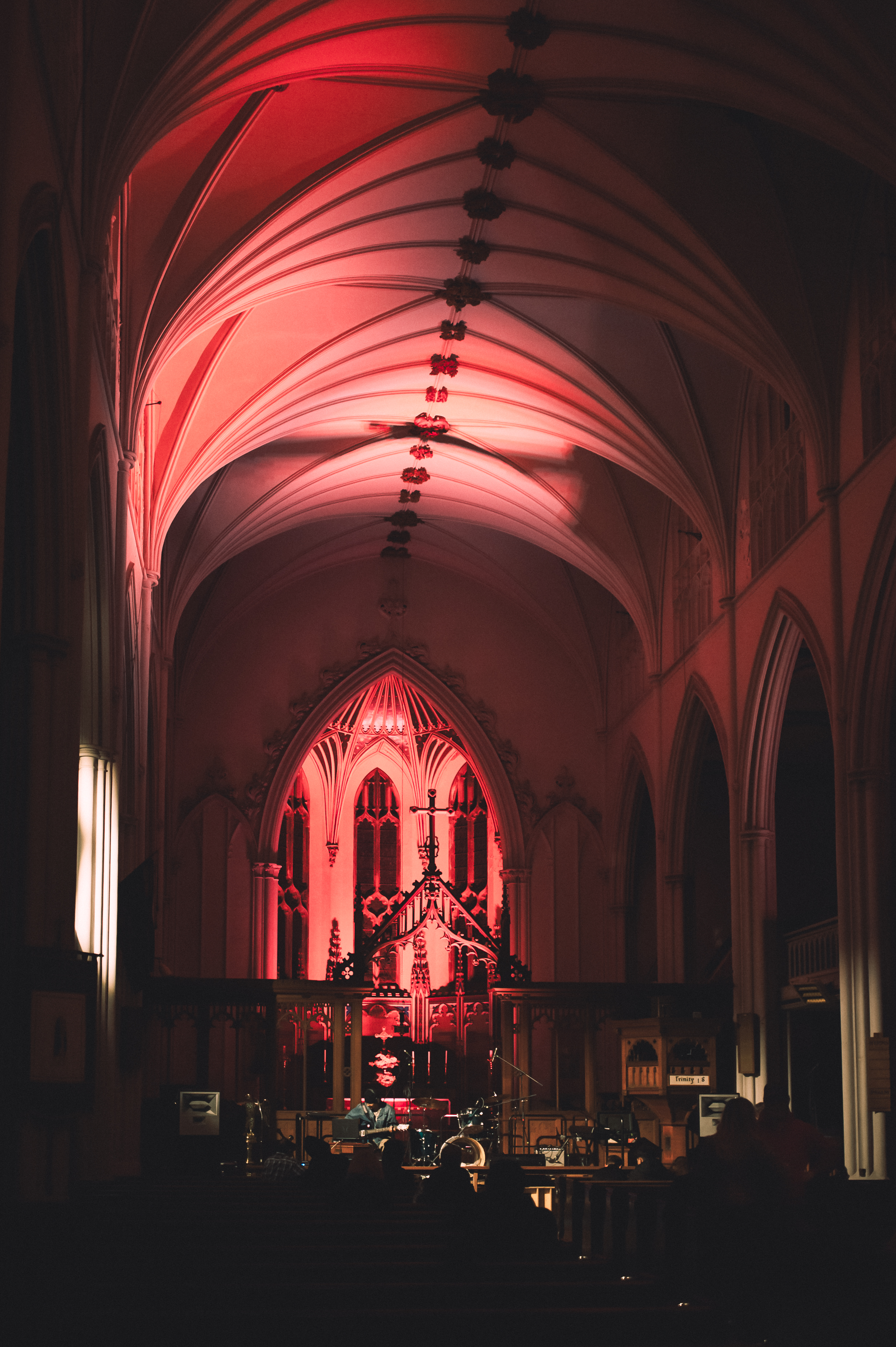
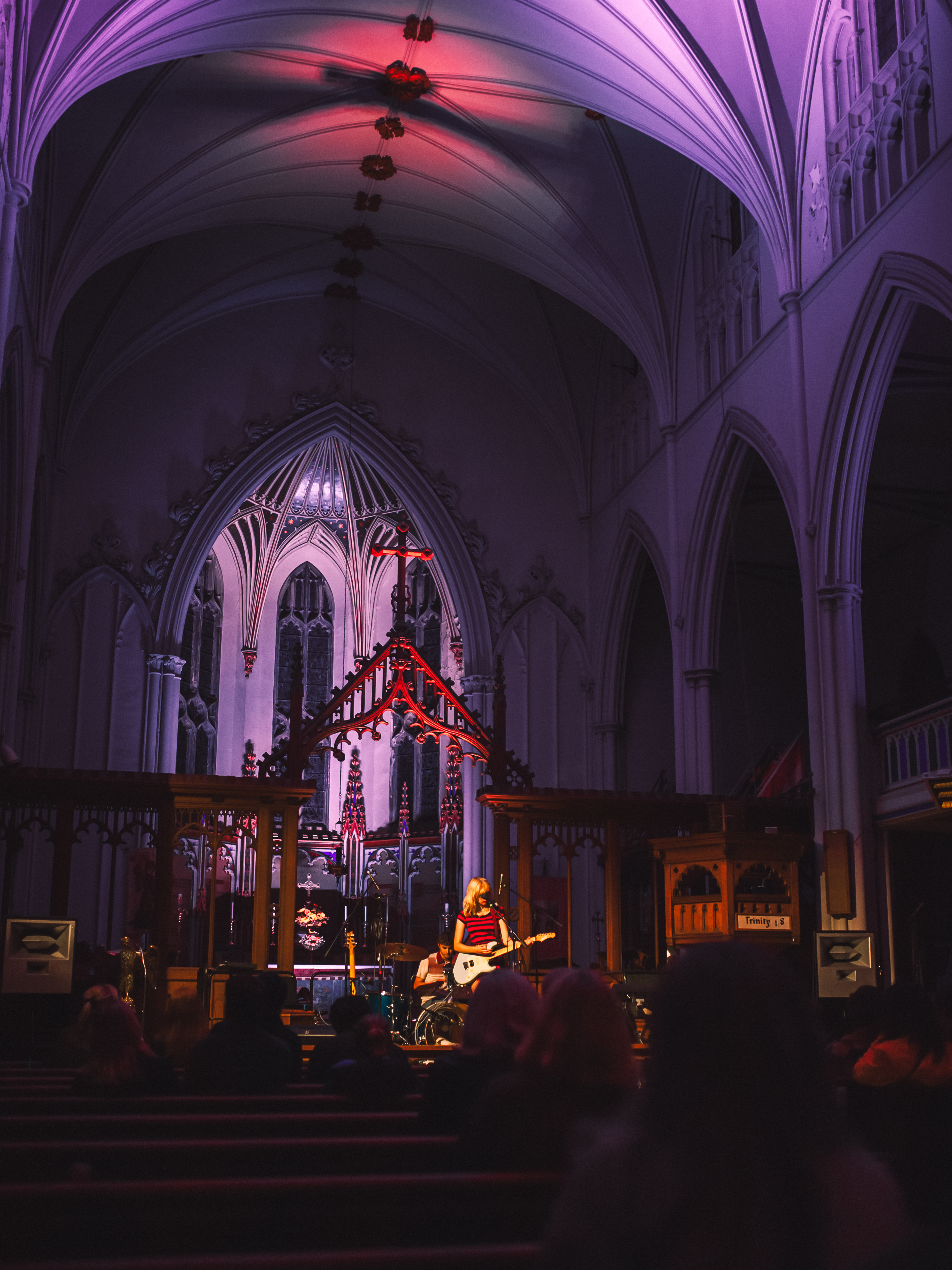
Last week with Pie Factory Music was fantastic! Not only did we raise over £1,000 – split equally between Pie Factory and The St George’s Restoration Fund, we also had a brilliant time doing it. Thanks to all the acts, staff and volunteers who worked so hard to put this event on and of course to everyone who bought tickets.
A key aim of Project 200 is to open up St George’s to everyone in our community. It’s really important for young, local musicians to have the opportunities to showcase their talents, so we were particularly excited to host artists from Pie Factory’s Emerging Artist programme.
Photographer Tom Keenan captured some lovely moments on the night. More of his work is on his website.
We have been going through the Bible looking at moments when God revealed his plans to his people, so that they had a vision of the future that God was going to bring about. Each vision statement was relevant to particular people at particular times and although each had a lot to show us about what it means to be the people of God, they were not specifically meant for us.
They lived before Jesus, to whom the Old Testament ultimately points. He is the pre-eminent descendant of Abraham, through whom all nations are blessed. The rescue of Israel at the time of Moses from slavery in Egypt to a life in the promised land merely foreshadows, Jesus’ exodus through death, which brings us freedom from sin and the living hope of eternal life. Jesus was the Son of David, who would rule not just over Israel for a lifetime, but at God’s right hand eternally. It is the sacrificial blood of Jesus on the cross, that creates the New Covenant of inner transformation that Jeremiah looked forward to.
We now live after Jesus. So, the vision that Jesus gives to his followers, between his resurrection from the dead and his ascension into heaven, is a vision for God’s people until he returns. Matthew emphasises this vision, by making it Jesus’s last words in the gospel.
The key phrase in this vision statement is: ‘make disciples.’ The rest elaborates what that means. Disciples are to come from all nations and be given a new identity through baptism as those who belong to the God who is now known as Father, Son and Holy Spirit. They are to be taught to obey all that Jesus had taught and they are to know that Jesus will always be with them. Whatever our vision is to be, it must have making disciples at its heart.
Paul Worledge
Vacuum Cleaner – Needed!
We need a replacement vacuum cleaner for the St. George’s church hall. Does anyone have a spare device, not needed, which they could donate? Preferably a cylinder style one. Please contact Mark Ogden on 07896 111159.
National Week of Prayer from 12th October
The National Week of Prayer runs from 12th to 20th October. YWAM are organising some local ‘Sphere of Influence’ prayer events:
The Light Party, St. Luke’s, 4:30-6:00pm, 31st October
Our alternative to Halloween. A party event for all ages. This annual event is great fun and a good way to provide a positive alternative to the darkness that is the focus of Halloween celebrations. Do come and encourage both church and non-church friends to come.
If you would like to volunteer to help make this event possible, then please speak to Charlie or Tonya.
Questionnaire Response Analysis
Thank you to all those who filled in the online questionnaire during the summer. The full analysis is now available as a printed copy at the back of church and online. Please feel free to look at the printed copy, but don’t take it away! Read the online version…
What have we discerned?
As we come to the end of the Year of Discernment we want to share, Vision 2030, the plan we think God has for our churches over the coming five years. We will be making a presentation on Monday 11th November at 7:30pm at St. Luke’s church, members from both churches are encouraged to come and hear the plans. There will be opportunities for feedback in the meeting and in the weeks afterwards.
Links to Share:
This week some articles that deal with some of the struggles we face.
A Christian Response to Chronic Pain
The chances are that you know someone who lives with chronic pain, whether you are aware of it or not. Chronic pain is a specific type of suffering which is invisible, unpredictable and long-lasting. We discuss how this presents a particular set of challenges and hurdles to the sufferer, their loved ones and the wider church family, and we also share a personal example of living with chronic pain. Chronic pain demands a response; here we seek to bring biblical light to help people of faith who are seeking to respond well. Read more (an in depth article, but well worth the read if you suffer with chronic pain or want to know how to support those who do.)
Israel-Gaza war anniversary: why peacemakers need a touch of doubt
This article by Graham Tomlin aims at helping us understand the present Middle Eastern conflict from the point of view of Israeli’s and Palestinians and encourages us to think through what it means to ‘love our enemy.’ Read more…(7 min. read)
Assisted Suicide Bill
If you are concerned about the possible introduction of an assisted suicide law, then you may want to check out this message and way of contacting the MP about it. Find out more…
Finally, let’s pray that we can make more disciples.
Yours in Christ
Paul Worledge
(Priest in Charge, St. George’s Ramsgate)
Weekly Calendar
Sunday 13th – The Twentieth Sunday after Trinity
Eucharist (St George’s, 9:30am) – Reading: Matthew 28:16-20
Sunday School (St George’s, 10:30am)
Monday 14th
Prayer Meeting (St. Luke’s Church) – 9:30-10:00am
Craft Group (St. George’s Hall, Soup Kitchen) – 2:00-3:30pm
What’s On – a page which lets you know what is happening this week and gives information about upcoming events.
Notices – You can read the latest notices on this page.
Sermons – Read a transcript of a recent sermon or watch the YouTube version recorded at St. Luke’s. There are now videos for all the sermons over the summer.
Safeguarding Training
If you volunteer in anyway at church the national authorities are strongly encouraging you to take at least the Basic Module in safeguarding training once every three years.
If you have not completed the training in the last three years, then the module can be completed online and takes about ninety minutes. You can access the training by following this link. You will need to first register, to access the training. Once the training is completed, you will be sent a certificate. Please forward that certificate to James (office@stlukesramsgate.org), so that we can keep records of who has done the training.aining.
“This is the covenant that I will make with the people of Israel after that time,” declares the LORD. “I will put my law in their minds and write it on their hearts. I will be their God and they will be my people.” (Jeremiah 31:33)
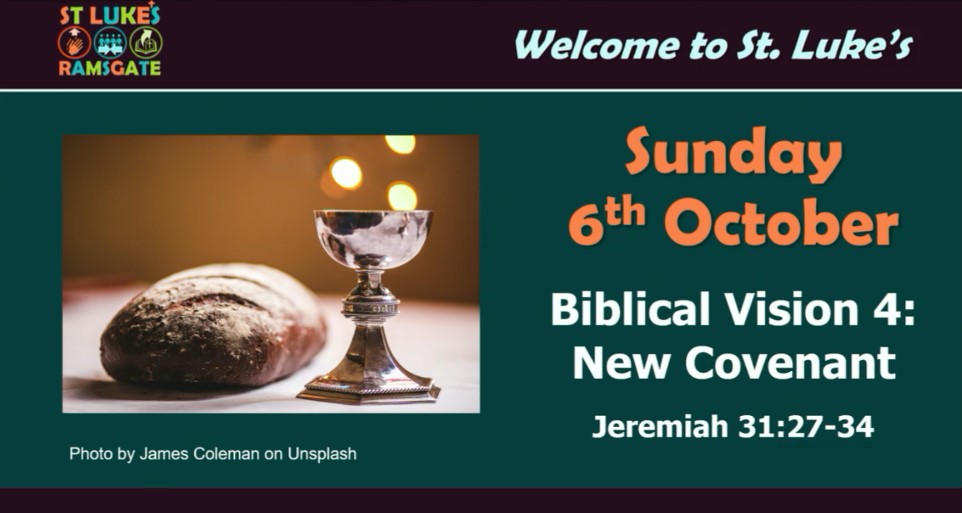
This week we return to our theme of Biblical Visions and look at Jeremiah’s prophecy of a coming ‘new covenant’, which will bring forgiveness and transformed hearts and minds.
None of us want life to go badly. Most of us hope for a peaceful life, a happy marriage, a successful career, a healthy retirement, happy families and so on.
But, sometimes, life can be hell. We find ourselves embroiled in conflicts, marriages falling apart, being made redundant, struggling with ill health and seeing our families estranged.
We might ask, where is God in all that? Is this really part of his plan for my life? Surely he would want me to have an easy life?
We’re going through a series on Biblical Vision, looking at key moments in the Bible, when God reveals his big plans to key people. Today we come to a really important passage in Jeremiah, where God lays out his plans.
Now, although the vision we are looking at is positive, it is worth remembering that Jeremiah’s message was often much more about the struggles that God was going to bring. In fact, for Jeremiah, life was hell. He lived through the complete destruction of his kingdom and city and found himself hated for a message that proved to be true. Yet, God used him powerfully and his message is one that as we will see is fundamental to understanding the story of the whole Bible and even the Christian message! His was a hell of a life, but he was certainly part of God’s plan!
Jeremiah in Biblical History
To my shame in nearly a quarter of a century of regular preaching I have never preached on Jeremiah 31 before. In fact, in looking through my notes, I’ve only ever preached on Jeremiah once before! This is quite shocking, when you consider how big a Biblical book Jeremiah is, and how important this passage in Jeremiah 31 is.
To understand Jeremiah and this passage, we’ll need a quick recap of what we have looked at in our series on Biblical Vision so far as we have gone through the Biblical history looking at God’s vision statements.
The Gradual fulfilment of God’s Vision:
We started with Abraham and God’s promise that he would bless him and his family and through him bless all nations. This would happen by making his family into a great nation, a fulfilment that moved forward by stages:
First, he would have many descendants, then they would settle in the promised land, then they would be ruled by a victorious king and his dynasty. Once all this was fulfilled after 100s of years, Israel was a great nation under David’s son Solomon. In fact rulers of nations would come to be blessed by his wisdom!
But alongside this plan for Israel to be a great nation and intricately connected to it was God’s plan for them to be his people. This was to be expressed in a special covenant relationship.
This was made clear to them on the way from being slaves in Egypt to the promised land, when God told them through Moses:
“”Now if you obey me fully and keep my covenant, then out of all nations you will be my treasured possession. Although the whole earth is mine, you will be for me a kingdom of priests and a holy nation.” (Exodus 19:6-7)
What did it mean to obey God fully? Well, the Ten Commandments set out the basic ideas of obedience.
What was a covenant? A covenant is kind of relationship plus promise. So, a marriage is a covenant relationship, that comes about when a man and a woman in a special ceremony promise to remain committed to each other for the rest of their lives. And at Mount Sinai, Israel ratified their covenant relationship with God, by agreeing to be loyal to him and to obey his commandments. This was all sealed by a special ceremony, which involved animal sacrifices and the sprinkling of the blood of the sacrifice on both the people and the altar to God.
So, by the time of Solomon, who built a temple for God, the covenant relationship and promise to become a great nation was all in place.
The Disintegration of the vision
But from this high point, things went downhill. Why? Because the kings failed to be loyal and obedient to God and the people followed suit. God had kept his side of the covenant, but the people were consistently disobedient and disloyal.
Even Solomon, led astray by his many foreign wives, allowed the worship of foreign gods. So, God, declared that most of the kingdom would be taken from his family. And in his son’s time the kingdom split in two. A Southern kingdom around Jerusalem, still ruled by David’s descendants and a Northern kingdom ruled by other kings.
The kings of both nations were often wicked, oppressive and idolatrous. God was patient, but in the end, he punished them for their wickedness by sending first the Assyrian empire to exile the people of the northern kingdom, then the Babylonian empire to exile the people of the southern kingdom.
This second exile happened was forecast by Jeremiah and happened during his lifetime. Indeed, much of Jeremiah’s book is taken up with warnings to Israel to stop sinning and to turn back to God before it was too late. But his warnings fell on deaf ears and Jerusalem and the temple built by Solomon was destroyed.
Many of them probably thought it was all over. The covenant, the promises, the vision of God for a people through whom he could bless the nations all destroyed.
But although, Jeremiah’s preaching had mainly forecast this destruction, it also contained a message of hope, that the covenant, the vision of God was not over. In fact, in the midst of this tragedy, God proclaims through Jeremiah a significant vision of a brighter future.
A Different Future (31:28)
Most of Jeremiah’s book is about destruction. Verse 28 echoes the key theme of the book, but notice, that although destruction is the focus, it is not the end of the story:
“And it will be just as I watched over them,
to uproot,
to breakdown,
to overthrow,
to destroy,
and to bring evil,
then I will watch over them
to build,
and to plant!”
declares the LORD. (verse 28)
If you take on a house with a garden full of weeds, you need to start by uprooting all the weeds, before you can plant a beautiful garden. If you take on a derelict site on which to build a new house, first of all you need to demolish the house before you can build something better. If you are a doctor looking after a patient with cancer, first you need to cut out the cancer, and punish the body with chemotherapy and radiotherapy before you can bring about a healed and renewed healthy body.
Jeremiah lived through a time of uprooting and destruction. It wasn’t pleasant, but the nation that was meant to be great, and a blessing had proved to be corrupt and a curse. Uprooting and destruction were needed, before something better could be planted and rebuilt.
A Different Covenant (31:32-34)
But how will things be better?
The old covenant had just not worked. Israel kept breaking it. Jeremiah makes this point in verse 32:
“…the covenant that I made with their ancestors when I took them by the hand to bring them out of the land of Egypt — a covenant that they broke, though I was their husband,” says the LORD.” (Jeremiah 31:32)
Over generations Israel had consistently failed to live up to their side of the covenant relationship, if they kept running after other gods, and created a society of oppression rather than justice.
Things seemed impossible. How could the covenant work, when Israel would not change? How could a leopard change its spots?
Actually, that phrase about leopard and spots, comes originally from Jeremiah!
“Can the Ethiopian change his skin or the leopard its spots? Neither can you do good who are accustomed to doing evil.” (Jeremiah 13:23)
Of course, Israel was not unique in this regard. Evil seems ingrained in all humanity. Despite the many great technological, philosophical and societal advances in recent history. Evil and wickedness at every level continues to destroy lives. What hope is there?
Well God has a solution. It is a new covenant. Look at verse 33:
“This is the covenant that I will make with the house of Israel after that time,” declares the LORD. “I will put my law in their minds and write it on their hearts. I will be their God, and they will be my people.”
The great vision for Israel was that God would be their God and they would be his people. That could only work, though, if they are changed on the inside. A law on their minds and writing on the heart talks about a radical inner transformation. A true winning of hearts and minds. One that would also involve God’s forgiveness for sin as verse 34 makes clear:
“For I will forgive their wickedness and will remember their sins no more.”
Jesus and the New Covenant
So, how could this happen? The first covenant at Sinai was ratified by animal sacrifices and blood. But it had failed. A more powerful sacrifice and blood was needed.
At the last supper, with his disciples, Jesus prepared them for his imminent death by giving them bread and saying, “This is my body.” Then he gave them a cup of wine and in the words of Luke 22:20, he said:
“This cup is the new covenant in my blood, which is poured out for you.” (Luke 22:20)
The only place the phrase, ‘new covenant’ is used in the Old Testament is this passage in Jeremiah. Jesus was declaring that his imminent death on the cross, would be the sacrifice that would make possible the new covenant, not just a call to try and live by God’s rules, but the promise of a deep forgiveness of sin and an inner transformation of heart to enable us to truly become God’s people.
As Christ himself was torn down and uprooted by the sins of the world on the cross, God raised him up to become for us the means of entering into a new covenant with God, where we can be enabled to lives of loyalty and obedience to God.
What about our vision?
So, what has all this to say about our vision as church today?
Firstly, we need to accept that God’s plans can include destruction and judgement. Sometimes things need to be uprooted for something better to be planted. Sometimes things need to be destroyed for something better to be rebuilt. If we want to be part of something better, like Abraham we may need to leave some things behind, like the Israelites in Egypt, we may need to leave one home to travel through the wilderness to a better home, like Jeremiah, we may need to witness destruction in our time in a hope of God building a better future.
Even the Christian call to each individual is a call to repentance, that will often mean letting go of things we value in order to let go of someone whose value surpasses all. Are you willing to do that in order to grasp Christ?
Secondly, our vision needs to be about inner transformation of people. We want to see God at work transforming people from the inside out. Becoming a Christian is not primarily about taking up new habits, like prayer, Bible reading and coming to church (important as those things are). It is not primarily about joining a community of like-minded people (crucial as that is to faith). It is primarily about coming to know God as your God, Jesus as your saviour and the Holy Spirit working in you to bring about fundamental inner transformation. Creating in you a heart eager to live for God.
If our aim in growing the church is just to attract a crowd, then we will not really have achieved anything. We need to be about the new covenant, calling people to accept God’s work in their lives for a radical inner transformation. Anything short of that is failure. Not that we shouldn’t welcome people to join us as a church family and encourage them to pray, read the Bible and come to church, these are all the means to the end of inner transformation – but we must not mistake them for the end!
Thirdly, Jeremiah lived through a terrible time to be a prophet and a member of Israel. His experiences would have not been too dissimilar to the kinds of experiences of those living in some of today’s war zones. Sometimes for us today it can feel like life is falling apart, that we are living through a time of uprooting and destruction. But, although that may be God’s plan for now, it is not his ultimate goal. As Jeremiah could see, the ultimate goal is always to plant and to build.
“This is the covenant that I will make with the people of Israel after that time,” declares the LORD. “I will put my law in their minds and write it on their hearts. I will be their God and they will be my people.”
Lots in this week’s notices. Remember to scroll to the end for church calendar. Also, the shared blogs give a range of views on the effects of young people’s use of smart phones…
___________________________
The Bible is full of visions of the future that God gives to his people at different points in their history. These visions given by God, contain a certainty and commitment that is not possible for mere human beings. Our lifespans are finite, our power is limited, but God is eternal and unconstrained. He is also faithful. What God says about the future will come about – eventually.
The Bible often refers to God’s vision statements as ‘covenants.’ A covenant is promise plus relationship. It is commitment to a goal and loyalty to a person or people. God’s visions are covenants, because they commit God to fulfilling certain goals and remaining loyal to his people.
But what if God is loyal and the people are not? How can that relationship work? The Old Testament shows that this was a common problem.
So how does God deal with this dilemma? Firstly, there is a certain conditionality to the covenants. There is judgement when the people fail to live up to their side of the bargain. Jeremiah and the other prophets keep warning the people that this judgement is coming. Secondly, although God judges, he does not abandon the covenant. There is always hope, because God is faithful. Jeremiah and the other prophets also talk about hope beyond judgement.
But Jeremiah also tells us of a third response: ‘a new covenant’. God will transform hearts and minds, so that they will remain loyal to the covenant. How does God do that? Through Jesus. At the last supper, Jesus says, “This cup is the new covenant in my blood…” (1 Corinthians 10:25) This is a vision that goes beyond a hope of stronger nations, prosperity or better buildings. It is a vision for a transformed humanity, that can truly be God’s people.
Paul Worledge
Prayer Breakfast – Saturday 5th October, 9-10am
St. George’s will be hosting the churches together prayer breakfast at St. Luke’s Hall (St. George’s Hall is unavailable). Any volunteers to help are welcome (please see Paul), but please do also plan to come, meet up with others from local churches and pray!
Pie Factory Concert at St. George’s – Tomorrow!
Pie Factory Music and St George’s are teaming up for a gala fundraiser on Friday 4th October in St George’s Church. There will be a pay bar, with doors opening from 7.00pm. Tickets £10 available through the St. George’s website. Find out more…
Harvest Collection
Thank you to all those who contributed food to the Harvest collection and money to the Christian Aid Middle East appeal.
Youth Hangout – After School Club
Do encourage young people to come to our new after school club on Thursday afternoons. We have extended the time to be from 3-6pm, so children returning to Ramsgate a bit later in the evening can attend. More information and a parental consent form available on the website.
National Week of Prayer from 12th October
The National Week of Prayer runs from 12th to 20th October. YWAM are organising some local ‘Sphere of Influence’ prayer events including one for Arts, Entertainment and Media at St. Luke’s Church, 7:30-8:30pm on Monday 14th October. See Lucy or click here to find out more or here to watch a video about the events.
Questionnaire Response Analysis
Thank you to all those who filled in the online questionnaire during the summer. The full analysis is now available as a printed copy at the back of church and online. Please feel free to look at the printed copy, but don’t take it away! Read the online version…
Upcoming Baby Loss Support Service
On the 12th October at 11.30am, in Canterbury Cathedral, Mariposa Trust will be hosting one of their Saying Goodbye Services. This is for anyone who has either personally lost a baby at any stage of pregnancy, at birth, or in early years, or who has been affected by family members’ or friends’ loss. Whether the loss was recent or 80 years ago, everyone is welcome to attend.
Links to Share:
Some blogs about the ongoing debate around children and young people’s use of Smart Phones.
Smart Phones – a young person’s perspective
In this powerful article by a young person, the writer argues that smart phones have touched her of a normal childhood. Read more (5 minutes)
Parents against Smartphones
This article reports a growing movement of parents in the United Kingdom seeking to restrict the use of Smart phones untill the age of 16. Read more
Are we being anxious about anxiety
This article argues that the concerns about mobile phones and social media on our young people is over-hyped. Read more (6 mins).
More on what is causing anxiety among young people
In this article, Krish Kandiah considers the arguments around the causes of anxiety in the new generation. Read more…
Finally, let’s enter into God’s new covenant made available through Jesus.
What’s On – a page which lets you know what is happening this week and gives information about upcoming events.
Notices – You can read the latest notices on this page.
Sermons – Read a transcript of a recent sermon or watch the YouTube version recorded at St. Luke’s. There are now videos for all the sermons over the summer.
Safeguarding Training
If you volunteer in anyway at church the national authorities are strongly encouraging you to take at least the Basic Module in safeguarding training once every three years.
If you have not completed the training in the last three years, then the module can be completed online and takes about ninety minutes. You can access the training by following this link. You will need to first register, to access the training. Once the training is completed, you will be sent a certificate. Please forward that certificate to James (office@stlukesramsgate.org), so that we can keep records of who has done the training.an keep records of who has done the training.
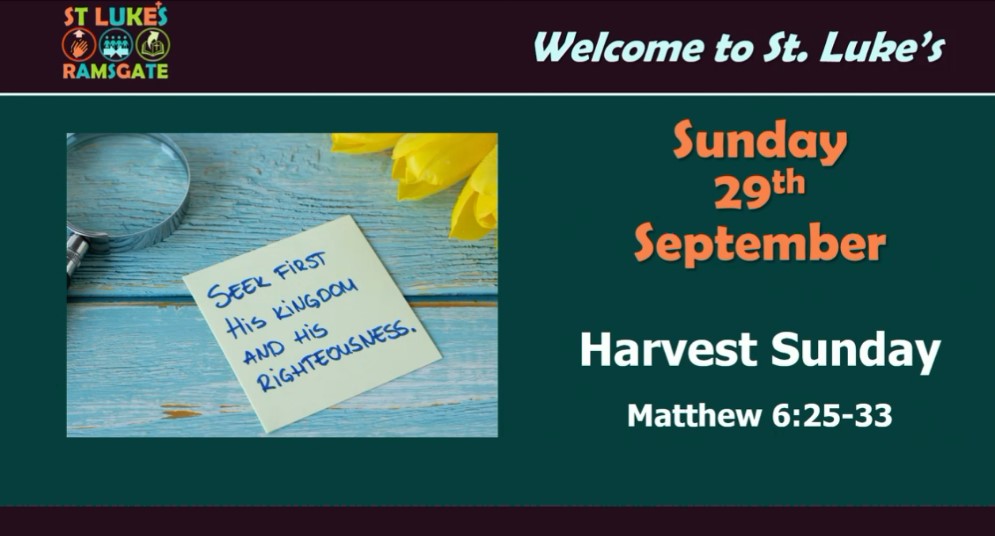
‘But seek first his kingdom and his righteousness, and all these things will be given to you as well.’ (Matthew 6:33)
In this time of harvest, we are first reminded to seek the Kingdom, trusting in God completely. Then, we are called to BE the Kingdom to others around us, showing hospitality, love, and mercy in the face of scarcity, anxiety, or fear. As Jesus said, can any one of you, by worrying, add a single hour to your life? Instead, let’s trust in God’s provision and show love to those around us.
A bit later than normal this week, but please read on for details of our Harvest Sunday service this Sunday.
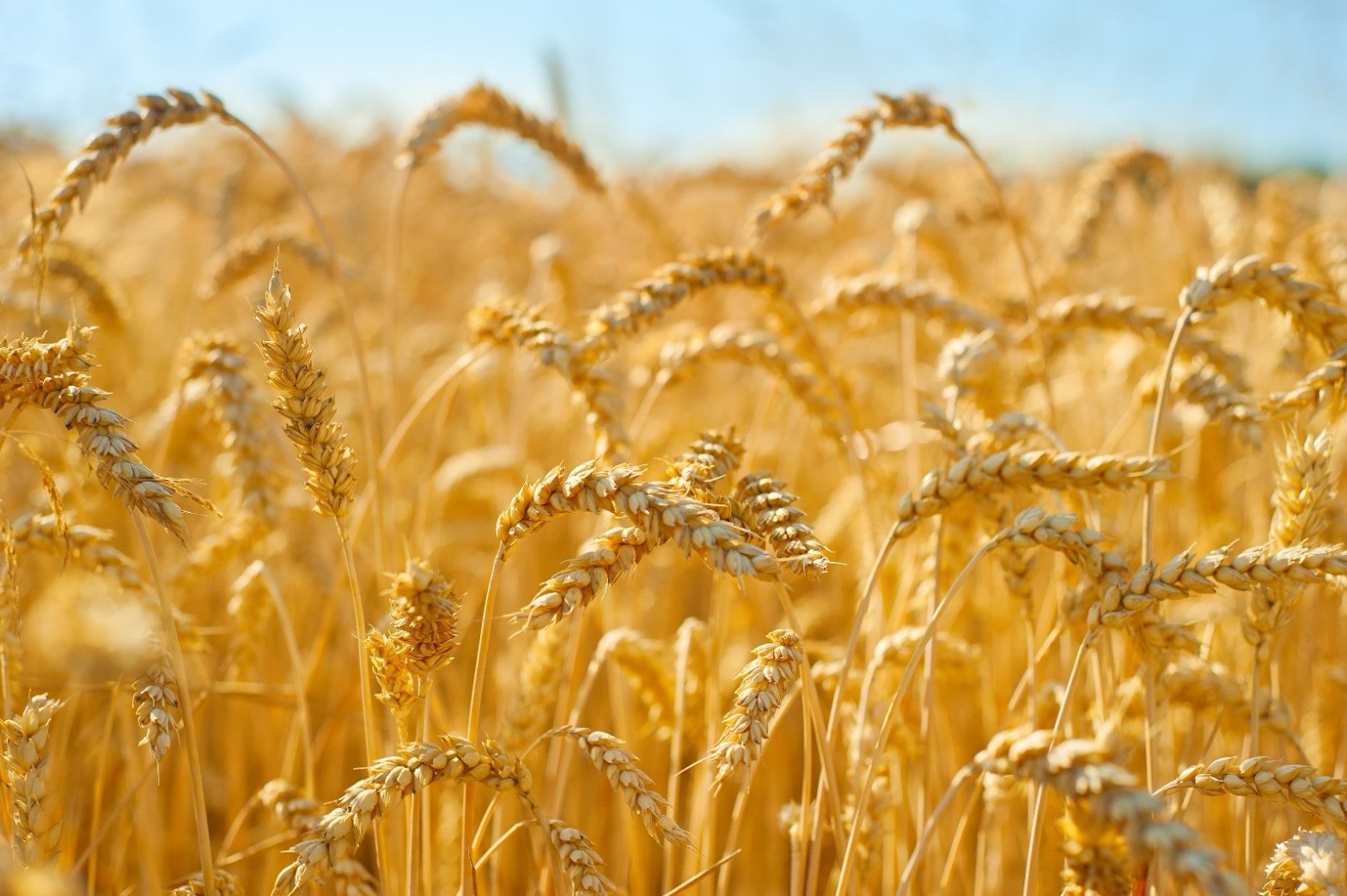
I wonder what memories you have of ‘Harvest’ from years gone by? Is it primary school songs such as ‘Cauliflowers Fluffy and Cabbages Green’, picking out tins of food with a loved one to carry to church, working in the fields in all weathers to bring in muddy potatoes, or receiving a much-needed donation of cupboard staples?
Each of us has varying and different relationships with food and we have probably engaged with harvest festivals in many different ways. Whilst technology and agricultural advances have changed drastically over the years, one aspect of our relationship with food doesn’t seem to have diminished, and that’s the worry surrounding it. With the cost-of-living crisis, climate change and ever-evolving ethical stances on the manufacture of our food, the ‘do not worry about what you eat’ statement from Jesus is still as true today as it ever has been.
Jesus’s words at the Sermon on the Mount in Matthew 6:25-34 tell us not to worry about what we will eat, or wear, not because believing in Jesus means an endless supply of material possessions, but because he wants us to trust God the Father to supply us with what we need, knowing he is a good Father who values his children so greatly, even if we don’t know where the next meal is coming from.
In this time of harvest, we are first reminded to seek the Kingdom, trusting in God completely. Then, we are called to BE the Kingdom to others around us, showing hospitality, love, and mercy in the face of scarcity, anxiety, or fear. As Jesus said, can any one of you, by worrying, add a single hour to your life? Instead, let’s trust in God’s provision and show love to those around us.
Beth Keenan
Harvest Sunday – 29th September
Our Harvest Service will be an All Age service on Sunday 29th September starting at 10:00am. We are hoping that this will be an opportunity for both the 9:30am congregation and Sunday School families to join together in a short service of thanksgiving. There will be a simple Holy Communion in the choir stalls before this service at 9:30am.
We will also be having a special collection, which will go towards Christian Aid’s Gaza Appeal.
We will be collecting non-perishable food items at the service, which will be donated to the local Salvation Army Food Bank. Please bring some non-perishable food to offer at the service.
Prayer Breakfast – Saturday 5th October, 9-10am
St. George’s will be hosting the churches together prayer breakfast at St. Luke’s Hall (St. George’s Hall is unavailable). Any volunteers to help are welcome (please see Paul), but please do also plan to come, meet up with others from local churches and pray!
Pie Factory Concert at St. George’s
Pie Factory Music and St George’s are teaming up for a gala fundraiser on Friday 4th October in St George’s Church. There will be a pay bar, with doors opening from 7.00pm. Tickets £10 available through the St. George’s website. Find out more…
New: After School Club – St. Luke’s, Thursdays 3-5pm
A while ago we mentioned about the vision of an after school club. A group of us have meet a few times to discuss the issues of running the club and praying for guidance.
We will be opening our doors this coming Thursday 3rd of October to all Year 7 and above so let your friends know and encourage the youngsters to pop in any time. We want to provide a safe place off the streets for our kids to feel a sense of belonging and a place with fun activities good company and great food.
Kent Womens’ Convention, 5th October, Sevenoaks.
A day of encouragement from scripture, worship and prayer just for the ladies. See Brenda Clarke for more information or click here.
Upcoming Baby Loss Support Service
On the 12th October at 11.30am, in Canterbury Cathedral, Mariposa Trust will be hosting one of their Saying Goodbye Services. This is for anyone who has either personally lost a baby at any stage of pregnancy, at birth, or in early years, or who has been affected by family members’ or friends’ loss. Whether the loss was recent or 80 years ago, everyone is welcome to attend.
Active Christianity in Thanet Schools
It’s been quite a start to the new academic year for ACTS, with both Abi & Charlotte starting their new roles and myself (Rhodri) having the Project Manager role. It really is an exciting time and so we wanted to make sure that we continue to cover it all in prayer.
In the meantime, I asked Abi & Charlotte how things are going & here’s what they said:
Abi (Primary Schools-Work Facilitator):
The first few weeks in my role as Primary Schools Facilitator have been busy and varied. I have spent a lot of time reaching out and getting to know local ministers, headteachers and RE coordinators. It has been wonderful to witness God opening doors to schools we have had little contact with before. It has also been encouraging that so many schools already know the work of ACTS and are keen to book events with us and invite us into their spaces. We already have six schools booked for our Christmas workshops and three schools who have signed up to us running after school clubs. Please pray for more of this. That schools will be open to us working with them and churches too will be united with us in spreading the gospel to every child in Thanet.
Charlotte (Volunteer Co-Ordinator):
I’ve started to build links and relationships with lots of different people in different churches. Telling people about ACTS and how they can get involved. We already have a few new volunteers! The plan is to develop a new volunteer program and database, that supports and values volunteers. Connect with churches and people to help raise funds for ACTS to enable us to share the Good News to more children.
Links to Share:
This week one post about the void in our present culture and another is an insight into what the euthanasia laws in Canada mean in practice.
Legends of the Fall
This is a long thoughtful article, reflecting on where our culture is at spiritually. Read the article…
A Glimpse of Assisted Dying
As there is an increasing clamour to legalise assisted dying in the UK, this article describes the experience of someone choosing this route in Canada. Read more…
Finally, let’s seek first God’s kingdom.
Yours in Christ
Paul Worledge
(Priest in Charge, St. George’s Ramsgate)
Weekly Calendar
Sunday 29th – Harvest Sunday
Short Eucharist at 9:30am,
followed by a short All Age Harvest service at 10am.
Reading: Matthew 6:25-33
Monday 30th
Prayer Meeting (St. Luke’s Church) – 9:30-10:00am
Craft Group (St. George’s Hall, Soup Kitchen) – 2:00-3:30pm
What’s On – a page which lets you know what is happening this week and gives information about upcoming events.
Notices – You can read the latest notices on this page.
Sermons – Read a transcript of a recent sermon or watch the YouTube version recorded at St. Luke’s. There are now videos for all the sermons over the summer.
Safeguarding Training
If you volunteer in anyway at church the national authorities are strongly encouraging you to take at least the Basic Module in safeguarding training once every three years.
If you have not completed the training in the last three years, then the module can be completed online and takes about ninety minutes. You can access the training by following this link. You will need to first register, to access the training. Once the training is completed, you will be sent a certificate. Please forward that certificate to James (office@stlukesramsgate.org), so that we can keep records of who has done the training.
Pie Factory Music and St George’s Ramsgate are teaming up to present a gala fundraiser in our iconic Grade 1 listed church in a bid to raise vital donations to save Pie’s youth centre following KCC’s decision to sell the building and to allow for vital repairs to St George’s vestry roof. The evening features a host of acts who have graduated from Pie’s Emerging Artists programme since it began running in 2018, for a night of electrifying music entertainment.
Char.B, Claire Pitt Wigmore, debdepan, Evan Williams, Harmony Bo and JanMakesNoise will each perform their signature styles, from punk to rap to funk and soul, electronica and rock, demonstrating the undeniable and ever-growing talent of Thanet’s young musicians.
This is a unique chance to hear the sound of young Kent in a immersive and acoustically rich environment and support two organisations with community at their heart.
St George’s regeneration officer Jemima Brown says: – ‘St George’s Church is delighted to be hosting artists from Pie Factory Music in our beautiful building. It will be fantastic to have young local talent showcased in the church. It’s all part of our 5-year Project 200 5-year regeneration project, funded by the Diocese of Canterbury leading up to the 200th Anniversary of St George’s Church in 2027. Now nearly 2 years into the project, we have been opening the church up to the wider community in Ramsgate, with events and projects outside of Christian worship. We’re so excited for this event and hope you can join us.”
David Morris, Pie’s Emerging Artists Programme Lead says: “It’s such an honour to play in this beautiful building and for our aspiring artists to have this opportunity. The timing couldn’t be more important for us as we fight to save our youth centre which gives young people a safe space to hang out, explore their creativity and be themselves. We can’t wait to see you there.”
Technical production is being provided by Pie alumni James Brown. There will be a pay bar, with doors opening from 7.00pm.
One of the big questions Christians often ask is, “Why doesn’t God always answer my prayers?” Often, we see amazing answers to prayers, even on occasion miraculous healings. At other times, it feels like God is deaf to our appeals.
The truth is that God does always hear our prayers. Sometimes he says, ‘Yes’ to them, but often he says, ‘No’ or ‘Not yet.’
Why is that? Because we often pray for what we think would be the best thing to happen. We ask God to honour our plans for the future, but too often our plans are not in line with his plan!
We think life would be much better if only:
I had more money
I was healthier
I could find the perfect husband or wife
I could get a job
Sometimes those things are true, but sometimes God has other plans!
Years ago, I was in a small Bible Study group, with someone who was really worried he was going to lose his job, because he worked for a London borough and some cut backs were looming. He was really anxious about this and we would often pray in the group that he would keep his job. But God said, ‘No!’ to that prayer. And when the cut backs came he was made redundant.
But, God’s plans are better than our plans. Once he was finally made redundant this man was a lot happier. He even started running a group at the church for other unemployed people and became a real blessing to many others.
We think we know the best plans and we pray that God would fulfil them, but God knows better
What does God say to my plans?
We’re in the midst of the Year of Discernment. Yesterday, some of us from both St. Luke’s and St. George’s PCC met together to discuss some possible plans for the next few years. We had a good natured and positive meeting, sharing some big ideas and being honest about hopes and fears. No consensus was reached and more work needs to be done, before we can share plans, but it was a good step forward.
Our main prayer, though is that the plan we come up with is God’s plan not ours. Because after all, God knows better than us.
David’s Plan
In our passage for today, the third in our series on Biblical Vision, we focus on King David. He is one of the most important Bible characters and this is a crucial passage, to help us understand the story of the whole Bible.
As the story begins, David is established as king over Israel. All the enemies that had been a big threat to Israel for centuries have been defeated and the land seems secure. David has also established Jerusalem as the new capital city and is now living in a smart new palace.
But the ark of the covenant, the symbol of God’s presence with Israel is still in a tent. So, David comes up with a plan. He calls in Nathan, the prophet and says to him, “It can’t be right! I am living in a house, but God is still symbolically in a tent. We need to build a house for God.” Nathan was a wise prophet and thought it sounded like a great idea and told David, so.
But, God had other ideas. He came to Nathan that night, with a clear answer to David’s plan to build him a house. The answer, was , ‘No!’
But why?
God says, ‘No’
It’s God’s plan not man’s – vs. 4-7
In verses 4-7, God’s answer seems to be:
This is not something I have asked for or suggested to anyone. So why suggest it now?
Perhaps you have experienced other people, say something to you like, “What you really need is such and such…” and you think, “No, I am quite happy without that thank you!” Maybe you have even been a bit annoyed at such people trying to tell you how to live your life.
That seems to be what God is saying to David. You think my ark needs a house to live in? Why? I told Moses to build a tent, not a temple and I’ve moved with the people. That’s worked fine for hundreds of years, why do I need a temple built from wood? Are you trying to tell God what to do, David?
Jesus teaches us not to tell God what we think should happen. He teaches us to pray, “Your will be done!”
It’s about what God does for us, not what we do for God – vs. 8-11a
Then, God goes on to remind David of his and Israel’s story.
JFK famously said, “Ask not what your country can do for you, but what you can do for your country.”
People sometimes treat God in the same way. They come to church eager to volunteer and prove to the church and God that they can do stuff. But that is to seek our value and worth in our work, skills and gifts.
That is kind of what David is doing. He wants to do something for God, to build him a house. Especially now he is securely established as a king.
But in verses 8-9, God reminds David, that he owes his position as king, completely to God. God raised him from being a lowly shepherd, to become the leader of his special people, fulfilling a key purpose in the
fulfilment of God’s plans and promises to Abraham to make his family into a great nation so they can bless all nations.
Last week we saw how part of God’s plan was to rescue them from slavery in Egypt, to enter into a special relationship with them and to bring them into the promised land. God had done all of that hundreds of years before David, but they were still not a great nation, because they were unable to defend themselves from the peoples around who would plunder, invade and oppress them. Now, however, with David as king, the nation was securely planted in the land and at rest from all their enemies. Now they truly could be a great nation.
The point of what God is saying is: it’s not about what Israel or David could do for God, but what God had done for Israel!
So, when David says, God I think I should do this for you. I should build you a house! God, says, “No!” That’s not the way it works David, I do things for you, you don’t need to do things for me.
God says, ‘Not yet’
But God’s answer to David’s plan is not really a ‘No!’ It is a ‘Not yet!’ A house will be built for God in Jerusalem, but not until God has done something more for David.
God builds David’s house first
The key word in this whole passage is the word, ‘House’. It occurs eight times in our verses and fourteen in chapter 7 as a whole.
But the passage plays on the word ‘house.’ Sometimes it refers to David’s house and some Bibles translate it as ‘Palace.’
At other times it refers to a ‘house for God’ and you could translate as ‘temple.’
But in verses 11 and 16, it refers to David’s family or dynasty. A kingdom is ruled over by a king, and his successors, all being well come from his family or house.
David offers to build God a house, but God says, “Not until I have established your house.”
And God did that. David’s family remained on the throne in Jerusalem for around four hundred years until the Babylonians destroyed Jerusalem.
But, even when they no longer had a king, because Israel had become part of big empires, the Jews remembered God’s promise and plan to have one of David’s descendants on the throne. When the New Testament talks about a hoped-for Christ or Messiah, it is referring to this promise to David. The Jews believed God would fulfil this plan and so they prayed for a Messiah.
And God sent Jesus, a son of David, who would be established eternally as king. He wasn’t the kind of king they expected. He was a better king. He would rule not on a throne in Jerusalem, but at the right hand of God. Not until he died, but from when he was resurrected.
Jesus is the ultimate fulfilment of God’s plan to establish David’s house.
David’s son will build God’s house
So, God promises that he will first, establish David’s house. But then when that has happened, God will allow David’s son to build a house for God.
And that is what happened. Solomon, David’s son became king and built a house or a temple for God in Jerusalem, that would stand for 400 years, until the Babylonians came, and would be rebuilt twice after that and stand in Jerusalem until its destruction in AD 70.
David’s plan would come about. Not by his timing, but by God’s timing.
But again, this is another promise, that Jesus as David’s greater Son fulfils in an unexpected way.
Jesus also comes as the Son of David, to build God’s house. It is not a house of dead stones, but living stones. It is not contained in one place, but is dispersed across the world. Jesus said to Peter,
“And I tell you that you are Peter, {Peter means rock.} and on this rock I will build my church, and the gates of Hades {Or hell} will not overcome it.” (Matthew 16:18)
Peter as the first to realise that Jesus was the Christ, becomes the starting point for the new temple, the building. Peter will later describe the dispersed church as a temple built with living stones with Christ as the cornerstone.
But notice again, that it is not Peter who does the building, but Christ, the Son of David, the Son of God who builds the church.
What about our plans?
So, what has this to say about our plans and our year of discernment?
God’s grace not human plans
Firstly, we need to focus on God’s grace and not human plans. Successful churches can fall into a trap of celebrating their great achievements and forget that what we are meant to be about is celebrating God’s achievements despite us!
When we focus on God’s grace as primary, we can sit more loosely to our plans. Our faith, our hope is not on the success of any plan we may dream up, it is on what God has done already for us in Christ. We can be confident and at peace.
Establish people before buildings
Secondly, we need to note that God was more interested in establishing David’s family, his house, before wanting to build a special house for himself.
We also need to note that the New Testament focuses on building a house made up of living stones, that is people not bricks.
Here in Ramsgate, we have big buildings and they can take a lot of effort and time. But, our focus needs to be on establishing a family of Christians in a strong community of faith. If we forget about the people and focus on buildings, then we have lost track of God’s vision. It is more important to maintain a strong family of Christians than to keep the church buildings open.
Buildings for God’s name
But, thirdly, buildings do have a place in God’s plans. In the passage, God talks about David’s son, building a house for his name. Many of our church buildings have foundation stones, that say simply, ‘to the glory of God.’
The fact that previous generations built such magnificent buildings for the worship of God in Ramsgate is their ongoing witness to God’s glory and their desire to provide a place for future generations of Christians to gather.
Our buildings say something about God’s name to the world around, and by their presence bring glory to God.
We live with a conundrum. How can we respect the witness of these old buildings and the vision of those who built them, without losing that priority focus on the people of God or allowing the maintenance of the buildings to distract from the growth of the church? Have the buildings had their time in God’s plan? Or are they still a crucial part of the future vision? Let’s pray for God’s guidance!
The story of the Bible moves forward as a gradual fulfilment of God’s plan and vision. We saw that God promised to bless Abraham and to make him into a great nation. He started by turning his tiny family into a numerous people, then, with Moses as leader, he rescued them from slavery in Egypt, set up a special relationship with them and brought them into the promised land.
But Israel was still not a great nation. They kept forgetting their special relationship with the God who rescued them. So, a cycle developed. They forgot God and worshipped other gods, God allowed others to invade and oppress them, they turned back to God, and he rescued them once more. How could they break this cycle? They needed good leadership: a king.
So, God appointed a king. His name was Saul, but he did not fully trust God. So God raised up a better king who did fully truly trust in him, David. It was David who eventually succeeded in establishing Israel as a secure kingdom and led them to truly follow the God who had rescued them from Egypt all those centuries before. Under his rule, Israel was finally becoming ‘a great nation’.
King David had his own plan to secure Israel’s special relationship with God. He wanted to build a house for God, a temple in Jerusalem. “What a great idea!” said, the prophet Nathan. “No, it’s not,” said God. The story of the Bible runs to God’s plans, not David’s. So, God revealed a new plan and vision. He would build David’s house, that is his dynasty and establish his kingdom for ever. Only then, would David’s son build a temple in Jerusalem.
The story of the Bible does not move forward according to the plans of men, but the promises of God. In the same way, let’s pray we can distinguish between our plans and God’s vision for our churches.
Paul Worledge
Harvest Sunday – 29th September
Our Harvest Service will be an All Age service on Sunday 29th September starting at 10:00am. We are hoping that this will be an opportunity for both the 9:30am congregation and Sunday School families to join together in a short service of thanksgiving. There will be a simple Holy Communion in the choir stalls before this service at 9:30am.
We will also be having a special collection, which will go towards Christian Aid’s Gaza Appeal.
We will be collecting non-perishable food items at the service, which will be donated to the local Salvation Army Food Bank. Please bring some non-perishable food to offer at the service.
New Men’s Group – 7:30pm, Thursday 26th, St. Luke’s Hall
This is a great chance to me to get to know each other and to share food and activities in a relaxed setting each month. Our first meeting will include hot food, a quiz and a chance to share ideas. For more information see a flier in church or contact Bruce Stokes.
Kent Womens’ Convention, 5th October, Sevenoaks.
A day of encouragement from scripture, worship and prayer just for the ladies. See Brenda Clarke for more information or click here.
Pastoral Care Team
We are exploring the possibility of setting up a pastoral care team, which would include arranging visiting, befriending schemes or offering prayer after services. If you are interested in being a part of a team, then please let Paul know by Tuesday 24th September using this form, if you have not already done so.
Tear Fund’s Big Quiz
Put this exciting quiz evening to raise money for Tear Fund in your diaries: Saturday 16th November, 7:30pm, St. Luke’s Hall.
Upcoming Baby Loss Support Service
On the 12th October at 11.30am, in Canterbury Cathedral, Mariposa Trust will be hosting one of their Saying Goodbye Services. This is for anyone who has either personally lost a baby at any stage of pregnancy, at birth, or in early years, or who has been affected by family members’ or friends’ loss. Whether the loss was recent or 80 years ago, everyone is welcome to attend.
Active Christianity in Thanet Schools
There is some exciting news for this charity with some recent appointments. Read the newsletter.
Links to Share:
Just one this week, but a long one on…
The Israel-Hamas War
This is a more in-depth article. Hamas’s attack on Israel on 7 October 2023 and Israel’s response have pushed the Israeli-Palestinian conflict to the top of the international agenda and created an existential crisis for Israel. This paper attempts to explain the background to these events by surveying the history of Israel’s dealings with Gaza since 1948. After asking whether there should be a distinctively Christian approach to the conflict, it explores the possibilities for a just and peaceful resolution of the conflict. Read the article…
Finally, let’s seek to follow God’s vision, plans and agenda and not our own.
Yours in Christ
Paul Worledge
(Priest in Charge, St. George’s Ramsgate)
Weekly Calendar
Sunday 22nd – The Seventeenth Sunday after Trinity
Eucharist (St George’s, 9:30am) – Reading: 2 Samuel 7:1-17
Monday 23rd
Prayer Meeting (St. Luke’s Church) – 9:30-10:00am
Craft Group (St. George’s Hall, Soup Kitchen) – 2:00-3:30pm
What’s On – a page which lets you know what is happening this week and gives information about upcoming events.
Notices – You can read the latest notices on this page.
Sermons – Read a transcript of a recent sermon or watch the YouTube version recorded at St. Luke’s. There are now videos for all the sermons over the summer.
Safeguarding Training
If you volunteer in anyway at church the national authorities are strongly encouraging you to take at least the Basic Module in safeguarding training once every three years.
If you have not completed the training in the last three years, then the module can be completed online and takes about ninety minutes. You can access the training by following this link. You will need to first register, to access the training. Once the training is completed, you will be sent a certificate. Please forward that certificate to James (office@stlukesramsgate.org), so that we can keep records of who has done the training.
Our Harvest Service will be an All Age service on Sunday 29th September starting at 10:00am. We are hoping that this will be an opportunity for both the 9:30am congregation and Sunday School families to join together in a short service of thanksgiving. There will be a simple Holy Communion in the choir stalls before this service at 9:30am.
We will also be having a special collection, which will go towards Christian Aid’s Gaza Appeal.
We will be collecting non-perishable food items at the service, which will be donated to the local Salvation Army Food Bank. Please bring some non-perishable food to offer at the service.








 St. George's Church Ramsgate
