“You shall not misuse the name of the LORD your God, for the LORD will not hold anyone guiltless who misuses his name.” (Deuteronomy 5:11)
(Deuteronomy 5:11)
Liberty Choir Gala Fundraiser
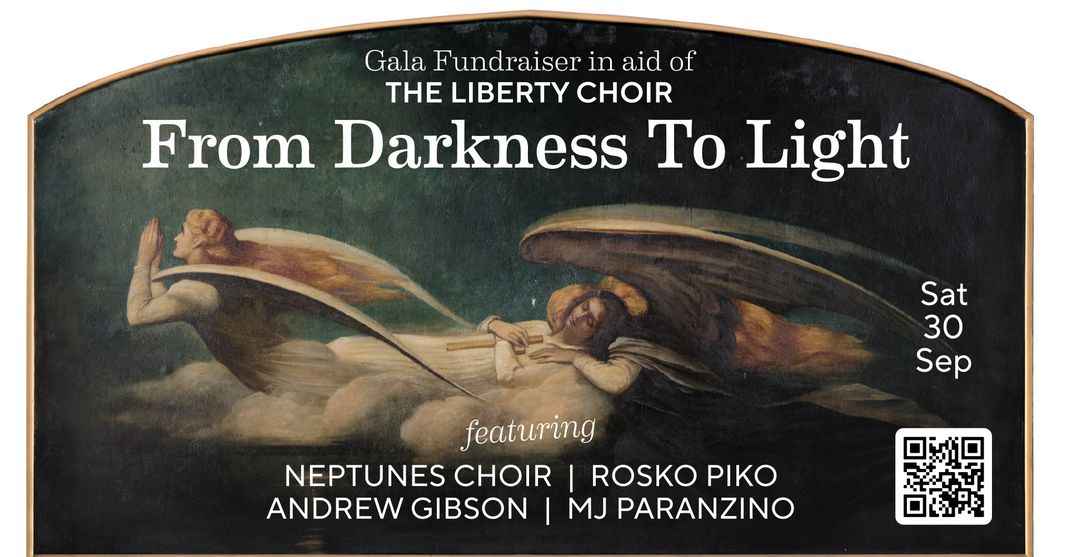
At the end of September St George’s is hosting ‘From Darkness to Light’, a Gala Fundraiser evening on Saturday 30th September in aid of The Liberty Choir. Tickets can be purchased here.
Ross Bell, a former Captain serving in Iraq, returned with undiagnosed adjustment disorder leading him to make poor life decisions, including a large-scale VAT fraud, which resulted in a long prison sentence. In his first months in prison, frightened and alone, he discovered Liberty Choir – a full-circle charity where volunteers from the community form an integrated choir with prisoners every week, and support them on their release. The seeds of hope were planted which flourished in a delightful and unexpected way.
Ross discovered he had a voice! Not only could he sing (tenor) but he started to write: a weekly blog”The Man Inside” – then he was able to access a guitar which he learnt to play, wrote songs and now – many years of rehabilitation later – sings in a soul choir, has recorded an album, completed a masterclass in songwriting and has one of his songs covered by the Cuban Brothers.
“Liberty Choir was instrumental in changing the course of my life”
– Ross Bell
He and his wife, Vicky who were both born in Thanet and have lived in Ramsgate for the past 15 years, owe it all to Liberty Choir which offered him a hand up in his darkest days and every week, Vicky knew that her husband was safe and even happy for a few hours – priceless.
“I will never be able to fully express how much comfort and relief Liberty Choir gave to me and our children, to know that he had contact with the outside world, with people who were there with the sole purpose to connect with him and offer him unconditional support and positivity.”
– Vicky Bell
Now they and all their friends and family have formed the Ramsgate Liberty Choir Fundraising Committee to support the work which turned Ross’s life around and to help other serving prisoners find a way through their most challenging days and an even bigger challenge – for those who have no family left and have burned their bridges – to navigate life on the outside.
This gala event – FROM DARKNESS TO LIGHT– links three incredible community choirs – Neptunes Choir, the work of the multi talented Naomi Hammerton, the amazing voice of Liberty Choir founder MJ Paranzino“a vocal powerhouse” and Ross Power Founder, Musical Director, Arranger and Vocal Leader of the London and Kent Soul Choirs who has joined forces with Ross Bell to form the band Rosko Piko – in St George’s Church, Ramsgate on Saturday September 30th from 6pm.
This Gala concert is the vision of Andrew Gibson, Festival Director for the Ramsgate Festival of Sound and true to form, Andrew will curate the evening and captivate his audience with his wonderfully unique style.

Ramsgate Music Hall

On Friday 29th September St George’s is excited to be welcoming back Ramsgate Music Hall who are putting on an evening with Kristin Hersh. Tickets can be purchased via the Ramsgate Music Hall website
No Idols (Deuteronomy 5:8-9)
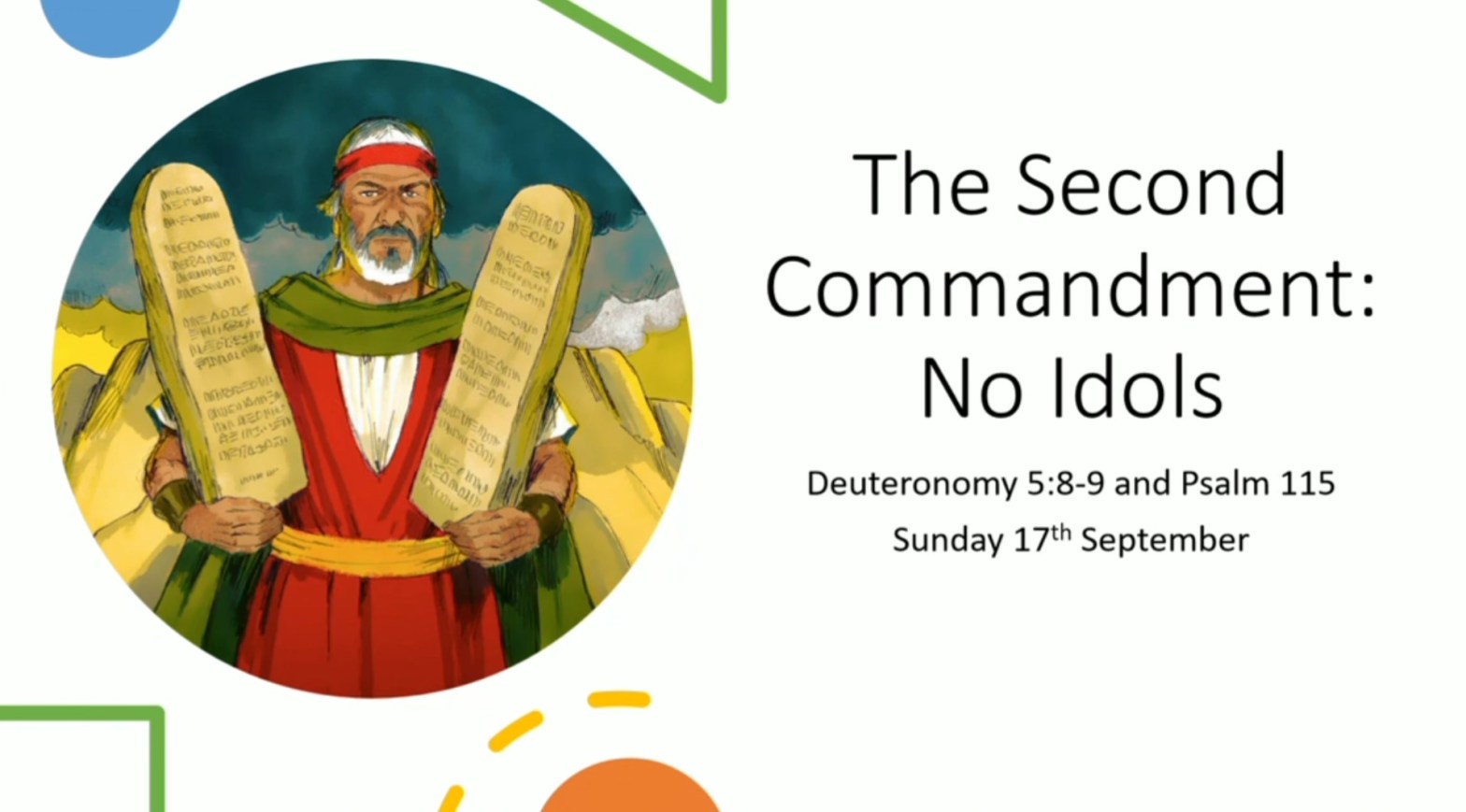
‘Idols’ are man made constructs that replace the one true God in our lives. In ancient times and in parts of the world today, these were statues made to be worshipped. The religion and superstition linked to them became a tyranny. The ideology claimed, that unless you appeased these gods in some way, you would be cursed. People became enslaved to gods that were not gods at all.
The Lion, the Witch and the Wardrobe
One of C.S. Lewis’s most famous books is the children’s book, the Lion, the Witch and the Wardrobe. It was the first in a series of stories about Narnia and has been made into films and TV series. Apparently, Netflix have also recently commissioned a TV adaptation of the story.
In the book, the land of Narnia is under the control of The White Witch, who calls herself the Queen of Narnia. Her rule, however, brings winter to the land and fear and oppression. Perhaps the book set during World War II and written soon after is deliberately echoing the Nazi occupation of Europe in this description.
Yet, in the story, like in Nazi occupied Europe, there is resistance to the oppressive rule. In particular when the children enter the land through the cupboard, they are helped by a faun and beavers to escape the clutches of the White Witch despite the danger they bring to themselves. Just as some in Nazi occupied Europe sought to help Jewish people despite the threat from the Nazis. In both cases, evil rulers were resisted by those seeking to do good.
Holy Resistance
The Lion, the Witch and the Wardrobe echoes a lot of Christian themes. But perhaps this theme of resistance to an evil oppressor is one that is often missed.
The Bible understands the world to have been created good, but since people have rejected God, it has come under a kind of occupation of evil. So much so that Jesus, can even talk about the devil as being the ‘prince of this world.’
But Jesus came to rescue us from the oppressive rule of the evil one. Talking about his imminent death on the cross, he says:
“Now is the judgment of this world: now shall the prince of this world be cast out.” (John 12:31)
On the cross, the power of the devil has been defeated, the occupation is coming to an end. But while we wait for his final downfall, we still live in a world, where his evil influence is at work. As followers of Jesus, we are called to a Holy Resistance.
Peter puts it this way:
“As obedient children, do not conform to the evil desires you had when you lived in ignorance. But just as he who called you is holy, so be holy in all you do;” (1 Peter 1:14-15)
Last week, we saw that the Ten Commandments were rooted in the story of God’s saving work. The introduction to the Ten Commandments says,
“”I am the LORD your God, who brought you out of Egypt, out of the land of slavery.” (Deuteronomy 5:6)
Having rescued Israel from the oppressive rule of Pharaoh, the King of Egypt, God is now calling them to live as his people, in a way that resists the evil oppressive forces that shaped those who had enslaved them. The Ten Commandments are a call to Holy Resistance. A recipe to avoid being enslaved again to the forces of evil that so corrupt God’s good world.
The first commandment was to keep the God who rescued them as the main focus of their worship, whilst the second commandment was not to make any idols. Not to make any physical representations either of the true God who rescued them or the false gods of the peoples around them.
This was an utterly radical idea in the Ancient Near East. At the time, the world was full of idols, both in Egypt, where they had come from and in Canaan where they were heading. To not create a physical object to worship, not even of their own God was a radical act of Holy Resistance to the ways of their world.
This meant that when other nations visited, the Israelites, they were astounded that they could not find an image of any god in their homes or temple. In their eyes, the god of the Israelites was missing.
The result was, as Psalm 115 makes clear in verse 2, that Israel were mocked, for having an ‘invisible God.’
The Problem with Idolatry
So, what was wrong with idolatry? Why did the God who rescued them from Egypt command that they make no images to worship, not even those that represented him.
Well God had rescued them from slavery in Egypt. He did not want them to return to any form of slavery and the problem with idolatry is that it takes away your freedom, it dehumanises you. As the Psalm puts it in verse 8, in some way it makes you like the idol that you worship:
“Those who make them will be like them, and so will all who trust in them.” (Psalm 115:8)
The word, ‘like’ here is an echo of Genesis 1, where God says, that he is going to make humans in his image, in his likeness. To be truly human is to be like the God, who created the universe, but when the focus of your worship, becomes something created by humans, you end up becoming something far less than you were made to be.
The Psalm puts this brilliantly, mocking the idols made by man as being, completely useless. They may have bodily parts, but none of them work. They cannot hear, see, feel, smell or move. They are as good as dead.
Many writers point out, that the people of the Ancient Near East did not really worship the statues, they only saw the statues as representing the gods. But how can something made by human hands ever represent anything other than something made up by humans. The idea of the gods, their stories, images and powers, were as much a human creation as the statues themselves. They had no more power than the imaginative force of other humans.
Indeed, they were often invented by humans as a way of controlling other humans. They were a form of slave making, controlled by priesthoods made rich, by the offering of the people who worshipped their gods.
But worshipping something invented by other humans is to become blind to the God in whose image we are made. To become less than human.
Loss of Heaven
First of all there is a loss of heaven. The Psalm talks of the LORD as being the God in heaven, the one who does whatever pleases him.
He is not controlled by people on earth, he cannot be represented by any image on earth. He is in heaven, above and beyond this world, transcendent above the immediate issues and concerns of humanity.
Stefani Ruper, was an atheist that realised that people need to engage in spirituality to be truly whole. But she was an atheist. She did not believe God existed. So, she tried to write books on spirituality for atheists. However, having done so she came to a conclusion that such attempts of spirituality without acknowledging the transcendent God just did not work and she became a Christian.
When we worship manmade gods or simply manmade ideologies that reject the idea of god, we lose our sense of heaven.
Loss of Eternity
We also lose our connection with eternity. God is eternal, but our lives on this earth are finite. One day we will die. The Psalm talks about the dead going down to the place of silence.
For worshippers of idols, which merely reflect the temporary work of human hands, or ideologies, which are human ideas that come and go, their worship is of something finite. Idols do not last, ideologies do not last. Neither offer any hope in the face of death.
But the God of the Bible is eternal. He is always there and when we see our role as praising and glorifying him, as the Psalm suggests, then we discover our eternal role and so find eternal life through our trust in the one who can save us even from death.
Loss of Life
The gods and idols of the ancient world were just inanimate objects, no more alive than the materials they were made from. The human made ideologies behind them were equally dead, just as human ideologies are today, mere fantasies, that lose all power, when no-one believes them anymore. They too are dead. If you trust in them, then you are just as dead.
But the God of the Bible is before us and beyond us. He is the alpha and omega. He is not a figment of our imagination, but we are created by his word and sustained by his will. Our life is utterly dependent on him and only when we turn to him do we become truly alive, truly human.
As Paul said of the Thessalonians:
“They tell how you turned to God from idols
to serve the living and true God,” (1 Thessalonians 1:9)
Idols of our Age
In the Twenty-First Century West we do not create images as representatives of gods, but we do replace worship of the living and true God, with the worship of human created things and ideas.
This is particularly true in our secularised world, where God is completely pushed out as irrelevant to life. The focus is completely on material man made things, ideologies and concerns. Just as the idolaters of the past, we lose our connection with heaven or the transcendent and eternity. We end up imprisoned in a world limited to immediate material concerns and become dehumanised as a result.
So what are some of the idols of our age?
- Wealth –
The New Testament, explicitly names greed as a form of idolatry:
“Put to death, therefore, whatever in you is earthly: fornication, impurity, passion, evil desire, and greed (which is idolatry).” (Colossians 3:5)
Jesus, pretty much names Money as a replacement for God,
“”No-one can serve two masters. Either he will hate the one and love the other, or he will be devoted to the one and despise the other. You cannot serve both God and Money.” ( Matthew 6:24)
Greed or money has become one of the dominant idols of our age. The stories we are told in the constant advertising of our world, is that if we have better stuff or buy more experiences, then we will be happy in life. It seems appealing, but we often end up enslaved to this power, working harder and harder to have more and more, but never really finding the promised happiness. Doesn’t the promise of having more often prove faithless? Doesn’t the simple accumulation of stuff become soul destroying? It offers no hope in the face of death and no connection with ultimate meaning or reality.
- Fame – Then there is fame. Many people today, long to be well known and well liked. Social media feeds this, we count the number of our followers, long for ‘likes’ for our posts. Apparently 1 in 5 youngsters in the UK dream of becoming social media influencers. A few such influencers have gone from obscurity to find fame and fortune through social media. Their stories inspire others to hope for the same. But, yet again this alternative power is oppressive and slaving, pulling us to be constantly attached to our phones and basing our hope and value on how people respond to our posts. We long to be loved by others, but even if we manage to make people like our social media image, deep down we know that they are not loving the true me. No wonder, we have a mental health epidemic.
- Heart Desire – The third power or god of today is the inner self. Many people when wondering what to do are asked, ‘What does your heart say?’ Stories about ‘learning to follow my heart’ rather than being ‘enslaved’ by the views of others around suggest a kind of freedom. But is the ‘heart’s desire’ a better authority than the God who saves? Aren’t we then just enslaved to our inner desires, which are often twisted and corrupted by the attitudes of the people around us. Is our heart really as trustworthy a leader as the living and true God, who has a steadfast love and faithfulness.
- Success – A fourth idol is running after success. We think that what counts in life is achieving something, meeting some measure. It can be becoming a successful sport person, business leader, parent or even church. Everything is geared towards making what we do successful, becoming our ultimate goal in life. But
Even our church life can become caught up in running after the idol of success, whether it be achieving the restoration of a building or growing the church into vast numbers. When celebrating our success replaces worshipping our God, then the success has becomes all important and we become too focus on the present world and lose touch with eternity and heaven. We are often driven to work hours that are too long, wearing ourselves out and again it can be soul destroying.
Not that success, the desires of our heart, fame or money are bad things in themselves. The Psalmist seeks God’s blessing and such a blessing may well give us these things and more. The problem is when these things become what drive our lives, when they replace our relationship with the living and true God and imprison us in an outlook constrained by the immediate present world and cut off from the eternal.
Lots of good things can become idols in the same way, family, relationships, volunteer work and so on. The anti-dote is holy resistance. A constant guarding of our hearts, to turn them away from these idols and to focus once more on who God is and to wonder about his transcendent nature.
Holy Resistance
This is Holy Resistance, because it is not the way of the people around us, whose lives are driven by these things and for whom God is absent in their lives. But the more we resist the culture of the world around us, the more we may shine light into their worlds, of a better way. A way of life and freedom as we become the people of God.
In the Narnia stories, when the White Witch is defeated, winter is over, the land is released from its grasp.
The Nazi hold on occupied Europe was released and the people were free from its power.
When we live lives of holy resistance today, not allowing the idols of our world to drive our lives, we are those looking forward to the end of the winter of idolatry, to the end of evils occupation to the time, when Christ’s rule will be fully realised and we will have life to the full.
No Idols
“You shall not make for yourself an image in the form of anything in heaven or on the earth beneath or in the waters below. You shall not bow down to them or worship them…”
(Deuteronomy 6:8-9)
God is Number One (Deuteronomy 6:1-25)

Commandments – The Theft of our Precious Free Will?
Paul Kingsnorth grew up in a non-Christian family in the 1980s, said that despite being taught Christianity at school for most people in our culture,
“Religion was irrelevant. It was authoritarian, it was superstitious, it was feeble proto-science. It was the theft of our precious free will by authorities who wanted to control us by telling us fairy tales. It repressed women, gay people, atheists, anyone who disobeyed its irrational edicts. It hated science, denied reason, burned witches and heretics by the million. Post-Enlightenment liberal societies had thrown off its shackles…”
From https://www.firstthings.com/article/2021/06/the-cross-and-the-machine
Today we are starting a series on the Ten Commandments, God’s rules for life. Most Church of England churches have them on their walls, you are meant to have learnt them before you are confirmed.
But how do you feel about the 10 Commandments? Do you know them all? Do you care whether you know them? Do you teach them to your children as our reading suggests? Talking about them in the home on a regular basis?
Most people would sign up to some of them at least. ‘Do not murder.’ ‘Do not steal.’ ‘Do not commit adultery.’ But there are others that are at best forgotten and at worst ridiculed or seen as oppressive, as ‘the theft of our precious free will.’
Teaching the commandments to people who do not want to be told what to do or are worried about being made to feel guilty or condemned by them is just seen as a power grab and oppression. It is not very appealing.
Law Rooted in Story – 5:6; 6:19-25
In the U.K. we are seeing generational decline in the Christian faith. Each generation has less people going to church than the generation before and with that less people believing in God. Is that because we have failed to answer the next generations questions properly? Have we focussed so much on the importance of following laws like the Ten Commandments, without telling them the story that undergirds why we should follow them.
In the last section of our reading, Moses tells us how to respond to the questions of the next generation. We are not to dismiss or ridicule the questions, but to retell the story of God’s action.
In 6:20, we are given a question that a child asks,
“What is the meaning of the stipulations, decrees and laws the LORD our God commanded you?”
Perhaps the question is due to a natural inquisitiveness. Maybe it is more rebellious – ‘why should I allow my precious free will to be stolen by all these rules and regulations from God?’
The temptation in answering this question is to say something like,
‘Because God says so…’ – which he did.
or,
‘Because it is beneficial…’ – which it is.
But that is not the way Moses tells us to answer the question. What Moses tells us to do is to tell the story of God’s salvation.
Perhaps the reason we are losing more and more from each generation is that we have failed to answer the question correctly.
We have divorced the commands from the story,
the rules from the rule giver,
the instructions from the saviour?
Without the roots or the foundation in the story of God’s salvation, the Laws fall apart. They are heard simply as words of condemnation, irrelevant utterances from an unknown God. With the story as a foundation, however, we see them for what they really are, words of promise, freedom and blessing.
The Bible never separates the commands from the story. If you look at chapter 5, where the laws are listed, the commands begin with a prologue, which is a summary of the story of God’s salvation:
“I am the LORD your God, who brought you out of Egypt, out of the land of slavery.”
Only with the story in place, do the commands make sense.
Israel’s Story:
So what is the story of God’s salvation for Israel?
A Story of Promise => God is faithful
It is a story of promise. It begins with God calling Abraham and making some amazing promises to him. He takes Abraham out into the night and shows him the ancient Palestinian sky, packed with stars and says to him. See all that – your descendants will be as numerous as the stars. For Abraham who was childless it seemed like a ridiculous promise. But, God acted and even in old age, Abraham and his elderly wife Sarah had a son Isaac, who had a son Jacob, who had twelve sons, who in Egypt grew to become a massive group of people. God’s impossible promise, was fulfilled over many generations.
He also took Abraham outside and showed him all the land of Palestine as far as he could see. And said your descendants will own this land. It was a promise that also came true soon after the time of Moses giving the Ten Commandments, Israel settled into a new and wonderful land.
The story of the Bible shows again and again that the God of Israel is a God who makes great promises and fulfils them. He is a faithful God, who can be trusted.
A Story of Freedom => God is mighty and loving
Then at the start of the book of Exodus, we find that Israel are slaves in Egypt. Forced to build cities for the Egyptians, beaten and oppressed. What is more because the Egyptians were worried that there were too many of them, they had the babies of the Israelites thrown into the river Nile. Slavery to Pharaoh the king of Egypt was a terrible thing.
But God had rescued them from all that. He had sent terrible plagues on the Egyptians until Pharaoh agreed to let them go. Pharaoh, who was seen to be a god himself and the representative on earth of all the Egyptian gods was no match for the God of Israel. When Pharaoh tried to corner the people against the Red Sea, God led Israel through the Red Sea, but drowned the army of Pharaoh that followed them.
God was committed to his people, he loved his people and he was mighty and powerful enough to save them from the oppression of Pharaoh.
A Story of Rags to Riches => God is generous
Finally, this is a story of rags to riches for the Israelites. But not because of their hard work, but because of God’s generosity. He gave them the land to live in, going ahead of them and driving out the people before them, so that they found themselves with cities already built, wells already dug and vineyards and olive groves already planted. They did nothing, but became rich, because of God’s generosity to them. He is a generous God
The Christian Story:
You might say, well that is all very well, but it is Israel’s story not our story. But it is the same God and the story connects with the main story for us as Christians. Jesus himself, connected it when he set up the communion meal, at a Passover Meal, the meal where the story of Israel’s rescue was remembered and recounted.
His life, death and resurrection was shown again and again to be a fulfilment of the promises to Israel of the past. Jesus was the greater prophet, the true servant and the better king, who brought God’s word with powerful signs, died a sacrificial death for our sins and rose from the dead.
He showed his utter love for us by dying for us.
He proved his incredible power by rising from the dead.
He proclaimed God’s incredible generosity by promising the free gift of forgiveness for sins and eternal life to all who came to him.
The Call to Loyalty to God
Only when we understand these stories, only when they become our stories, can we get to know the God of the Bible and so come to value his commandments as trustworthy and for our good and blessing.
The first commandment is a call to loyalty to God, to make him the supreme power and authority in our lives. Nothing should have more say over how we live than him. No god should be before him.
Positively, the command is flipped and repeated in Deuteronomy 6:5:
‘Love the LORD your God with all your heart and with all your soul and with all your strength.’
When we have understood who this God is, through the stories of how he has saved his people, that he is faithful, loving, mighty and generous, then it makes sense to make him number one in our lives, to give him absolute loyalty. He wants the best for us, he has shown his love for us and he has the power to bless us more than we can imagine.
Only he has the answer to the wickedness in our hearts. Only he has the answer to death.
Holy Resistance to the Slavery of Other Gods
The only problem is that this means rejecting other potential authorities in our lives. For the Israelites it meant rejecting the ways of Egypt and the gods of the Egyptians, for us it means rejecting a world of sin, the world that had Jesus crucified. In being called to be loyal to God, we are called to reject the powerful loyalties of the world around us.
We need to see our world, which lives in rebellion against God as a good world, under the occupation of evil. Jesus actually talks of Satan being the Prince of the World. It is a good world, but because of Satan’s rule it has become corrupted, it is cold and harsh.
In the book, The Lion, the Witch and the Wardrobe, the Witch is meant to represent Satan. Her rule, attractive at first, freezes people and takes away their freedom. The Lion, who represents Jesus, however, leads a resistance her occupation of Narnia, one that eventually wins out.
As Christians, as followers of Jesus, we need to see ourselves as living in a world occupied by evil, full of attractive other ‘powers’ wanting to call us away from the faithful, loving, mighty and generous God. We are called to a holy resistance to this occupation, by committing ourselves wholeheartedly to the God who has saved us in Jesus Christ.
True Freedom
The world thinks that following the Ten Commandments is allowing your free will to be stolen. But, when we are caught up in the story of the God who gives the commandments, we find that actually they show us a way of holy resistance that frees us from the oppressive powers of the world.
After a long journey into faith, Paul Kingsnorth has finally discovered that to be true:
“I grew up believing what all modern people are taught: that freedom meant lack of constraint.” Orthodoxy taught me that this freedom was no freedom at all, but enslavement to the passions: a neat description of the first thirty years of my life. True freedom, it turns out, is to give up your will and follow God’s. To deny yourself. To let it come. I am terrible at this, but at least now I understand the path.
Unsinkable People
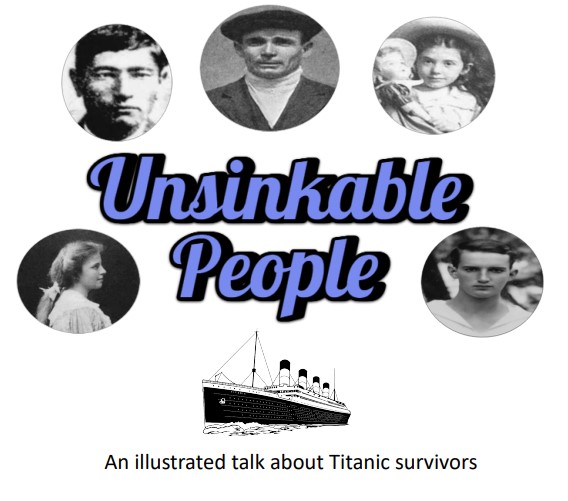
As part of the Heritage open days, on Saturday 16th September Margaret Bolton will be bringing to us stories of survivours of the Titanic linked to St. George’s Church.
I’ve heard Margaret’s talks before; they are well researched, informative and entertaining.
The talk starts at 3pm, tickets are £5.
You can purchase tickets using the following link https://bit.ly/44ys7KM or on the door.
Sailors’ Church and YI

This Sunday (10th September) is the final monthly service of the summer at the Sailor’s church.
The Sailor’s church is a stunning setting for worship and we gather with brothers and sisters from the area and tourists enjoying our town.
The Sailor’s church will be open from 5pm for refreshments and conversation followed by the service at 6pm.
This week our youth from St. George’s and St. Luke’s are invited to join this service as part of our youth provision.
God’s commands
“Love the Lord your God with all your heart and with all your soul and with all your mind and with all your strength.”
(Mark 12:30 )
Heritage Open Days 2023

St George’s is pleased to be participating in Heritage Open Day again in 2023. We will be open on Saturday 9th and Saturday 16th September, from 10am til 3pm.
There will be tours of the tower and crypt on both days. The 9th September will be the final Yard Sale of the summer, with stalls and activities, featuring pre-loved and vintage clothes, food, bric-a-brac and crafts.
On the 2nd of the Heritage Open Days, Saturday 16th at the end of the event there will be an illustrated talk, ‘Unsinkable People’, given by historian Margaret Bolton about survivors of the Titanic who had links with Ramsgate and East Kent.
Buy tickets for ‘Unsinkable People’ here.


 St. George's Church Ramsgate