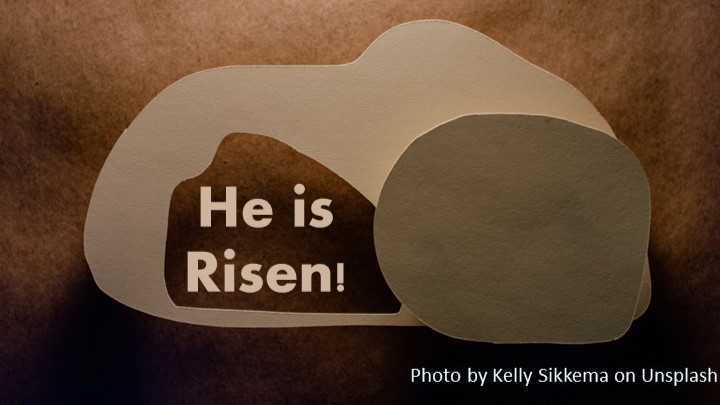
The angel said, “He is not here, he is risen, just as he said. Come and see the place where he lay.”
(Matthew 28:6)
Palm Sunday (Matthew 21:1-11)

The Coronation is coming up, but how does it compare with Palm Sunday when Jesus entered Jerusalem being proclaimed as king?
Symbols of the Coronation
In about 1 months time, King Charles III is going to have his Coronation. The event is going to be a great event to watch and if you want to watch it with others we are going to show it on the big screen at St. Luke’s.
During the Coronation there are lots of different parts to the ceremony. Can anyone tell me some of the things that happen when the king is crowned?
…..
Let me just share four things that happen and some of the items attached.
- The Gold State Coach
Firstly, the king travels to Westminster Abbey in the Gold State Coach. This is not any ordinary vehicle. It is pulled by 8 horses and is covered in gold!
It was built in 1762 for George III. In today’s money it would have cost £3.5million to build!
2. St. Edward’s Crown
The most important moment of the ceremony is when the crown is placed on Charles’s head. The crown is called, St. Edward’s crown.
It was originally made for Charles II in 1661.
3. Fanfare of Trumpets
When the crown is placed on the king’s head, everyone in Westminster Abbey cries, ‘God Save the King!’ and there is a Fanfare of Trumpets!!
This is a kind of declaration that the king has now been crowned.
4. Coronation Chair with the Stone of Scone
Part of the ceremony also involves the king sitting on a special chair or throne called the Coronation Chair. It is a chair originally built in 1300 to house a special stone.
The Stone of Scone used in coronation of Monarchs of Scotland, but stolen by Edward I in the invasion of Scotland in 1296. From then on all the English Kings were crowned on the chair and the stone.
All of these symbols and more suggest how grand and important the new king is. Across Europe when kings used to have a lot more power, than they do today, most kings and queens would have been crowned with similar symbols. The grander and more expensive the symbols the more impressive and powerful the king or queen was seen to be.
Today is Palm Sunday. As Christians we look back to a moment when Jesus came to Jerusalem and was welcomed by many people as a new king. Like the Coronation, there were lots of symbols used, but these were very different symbols to the symbols used for a king today and show us that Jesus was a very different kind of king!
Symbols of Jesus’s Kingship
So, what were the symbols that showed Jesus was a king.
- Donkey
The first one was how Jesus came into Jerusalem. It wasn’t in a Gold State carriage, but on a donkey! At first glance this does not suggest that Jesus was a very important king or even a king at all. Surely, a king would come in a chariot or on a warhorse – not a donkey?
Yet, for the Jews coming into Jerusalem on a donkey was Jesus saying, look I am doing what the prophet Zechariah said 500 years before:
“Say to the Daughter of Zion,
`See, your king comes to you,
gentle and riding on a donkey,
on a colt, the foal of a donkey.’”
(Matthew 21:5; Zechariah 9:9)
In doing this Jesus shows us that he is a very different kind of king. He does not come as a great warrior to overthrow people or force his rule on others. Neither does he show off his power or might. Rather it says he is gentle.
Earlier in Matthew’s gospel, Jesus gave this invitation:
“Come to me all you who are weary and burdened,
and I will give you rest. Take my yoke upon you and learn from me, for I am gentle and humble in heart and you will find rest for your souls. For my yoke is easy and my burden is light.” (Matthew 11:28-30)
When we accept Jesus as our king and decide to follow him in our lives, we find that it is much less demanding and soul destroying than following any other leader or philosophy or way of life. Jesus is a very different kind of king.
2. Palm Branches
Secondly, Jesus did not wear a crown, but he was welcomed into Jerusalem with palm branches, which the people laid in front of him along with their cloaks to form a kind of carpet to welcome him into Jerusalem.
The people doing this were the crowds coming to Jerusalem from other parts of the country to celebrate the Jewish feast of Passover. They had seen Jesus do amazing miracles and heard him teach them about God and following him in an amazing way. They hoped he would become their new king in Jerusalem and give a better way of life.
Laying palms and coats down in front of Jesus was their way of saying they wanted Jesus to be their king.
But the people living in Jerusalem were worried.
It says at the end of our reading:
“When Jesus entered Jerusalem,
the whole city was stirred and asked, ‘Who is this?’”
(Matthew 21:10)
A new king was dangerous. It meant big changes and it was not good news for those in charge, the Chief Priests who ran the temple and the Roman authorities. Especially as the first thing Jesus did when he came into Jerusalem was to clear out all the money changers from the temple courts! Those who liked things the way they were, did not like the idea of a new king.
Many people today, do not want to think about following Jesus or making him their king, because they don’t want to change their lives or be challenged by Jesus like he challenged the temple leaders. Yet, those who were following Jesus had discovered that he was someone amazing. Jesus is a completely different kind of king. He may challenge you, but any change he brings will be for the best.
3. Shouting
So, Jesus was not welcomed into Jerusalem with an official fanfare, but he was welcomed by those following him with loud shouting.
Split into sides one side, shout the first line, the other shout the second:
“Hosanna to the Son of David!”
“Blessed is he who comes in the name of the Lord!”
(Matthew 21:9)
They thought the miracles showed that Jesus was the Son of David. God had promised King David, 1000 years before Jesus, that there would be a king who ruled God’s people descended from David forever more. But there had not been a descendant of David on the throne in Jerusalem for 100s of years. The crowds believed Jesus was the king God had promised!
And they believed he was the one blessed by God and completely committed to following God. He came in the name of the lord, he came to bring God’s blessings and promises as he had shown through his miracles and healing.
Most kings and leaders may pay lip service to what God wants, but Jesus is different, he is the king totally in line with God’s will and way. He is God’s gift to us, he is a very different kind of king!
4. Cross
Lastly, we come to the coronation seat or throne. When Jesus arrived in Jerusalem the people were shaken by him. The leaders in Jerusalem were against him and before long there was a different crowd shouting ‘Crucify Him!’
Yet, as he was crucified, a sign was put up on the cross that said, ‘Jesus, King of the Jews.’
The Bible teaches it was on the cross, that he was enthroned that he truly became king. Why? Because on the cross, he was condemning all the wickedness and evil of the world, by taking its guilt on himself. He was also creating a way for us to come back to God, to become part of God’s different Kingdom.
The cross was a seismic moment that shook up not just Jerusalem, but the whole world. Matthew emphasises that by talking about an earthquake that happened at the same time as Jesus died on the cross:
“At that moment the curtain of the temple was torn in two from top to bottom. The earth shook, the rocks split…”
(Matthew 27:51)
The breaking of the temple, showed that Jesus was creating a new way to God, a new way to a better life, following him as king.
In the end it is also a new way to eternal life, because Matthew records another earthquake, only a few days later, when Jesus rose from the dead… but that is for next Sunday!!
Will you make Jesus your king?
All the symbols of Palm Sunday and what happened next, show that Jesus was very different kind of King that wants to welcome us into a very different kind of Kingdom. It is a kingdom, where Jesus as the gentle crucified king serves us and we learn to serve one another.
It may not look grand, impressive or powerful, but it is a kingdom that has lasted 2,000 years and is still growing around the world. Will you choose like the crowds waving the Palm Branches on that first Palm Sunday to welcome Jesus as your king?
Easter Services and Events 2023

Few moments shape history in quite the same way as the death and resurrection of Jesus Christ. The seemingly run of the mill execution of a Jewish prophet, led to the explosion of a movement that declared that the man, Jesus had risen from the dead. It was a movement that claimed Jesus was more than a prophet and that his death and resurrection had created the possibility of a new reality for all who followed him. Join us in celebrating these events and find out more at our Easter Services this year.
Holy Communion, Maundy Thursday
6th April, 6:30pm, St. Luke’s Church
Join us as we remember Jesus’s last supper with his disciples in which he gave them a way to celebrate and remember his death.
The Easter Story, Good Friday
7th April, 10:30-11:15am, St. Luke’s Church
An interactive retelling of the Easter Story for all ages. In the style of a crib service, we build up a montage portraying the Easter Story.
Good Friday Meditations
7th April, 12noon until 3pm, St. George’s Church
Split into 30 minute slots, join us for some or all of the time as we travel through the events of Jesus’s crucifixion. An outline of the sessions are below:

Easter Fair
8th April, 1:30-4:30pm, St. George’s church grounds
Barbecue, crafts, bunny treasure hunt, biscuit decorating. This is not a fundraiser, just a fun event for all the family.

Easter Sunday Eucharist
9th April, 9:30am-10:30am, St. George’s
Join us for a traditional celebration of the resurrection of Jesus.
Easter Sunday All Age Celebration with Holy Communion
9th April, 11:00am-12:00pm, St. Luke’s
Join us for an All Age celebration of the resurrection of Jesus.
YI on Easter break

The youth provision for our young people is now on Easter break.
The next YI will be Sunday 23rd April at 5pm in St. Luke’s Church Hall.
Palm Sunday
“Blessed is he who comes in the name of the Lord!”
(Psalm 118:26a)
Forgive us our sins (Psalm 51)

In this last in the series on the Lord’s Prayer, we look at why we should ask for the forgiveness and sins, how we should do it and how it helps.
Why pray for the forgiveness of sins?
Jesus teaches us in the Lord’s prayer, to pray, ‘forgive us our sins…,’ but why? We can understand the necessity to pray for our daily bread, we may also understand that if we are Christians we should pray for God’s kingdom to come, but why pray for the forgiveness of our sins?
A Modern Objection:
Perhaps this is an increasingly modern question. We live in a society that does not talk much about God and also does not talk much about sin.
Instead of sin, people talk purely about right and wrong. Doing right is what makes the world a better place for everyone and doing wrong makes things worse for everyone. It is generally agreed that people should be encouraged to do what is right rather than what is wrong, but this is achieved it is thought, by better education and campaigning to make people do what is right.
The need for forgiveness from God or involving God in the process does not seem necessary. In fact many associate it with creating feelings of guilt and so lowering self-esteem. Indeed, people are increasingly offended if you tell them they are doing something wrong, possibly because they see it as undermining their sense of wellbeing by inducing some kind of guilt.
So from the perspective of many in our society praying for forgiveness is quite strange, even unhelpful.
A Theological Objection:
For some Christians there is also a theological objection. Surely, once we become a Christian, we are already forgiven. Jesus’s death on the cross has done everything necessary to secure our salvation and wash away our sins.
If we keep praying for forgiveness, aren’t we denying that we are already forgiven. Aren’t we making praying forgiveness or confessing our sins a work for our salvation, rather than accepting that we are saved by faith.
At first glance, these are powerful points to make. Yet, Jesus teaches us to pray regularly: ‘forgive us our sins.’ So, why do we need to do so, if we are already forgiven?
David’s Prayer (Psalm 51)
To help us think more carefully about both why and how we should pray for forgiveness it is good to turn to the most famous prayer for forgiveness in the Bible: Psalm 51.
David’s Sin:
This prayer comes as a result of a terrible incident in David’s life. David was very much God’s man. He had shown incredible faith from an early age and God had blessed him and raised him to become king of Israel, promising that one of David’s sons would always be on the throne. David was very much God’s man.
But then just as David was looking most secure and comfortable on the throne he did something really bad. Whist the army were off fighting in a war, he seduced the wife of Uriah, one of the soldiers away fighting for him and committed adultery with her. When Bathsheba became pregnant with his child, he tried to cover it up and when that didn’t work he had Uriah sent into the thick of the battle so that he was killed.
In anyone’s terms this was all wrong, adultery, murder and lying to cover up. What was worse, David thought he had got away with it. After all this was probably not abnormal behaviour for kings of his time and who would know?
But God saw it all and God was not happy. So, God sent the prophet Nathan to challenge David about what he had done. Suddenly, David is face with the problem of his sin.
The Problem of Sin:
Guilt – Our Inner Emotional Pain – vs. 3, 8
Firstly, as we read the Psalm we get a sense of the guilt that David was wracked with.
In verse 3, he says:
“For I know my transgressions,
and my sin is always before me.”
Then in verse 8 he talks about his bones being crushed.
The Bible in general and David in particular do not deny the oppressive power of guilt. In a sense this whole Psalm is a cry for the guilt to be removed.
In response to the oppression of guilt our non-Christian culture sees it as something bad for us that needs to be avoided. So people hate it when you challenge them about wrongdoing or they seek to blame their wrongdoing on other pressures in their lives.
Similarly, if we as Christians simply say, we are already forgiven by God and so there is no place for guilt in our lives, then we deny the reality of our ongoing struggle with sin.
Both attitudes seek to avoid the pain of guilt, but in so doing they miss out on what guilt is pushing us to do – to change to be the better people God wants us to be. If David was to do the same with his guilt, there would be every chance that he would just repeat his lies, adultery and murder.
Guilt in the short term may be a painful response to sin and if not dealt with can be very destructive. Yet, when it provokes the right response, it is a painful step in a powerfully transformative process.
God – Our Damaged Relationship – vs. 4, 11
The second problem that David sees with his sin is the damage it has done to his relationship with God. God after all had sent Nathan to challenge David about his behaviour and so David senses that he is under God’s judgement.
In verse 4, he acknowledges that God is right to judge him:
“Against you, you only, have I sinned and done what is evil in your sight, so that you are proved right when you speak and justified when you judge.”
And in verse 11 you sense David’s fear at losing his relationship with God:
“Do not cast me from your presence or take your Holy Spirit from me.”
Again our society recoil from this talk of God’s judgement. Many deny God’s existence, so that they don’t have to worry about judgement, others just like to imagine that God is not interested, does not care or will just ignore our wrongdoing.
Again, if as Christians we simply say, we are already forgiven, we can quickly dismiss any idea of God’s displeasure at our wrongdoing.
But, this too fails to deal with our sin and can damage any real relationship with God we might have. After all any good relationship has to acknowledge the hurt and upset that one person may cause to another. That is what makes the relationship real.
Praying for Forgiveness:
Praying for forgiveness, rather than avoidance of guilt and the damaged relationship with God, actually seeks to deal with our sinful behaviour, through a powerful engagement with God and a deeper dependence in faith on him.
And that is what we see David doing in this Psalm. In a sense this is a model for a powerful therapy in our lives, with God as our therapist. The more we learn to engage with this process, the more we will be truly transformed to be the kind of people God wants.
So here are five steps to dealing with the problem of sin:
1. Confident, because of God’s character – vs. 1
Firstly, we need to be confident in approaching God that he will forgive us and help us.
For David this confidence comes in verse 1, with a deep understanding of God’s character, his compassion and unfailing love.
For us as Christians, our confidence is even greater. We know he has already forgiven us. Jesus says he gave his blood on the cross for the forgiveness of our sins. His once for all sacrifice is all that is necessary to win us forgiveness, to pay the price for our sins.
No matter what our sin we can approach God with confidence, because our sins have and will be forgiven.
2. Confess the reality of our sin – vs. 3-5
But that does not mean we can ignore our sins. The next step David takes is to acknowledge the reality of his own sin. Indeed, the reality of his specific sins, his adultery, lying and murder have pushed him to acknowledge something deeper. He was like us, sinful from birth.
This is not a step into self-loathing, or depression – it would be without God to help. No it is an acceptance that there is something fundamentally wrong with us and we need God’s help to ever have any hope of change. Not just God’s help to stop being adulterous or murderous, but to accept that we need a deeper transformation.
3. Convert my inner self – vs. 10
This brings us to the next step. If the first two steps are about acknowledging what God is like and what we are like, the next two are about seeking the real change we need.
The first change is to ask for God’s help to convert our inner self. Verse 10 expresses this very powerfully:
“Create in me a pure heart, O God,
and renew a steadfast spirit within me.”
David does not just say, “Sorry!”. He says, “Help me! Change me!” And he is not just asking for help to stop murdering people or to stop lying or to stop committing adultery, he is asking that the whole attitude of his heart is changed, so that such behaviours become completely against the kind of person he has become.
If you weed your garden by cutting off the weeds at the top, the weeds will grow back. If you pull the weeds out, roots and all, you will stop them growing again. It is this kind of rooting out that David is praying for.
In the Lord’s Prayer, Jesus tells us not just to pray for forgiveness, but also to be rescued from all sin:
“Lead us not into temptation,
but deliver us from evil.”
We may already be forgiven, but the reason we keep praying for forgiveness is to help us in the process of rooting sin out of our lives.
4. Connect again with God – vs. 11-12
Fourthly, David’s prayer for forgiveness, is also seeking to connect again with God. He expresses a longing for a renewed relationship and a valuing of the joy and support that that relationship brings.
He says in verse 12:
“Restore to me the joy of your salvation…”
In experiencing God’s displeasure at his sin, David longs once more for the joy of knowing God and being in a perfect relationship with him. The result of his seeking forgiveness is a deeper reliance on God’s salvation and joy in what God has done for him.
For us as Christians this will also involve a return to understanding what Jesus has done for us on the cross and a deeper gratitude and rejoicing of his saving work there and the price he paid for our sins.
But, also understanding the price he paid for our sins, is important in showing us the need to forgive others as well.
In the Lord’s Prayer, Jesus says to pray,
“Forgive us our sins as we forgive the sins of others.”
Jesus follows that up in Matthew’s gospel with the verses:
“For if you forgive men when they sin against you, your heavenly Father will also forgive you. But if you do not forgive men their sins, your Father will not forgive your sins.” (Matthew 6:14-15)
It’s only as we remember how much God has done in forgiving us, that we see the utter necessity to forgive others. After all how can we accept God paying such a great price to release us from our debt of sin and guilt to him, if we are not willing to release others from their much smaller debt of sin against us.
When we are serious about connecting again with God and accepting his forgiveness, then we will also forgive others.
5. Contrite before God – vs. 16-17
All of this is to accept that in and of ourselves we cannot become perfect people. We do mess up, we do sin. We need God’s help to forgive us, remove our sin and restore our relationship with him.
In this sense we come to him as contrite, broken in our own pride, but rejoicing in his love and acceptance.
Our world today with its focus on the importance of self-esteem finds this idea difficult to accept. Yet, a self-esteem built on a denial of who we really are will never be stable or sustaining. Perhaps it’s no wonder that mental health is an increasing problem in our society.
True resilience comes from being broken before God and rejoicing in allowing him to renew and restore us to recreate us to be the kind of people he really wants us to be. That is a process, but a process in which regular confession of sin plays an important part.
The Result of Forgiveness:
We saw that the immediate problem for David created by his sin was his guilt and broken relationship with God. Such painful realities pushed him into praying for forgiveness.
And the result of that forgiveness is that the guilt, although painful for a while is soon removed. For example look at verse 7:
“Cleanse me with hyssop and I shall be clean;
wash me and I shall be whiter than snow.”
More than the inner guilt being removed, there is a joyful restoration in the relationship with God, which overflows from David in praise of God to others:
“Deliver me from the guilt of bloodshed, O God,
you who are God my Saviour,
and my tongue will sing of your righteousness.”
Acknowledging our sin, may be painful at first, but when we deal with it through prayers of confession – genuinely seeking God’s help, and a transformation or our inner selves and relationship with him, then we discover a life of deeper joy and love and we become the kind of people that truly shine for him.
Neptune Concert

The Neptune choir are holding a concert with support from Charles Watson in St. George’s church on Friday 31st March from 7:30-9:30pm.
Tickets are £10.
Youth provision this week
This week at YI will not be meeting at St Luke’s church hall. Instead we join the youth groups of Thanet at Queens Road Baptist church, Broadstairs, for The Event. A great opportunity for friendship, fun and learning more about God.
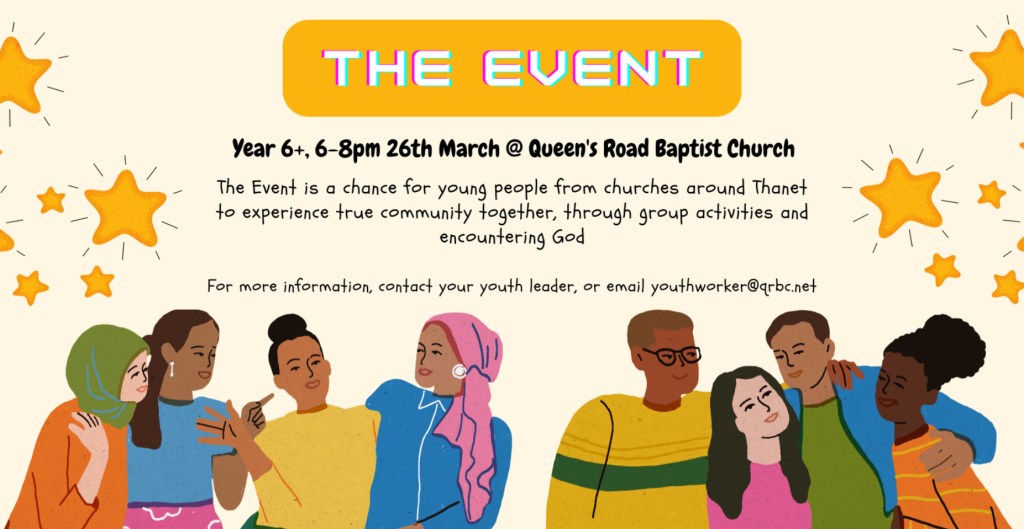
We’d be delighted to welcome any young people from Year 6 to 13, and the leaders from YI will be there. If you need a lift please contact Claire.
Have a good rest of the week.
Praying for Forgiveness
“Forgive us our debts, as we have also forgiven our debtors. And lead us not from temptation, but deliver us from the evil one.”
(Matthew 6:12)
Parenthood – Love and Sacrifice (1 Samuel 1:20-end)
Being a mother takes sacrifice. Hannah was desperate to become a mother, so why when God gave her a son did she give him back to God?
Have you ever wanted something really badly?
Have you ever wanted something so badly that it’s all you can think about, you desire it, dream about it, talk about it share your need for it.
When I was younger I really desperately wanted a Mr Frosty. I don’t know if you have ever come across Mr Frosty. it was basically a big hunk of plastic that you put ice cubes in its hat and turned a handle, added some fruity flavourings and it basically made a crushed ice slushy.I badly wanted a Mr Frosty I think from about probably the age of 4/5 it went on my Christmas list and for a number of years I think it went on there every Christmas. I can’t remember now if one of my cousins had one or not, but I just thought this was the most fantastic thing and I really wanted it. So I kept asking. I can’t remember if I did eventually stop asking or I realised that my life was carrying on without one and that was okay, when on my 18th birthday I opened up a present and what did I get I got a Mr Frosty because mum said it’s something I’ve always wanted and so she finally bought me a Mr Frosty. I love that gift I love the thought that mum knew me so well she knew that that’s what I’d wanted when I was younger it might be a trivial thing to want but it was something I wanted and I eventually did get it
Is there something desperately that you really want?
Hannah’s desire for a child
In the Bible there is a story of a lady called Hannah. Hannah didn’t have children and she really wanted to. She was really sad about it and her husband was concerned for her – Hannah, why are you weeping? Why don’t you eat? Why are you downhearted? Don’t I mean more to you than ten sons?”
But Hannah knew what she wanted. Hannah and her husband and the whole family had Gone to the temple to offer their yearly sacrifices and Hannah had got up in her longing and desire and had gone into the temple of the Lord and she made a vow to God saying Lord Almighty if he will only look on your servants misery and remember me and not forget your servant and give her a son then I will give him to the Lord for all the days of his life and no razor will ever be used on his head” and she kept crying and crying to the Lord just full of of desire for what she wanted and felt she needed. As she was praying Eli one of the priests the high priest, saw her lips moving and thought she was drunk and he said how long are you going to stay drunk and she’s like I’m not my lord I’m a woman who is deeply troubled I’ve not been drinking I was pouring out my soul to the Lord I’ve been praying here out of my great anguish and grief.
and Eli says to her go in peace may the God of Israel grant you what are you have asked of him. in due course Hannah did actually become pregnant and she gave birth to a son and named him Samuel and Samuel sounds similar to the Hebrew word heard by God and so she calls him Samuel because she says I asked the Lord for him.
We’re going to look a little bit more about Hannah and Samuel and what we see of parenthood love and sacrifice so we’re gonna continue her story by reading from 1 Samuel chapter 1 starting at verse 21through to 28.
Parenthood – love and sacrifice
The title I gave todays talk was parenthood – love and sacrifice, but maybe a better title might actually be parenthood – loving sacrifice.
Raising a child can and does require loving sacrifice. Great parents do give up things in order for their children to grow and develop well.
To help us think about that a little bit I have a little quiz
How much sleep do you parents give up? These options are for the number of nights before the child reached one year of age. is it 25 nights, 78 nights, 133 nights or 265 nights. The answer is 133 nights.
How much does it cost to raise a child? Is it £2000 £20,000 £200,000 £2 million? According to him and ask her on the times it’s just over £200,000 to raise a child from birth to the age of 18
According to the official office of national statistics how much of a parents time each day is spent on childcare and housework? Is it 60 minutes, 158 minutes, 252 minutes, 381 minutes? the answer is 252 minutes.
Final question what proportion of parents pay towards the cost of their children’s house? is it 1/5 of parents, half of all parents, 2/3 of all parents or 4/5 of all parents. According to the website I was looking at apparently 2/3 of parents contribute in some way towards their child’s property.
Parenthood involves loving sacrifice of your own needs for the sake of your child.
When I was younger I thought the story of Hannah giving Samuel up in service to God was a strange story. She was desperate for a son, but she gave him back to God. Why would she sacrifice that?
It’s true parents sacrifice many things for the love of their children, to provide for their needs but why was Hannah’s sacrifice to only raise him until he was three and then give her child to God’s service? I think I found this strange because I didn’t fully understand the motivation behind Hannah’s sacrifice.
I’ve come up with three reasons why Hannah gave Samuel back to God. Number one she was able to sacrifice raising her son at home because she had faith in a loving God. Her heartfelt prayer came from a place, yes of desperation, but to a God who she believed would listen to her and care for her.
Secondly I think she sacrificed raising her son because of her gratitude to God for answering her prayers. She recognised that the gift of her son was just that a special gift and that God had provided her what she had most wanted. Which was why she was able to offer him back to God.
When we take up the offering we normally say Lord, all things come from you and of your own do we give you. This is gratitude and that’s what I think enabled Hannah to give her son back to God.
Thirdly she was able to entrust Samuel into Gods service because she was faithful to her father God. She had made a vow and she followed through. She could have said her prayer, received her son and then done nothing about the promise she had made to God. And yet she was faithful. Obedient in return.
The story of Hannah really struck a chord for my mum. My mum and dad were married for seven years before I was born and mum told me once that she never felt she could say the same prayer as Hannah because she couldn’t give me up. My mum desperately wanted to be a mum but she never felt she could give me up like Hannah did. We were having this conversation once and I said but mum that’s exactly what you’ve done. You brought me up to know and love God and sent me off into the world to serve him.
By Hannah’s sacrifice Samuel was going to be brought up in Gods house. She was ensuring him a future of walking closely with God
Remember our verse at the beginning? Come my children listen to me I will teach you the fear of the Lord’
That’s what my mum did for me and what Hannah did for Samuel.
We are not all parents here this morning but I believe On this Mothering Sunday that we can all learn from Hannah’s example?
I think there are at least three things:
Gratitude – have an attitude of gratitude. Know that we are Gods children that we are his. That is the place that we’re starting from. Show gratitude to our parents, carers and those that through loving sacrifice give of their time and resources to help us.
Importance of teaching and nurturing faith in our children – And that all of us can play a part in the nurturing of faith in our children but also for each other.
God’s faithfulness and plan
Hannah’s story shows us that we love a God who is faithful to his people, has a plan and provides for their need Samuel became a great prophet in Gods plan for providing for his people when they desired a king.
We can all learn from the story of Hannah, to be grateful to our loving heavenly parent, to look out for where we can help our children and young Christian’s to grow in faith and to be assured of Gods faithfulness and plan for all his people.
 St. George's Church Ramsgate