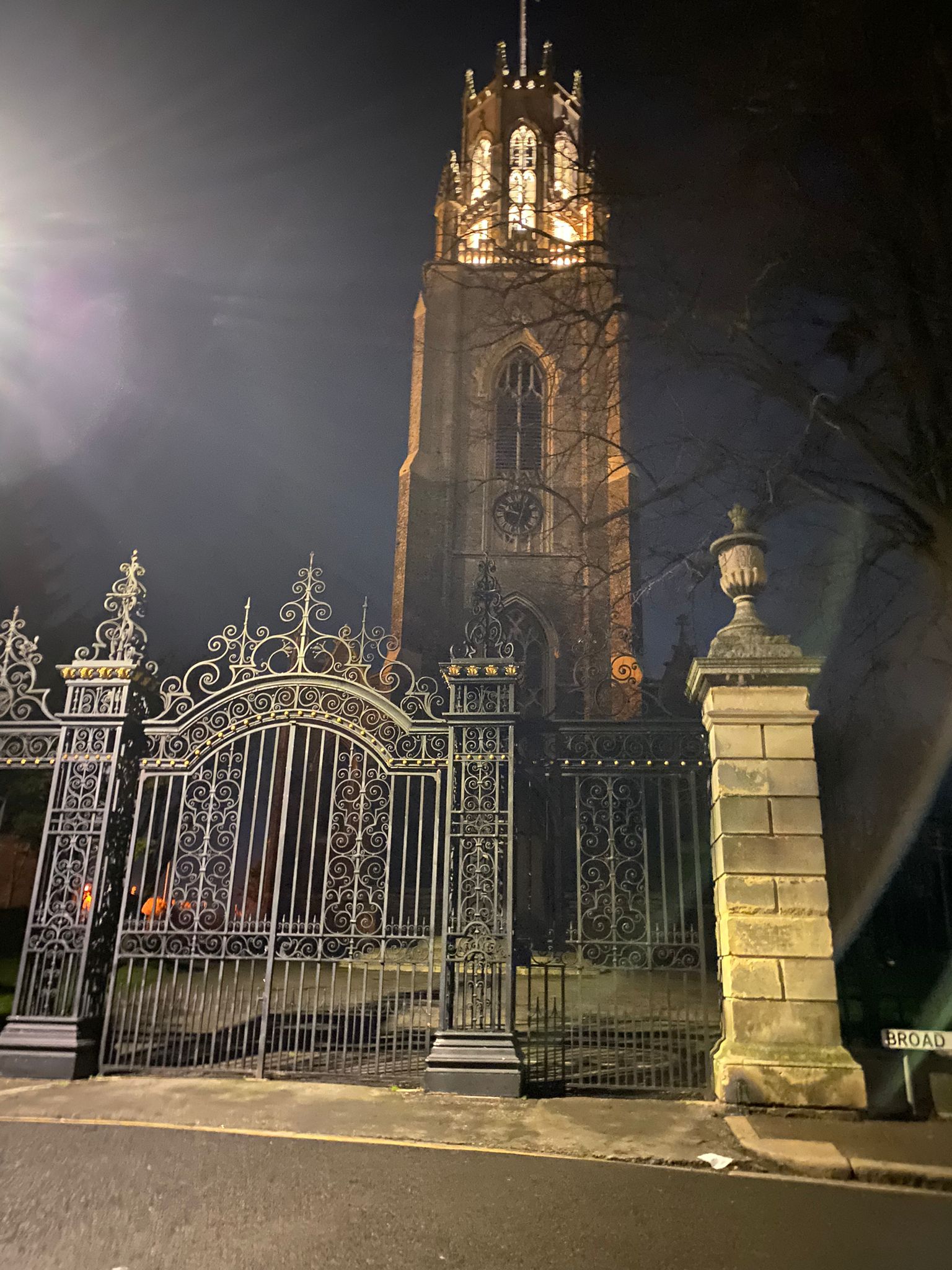
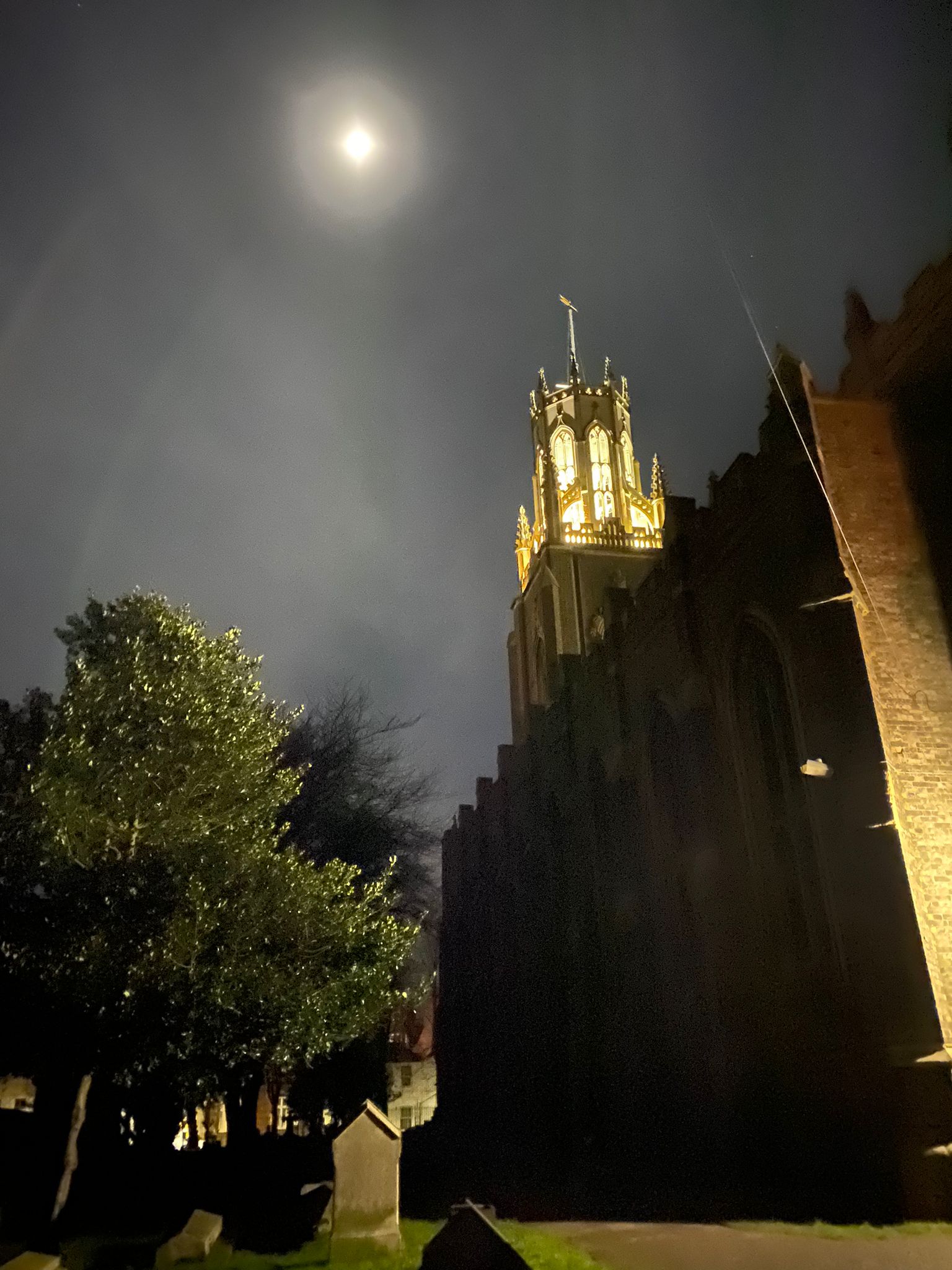
Thanks to Caroline Perkins from St. Luke’s for taking these lovely photos of the St. George’s lantern that was lit up over the Christmas and Epiphany period in memory of those lost to Covid.

Find out what is happening at Ramsgate's Town Centre Church.
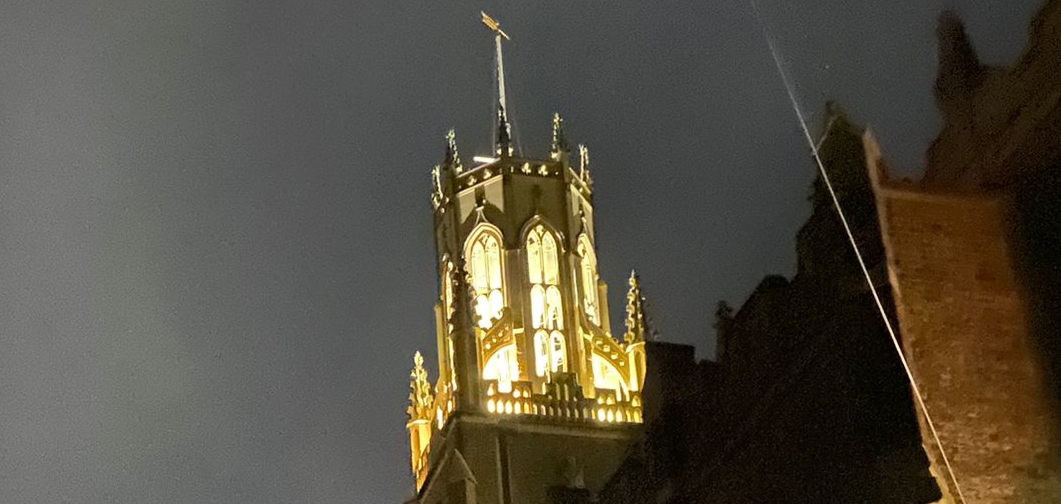
Thanks to Caroline Perkins from St. Luke’s for taking these lovely photos of the St. George’s lantern that was lit up over the Christmas and Epiphany period in memory of those lost to Covid.

Week of Prayer of Christian Unity (18th – 25th January)
Materials for the Week of Prayer for Christian Unity 2022 have been prepared by the churches of the Middle East.
The story of the Magi visiting the Holy Family in Bethlehem is one very familiar to us. The Magi have sometimes been seen as a symbol of the world’s diversity – different religions and cultures – that comes to pay homage to the Christ-child. The story might therefore represent the unity of all created that God desires.
The Week of Prayer for Christian Unity in 2022 has been prepared by the churches of the Middle East, the history of which was, and still is, characterised by conflict and strife, tainted with blood and darkened by injustice and oppression. The Christians of the Middle East offer these resources conscious that the world shares many of the travails and much of the difficulties that it experiences, and yearns for a light to lead the way to the Saviour who is the light that overcomes darkness.
Serving the Gospel today requires a commitment to the human being, especially the poorest, the weakest and those marginalised. It requires from the churches transparency and accountability in dealing with the world, and with each other. This means churches need to cooperate to provide relief to the afflicted, to welcome the displaced, to relieve the burdened, and to build a just and honest society. This is a call for churches to work together so that young people can build a good future according to God’s heart, a future in which all human beings can experience life, peace, justice, and love.
Daily Prayer Meetings at 9am:
Weekdays 9am at Hardres Street Church.
Saturday 22nd, Prayer Breakfast at Salvation Army, High Street
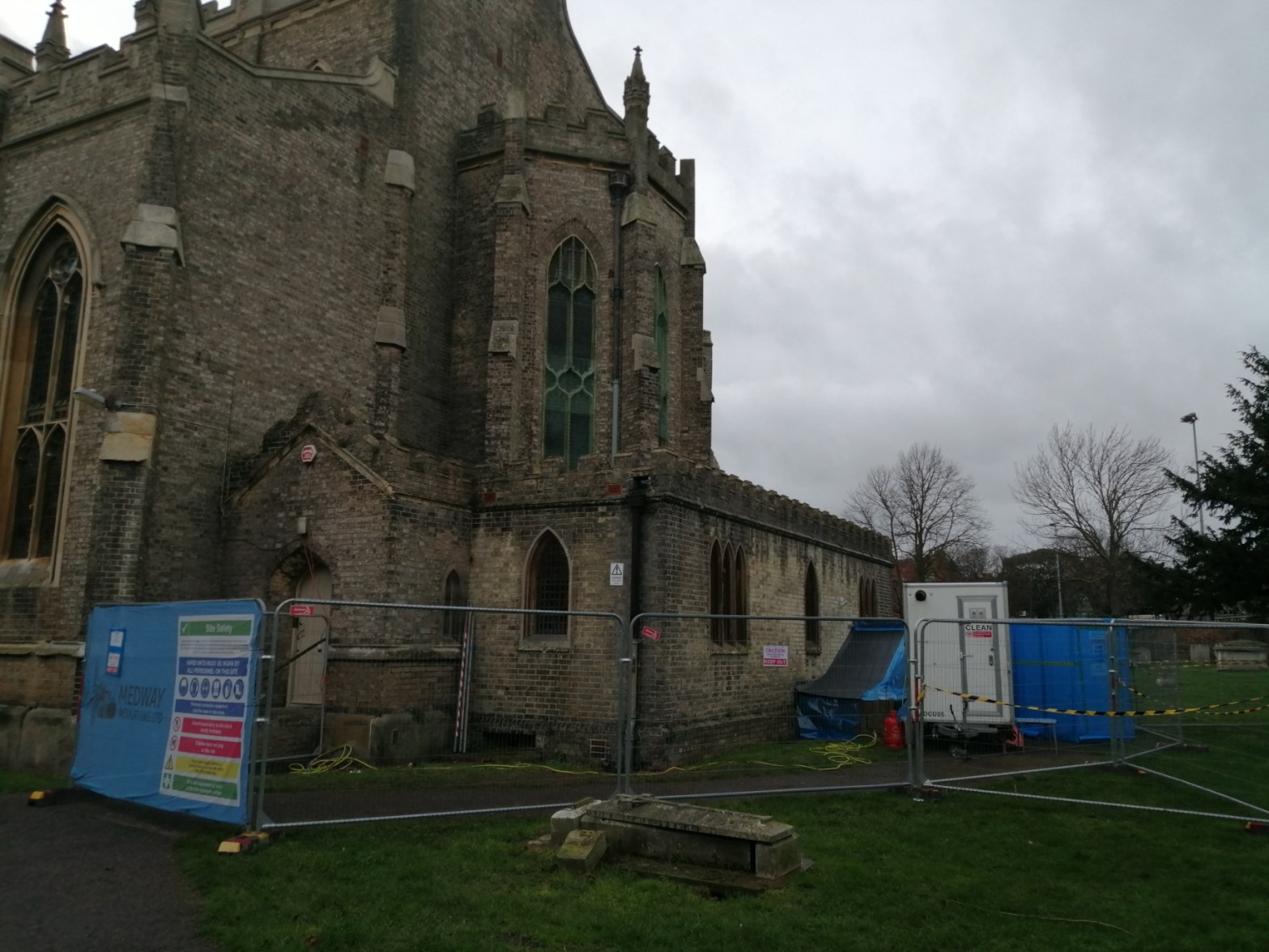
This week work has begun on removing asbestos from St. George’s crypt. The work will last for about a month, but should not effect our normal services and prayer meetings in church other than to prevent us from using the organ (we will use the piano instead).
This work is costing around £35,000 and we are grateful to the Friends of St. George’s who are funding it. The work is necessary in order to make the crypt accessible so that other work such as upgrading the heating system in the church is possible.
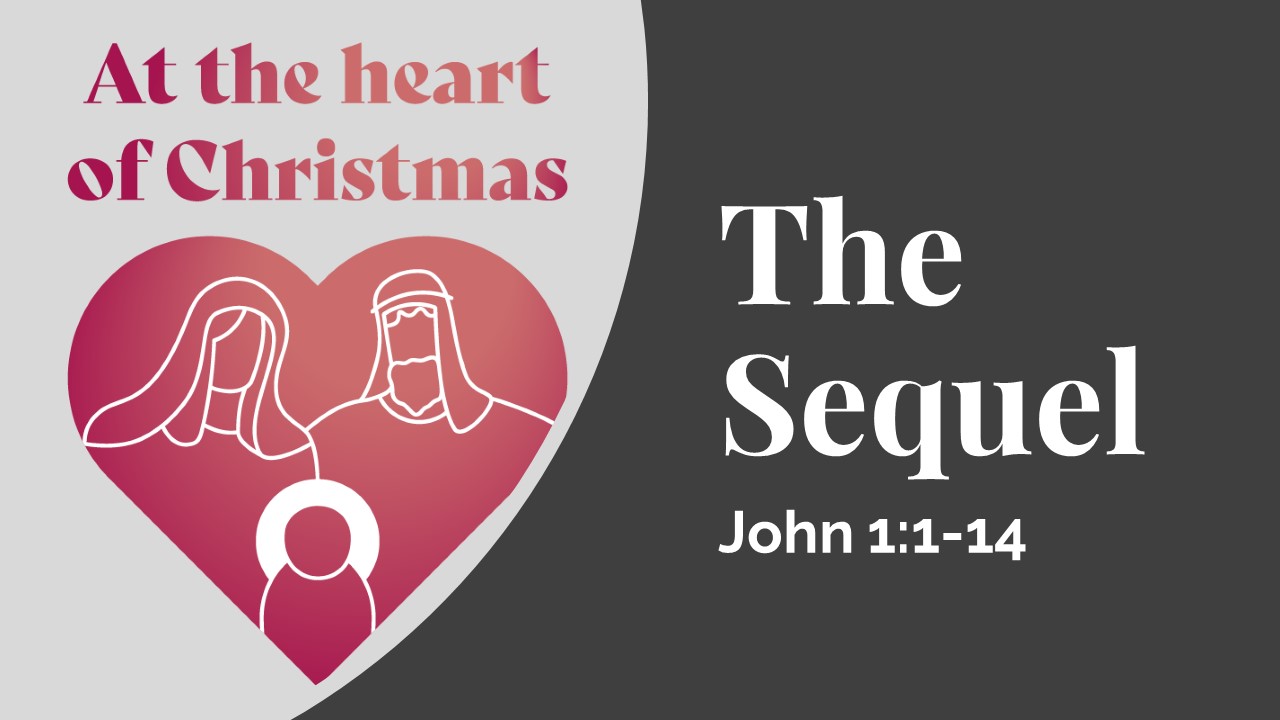
This talk was given at the Midnight Service at St. George’s on Christmas Eve. As we think about what kind of sequel we want in 2022, we look to Jesus as the one who creates a possibility for a different kind of humanity. A version of this talk was also given at St. Luke’s Ramsgate and you can watch a video of it here.
2022 – The Sequel
I wonder what your favourite film sequel is?
Some people are thinking that the year 2022 will be a sequel to 2020 as in: 2020: 2, the sequel.
In other words the follow up to the year 2020!
But what kind of sequel do you think 2020: 2 will be?
Many film sequels simply repeat the basic formula of the original.
So you might call it:
2020: 2 – Here we go again!
2020: 2 – The Virus returns
2020: 2 – The Wrath of Covid
But some sequels are the next stage in the story and turn a bad ending into a good ending a tragedy into a comedy. So you might call it:
2020: 2 – The Vaccine strikes back
2020: 2 – A new Hope
2020: 2 – Covid: Endgame
So are you pessimistic that 2022 will just be like 2021 and 2020 with new variants of the virus causing further waves of illness and death.
Or are you hopeful that 2022 will see the end of the Pandemic and a chance to return to life without threats of illness or worries about lockdowns.
What kind of sequel do you think 2022 will be?
History – Repeating the Pattern
When we look at history, we find that in many ways it is a series of sequels of the kind that follow the basic formula or pattern of the past. Times of peace and prosperity followed by times of war and poverty. Humanity seems to keep making the same mistakes, the same stories of greed, lust, arrogance and anger play themselves out again and again at a personal and national level. History repeats itself. Yes, there are different characters, yes the technology improves, but the basic formula and story format remains the same. Each new generation simply repeats the mistakes of its forebears.
The Bible calls this sin and says it goes right back to the first man and woman and their decision to decide for themselves what was right and wrong, rather than follow God, the one who made them in his image. Generation by generation, we all follow the same formulaic story.
But how can this pattern be broken? If every generation is at heart just as corrupt as the previous generation, then how can there be any hope of a different kind of sequel? How can there be a happy ending?
Jesus – The Same but Different
This is where Jesus comes in. This is the point of the virgin birth. This is the heart of Christmas. It introduces a new start a new kind of humanity.
The virgin birth makes Jesus unique. Everyone else is born of a father and a mother, they inherit the same wrong attitudes and tendencies that tend to make a mess of the world.
Jesus is the same. He is born of a woman and fully human.
Yet, Jesus is different. He has no human Father, rather he eternally existed as the Son of God and the Word with God as John puts it
To sum these two ideas up, it says in John 1:14:
“The Word became flesh and made his dwelling among us.” (John 1:14)
Like all humanity he bears the image of God, but unlike the rest of humanity it is not corrupted. Jesus brings a new start free from the sin of Adam, a humanity that is fully connected with God.
This is God coming to show us how humanity is meant to be, how we are meant to live, without greed, lust, arrogance and anger, but with pure selfless sacrificial love. Jesus was the same as us, but free from sin.
This became clearest when he willingly went to the cross. On the cross he took the judgement for the world’s sin. He died to condemn our wickedness, but also to take our place, that we might find forgiveness and a way back to God. Jesus’s selfless act of love creates a new Way, a new humanity and he invites us to become part of that humanity.
Do you want the same or different?
So, we are left with a choice. Do we embrace Jesus’s new humanity or do we reject Jesus and all he has to offer?
In John 1, it calls Jesus the light in the darkness. Many people it says, wanted to stick to the old ways and the old stories. They wanted to continue with the sequels that just repeated the same age old patterns, the ways of darkness. They didn’t want to change. So, they did not receive him. Is that how you treat Jesus?
Others, though it says did receive Jesus and they because of this something amazing happened. They became children of God. Children not from natural descent, but born of God. Not that we Christians become perfect or sinless. Not that we don’t struggle with issues of greed, lust, arrogance and anger. Our old habits and old ways still cling to us, but with God’s help we are being changed to become more like Jesus from the inside out, to start living out our new identity and the new humanity that he brings.
Finally we look forward to the ultimate sequel when Jesus comes and creates a truly new world, where sin and death are no more, where darkness is banished and we can shine with the light of Christmas.
2022 may not be a better year than 2020 in terms of Covid, but if you are willing to accept Jesus coming to change you, then it could be much happier year for you.
The Mayor’s Christmas video this year was shot mainly in St. George’s church and shows the Christmas Tree Festival beautifully.

We hope you’ve noticed that the Lantern on the top of the church is lit again for the Christmas period? This year it is a particularly poignant reminder of all the Ramsgate people we have lost during the year to Covid. It is also a gesture of comfort to those who find themselves alone at this time of the year. We are able to do this through the very generous support of Trevor Shonk and a number of other local people who have donated to pay for the electricity. Thank you to all of them!

Our Midnight Mass starts at 11:30pm at St. George’s Church. There is no need to register or book beforehand, but we do ask people to wear masks and observe social distancing.
Join us in the beautiful setting of St. George’s church decorated for the Christmas Tree festival to welcome in Christmas Day.
Thanks to all those who have donated to light the lantern tower in memory of those who have died from Covid.

Join us at St. George’s Ramsgate tonight (Tuesday 21st) at 7pm for our Carol Service. Featuring many carols, candles, Christmas Bible readings, the dedication of the Tree of Loving Thoughts and the building of a crib scene. All in the setting of a beautiful church decorated for the Christmas Tree festival.
Photo by Frank Leppard.
As Christians we talk a lot about ‘faith.’ But do we think and talk about faith in a way that truly reflects a Biblical understanding? How well does our understanding of faith stack up against the kind of faith we see in the Bible?
When we talk about faith do we see it as ‘blind faith’. A kind of leap in the dark, a trust that can have no evidential support?
When we talk about faith is it a way of making ourselves feel superior to others? ‘My faith’ enables me to live a good life.
And when we talk about faith is it a serious matter, that produces no sense of joy or excitement?
Today’s Gospel reading is a short passage, but it is pivotal in the birth narratives in Luke’s gospel. These opening chapters are all about faith. In particular, whether people will believe God’s messenger, the angel Gabriel.
Luke starts by telling us of Zechariah and Elizabeth. They are very old and their deep sadness is that they have not been able to have children. Yet, they are good faithful Israelites. Zechariah serves in the temple as a Priest and one day he is confronted by the Angel Gabriel. Gabriel tells him that the impossible will happen, he is going to have a baby boy, who he should call, John, someone who will play a key role in God’s plans. Zechariah, however, does not believe Gabriel – he thinks he and his wife are too old. So Gabriel strikes him dumb. Yet, when Zechariah goes home the impossible does happen and his wife Elizabeth becomes pregnant.
Then Luke tells us that the angel Gabriel comes again, but this time to a young girl, Mary, a virgin, who is engaged to a man called Joseph. This time the angel tells her she will conceive a boy by the Holy Spirit, who will be called Son of God and have an eternal kingdom. Although, again this seems impossible, Mary does believe Gabriel.
Then we have our passage, where these two stories, one about unbelief and the other about belief come together: Mary visits Elizabeth. These short verses actually teach us a lot about faith. Perhaps that shouldn’t be surprising as the last verse has a kind of beatitude:
“Blessed is she who has believed that what the Lord has said to her will be accomplished!” (Luke 1:46).
In other words here is an assertion, that faith brings blessing. Mary has a unique role in that she became the mother of the Son of God. Yet, she is also an example for us all to follow. True blessing comes from believing what God tells us. True faith really matters, so we should be concerned to check that our faith is shaped by the faith of these Biblical characters.
So, what kind of faith does this meeting between Mary and Elizabeth show us?
Firstly, it shows us that faith is not simply blind faith. Rather it seeks out stronger confirmation of what has already been believed.
Luke tells us that Mary hurries to go and see Elizabeth. In fact we know from Gabriel that Elizabeth was 6 months pregnant at the time he spoke to her. Luke also tells us that Mary stayed with Elizabeth for about three months, before telling us of the birth of John the Baptist. The implication is then, that Mary goes to Elizabeth almost as soon as Gabriel has spoken to her.
But why? Why does Mary, a young woman who would probably be expected to stay in her parents home and not go travelling by herself, travel the 70 miles or so to Elizabeth?
Well when Mary asks how she can become pregnant, since she is a virgin, Gabriel mentions the miracle of how Elizabeth was pregnant despite being very old. It may be that Mary had not heard about this and so she goes to Elizabeth to see if what the angel said was true. Or perhaps she did know, but what the angel says suggests that Elizabeth is the best person to help her understand what is going on.
Mary believes the angel’s words, but she wants a deeper certainty and a deeper clarity. This is not simply blind faith.
Luke tells us that he writes his gospel so that:
” so that you may know the certainty of the things you have been taught.” (Luke 1:4).
God certainly seems to respect this desire on Mary’s part. When Gabriel tells Zechariah about his new son he says that he will be filled with the Holy Spirit even before he is born and will go before the Lord to make a people prepared for the Lord.
When Mary arrives, John leaps in Elizabeth’s womb and Elizabeth herself is filled with the Holy Spirit. The implications are that her words are inspired – and what words: “Blessed are you and blessed is the child you will bear!”
Immediately, Elizabeth independently confirms everything that the angel Gabriel has said to Mary. She becomes a second witness to the great truth and there is a principle in the Bible that you need two witnesses to prove anything.
Mary’s faith is not simple blind faith. It immediately drives her to seek greater certainty and God gives her that.
We see a similar thing with the shepherds. When the angels give them the message about the birth of Jesus, they go and check out whether it is true – can there really be a baby in Bethlehem in a manger?
We are not called to a blind faith. True faith takes God’s words seriously and checks them out in order to gain a deeper certainty and confidence.
So, faith seeks certainty, but it also needs humility.
After our scripture Mary, says a wonderful poem that is based on Hannah’s song of praise at the beginning of 1 Samuel. Mary’s poem is called the Magnificat and is traditionally said or sung in the Church of England evening prayer. The hymn, Tell out my soul is based on it.
It is a song about the fact that God blesses the humble. It talks about how God has:
“been mindful of the humble state of his servant.” (Luke 1:48)
but,
“he has scattered those who are proud in their inmost thoughts.” (Luke 1:51b)
Even when Mary accepted Gabriel’s message she said,
“I am the Lord’s servant.” (Luke 1:38)
But if you think Mary acts with humility what about the example of Elizabeth. Here she is the much older woman, but when her teenage relative turns up at the door she gives a greeting that you would expect a servant to give to a master.
What is more she doesn’t just treat Mary as having a higher status than her she calls the baby in her womb, ‘my Lord!’
God scatters the proud, but lifts up the humble. True faith comes humbly before God and before Jesus. Like Elizabeth it is not concerned to hold on to status or prestige, but to submit to God and his purposes and ways. True faith needs humility.
So, firstly, faith seeks certainty, secondly faith needs humility, but thirdly this passage shows us that faith breeds joy!
Elizabeth’s whole attitude her shouts of blessing at seeing Mary and expressing what God is up to all show a great delight about what God is up to. There is a real feeling of joy in the whole incident.
She tells us that the baby in her womb leapt with joy when he heard Mary’s greeting.
Mary goes on at the start of the Magnificat to say,
“My soul glorifies in the Lord
and my spirit rejoices in God my Saviour!” (Luke 1:46-47)
True faith brings great joy, because it trusts that through everything God is acting to bring about the salvation of those who trust in him and love him.
That’s why Paul says,
“Rejoice in the Lord always! I will say it again, rejoice!” (Philippians 4:4)
Christmas time is meant to be a time of joy and celebration. For the second year running it looks like Covid is going to make that difficult! But as Christians, Covid can never take away our joy in Christ. As long as the heart of our Christmas is about Christ, then we will always have reason to rejoice and celebrate.
That does not mean we will never feel sad or low, but it does mean that we can keep returning to the deeper reality of joy that only faith in Christ can bring, faith breeds joy.
How do you see faith?
So how do you see faith? Is it a blind leap in the dark, linked with a kind of religious arrogance and sombre seriousness? Or is it a joyful and humble seeking after certainty focussed on Jesus as the Christ, the one who truly is our Saviour and God with us.

Thank you so much to the three very talented musicians: Lisete, Petra and Iva for a fantastic baroque concert at St. George’s Church last night (Friday 17th). We were taken back in time as we heard music from a variety of Baroque composers from Bach to Jean-Marie Leclair played on 18th Century replica instruments. The music was beautiful and the little introductions about the composers and instruments fascinating. We very much hope we can hold a similar concert again in the future.

 St. George's Church Ramsgate