Joy out of Oppression (Matthew 2:13-23)

“The LORD is my rock, my fortress and my deliverer; my God is my rock, in whom I take refuge, my shield and the horn of my salvation, my stronghold.” (Psalm 18:2)

As recorded at St. Luke’s

Joy out of Oppression (Matthew 2:13-23)

Knitting…

I can’t really knit. But knitting is amazing. People take a long thread and turn it into a beautiful jumper.

As we look at our Bible passage today, we will see that Matthew is knitting together some amazing themes, to show us a true picture of who Jesus is and how he came to fulfil the Old Testament.

1 simple story and 3 strange quotes

In the passage is a simple story. Jesus has been said to be the new King of the Jews, by the Wise Men who visited. But Herod, who was made king of the Jews by the Romans, did not want the threat of another king.

So, God warns the Wise Men not to return to Herod and Joseph to flee to Egypt with Jesus. Sadly, though, Herod desperate to destroy the baby who may be king, orders the murder of all the children in Bethlehem. Jesus is safe, but Bethlehem is sad. Soon, however, Herod dies, and Joseph it is safe to return to Israel and settles in Nazareth.

One simple story, but Matthew uses the story to knit together three rather strange quotes. He seems to be saying, that Jesus fulfils the quotes, but none of the quotes are about a future king, the first looks back to the birth of the nation of Israel as it came out of Egypt, the second records the sadness of Israel being taken into exile by the Babylonians and the third does not even appear in the Old Testament. This is not a simply the Old Testament said this would happen and now it has. Matthew is doing something much deeper with the quotes here.

So, let’s follow the threads and see what we can find.

Egypt

Follow string to 1st board, with ‘Egypt’ written on front.

“Out of Egypt I called my son.” (Hosea 11:1)

Egypt, is where the nation of Israel were slaves,

until God brought them out of Egypt and made them into the nation.

Coming out of Egypt was the birth of a new nation.

This verse looks back to that moment.

‘My son’ refers to the people of Israel.

Tear off ‘Egypt’ half of sign to reveal star of David and X

However, in Hosea it tells us that they kept turning away from God,

even though God longed to have them back.

Again and again, Israel proved to be a failure as God’s son.

Tear off ‘Egypt’ half of sign to reveal Jesus and tick

Now, Matthew seems to be saying,

that Jesus was going to fulfil God’s vision for Israel as his Son,

in a way that Israel never would.

In Matthew 3, at his baptism,

God speaks from heaven and says,

“This is my Son, whom I love; with him I am well pleased.” (Matthew 3:17)

When Israel left Egypt they went into the wilderness

and often failed God there.

When Jesus was taken into the wilderness,

he was tempted, but never gave into temptation.

Where Israel failed, Jesus succeeds.

  • Jesus proves himself to be the true Son of God.

He does not just give us rules to follow, but a life to copy.

He shows us what it means to live as part of the true family of God.

Will you live to be like Jesus?

Ramah

Follow string to 2nd board, with ‘Ramah’ written on front.

In the Old Testament, Rachel was the favourite wife of Jacob.

However, there is confusion about where she was buried.

Some texts suggests she was buried near Bethlehem,

other texts suggests she was buried in Ramah.

So, in some way Rachel is associated with both places.

So, because Rachel was associated with Bethlehem, he uses a quote from Jeremiah:

“A voice heard in Ramah,

weeping and great mourning,

Rachel weeping for her children,

and refusing to be comforted,

because they are no more.”

(Jeremiah 31:15)

Tear off half ‘Ramah’ to reveal sad face.

Matthew tells us about the terrible killing by Herod of the children in Bethlehem,

in an attempt to destroy Jesus. The people in Bethlehem must have been very upset indeed and because of their association with Rachel, this verse seems to fit their upset.

The verse actually refers to the people of Israel being taken away from their homes

and forced to go into exile in Babylon.

Ramah was the staging post for those taken from Jerusalem as they were prepared

for the long journey. This was a sad moment. Israel were being oppressed

by the Babylonian king Nebuchadnezzar.

This also all echoes Israel’s time in Egypt, when the king of Egypt Pharaoh,

ordered the firstborn males of Israel to be killed and thrown into the Nile.

All these stories record terrible moments for Israel under oppression.

Whether by Pharaoh, Nebuchadnezzar or Herod.

Tear off half ‘Ramah’ to reveal happy face

But, they are also only parts of a story that are all about hope in God’s

ultimate rescue.

Moses miraculously survived the murder of the babies in his time and God ultimately used him to lead Israel out of slavery and to the promised land.

The next verse in Jeremiah tells Israel to stop weeping, because God will rescue them from exile in Babylon and bring them back to the promised land. And God did as Jeremiah promised.

Jesus like Moses was miraculously rescued from the murder of babies, by a warning in a dream to Joseph to flee to Egypt. And Jesus will return to bring salvation. Not from Herod, but from sin and death itself.

  • Jesus offers hope to the oppressed. We live in a world ravaged by sin and in particular, the oppression by terrible tyrants like, Pharaoh, Nebuchadnezzar and Herod. But even as we suffer in a sinful world, Jesus brings us hope that just as he ultimately died on the cross, because of human sin, he will lead us to the promised land of God’s eternal kingdom.

Nazareth

Follow string to  3rd board, with ‘Nazareth’ written on front.

So, we come to the last quote. Except it is not a quote. You won’t find it in the Old Testament, and the fact Matthew says what was said through the ‘Prophets’, suggests that this is meant to be a summary statement of a theme of the teaching in the Old Testament.

“He will be called a Nazarene.”

So, what could it mean? This is debated, but I am most persuaded that the link should be made to the Hebrew word, Nezer, which means, Branch.

“Branch,” is a title used in the Old Testament of the hoped for Messiah.

Tear off  half ‘Nazareth’ to reveal crown

The clearest link is to the famous verse in Isaiah 11:1.

“A shoot will come up from the stump of Jesse; from his roots a Branch will bear fruit.” (Isaiah 11:1)

Jesse was the father of David, so this is looking forward to God’s promised king.

But there is another quote, with the title, ‘Branch’, which goes further.

Tear off half ‘Nazareth’ to reveal people

“Tell him this is what the LORD Almighty says: `Here is the man whose name is the Branch, and he will branch out from his place and build the temple of the LORD.” (Zech. 6:12)

Just as David’s son, Solomon, was the one to build the first temple in Jerusalem, so the prophecy says, a future Messiah will build a new temple in Jerusalem. When Jesus was born, there was already a temple being built in Jerusalem, by the King Herod. What Matthew seems to be saying with this title, is that this child has come to build the true temple, by the true king.

  • But, Jesus did not build a temple out of stones, but of people. He built his church, the new temple to replace the stone one built by Herod. Not built on the backs of oppression, but on the foundation stone of Jesus crucified. This temple, would be worldwide and spread the glory of God worldwide.

Today, you too are invited to be a part of that temple, and bringing glory to God, where we are in this place. As we approach a New Year, why not take the opportunity to be built by Jesus, the Nazarene, into the true temple of God.

The Gift of Joy (John 1:1-14)

“I bring you good news that will cause great joy for all people. Today in the town of David, a Saviour has been born to you.” (Luke 2:10-11)

As recorded at St. Luke’s

The Word Became Flesh (John 1:1-14)

1 In the beginning was the Word, and the Word was with God, and the Word was God. 2 He was with God in the beginning. 3 Through him all things were made; without him nothing was made that has been made. 4 In him was life, and that life was the light of all mankind. 5 The light shines in the darkness, and the darkness has not overcome[a] it.

6 There was a man sent from God whose name was John. 7 He came as a witness to testify concerning that light, so that through him all might believe. 8 He himself was not the light; he came only as a witness to the light.

9 The true light that gives light to everyone was coming into the world. 10 He was in the world, and though the world was made through him, the world did not recognize him. 11 He came to that which was his own, but his own did not receive him. 12 Yet to all who did receive him, to those who believed in his name, he gave the right to become children of God— 13 children born not of natural descent, nor of human decision or a husband’s will, but born of God.

14 The Word became flesh and made his dwelling among us. We have seen his glory, the glory of the one and only Son, who came from the Father, full of grace and truth.

Traditional Carol Service – Joy

“I bring you good news that will cause great joy for all people. Today in the town of David, a Saviour has been born to you.” (Luke 2:10-11)

As recorded at St. Luke’s

How to eat a burger?

What is the best way to eat a burger? Should we grab it with both hands and stuff it into our mouths, not caring what spatters out on either side? Or is it best to be more civilised and eat your burger with a knife and fork, carefully slicing off small chunks to place carefully in your mouth?

My guess is that probably you think it doesn’t matter. Each to their own. But I came across an article the other day, which said that a woman had been kicked out of a restaurant because she was eating her burger with a knife and fork! Apparently, it was the restaurant rules that you had to use your hands to eat a burger.

What an outrage!!!

Rage Bait…

Or was it?

This year, the Oxford University Press decided its word of the year was ‘rage bait.’

Rage bait is online content that deliberately provokes a strong emotional reaction in you, so that you will respond or comment. Many posts are interesting or funny, you may read them, but you will soon scroll on. If the post makes you angry, however, then you are more likely to engage, to make a comment or add a horrified emoji.

The thing is the more comments or reactions a post receives, the more it will be promoted by the algorithms and the more money the content creator will receive. Rage bait is a lucrative business.

The story about being kicked out of a restaurant for eating a burger with a knife and fork was of course a fake story. It was rage bait made for fun. But the author has become very wealthy making similar stories!

The sad truth is we are all more easily engaged by appealing to our base instincts, like pride, lust, greed and anger. That is how we can be manipulated by people to make us do what we want. Historically, leaders have tapped into people’s anger to build their power and cause wars, which lead to destruction and heartache.

Prince of Peace

Jesus, however, was announced by the angels to be the bringer of peace. He comes not to stir up anger, but to lead us in the way of joy and peace.

The term Prince of Peace comes from Isaiah 9, a prophecy looking forward to a better ruler. It is a passage written to a people being oppressed by angry warring nations and looks forward to a time, when wars will cease, joy will break out and the Prince of Peace will come. He is the son, that is given to us the child who is born for us.

But, what is so special about the promised Prince of Peace? Why might we want him to be our leader? How can he bring us personally joy and peace now?

Is this the leader we need?

As well as the term, Prince of Peace, Isaiah uses three other titles for this coming king. The King Christians claim is Jesus.

Wonderful Counsellor:

First of all, he is a “Wonderful Counsellor.” In our world we find counsel from all kinds of sources. Through the internet, we can find counsellors from all over the world, commentators and influencers with all kinds of different ideas and philosophies. But, why should we choose one human over another to be our guide in life?

Perhaps we should allow Artificial Intelligence to guide us? But that is also a very poor guide, mainly because it is simply trying to imitate human thinking, not offering us anything better and often something worse.

The claim, however, is that Jesus is a wonderful counsellor. ‘Wonderful’ suggests something beyond mere human, it points to his divine nature and wisdom.

And when we look at Jesus, we see his teaching, which is so powerful, memorable and radical. Here is not a preacher of anger, but someone who says, “Blessed are the peacemakers” and “love your enemies”.  Someone, who appeals not to our base instincts, but call us to a better way of life.

Isn’t this a leader you can trust for the best guidance in life?

Mighty God:

Secondly, he is described as ‘Mighty God.’ Leaders in our world build their power on military strength. But in the Bible, we are encouraged to put our trust in God to save us. After all Israel did not escape Egypt by military strength, but by the power of God.

In the same way, Jesus came demonstrating the power of God, through miracles that healed sickness, calmed storms and even raised the dead. He didn’t live by the sword, but in dying at the hands of military executioners he overcame the power of death itself by rising again on the third day.

Jesus may not meet our immediate desires, but he offers to give us lasting joy and security. Isn’t this a leader you can trust for your ultimate security?

Eternal Father:

Thirdly, he is called, “Eternal Father.” When the term, ‘Father’ is used of a leader if suggests a caring authority. Many leaders are in it for their own status, power or wealth gathering. Fortunately, they never last!

Jesus, however, said that he had come not to be served, but to serve. To give his life as a ransom for many. And that is what he did through his sacrifice on the cross to save us from our sins. He showed deep care for us, a care that continue because his reign is eternal.

Isn’t this a leader you can trust to care for your needs, not just now but always?

Rage Bait or Peaceful Rule

So, what will you let lead you this Christmas? Rage bait or peaceful rule?

Will you allow yourself to continue to be manipulated by those who appeal to your base instincts, or the one who offers you wonderful counsel, eternal security and caring support?

Can I invite you this Christmas to consider following Jesus. I would love to give you a copy of Luke’s gospel, so that you can read it and find out more about the Prince of Peace and see whether he might be a better leader for your life.

Family Carol Service – Joy

“I bring you good news that will cause great joy for all people. Today in the town of David, a Saviour has been born to you.” (Luke 2:10-11)

As recorded at St. Luke’s

What brings you joy?

Turn to person next to you and see if you can answer this question:

  • What brings you joy? What makes you happy?

Lots about Christmas is meant to bring us joy. Giving and receiving presents. Eating good food. Spending time with family.

True joy often comes through connecting with others: family, friends, loved ones. But increasingly, our society is becoming less good at connecting. Anger, upset or bitterness destroys relationships. We hide ourselves behind social media, only putting our best selves on display and closing ourselves off to real relationships. We become wrapped up in our own lives too anxious to truly engage with others and too keen to protect ourselves from harm. The result is that our lives, lose their joy.

Wrap up Card with ‘JOY’ on.

Joseph – Closed Off

Joseph was engaged. He was looking forward to marrying his bride, Mary. But then he discovered something shocking. Mary was pregnant and the baby was not his! What was he to do?

Rather than tackling the problem head on, Joseph wrapped up in his own thoughts and ideas, seems to come up with his own idea of how to deal with the situation. Rather than confronting Mary or find out what has really happened, he decides to act in what seemed like a righteous and kind way. He decided to divorce Mary quietly, saving her and him  embarrassment. In this way he wanted to close down the issue, cut himself off from the pain and move on to continue his own life. Shut off from the joy of marriage to Mary.

Joseph – Unwrapped

But, God had other ideas.

Pull wrapping paper and Joy sign off.

God sent a messenger, an angel in a dream. He wanted to unwrap what was really going on. To unwrap the truth of what had happened to Mary. To open up the possibility of joy not just for Joseph, but for all of us. In unwrapping this truth, God also provides a way for us to be unwrapped to the possibility of real joy.

The Holy Spirit

The first thing the angel says, is that the baby is from the Holy Spirit.

Unfold left arm to reveal Holy Spirit.

The Holy Spirit appears right at the start of the Bible. The world is empty,  chaotic and lifeless. But, the Holy Spirit hovers above the waters and God acts. From the emptiness comes everything, from the chaos comes beauty, from lifelessness life comes in abundance.

Now, the angel says, the Holy Spirit comes to make something new again. This baby was a completely new creation for our world.

When the world seems full of chaos and horror, we can be tempted to shut ourselves away, to become wrapped up in ourselves. But, when we realise God can create something new, beautiful and full of life by His Holy Spirit, then we can begin to open ourselves up to the work of his Holy Spirit. We can open ourselves up to joy.

Jesus = The Saviour

The second thing the angel says is that the baby is to be called, Jesus, which means ‘God saves’, because he will save his people from their sins.

Unfold right arm to reveal cross.

Sin is ultimately, a focus on myself above others and God. It is to disobey the great commandments to love God and neighbour. To sin is to become wrapped up in yourself. It destroys relationships and creates guilt and shame, which make us withdraw from God and others more and more. Sin can often look like a means for joy, but ultimately it cuts us off from the true source of joy.

Yet, the angel says that God in Jesus came to deal with our sin. Jesus was born not just to be a cute baby, not just to teach us God’s way of life, but by his death on the cross to condemn sin and bring us forgiveness. To free us from guilt and shame and free us to discover true joy through love of God and others.

Jesus = God with Us

The third thing we are told, is that Jesus is Immanuel or God with us.

Unfold top arm to reveal hand from above…

When we become wrapped up in ourselves we become cut off from God and others. We experience loneliness and lose joy.

In a recent survey, 33% of 16-29 year olds in Britain reported being lonely. They find it hard to reach out to others, and others are less likely to reach out to them.

But, Christmas tells us that God reaches out to us in our loneliness and estrangement from him. Jesus is God with us and God will be with us if we let him. He invites us not just to let him be with us in the ups and downs of life, but to become part of his family and find friendship and community in his church. This is the root to true joy.

Joseph finds joy in faith

So, this was the message of the angel to Joseph. It was an invitation to Joseph to unwrap himself, to open himself up to what God was doing with Mary and to become part of the plan.

But would Joseph trust or believe the angel. Would he stop being afraid of the embarrassment of marrying a woman who was pregnant with a child not his? Would he take her to be his wife and name the child Jesus as the angel said? Would he find joy in trusting the angel and doing what God said or would he remain wrapped up in himself?

Unfold bottom arm to reveal tick…

Joseph did trust and obey and found the joy not just of marrying Mary, but the honour of becoming the father of Jesus himself.

In the same way God invites all of us to stop being wrapped up in ourselves. To instead allow ourselves to be opened up to a life with God, a life freed from sin and a life made new by the Holy Spirit.

Why not open yourselves up to God more this Christmas? Let me suggest two ways you might start to do that:

Grab a Luke’s gospel off me on the way out today so you can read more about Jesus for yourself.

Join the church community by coming along in the New Year. Register now online now, to receive the church email so you can be reminded of what is coming up.

This Sunday – 14th December 2025

(Luke 2:10-11)

This week, the sections of the email are:

  • Opening reflection: Joy
  • Key notices: Parish Safeguarding Officer Role, Daily Prayer
  • Coming Up: Christmas Tree Festival, Christmas Baroque, Dare to Pray, Back after Christmas, Join Up Confirmation course, Churches Together in Ramsgate  United Service
  • Interesting Blogs: Grumpy Owl, Joy in the Bible, Christmas Karma
  • Weekly Calendar
  • Online Forms: Event application, Submit a notice, maintenance report, access Safeguarding training

Scroll on…

Opening Reflection

The theme for this year’s Christmas Publicity is ‘Joy!’ My hope and prayer for all of you reading this, is that you have a truly joyful Christmas. After all, everyone, Christian or not, believes that Christmas is a time to be happy.

Yet, joy can so easily slip away from us. The joy of giving becomes the stress of shopping; the joy of gathering slips into irritation with others and the joy of feasting dissolves into the pain of indigestion.

When our focus is on trying to make Christmas a happy time, then the pressure to be of ‘good cheer’ becomes just another cause of stress and anxiety. But when we embrace the Christian truths of the Christmas story, then we discover something that takes us above and beyond our day to day struggles and brings lasting joy to our souls.

When Jesus was born, shepherds were going about their day to day business. They no doubt had worries about the health of their family, the state of their flocks and how to pay their taxes. But suddenly an angel appeared to them with a message of good news of great joy. A Saviour was born. God was coming to help them and give them a reason for hope that would put all their other worries into perspective.

Life can be far more than worrying about possessions and politics, it can be a journey with God. A journey of transformation, hope and deep joy that lifts us beyond our immediate anxieties. The Christmas story is not meant to be a cute part of our Christmas festivities. When fully grasped it gives us joy for all of life.

Paul Worledge

Key Notices:

Parish Safeguarding Officer Role

Safeguarding in church is the responsibility of everyone. However, we need someone to champion and promote safeguarding in the church and to be a point of contact for any concerns raised. There is a lot of Diocesan training and support for this role. If you think you might be the person to take it on then please let Paul know and he can share more about what is involved.

Daily Prayer

Please note that there will be no daily prayer for the next two weeks. It restarts on Monday 5th January.

Coming Up:

Christmas Tree Festival at St. George’s, 2-5pm

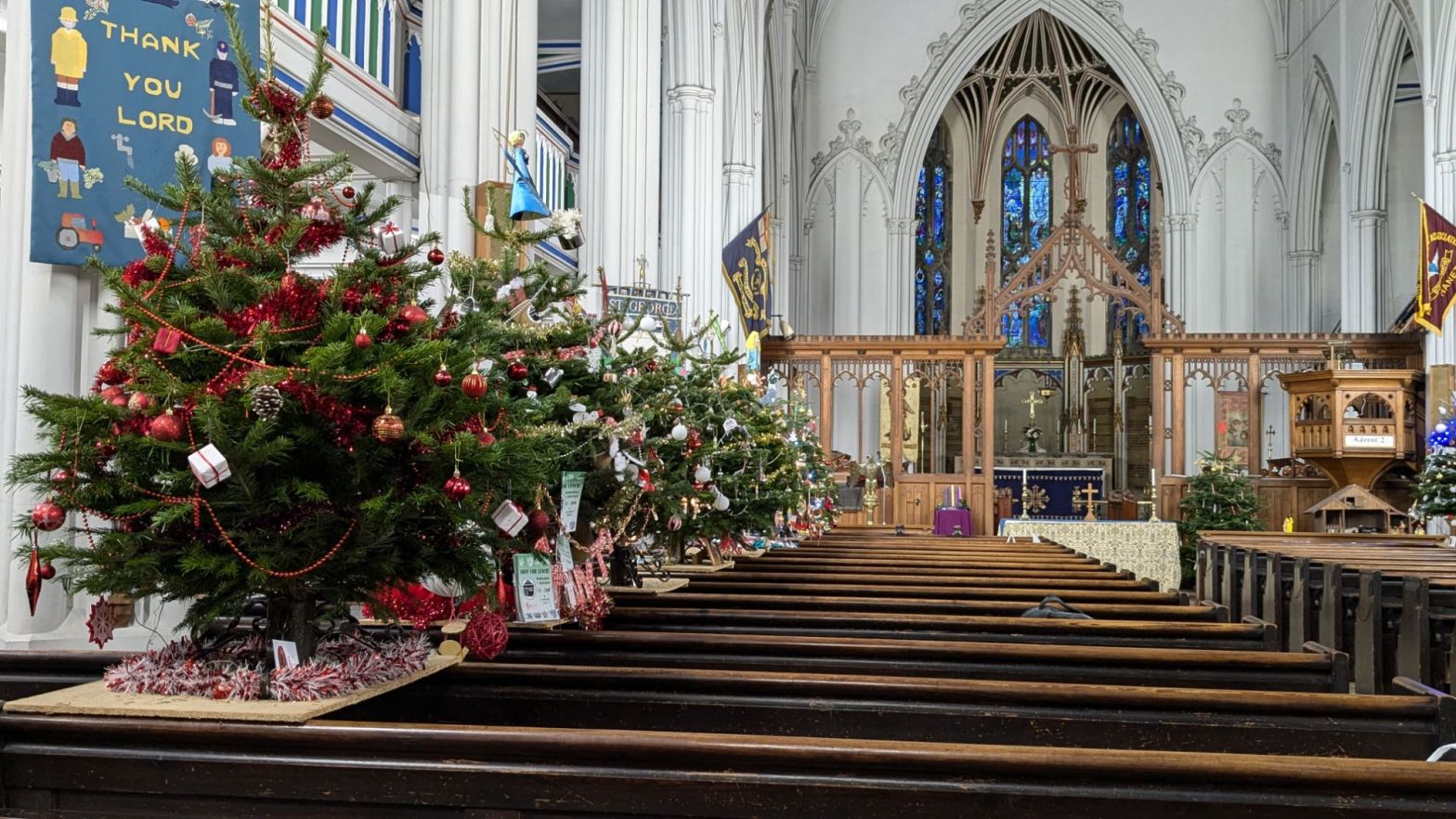
Running from Friday 12th December to Sunday 21st. Come and view the beautiful Christmas Tree festival inside St. George’s church

Christmas Baroque at St. George’s – Tonight , 7pm

Tickets £15 on the door.

Dare to Pray – This Saturday 20th, 9:30-10:30am

There are lots of events happening over Christmas and it is a great opportunity to welcome more people into our churches to hear the good news about Jesus. But we need to pray for God to work. So please join us at our monthly Dare to Pray meeting at St. George’s church this Saturday.

Back after Christmas

  • Daily Prayer restarts on Monday 5th January
  • Cafe4All will then be closed for two weeks and re-open on 8th January.
  • Play and Praise restarts on 9th January
  • Community Meal restarts on 13th January

Join Up Confirmation Courses

We will be hosting a Confirmation Service at St. Luke’s on 28th February 2025. Paul will be running a course called, Join Up, from 8th and 12th January, which is both a follow up to Christianity Explored and a preparation for Confirmation. If you have not been baptised or confirmed or are just interested in taking part in the course, then please talk to Paul.

Churches Together in Ramsgate United Service

After the success of the united service at Pentecost last May, we are planning another united service at the Royal Harbour School, for Sunday January 28th at 6pm. This will be more traditional in style and there will be a joint choir for the event. If anyone would like to be part of the choir, please let Paul know.

Interesting Blogs to Share:

The Grumpy Old Owl and the Joy of Christmas

Check out this video for children from the Church of England, exploring the Nativity. Watch Video…

Joy in the Bible

This is a fast paced look at the theme of joy running through the whole Bible. All done in under 5 minutes! Watch the Video…

Christmas Karma

In this article by Graham Tomlin, we discover why the title to one of the latest Christmas movies, does not make sense. Read more (5 mins.)

Christmas Calendar

Sunday 21st December – Fourth Sunday of Advent

Carol Service (St. George’s Church) – 5:30-6:30pm

Wednesday 24th   

Community Soup (St. George’s Church) – 12:00-2:00pm

Midnight Service (St. George’s Church) – 11:30pm

Thursday 25th        

Family Communion Service (St. Luke’s Church) – 11:00am-12:00pm

Sunday 28th – First Sunday of Christmas

Eucharist (St. George’s Church) Matt. 2:13-23 – 9:30am

Saturday 3rd January       

Community Soup (St. George’s Church) – 12:00-2:00pm

Sunday 4th – Second Sunday of Christmas

Eucharist (St. George’s Church) – 9:30am

Monday 5th         

Prayer Meeting (St. Luke’s Church) – 9:30-10:00am

Tuesday 6th          

Prayer Meeting (St. George’s Church) – 9:30-10:00am

Community Meal (St. George’s Hall) – 5:30-7:00pm

Wednesday 7th   

Community Soup (St. George’s Church) – 12:00-2:00pm

Thursday 8th         

Prayer Meeting (St. Luke’s Church) – 9:30-10:00am

Saturday 10th       

Prayer Meeting (St. George’s Church) – 9:30-10:00am

Community Soup (St. George’s Church) – 12:00-2:00pm

Sunday 11th – First Sunday of Epiphany

Carol Service (St. George’s Church) Num. 11:4-6,16-34 – 9:30am

Confirmation Course (St Luke’s Vicarage) – 5:00-6:30pm

Online Forms:

Under the ‘Contact’ tab on the website, there are now three forms that you can use to help us in managing the church:

  • Events Application Form. Use this if you are organising a church event that needs a church room booked, advertising or ticketing.
  • Submit a Notice. Use this if you want to ask us to include a prayer request or other notice in the church notice sheet or email.
  • Maintenance Reporting Form.Use this to report any non-urgent issues with our buildings or grounds.

Safeguarding Training

If you volunteer in anyway at church the national authorities are strongly encouraging you to take at least the Basic Module in safeguarding training once every three years.

If you have not completed the training in the last three years, then the module can be completed online and takes about ninety minutes. You can access the training by following this link. You will need to first register, to access the training. Once the training is completed, you will be sent a certificate. Please forward that certificate to James (office@churchramsgate.org), so that we can keep records of who has done the training.

Finally, have a really joyful Christmas.

Yours in Christ,

Paul Worledge

(Priest in Charge, St. George’s Ramsgate)

Christmas Baroque (18th December, 7pm)

Join us in the beautiful setting of St. George’s, during its fabulous Christmas Tree festival for the delight of music from the Baroque Collective a group of eight professional musicians. The concert will feature Vivaldi’s four seasons.

Tickets are £15 on the door. Under 16s are free. (Advanced tickets no longer available).

The programme for the evening is:

1st half

  • Johann Sebastian Bach: Harpsichord Concerto No. 4 in A major, BWV 1055
  • Johann Sebastian Bach: Violin Concerto in A minor, BWV 1041
  • John Eccles: Aire from The Mad Lover

2nd half

  • Antonio Vivaldi: The Four Seasons, Laura Rickard leading

Doors open at 6:30pm and the concert starts at 7pm. Refreshments available.

Care for others (Matthew 25:31-46)

“Therefore keep watch, because you do not know on what day your Lord will come.” (Matthew 24:42)

Do we see Jesus when we see someone in need? If we say we are a Christian now, if we believe that Jesus gave his life, so that we can have the hope of eternal life, then how would we not help Jesus in need? Jesus says the way we need to do that is to help those we come across who find themselves in need.

As recorded at St. Luke’s

Matthew 25:31-46, Care for Others

Aim: To embrace being a follower of Jesus by living out care for his family.

Assessment Day

A couple of months ago, my son went to an ‘assessment day’ for a job. The company were looking to expand and hire a number of people, so there were over twenty people invited to the assessment day. In the morning, they were given various team exercises with assessors watching how the applicants acted and behaved as part of a team trying to solve different problems.

Then at lunchtime something shocking happened. The group were split into two and taken to different rooms. The group my son was in were told you are through to the next stage of the process. In fact, depending on how you do at interview, we may employ all of you. What about the other group? They were being sent home with no hope of getting the job. Lunchtime it turned out had been a key moment in the day when the candidates had been divided between those sent away and those welcomed into the next stage.

Thankfully, my son did eventually go on to get the job.

In Matthew’s gospel, Jesus’ teaching consistently emphasises that there will come a moment when the world will be separated in two. Between those welcomed into his heavenly kingdom and those who are sent away.

Now in this last major section of Jesus’ teaching in Matthew’s gospel, the separation at the end of time is highlighted once more, but with a twist!

A Short Parable

This section is often called the parable of the sheep and goats. Indeed, in verses 32b-33, the image of a shepherd separating sheep and goats is used as a metaphor for what Jesus is teaching here.

It was again a typical scene in the rural life of first century Palestine. At the end of the day, the shepherd brings his flock home. In the flock are sheep and goats. At night the goats preferred to be taken inside to keep warm, whereas the sheep preferred to be in the fresh air. So, it was necessary for the shepherd to separate them each evening.

Jesus uses this image as another way of illustrating the division when Jesus returns, but although the structure of the section is like a parable, unlike most parables, the metaphor drops away and we have more of a simple description of the judgement at the end of time.

Yet, the shepherd, sheep and goats, gives us the framework in which to think about the parable and its meaning. Let’s begin by looking at the shepherd.

The Shepherd

The Awesome King

Let’s start by looking at the first verse of this section:

“When the Son of Man comes in his glory, and all the angels with him, he will sit on his throne in heavenly glory.” (Matthew 25:31)

Jesus has consistently referred to himself as the Son of Man and here as he describes the end of time to his disciples, he places himself in the very spot you would expect to see God: in glory, with angels on the throne.

Just consider the enormity of what Jesus, this first century, Jewish Rabbi is claiming for himself. Unlike, Buddha or many gurus down the ages, he is not simply claiming to have found the best way to live, but to be the one who will judge all who have lived. Unlike, Moses or Mohammed, he is not simply claiming to be bringing messages from God, he is putting himself in the place of God.

If Jesus was a fraud, he was the most audacious fraud of all time. Yet, what happened in the week after this claim proves that Jesus was not a fraud. Although the authorities had him crucified for making such claims, God raised him from the dead. These audacious claims were backed up by an even more audacious act, his death and resurrection!

This is the shepherd in the parable, the Son of Man. He is the awesome king of kings and lord of lords.

  • So, have you truly grasped the real identity of Jesus? As we prepare for the carol singing season, when we will sing phrases, like

“He came down to earth from heaven

Who is God and Lord of all,”

“Christ, by highest heaven adored,

Christ, the everlasting Lord,”

“God of God, Light of Light… Very God, Begotten, not created:”

Will you truly reflect on the true majesty of who it is we as Christians are called to follow? What kind of amazing king we are called to serve?

The Shepherd Identifies with his Sheep

And yet although Jesus starts this section with an incredible self-description, the great twist of this section is that the Shepherd fully identifies with his sheep.

At the end of time, Jesus is judging the people by how they have treated him. Whether they have served him or not. But the twist comes in verse 40 and is repeated in verse 45:

“”The King will reply, ‘I tell you the truth, whatever you did for one of the least of these brothers and sisters of mine, you did for me.'” (Matthew 25:40)

 Notice, that Jesus is identifying himself with his family. He is saying that the way you treat my family, is the way that you treat me.

Who are his family? Those who are his disciples, who choose to follow him and live his ways. In other words, other Christians. Earlier on he said,

“Who is my mother, and who are my brothers?” Pointing to his disciples, he said, “Here are my mother and my brothers.” (Matthew 12:48-49)

 This idea of Jesus identifying with his family also occurs when Jesus appeared to Saul, who was to become Paul, on the road to Damascus. Saul had been persecuting the Christians. He couldn’t persecute Jesus he had died, risen and ascended to heaven. Yet, when Jesus appears to Saul he says:

“”Saul, Saul, why do you persecute me?” (Acts 9:4)

  • We’ll come back to this key point of the parable, when we think about the sheep and the goats, but first let’s just reflect on the encouragement that this should give us as Christians of the privilege of being in Jesus’ family.

 Jesus, who is the King of Kings, who will one day judge the whole world, identifies fully with us. To such an extent that when people fail to care for us, he will take it as failing to care for him.

 In short he sees us. He sees when people hurt us, he understands and identifies with our suffering and is with us in our grief. When the world does not seem to care, we can know that Jesus, the lord of the whole universe does care, does see and will ultimately do something about it.

 Surely, that must be an incredible encouragement to us as Christians.

The Sheep and Goats

So, we’ve thought a bit about the Shepherd. Let’s now turn to the sheep and goats.

The Test: True Faith, the Church and Service

Firstly, there is an assessment going on as the division between the sheep and the goats is made. The sheep, often symbolise he people of God, stand for the true Christians who are placed on the right hand of the shepherd, the place of honour. These are described as, ‘the righteous.’

On the other hand, the goats are placed on the left hand of the shepherd. They are given no description.

Now, the breeds in that place at that time looked very similar to each other. It was not easy to tell apart the goats and the sheep. The only way to tell was to check the tales. The sheep’s tale goes down, whereas the goat’s tail points up.

In the description at the end of time, the division is not made on the basis of people’s tails, but on how they have treated Christians, those who are part of the family of Jesus.

There are two obvious objections at this point.

  • Why is it just how Christians are treated and not all people?
  • Is Jesus preaching salvation by works and not faith?

Why care for Christians and not all people?

Let’s start with the first question: “Why is it just how Christians are treated and not all people?” For many people this is not what the parable is teaching at all. Surely, Jesus cares about how we treat all people. Isn’t everyone a child of God and part of his family?

Those things are both true. Jesus teaches us to love our enemies and to love our neighbours, which he makes clear in the Parable of the Good Samaritan includes loving our enemies. Even if you agree with me that Jesus is talking about how we care for other Christians, we also need to acknowledge that we do not always know who the Christians are or indeed, who may become a Christian, so in practice the encouragement to care for all remains.

Yet, I think it is important to see here Jesus’ emphasis on the family of Christians. It is fashionable today to say, “I love Jesus, but I hate the church.” But this parable teaches that if you love Jesus, you have to love his church. Jesus identifies so closely, with his followers, so much so that you cannot claim to be a follower of Jesus and not engage with his family. That does not mean just turning up on a Sunday morning, it means building relationships of care and support and mutual service as part of the family of Christ. If we make this parable just about caring for others, then we miss the important point Jesus is making about being part of his church.

Of course we are to serve and care for all people, but we have an especial responsibility to those in the church, just as we have a special responsibility to those in our earthly families. As Paul says,

“Therefore, as we have opportunity, let us do good to all people, especially to those who belong to the family of believers.”

(Galatians 6:10)

Is this salvation by works not faith?

So, what about the second question, “Is this salvation by works not faith?” The parable emphasises the active service or lack of active service as the reason they are welcomed into God’s kingdom or sent away. The list of six acts of service is repeated four times each. Clearly for Jesus, these practical acts of service really matter.

The Bible and Jesus are also clear. We are saved by faith, not works. As soon as we turn to Jesus our sins are washed away and we have complete forgiveness and a secure place in his eternal kingdom.

Jesus is also clear that newfound faith, if it is a true faith, will also show itself in newfound attitudes. We are not saved by good works, but we are saved to do good works. If our lives do not demonstrate the fruit of good works, if we do not show the kind of care, Jesus describes here, then we have not really found the saving faith we need.

Jesus puts it clearly in Matthew 7:

“Likewise, every good tree bears good fruit, but a bad tree bears bad fruit.” (Matthew 7:17)

True faith will show itself in the good fruit of service to fellow Christians.

The Destination: Blessing or Curse

All of this really matters, because of the eternal consequences. Jesus makes this abundantly clear in this final section of his teaching. There is a final separation.

Those who have truly believed are blessed. They are welcomed into the kingdom. They receive eternal life.

 Those who do not are said to be cursed and told to depart from Jesus into eternal punishment, the punishment reserved for the devil and his angels.

 Ultimately, the choice is to follow the devil in rebellion against God and share his punishment of being shut out from the blessings of God or of following Jesus in the way of faith and service to others as part of a church family and looking forward to a glorious welcome into His glorious kingdom.

The choice may seem stark, but it is the one that Jesus presents to us again and again in Matthew’s gospel. Which will you choose?

This Sunday – 14th December 2025

(Matthew 24:42)

This week, the sections of the email are:

  • Opening reflection: Advent – “Do I treat other people, as though they are Jesus?”
  • Key notices: Christmas Publicity, Parish Safeguarding Officer Role, Sunday 21st
  • Coming Up: Christmas Tree Festival, Advent Doors, Christmas Baroque, Dare to Pray, Christmas Services,
  • Interesting Blogs: Australia’s Social Media Ban, God watches the way we work
  • Weekly Calendar
  • Online Forms: Event application, Submit a notice, maintenance report, access Safeguarding training

Scroll on…

Opening Reflection

Over the last few weeks we have been considering the great Advent question: “Am I ready for Jesus’ return?” It is a really important question to ask and as we have seen it needs to be considered from different angles.

One angle is to ask the question, “Do I treat other people, as though they are Jesus?” This is the thrust of the last of the stories that Jesus tells to help us consider whether we are ready for his return in Matthew 25.

Jesus uses a day to day image of sorting to illustrate the ultimate separation that will divide people between those who are in God’s eternal kingdom and those who are excluded. In this case the image is of a shepherd dividing the sheep and the goats. It was a common scene in the ancient middle east. However, in this parable the imagery quickly falls away and the reality that Jesus is trying to illustrate is put forward bluntly.

Jesus identifies himself with those in need and says that if you have helped them, then you have helped Jesus. In so doing you have shown yourself to be a true believer and you will be welcomed into God’s eternal kingdom. If, however, you refuse to help those in need, then Jesus says you have failed to help Jesus. So, naturally you will be excluded from God’s eternal kingdom.

Do we see Jesus when we see someone in need? If we say we are a Christian now, if we believe that Jesus gave his life, so that we can have the hope of eternal life, then how would we not help Jesus in need? Jesus says the way we need to do that is to help those we come across who find themselves in need.

Paul Worledge

Key Notices:

Christmas Publicity

This week is the last chance to take some fliers to deliver. It would be great if most of them could be taken out! If you can deliver to one or more roads, please grab enough leaflets from the pile at the back of St. Luke’s, check the roads are not already taken on the maps, then cross out the road(s) so that others do not deliver there. It would be great to cover as many roads as possible.

Parish Safeguarding Officer Role

Safeguarding in church is the responsibility of everyone. However, we need someone to champion and promote safeguarding in the church and to be a point of contact for any concerns raised. There is a lot of Diocesan training and support for this role. If you think you might be the person to take it on then please let Paul know and he can share more about what is involved.

Sunday 21st December

Please note that there will be no service at 9:30am on Sunday 21st December, because there will be a carol service at 5:30pm that evening.

Coming Up:

Christmas Tree Festival at St. George’s, 2-5pm

Running from Friday 12th December to Sunday 21st. Come and view the beautiful Christmas Tree festival inside St. George’s church

Advent Doors at St. George’s, 16th December, 5-7pm

Thanet Festival Choir, soup, hot drinks, mulled wine and mince pies.

Christmas Baroque at St. George’s – Thursday 18th, 7pm

We have now sold over 60 tickets online. If you cannot buy online, then tickets can be bought at church this Sunday for only £10 each or for £15 on the door. We are also looking for a small team of volunteers to serve mulled refreshments on the night. Let Paul know if you can help.

Dare to Pray – Saturday 20th, 9:30-10:30am

There are lots of events happening over Christmas and it is a great opportunity to welcome more people into our churches to hear the good news about Jesus. But we need to pray for God to work. So please join us at our monthly Dare to Pray meeting at St. George’s church this Saturday.

Christmas Services:

For more information see the fliers or website.

  • Carol Services (Sailors’ Church, Harbour), Friday 19th, 3pm and 5pm
  • Tree of Love Service (St. Luke’s), Saturday 20th, 6:30-7:30pm
  • Family Carol Service (St. Luke’s), Sunday 21st, 11:00am-12:00pm
  • Carol Service (St. George’s, Church Hill), Sunday 21st, 5:30-6:30pm
  • Crib Service (St. Luke’s), Christmas Eve, 4:00-5:00pm
  • Traditional Carol Service (St. Luke’s), Christmas Eve, 6:30-7:30pm
  • Midnight Service (St. George’s, Church Hill), Christmas Eve, 11:30pm
  • All Age Service and Communion (St. Luke’s), Christmas Day, 11:00am

Interesting Blogs to Share:

Australia’s Youth Social Media Ban – Brave Step or Overstep? There are lots of articles outlining the harmful effects of social media on young people. Should our country follow Australia’s lead and ban Social Media for under 16s? This article provides a brief summary of and a link to a much deeper article, that argues that the social media ban for under 16s in Australia is an overstep. It raises interesting questions about how much young people’s voices should play a part in policy development, rather than adults deciding what is best for them. Read more…

God watches the way we work

This article by John Lennox, tells the true story of a man in Hungary during the Communist era. He worked as a maths teacher and preached in local churches in his spare time, without being paid. The police forced him to make a decision. He couldn’t be both a maths teacher and a preacher. So would he give up his well paid job or give up preaching? Read more…

Weekly Calendar

Sunday 14th – The Third Sunday of Advent

Eucharist – (St George’s Church, 9:30am), Reading: Matthew 25:31-46

Sunday School (St George’s, 10:30am)

Monday 15th         

Prayer Meeting (St. Luke’s Church) – 9:30-10:00am

Christianity Explored (St Luke’s Vicarage) – 7:30-9:00pm

Tuesday 16th          

Prayer Meeting (St. George’s Church) – 9:30-10:00am

Community Meal (St. George’s Hall) – 5:30-7:00pm

Advent Doors (St. George’s Church) – 5:00-7pm

Wednesday 17th   

Community Soup (St. George’s Church) – 12:00-2:00pm

Thursday 18th         

Prayer Meeting (St. Luke’s Church) – 9:30-10:00am

Christianity Explored (St Luke’s Vicarage) – 11:30am-1:00pm

Baroque Concert (St. George’s Church) – 7:00-9:00pm

Friday 19th       

Carol Services (Sailors’ Church, Harbour) – 3pm and 5pm

Saturday 20th       

Dare to Pray (St. George’s Church) – 9:30-10:30am

Community Soup (St. George’s Church) – 12:00-2:00pm

Tree of Love Service (St. Luke’s) – 6:30-7:30pm

Sunday 21st – The Fourth Sunday of Advent

Carol Service (St. George’s, Church Hill) – 5:30-6:30pm

Online Forms:

Under the ‘Contact’ tab on the website, there are now three forms that you can use to help us in managing the church:

  • Events Application Form. Use this if you are organising a church event that needs a church room booked, advertising or ticketing.
  • Submit a Notice. Use this if you want to ask us to include a prayer request or other notice in the church notice sheet or email.
  • Maintenance Reporting Form.Use this to report any non-urgent issues with our buildings or grounds.

Safeguarding Training

If you volunteer in anyway at church the national authorities are strongly encouraging you to take at least the Basic Module in safeguarding training once every three years.

If you have not completed the training in the last three years, then the module can be completed online and takes about ninety minutes. You can access the training by following this link. You will need to first register, to access the training. Once the training is completed, you will be sent a certificate. Please forward that certificate to James (office@churchramsgate.org), so that we can keep records of who has done the training.

Finally, let’s make sure we are ready for Christ’s return.

Yours in Christ,

Paul Worledge

(Priest in Charge, St. George’s Ramsgate)

Use your gifts (Matthew 25:14-30)

“Therefore keep watch, because you do not know on what day your Lord will come.” (Matthew 24:42)

Last week we saw that Advent is a season for making sure we are ready. Not just to celebrate Jesus’ first coming at Christmas, but more importantly to be ready for when he returns again to bring both judgement and a new heaven and new earth. During this time we are encouraged to think about whether we are living lives that will please Jesus he returns. One of the questions I said we need to consider is: “Am I using the gifts and talents God gave me as I should?”

As recorded at St. Luke’s

Use your gifts (Matthew 25:14-30)

Dragon’s Den:

Have you ever seen the programme, Dragon’s Den? The basic idea of the show is that you have five or six very wealthy investors who are looking for small entrepreneurial companies to invest in. These are the dragons. In each episode a handful of entrepreneurs come before them and try to persuade them to invest in their company, to help them to grow it and make it successful.

What the ‘Dragon’s care about’ is making a profit on their money. So, if they are not persuaded your company will be successful then you leave with nothing. But if they are persuaded that you will be successful, they will entrust you with a large lump sum in exchange for ownership of a percentage of the company. Confident that they will eventually receive more money in return.

An Entrusted Life

We like to think that our life is our own. But I want to invite you to see your life differently. It is not your own. Who you are and all that you have has been entrusted to you by God.

It is a radical idea, but it makes sense if we understand God to be the Creator of the world. After all, if I build something or create something, then I would expect people to see it as belonging to me. I would have the right to sell it on to someone else or do with it what I like. Why hasn’t God the same right over us as our Creator?

This idea is fundamental to the Bible, but it is expressed powerfully at the start of Psalm 24:

“The earth is the LORD’s, and everything in it, the world, and all who live in it; for he founded it upon the seas and established it upon the waters.” (Psalm 24:1-2)

So just as the investors of Dragon Den will at some point come and settle accounts with those they have invested in and expect to receive more money back than they have invested, so the Bible says that one day, God will want to settle accounts with us and expect to receive back more than he has entrusted to us.

That is the point, Jesus is making in the story he tells in Matthew 25:14-30. It comes as series of parables all designed to encourage us to be ready for when Jesus returns to judge the world. Something Jesus says that could happen at any time, so we always need to be ready.

The Key to the Story:

To understand the point Jesus is making, we need to understand what the elements in the story stand for. So let’s look at the key to the story. 

  • The Master = Jesus

He is going away, but will come back one day to settle accounts, to see what his servants have done with what he has entrusted to them.

  • The Talent = What is entrusted to us

When we hear the word, ‘talent’, we often think of people’s abilities and skills. We might say he is a very talented painter or musician for example. That meaning of the word, ‘talent’ has actually developed from this story.

However, to the people first hearing this story and for the first people reading Matthew’s gospel, ‘a talent’ was literally a very large amount of money worth about 6,000 denarii. One denari was worth the days wages of a labourer. In modern terms a talent is about half a million pounds. Two talents is a million pounds and five talents is two and a half million pounds. The servants in the story are being entrusted with very large sums of money, much more than the investors give out on dragon’s den.

So, what does Jesus mean this large sum of money to refer to? The story does not make it clear, so I think it is best to see it as referring to all that God has entrusted to us. That will include our skills and abilities, it will also include our personalities, our bodies, our possessions, our money and even the family and relationships we are blessed with. Ultimately, everything belongs to God.

  • The First Two Servants = Those who seek to grow God’s kingdom

The first two servants then stand for those who live lives, that want to make the most of what God has entrusted to them to expand what belongs to God.

  • The Third Servant = Those who refuse to grow God’s kingdom

The third servant, however, has a completely different attitude. He buries the money. This stands for those who do not want to do anything with all that God has entrusted with them to grow God’s kingdom.

The Final Outcome:

The focus of the story is on what happens when the Master returns. Jesus wants us to be ready for his return, so he tells this story, both as an encouragement and as a warning.

The Encouragement:

When the Master returns, the first two servants report to him that while he has been away they have each doubled the amount he has entrusted to them.

Notice, that although they were not given the same amount originally and they made different amounts of profit to each other, God, nonetheless rewards them in exactly the same way. God does not care so much about the level of success, he understands that some are capable of achieving a lot more than others. What he cares about is that we are faithful with what we are entrusted with. It is the faithfulness not the success that is rewarded.

Secondly, notice the encouragement and generosity of God. As reward for their faithful service, God gives each three things:

Firstly, praise. We all like to be praised by others and as a general rule the more important the person praising you the better. After all if your next door neighbour tells you, “Well done, great job” that is one thing, but if you receive a letter of praise from the king then that is something far more wonderful. How much more wonderful, then to hear the God of the whole universe, the king of kings say to you, “Well done, good and faithful servant!” That is the praise Jesus says we will receive for all that we have done for God in this life. Isn’t that encouragement in itself to serve God now.

 Secondly, promotion. The two servants are told, that having been faithful with a little, they will be put in charge of much more. Remember the amounts they were given were millions of pounds. So, the promise is to have huge responsibilities. This is a hint, that eternal life, is not so much like retirement as taking on even greater and more fulfilling work.

Thirdly, pleasure. The servants are invited to share in their master’s joy. To become part of a happy, joyful and wonderful team in God’s eternal kingdom.

All of this is deep encouragement to make the most of what God has entrusted us with and live to serve him in this life.

The Warning:

But alongside the encouragement, Jesus gives a warning. The third servant decides to bury the treasure entrusted to him, rather than work to invest it. He says he does it, because he is afraid of the master. He is afraid of failure, so he does not try.

 But this attitude is wrong for three major reasons:

Firstly, as we have seen the Master’s expectation was that the money be used to make more money. If you have half a million pounds, you do not bury it, you invest it to make more money.

Secondly, as we have also seen, the Master is incredibly generous towards those who do seek to make the most of what is entrusted to them. If we are seeking to be faithful, we have no reason to be afraid.

Thirdly, what he should have been afraid of was being judged for not even trying. If the investors on Dragon’s Den discovered that those taking their money do nothing with it, then they will be furious – they could have given it to someone who would seek to grow it.

We are all entrusted with so much by God. If we act as though we have no responsibility to use it for God’s purposes, to advance God’s kingdom in this life, then we are making a mockery of God’s will for us. If we do that in this life, Jesus warns that when it comes to his return, rather than praise, promotion and pleasure, we will lose the little we have and be locked out from God’s eternal kingdom and joy. Avoid this at all costs.

What to do with what is entrusted to us?

So, if we are to heed Jesus’ encouragement and warning, how can we live as good and faithful servants? Put simply we need to use what we have for God’s purposes.

 That means developing our gifts and talents, through hard work in our studies when we are at school and beyond.

It means doing our jobs, as though we were doing them for Christ. Do them for the good of others, rather than just as a way to make a wage. We need to seek to make a positive impact on the workplace, whilst being known as a Christian, so that seeing your good works, people may come to praise God.

It means caring for our families, with the love and compassion of God and encouraging our children and others to follow Jesus themselves. That is what Jack and Hannah you are promising to do for Eloise today.

 It means supporting the more obvious aspects of God’s work in the church and Christian agencies through financial giving and service.

In short it means accepting that all that we have has been entrusted to us by God and using it for God’s purposes and glory, confident that one day, the king of the whole universe will say to us, “Well done, my good and faithful servant.”