This week we celebrate Trinity Sunday where we reflect on the mystery and wonder of God, being Father, Son and Holy Spirit. The Trinity is not some sort of abstract description of God. The Trinity bears witness to the fact that the life of God is shared life – Father, Son and Holy Spirit – in relationship with each other, distinct but one.
God is our ‘Father’ – meaning he is our creator – the one who gave us life and who has all our days in the palm of his hands.
Jesus is God the Son, who was the model of perfect humanity and died for the forgiveness of our rebellion against God who created us. Through Jesus’ death and resurrection, it was then possible for all who confess in His name to be called children of God and therefore we’re co-heirs with Jesus.
God’s Holy Spirit lives within us who believe what God did for us through Jesus and is a seal of God’s love over us, enabling us to have more and more of the family resemblance.
This shared life between Father, Son and Holy Spirit is a life we’ve been invited in to. We are part of that relationship – we’ve been co-opted into the family.
What is the impact of knowing we are God’s children, that we are co-heirs with Christ and sealed with God’s Holy Spirit? How does that make us feel? How does it make us live? Let’s ask God to reveal more of himself and enjoy the impact of being in relationship with him – Father, Son and Holy Spirit.
Claire Coleman
Thank You
A big Thank You to the Social Events Team and others who made last Sunday such a special occasion. Fiona and I are very grateful for all the efforts made and the very kind, unexpected and unnecessary gift of just over £300. It was a lovely afternoon, and we really enjoyed the day. Thanks for everyone’s support.
Welcoming the new curate
Beth our new curate, husband Tom and son Toby are moving to Ramsgate in the middle of June. It would be good to provide some kind of welcome package for when they move in. If you would like to volunteer to co-ordinate this or to help in some way, please let Paul know this week.
Parenting for Teens Course
BRF are running an online Parenting Teens Course on Tuesday evenings from 4/6/24 – 9/7/24 | 20:00 – 21:00. This summer, we are running our brand new Parenting Teens course for church groups of parents and carers of tweens and teens. The sessions are suitable for all Christian parents of tweens/teens who long for them to meet and know God. You will have your own breakout room as a church (or multiple breakout rooms if you need) so that parents and carers can get to know each other better. We need to book as a church or churches but will need to have enough participants to make it worthwhile. Please let Paul know this week if you would like to attend this course.
Four ideas for ensuring every child has a chance to explore Jesus
How do we ensure children have an opportunity to explore Jesus? With increasing numbers of children growing up outside of a Christian faith, join us to explore four creative ideas for mobilising our churches to give every child a chance to explore Jesus.
This is an online training event on Tuesday 11th June 2024, 9:15-11:25am. The cost is £9. If you want to attend, book a place, then let Paul know and the church will reimburse the £9. Book now…
This thought provoking video from the Bible helps us think through how we as Bible believing Christians should be engaging with the political debate. Especially relevant at this time leading up to a General Election. Watch Video (4 mins).
General Election advice from CARE
You can also check out the CARE website, which has various resources to help you ‘prayerfully consider your vote.’ Check it out…
Leaders Wanted
What kind of leaders do we want or need? That’s a big question at a General Election, but it is also important at all levels of leadership. In this article, Elizabeth Wainwright, who serves on a local council, reflects on the kind of leaders we need. Read on…(10 minutes)
Finally, let’s join in with the life of the Trinity.
What’s On – a page which lets you know what is happening this week and gives information about upcoming events.
Notices – You can read the latest notices on this page.
Sermons – Read a transcript of a recent sermon or watch the YouTube version recorded at St. Luke’s. There are now videos for all the sermons over the summer.
Safeguarding Training
If you volunteer in anyway at church the national authorities are strongly encouraging you to take at least the Basic Module in safeguarding training once every three years.
If you have not completed the training in the last three years, then the module can be completed online and takes about ninety minutes. You can access the training by following this link. You will need to first register, to access the training. Once the training is completed, you will be sent a certificate. Please forward that certificate to James (office@stlukesramsgate.org), so that we can keep records of who has done the training.years, then the module can be completed online and takes about ninety minutes. You can access the training by following this link. You will need to first register, to access the training. Once the training is completed, you will be sent a certificate. Please forward that certificate to James (office@stlukesramsgate.org), so that we can keep records of who has done the training.
“And in him you too are being built together to become a dwelling in which God lives by his Spirit.” (Ephesians 2:22)
This weekend Fiona and I celebrate twenty years serving at St. Luke’s in Ramsgate. God has been at work during those twenty years. People have come to faith and others have found a Christian home and family within the church or been helped in their walk of discipleship. People come and go, but the Christian faith is not ultimately about filling a building. Rather, as the verse above says, it is about God building a community of people to fill it with his Holy Spirit. Let us pray for God to do that more and more in the future!
A number of people have said to me in the lead up to the twentieth anniversary, whether twenty years has felt like a short time? I have generally been answering, “No!”
I think the reason I answer, ‘No!’ is because a lot changes in twenty years. For example, twenty years before I came to St. Luke’s I was only 14. That means in the twenty years before coming to St. Luke’s, I had left home, done two degrees, spent five years teaching, got married, ordained and had three children. A lot can happen in twenty years!
And the last twenty years have seen big changes for us as a family as the children have grown through school and gone off to university.
Similarly, over the last twenty years, many of those who were at St. Luke’s when I arrived and still at school are now married, with careers and children. One or two are even preachers in their own right! Twenty years is almost the transition from one generation to the next.
Different phases of life
It has been interesting to reflect over the last twenty years. It is hard to remember what happened in what year, but more naturally, we tend to remember changes or moments, that bring in new phases of life, when life shifts gear from one way of living to another.
National Events bringing in new phases of life
And nationally there have also been significant changes over the last twenty years, that have led over time to transformations in people’s lives:
2004 – Facebook is launched and social media begins to grow into a major part of people’s lives.
2007 – First Smart Phones launched and access to the internet and social media is turbo charged.
2008- 2009, The financial crisis internationally and the closing of Pfizers, locally led to significant increases in deprivation in this area.
2016 – The vote for Brexit, which has changed our relationship with the rest of Europe.
2020 – The Covid Pandemic, the long term effects of which are unclear, but the short term effects of which we are only just recovering from.
It would be interesting to debate which of these changes in the last twenty years will have the biggest ongoing effect on our society or indeed the church. Also, whether the last twenty years will turn out to be an even more significant period, that moves our world not just from one phase to another, but one era to another.
Events in Church life bringing in new phases:
Looking back over twenty years as vicar at St. Luke’s, I think some of the key moments could include:
2005 – Introduction of small groups, although the style and make up of these groups has changed over the years, they have continued to be a key part of church life.
2009 – Start of Fusion Youth Group, which ran on Friday evenings for 10-18 year olds up until Covid.
2011- New toilets installed in the church. One member, Reg Richardson, said I would be the vicar remembered for installing the toilets.
2020 – Interruption of Covid, led to massive overnight changes, and the ending of some ministries at St. Luke’s, but also lead to services on YouTube, which still continues.
2021 – Partnership with St. George’s and the Start of Cafe4All, were perhaps two of the biggest changes as we come out of Covid.
But, I wonder if you are someone who has been at St. Luke’s for twenty years, whether the phases of church life revolve around the key members who come and go. Perhaps the fact I have been here for twenty years, means you feel that not much has changed, that church life has remained relatively stable.
Or perhaps you think back to the involvement of some of the other key leaders who have moved on and the changes that has brought, Joy Brenchley running the Women’s Fellowship, which became Tuesday Friendship Club, led by Fay Hatton. Or the period when Patrick Couch as Lay Reader and his wife Carol who used to run the Sunday Club, both of whom did a lot to keep St. Luke’s going before and when I arrived. Perhaps for people here now, the last three years will be remembered as the era, when Claire was curate.
Pentecost – Launch of a New Era
Well, what has all this to do with Pentecost? All of this talk of different phases in life or changes in era are just tiny examples of the most significant change in history.
Pentecost was the last in a series of dramatic events that launched a new era. The cross, resurrection and ascension of Jesus, followed by Pentecost, when he sent the Spirit on the church were like a stone landing in the pool of human history, which sent out ripples that are still impacting us today.
Pentecost itself, was a dramatic, but incredible moment, which effected the relatively insignificant gathering of 120 of Jesus’s followers who were still in Jerusalem. As they gathered together to pray early one morning, there was a strange rushing sound, then what was like tongues of fire separating out and landing on each of their heads. They were all filled with the Holy Spirit and suddenly each was able to speak in a foreign language. Each of these foreign languages could be understood by someone from the international community of Jews that were gathering in Jerusalem for the festival.
This was clearly a miraculous work and sign of God. Those watching on were amazed and perplexed and asked,
“What does this mean?”
It was a good question! Peter gets up to answer and begins with a quote from Joel, an obscure Old Testament prophet.
The quote begins,
“In the last days, God says, I will pour out my Spirit…” (Acts 2:17)
The phrase, ‘In the last days…’ refers to an era. It does not say how many days, only that these are the last days, the era before God comes to finally wipe out evil and restore the earth.
Peter’s point is that these strange events show that this new era has started. They show that the Holy Spirit has been poured out on all the followers of Jesus. This is the fulfilment of Joel’s prophecy. We are now in the last days, the final key era in God’s plan.
Joel’s talk of wonders in heaven and signs on the earth are a figurative way of emphasizing that a new era has come, that something dramatic has changed on earth and in heaven. This is a seismic moment! Now everything is going to be different.
So, what has changed, what is different about this new era? Peter is quick to let his listeners know and he picks up on the last verse from his quote:
“And everyone who calls on the name of the Lord will be saved.”
(Acts 2:21; Joel 2:32a; Romans 10:13)
Era of Jesus as Lord – 2:21, 36
Firstly, the pouring out of the Holy Spirit on Jesus’s followers, shows that Jesus is now at God’s right hand. That Jesus rules, that Jesus is Lord.
In history, eras are often linked to those who are in power, the big movers and shakers of the time. So we might talk of the Elizabethan era, referring to the reign of Queen Elizabeth first, or the Napoleonic era, referring to the time when Napoleon ruled over large parts of Europe.
But, Peter says, that Pentecost shows that Jesus now rules on the throne in heaven. In his talk he argues that the resurrection of Jesus demonstrates that He is God’s promised king, who now rules at the right hand of God. His conclusion of the talk is:
“Therefore let all Israel be assured of this: God has made this Jesus, whom you crucified, both Lord and Christ.” (Acts 2:36)
Unlike any human ruler, his rule is not limited to a few decades or a certain geographical area, his rule is eternal and universal. This is a bold claim for a Galilean fisherman speaking in a city on the fringe of the Roman Empire.
Yet, now most of the world now measures its years from the time of Jesus. We say we live in 2024, because it is meant to be 2024 years from the coming of Jesus. Before we took up this measuring system, people used to date the year, by who was ruling the empire at the time and how long they had been in power. Whether people like it or not, the fact that we measure our years from Jesus’ time, shows how massive an impact this crucified Jew has had on the world and that many people down the ages, say that is because he is now on the throne of heaven.
For us as Christians, when we look to Jesus’s rule, we can feel confident and secure that He is in charge no matter what happens, to us or our world.
What we need to be careful of as Christians, though, is not to allow church leaders or mentors to take the place of Jesus in our lives. Leaders will come and go – even ones who stay for over twenty years. They are far from perfect and will let you down. But we are not told to call on church leaders for salvation or even obey church leaders as our Lord. We are told to call on Jesus as our Lord.
Era of Salvation – 2:21, 38-39
Secondly, this is now the era of salvation, for those who call on Jesus as Lord, who align themselves with him and trust that his once and for all sacrifice on the cross will bring them forgiveness of sins.
Peter’s conclusion says:
“Therefore let all Israel be assured of this: God has made this Jesus, whom you crucified, both Lord and Christ.” (Acts 2:36)
The people Peter was talking to were mainly not those who condemned Jesus to be crucified. Yet, he says that it is their responsibility. The reality of the human state is that we have so rejected God as our creator and lord and fallen so far into evil, that when his Son came as the most perfectly loving man, performing miracles of healing and preaching inspiring truths, the people called for him to be crucified. The cross revealed the true state of the human heart and how evil it is. We need saving from our sin.
When the people heard Peter, they cried out, “What shall we do?” Peter’s response comes in verses 38-39. He says,
‘Repent – accept that you need to change, that your evil heart needs dealing with –
and be baptised – align yourself with Jesus and his ways –
for the forgiveness of sins.’
How can God forgive the evil attitude that crucifies his Son? The rest of the Bible tells us, that the cross was also the means of salvation. Jesus took upon himself the full condemnation for all our evil, he paid the full debt for all our wrongdoing, so that we could be forgiven for our sins, become part of God’s people and live a better life following him. We can be saved when we call on the name of the Lord.
My hope is that as the result of what we as a church have been doing in the last twenty years is that people have been saved. The greatest joy of ministry is seeing people come to faith, the greatest sadness is when people seem to give up on that faith. What the new era of salvation shows us is that the mission of the church has to be about calling people to salvation. That was true that first Pentecost, it was true when I started at St. Luke’s and it is still true now.
Era of the Diverse People of God
Finally, Peter promises those who repent and are baptised will also receive the Holy Spirit.
Back in the prophecy of Joel in 2:17-18 it emphasizes the full diversity of people who will receive the Holy Spirit:
“In the last days, God says, I will pour out my Spirit on all people. Your sons and daughters will prophesy, your young men will see visions, your old men will dream dreams. Even on my servants, both men and women, I will pour out my Spirit in those days, and they will prophesy.” (Acts 2:17-18; Joel 2:28-29)
In verses 1,4 of Acts 2, Luke also emphasizes that all those who were together, the Twelve apostles, the men and the women all received the Spirit and all were empowered to speak about God. That is what prophecy is in its broadest sense, talking about God to the world around.
The fact that they were enabled to do this in different languages, also emphasizes the diversity of the church that would spring into life. This was not to merely be an encouragement or spiritual experience for this medium sized congregation, it was to be the empowerment of everyone to play a part in spreading the message about Jesus to the whole world. And that is what they did. And that is how the world has been transformed by Jesus.
There is a danger in celebrating my Twenty Years at St. Luke’s. It can overemphasize the importance of my ministry and so diminish the importance of the ministry of every person in our churches.
Just as the Spirit did not fall on Peter alone, although he did the main speech, but on all 120, so the church is not just about the vicar alone, but about every person. Young or old, male or female, whether in front of large crowds or quietly with one other person, we can all speak about Jesus.
But church is more than just about speaking about Jesus. The word of Christ disconnected from people and community that live for Christ loses its power. Just as those first 120 were empowered when they came together, it is so important that we continue to come together to build a community and lives into which God can pour out his Spirit and from which his word can go out in power.
In my twenty years at St. Luke’s I am really grateful to the many people, who have worked with me to help build such a continuity. Some of you have been here for the whole twenty years and faithfully served in a variety of ways often unseen, others have come and gone, but nonetheless helped us as a community.
Let’s pray that God continues to build us all up, that the next twenty years at St. Luke’s – during which time I can guarantee I will leave, God will use the church even more powerfully to bring many to accept Jesus as Lord and find salvation in him.
This weekend Fiona and I celebrate twenty years serving at St. Luke’s in Ramsgate. I am only the second vicar at St. Luke’s to stay that long, although the first vicar of the church stayed for over thirty years, and I am not promising to try and beat him!
When I started, I remarked to the Area Dean at the time how big a building St. Luke’s was. His response was to say, that I needed to fill it! Sadly, that has not happened – at least not yet. We still have plenty of space in the pews and we have not had to buy more chairs to cope with increased numbers, although we have acquired a lot of sofas in the last two decades.
Yet, God has been at work during the twenty years. People have come to faith and others have found a Christian home and family within the church or been helped in their walk of discipleship. Many have joined us as a church and many have left, either positively because they have moved away or been called to another church or more sadly, because their faith has faded. A few who have grown up in the church are now elsewhere ministering and even preaching or leading churches themselves. Others have moved on to their eternal home and we look forward to being reunited with them once again.
People come and go, but the Christian faith is not ultimately about filling a building. Rather, as the verse above says, it is about God building a community of people to fill it with his Holy Spirit. Let us pray for God to do that more and more in the next twenty years, no matter who the vicar is!
Paul Worledge
Paul’s celebration BBQ
This Sunday 19th May we will be holding a celebration BBQ for Paul who has been at St Luke’s for 20 years. It will be held in the field behind St. Luke’s church after their service at about 12.30/1pm. St. George’s members are welcome to come along and join the celebration.
St. George’s APCM – Monday 20th May, 7pm, Church
St. George’s annual meeting at which we receive various reports, look back, look forward and elect people to serve on the Parochial Church Council takes place on Monday evening at 7pm in the church. We will be looking to elect Church Wardens (2), Deanery Synod Representatives (2) and normal PCC members (6). You need to already be on the church’s electoral roll in order to vote at the meeting.
Paper copies of the reports and nomination forms are available at the back of church. The reports can also be accessed on the church website.
Announcement about Claire Coleman
Last Sunday we announced that Claire, our curate for three years, has been appointed to a new post as Team Vicar in the Dover Team ministry. It will be a while before she takes up the post as no date has yet been fixed. Read more…
Training for After School Club
On the 23rd May we are having a meeting at 7.30pm at St George’s hall with Jen from the Canterbury diocese to encourage us in connecting with young people in our community, as we continue exploring a potential after school drop in on Thursdays from September.
It would be great for many to attend and if you’re interested in being a volunteer – commitment can be weekly, fortnightly or monthly. Anyone interested in volunteering but not able to make the meeting can contact Tonya on 07376485784.
Four ideas for ensuring every child has a chance to explore Jesus
How do we ensure children have an opportunity to explore Jesus? With increasing numbers of children growing up outside of a Christian faith, join us to explore four creative ideas for mobilising our churches to give every child a chance to explore Jesus.
This is an online training event on Tuesday 11th June 2024, 9:15-11:25am. The cost is £9. If you want to attend, book a place, then let Paul know and the church will reimburse the £9. Book now…
Links to Share:
Apologies for the focus on St. Luke’s, but this week a reminder of some of the resources available on St. Luke’s website, which you may find interesting.
Looking back beyond 2004
For St. Luke’s 140th anniversary, we compiled a history on the website of the church. You can check it out here and see pictures of vicars from a long time ago. Read more…
Catch Up on Sermons
On St. Luke’s YouTube channel there are now nearly two hundred sermons and talks going back four years. Check it out…Or just check out our most viewed sermon on YouTube. Watch…
Finally, let’s keep on waiting and praying that God will show us the way.
What’s On – a page which lets you know what is happening this week and gives information about upcoming events.
Notices – You can read the latest notices on this page.
Sermons – Read a transcript of a recent sermon or watch the YouTube version recorded at St. Luke’s. There are now videos for all the sermons over the summer.
Safeguarding Training
If you volunteer in anyway at church the national authorities are strongly encouraging you to take at least the Basic Module in safeguarding training once every three years.
If you have not completed the training in the last three years, then the module can be completed online and takes about ninety minutes. You can access the training by following this link. You will need to first register, to access the training. Once the training is completed, you will be sent a certificate. Please forward that certificate to James (office@stlukesramsgate.org), so that we can keep records of who has done the training.
St. George’s annual meeting at which we receive various reports, look back, look forward and elect people to serve on the Parochial Church Council takes place on Monday evening at 7pm in the church. We will be looking to elect Church Wardens (2), Deanery Synod Representatives (2) and normal PCC members (6). You need to already be on the church’s electoral roll in order to vote at the meeting.
Below are the various reports to download and read. We will have some paper copies available in church on Sunday as well. Nomination forms to stand for election are available in the church.
We are delighted to announce that Claire, our curate for three years, has been appointed to a new post as Team Vicar in the Dover Team ministry. It will be a while before she takes up the post and no date has yet been fixed.
The official announcement:
The Bishop of Dover is pleased to announce that The Revd Claire Coleman, currently Assistant curate at St Luke’s, Ramsgate, has been appointed Team Vicar in the Dover Town Team Ministry, subject to the usual procedures. The licensing occasion by Bishop Rose has yet to be confirmed.
“They all joined together constantly in prayer, along with the women and Mary the mother of Jesus, and with his brothers.” (Acts 1:14)
The book of Acts starts with the wonderful period of Jesus’ resurrection appearances, where he proves to his numerous disciples that he was truly raised from the dead. But then, Jesus leaves and ascends to heaven. Before doing so what does he tell the disciples to do? To wait. They are to stay in Jerusalem until they receive the gift of the Holy Spirit, which will enable them to witness powerfully to the reality of Jesus’ resurrection (Acts 1:4,8).
In Acts chapter 1, we are reminded that over a period of forty days, the resurrected Jesus had appeared many times to his followers and convinced them that he had truly risen from the dead.
Then he leaves them, by ascending into heaven.
Jesus had told them in verse 4, that they are to wait in Jerusalem for the coming of the Spirit. But why the wait? Why couldn’t Jesus just give them the Spirit and let the mission get going.
Isn’t waiting just a waste of time? In our busy and rushed society we would probably think so!
Yet, the waiting itself, is an important moment for the formation of the church. It builds anticipation of what is to come, but also gives space to re-align with God, rather than rushing into activity.
It helps them to see that our mission and work needs to happen with:
God’s timing, not ours.
They can’t just start when they want to, they need to wait for God to give the green light.
It needs to happen with
God’s power, not ours.
Although the disciples had all the proof, evidence and information they needed to be witnesses of Jesus’ resurrection, nonetheless they needed the power of the Holy Spirit to make their witness possible.
It needs to happen with
God’s plan, not ours.
We may have our own ideas about what should happen. But we need to give space and time for our plans to be shaped by God.
Year of discernment is waiting not rushing
In this year of discernment, we are basically waiting. I and a few others could have quickly drawn up some plans and vision of what the churches should do and rushed ahead with it. That’s often what I’ve done in the past.
But at the end of last year, I really sensed that we needed to pause, wait and give space to reflect over a longer period, so that we could seek out God’s plan not ours.
Praying – 1:14
And when we give space to reflect on our need for God, the natural response is then to pray. That is what we are told Jesus’s followers did during this time.
It says in verse 14:
“They all joined together constantly in prayer, along with the women and Mary the mother of Jesus, and with his brothers.” (Acts 1:14)
Prayer expresses and accepts our need to have:
Patience for God’s timing
Dependence on God’s power
Discernment of God’s plan
It is a turn away from self-empowerment and dependence and a turn to trust and depend on God for the help we so desperately need.
Year of discernment means seeking God
And the year of discernment needs to have this focus on prayer on seeking God, before doing anything else. Our verse of the year expresses that powerfully:
“One thing I ask of the LORD, this is what I seek: that I may dwell in the house of the LORD all the days of my life, to gaze upon the beauty of the LORD and to seek him in his temple.” (Psalm 27:4)
Discerning – 1:15-21
But for the apostles this was also a period of discernment. For them it was not so much about discerning God’s plan – Jesus had told them that in verse 8:
“But you will receive power when the Holy Spirit comes on you; and you will be my witnesses in Jerusalem, and in all Judea and Samaria, and to the ends of the earth.”” (Acts 1:8)
Rather the discernment was more about the team.
Discerning the Team
There were 120 followers of Jesus gathering together at this point, they were all involved in prayer and as far as we can tell they were also all involved on the day of Pentecost.
But Jesus had also called Twelve Apostles for the specific service of apostleship. To be the core witness to his life, death and resurrection. The team that would together express the truth about Jesus on which the worldwide church would be built. Indeed, the New Testament contains the essence of their teaching, and so even today as we read, preach and study the Bible, we tap into their witness.
But there was a problem. Jesus had appointed twelve to the team, but Judas had defected and played a key role in the attempt to destroy Jesus, rather than following him. As Peter reflected on what Judas had done and the Psalms of David that seemed so clearly to foreshadow the experience of Jesus as the ultimate Son of David, Peter discerned not just that this was all part of God’s plan, but that Judas needed to be replaced.
The full complement of twelve apostles was needed, that the figurative Twelve was needed to show that Jesus was creating a restored Israel built not on Twelve sons of Israel and their descendants, but on the Twelve witnesses of Jesus and those who believed their message.
So, in this space of waiting and prayer, the church discern who Judas’s replacement should be – someone who practically could fulfil the criteria as a witness to the whole of Jesus’s ministry, death and resurrection, but also someone chosen by Jesus himself through Lot.
Year of discernment means considering mission and team
For us in this year of discernment, we need to discern God’s plan for us here in Ramsgate and now in the 2020s, but we also need to discern the shape and make-up of the kind of team God wants us to be to be his witnesses in Ramsgate in the 2020s and beyond.
Do you enjoy waiting? I remember when I first went out with Fiona, I used to visit her a few miles away from where I lived in London, then have to catch the night bus home late in the evening. It was a particularly cold winter and waiting at the bus stops was not much fun! No-one likes waiting. Especially when the conditions are inclement.
Yet, God often makes us wait. We are naturally impatient, and in our society often in a rush to get to the next thing. Waiting can be boring. It can be uncomfortable and unsettling, particularly when the future is uncertain, and you do not know how long the wait will be. When will the bus come? Will it ever come? Or will I freeze to death waiting?
The book of Acts starts with the wonderful period of Jesus’ resurrection appearances, where he proves to his numerous disciples that he was truly raised from the dead. But then, Jesus leaves and ascends to heaven. Before doing so what does he tell the disciples to do? To wait. They are to stay in Jerusalem until they receive the gift of the Holy Spirit, which will enable them to witness powerfully to the reality of Jesus’ resurrection (Acts 1:4,8).
So, they wait in Jerusalem. They don’t know how long it will be until the Spirit comes or quite what the future will be like. It must have been an unsettling, uncomfortable and frustrating time. What did they do in this waiting period? They prayed and they discerned who should join them in leadership.
As churches we are engaged in a Year of Discernment. In a way this is a waiting period as we wait for God to show us where he is leading us over the next few years. It is uncomfortable and unsettling, but we need to face the uncertainty and throw ourselves on God in prayer as we seek his will.
Paul Worledge
Thy Kingdom Come
This week is the second phase of the Thy Kingdom Come prayer initiative. Do join us for one of the prayer meetings or prayer walks and or try out the prayer space in St. George’s church. Find out more…
St. George’s APCM – Monday 20th May, 7pm, Church
Our upcoming Annual Meeting is a great chance to celebrate and reflect on all God has been doing with us over the last year and to consider where he may be calling us. It is also where we receive the annual report and elect members to the PCC. We can elect up to two church wardens, six PCC members and two Deanery Synod representatives.
If you want to stand for election or nominate someone, then forms are available on the desk at the back of church and must be completed and handed in before the start of the APCM meeting.
The Event, Youth meeting at St. Luke’s, This Sunday
On Sunday 12th May St. Luke’s will be hosting The Event from 6-8pm. This is an evening where young people from across Thanet gather to have fun, eat, hear a message from God’s word and worship together. Please encourage any Secondary School aged young people to come along and enjoy the food, games, praise and teaching. Find out more
On the 23rd May we are having a meeting at 7.30pm at St George’s hall with Jen from the Canterbury diocese to encourage us in connecting with young people in our community, as we continue exploring a potential after school drop in on Thursdays from September.
It would be great for many to attend and if you’re interested in being a volunteer – commitment can be weekly, fortnightly or monthly. Anyone interested in volunteering but not able to make the meeting can contact Tonya on 07376485784.
ACTS Prayer Day – Saturday 18th May
ACTS is the local Christian schools’ work. The ACTS prayer day is a great opportunity for Christians throughout Thanet to join together to pray for our schools, teachers & children.
It’s on Saturday 18th May (at Elim Oasis Church, Ranelagh Grove, St Peters, CT10 2TE). There are two opportunities:
On Sunday 19th May we will be holding a celebration BBQ for Paul who has been at St Luke’s for 20 yrs. It will be held in the field behind St. Luke’s church after their service at about 12.30/1pm. St. George’s members are welcome to join in. There are forms in both churches to sign up to indicate your attendance, to contribute food and to indicate dietary requirements.
Overcoming depression one step at a time
This is the title of a course we are running in the Depression and Anxietiy Self-Help group over ten sessions. Our first session was to introduce the course. Next Wednesday, 15 May, we are holding the second session on How depression works. We’ll be meeting from 6-7.30pm in the Perry Room in the church hall at St Luke’s. Just look for the signs pointing to the room. All are welcome. We will be doing an exercise where we identify our coping strategies and how well they help us. We’ll be doing another exercise where we write down our activities during a typical week and thinking about whether we would like to change how we spend our time.
Links to Share:
The state of culture in 2024
In this insightful article (not Christian) there is a damming enditement of where our culture is heading. Read article (10mins).
Why come to church?
In this 3 minute video, Glen Scrivener gives a beautifully succinct answer as to why as Christians we should be a part of a church. Watch video.
Finally, let’s keep on waiting and praying that God will show us the way.
What’s On – a page which lets you know what is happening this week and gives information about upcoming events.
Notices – You can read the latest notices on this page.
Sermons – Read a transcript of a recent sermon or watch the YouTube version recorded at St. Luke’s. There are now videos for all the sermons over the summer.
Safeguarding Training
If you volunteer in anyway at church the national authorities are strongly encouraging you to take at least the Basic Module in safeguarding training once every three years.
If you have not completed the training in the last three years, then the module can be completed online and takes about ninety minutes. You can access the training by following this link. You will need to first register, to access the training. Once the training is completed, you will be sent a certificate. Please forward that certificate to James (office@stlukesramsgate.org), so that we can keep records of who has done the training.
Thy Kingdom Come is an initiative encouraging churches to extra prayer between Ascension Day and Pentecost (9th -19th May, this year). It will start with an Ascension Day service at 12pm at St. Luke’s (after Cafe4All).
We truly want God’s kingdom to come into the lives of those we love, into our community and town. In its basic form we commit to praying for five people every day for 10 days straight
This year we want to encourage prayer triplets, something that could naturally come out of study groups and/or volunteer groups/ friendship groups. We want to encourage these prayer triplets to meet at least a couple of times during those 10 days and pray together for each person’s five.
As well as this, we will have a Thy Kingdom come focus in our morning prayer sessions, prayer stations at St. George’s, and some opportunities for prayer walks as we pray for God’s kingdom to come. See the time table below:
Saturday 11th
Morning prayer at St. George’s 9:30-10:00
St. George’s Church Open – 10:00-12:00 Thy Kingdom come prayer stations
Monday 13th
Morning prayer at St. Luke’s 9:30-10:00
Tuesday 14th
Morning prayer at St. George’s 9:30-10:00 (prayer stations accessible in this time)
Wednesday 15th
Prayer walk (10:15 – 12) – Meet at St. Lukes at 10:15 where we’ll prayer walk to St. George’s for 11, have access to the prayer stations and walk back to St. Luke’s for midday
Thursday 16th
Morning prayer at St. Luke’s 9:30-10:00
Friday 17th
Prayer walk (6:45 – 8pm) – Meet at St. George’s at 6:45pm where we’ll walk down into town, to the harbour and back to St. George’s by 8pm.
Saturday 18th
Morning prayer at St. George’s 9:30-10:00
St. George’s Church Open – 10:00-12:00 Thy Kingdom come prayer stations
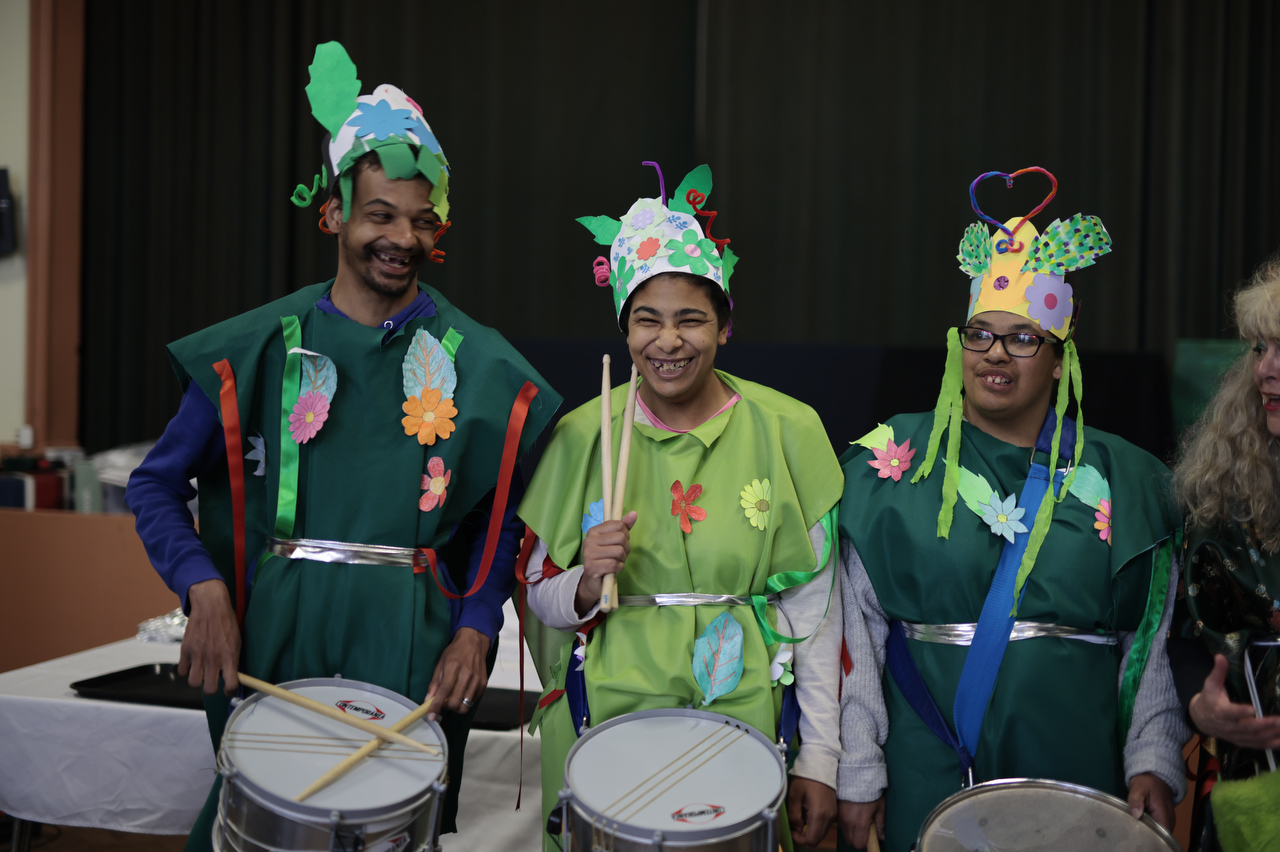
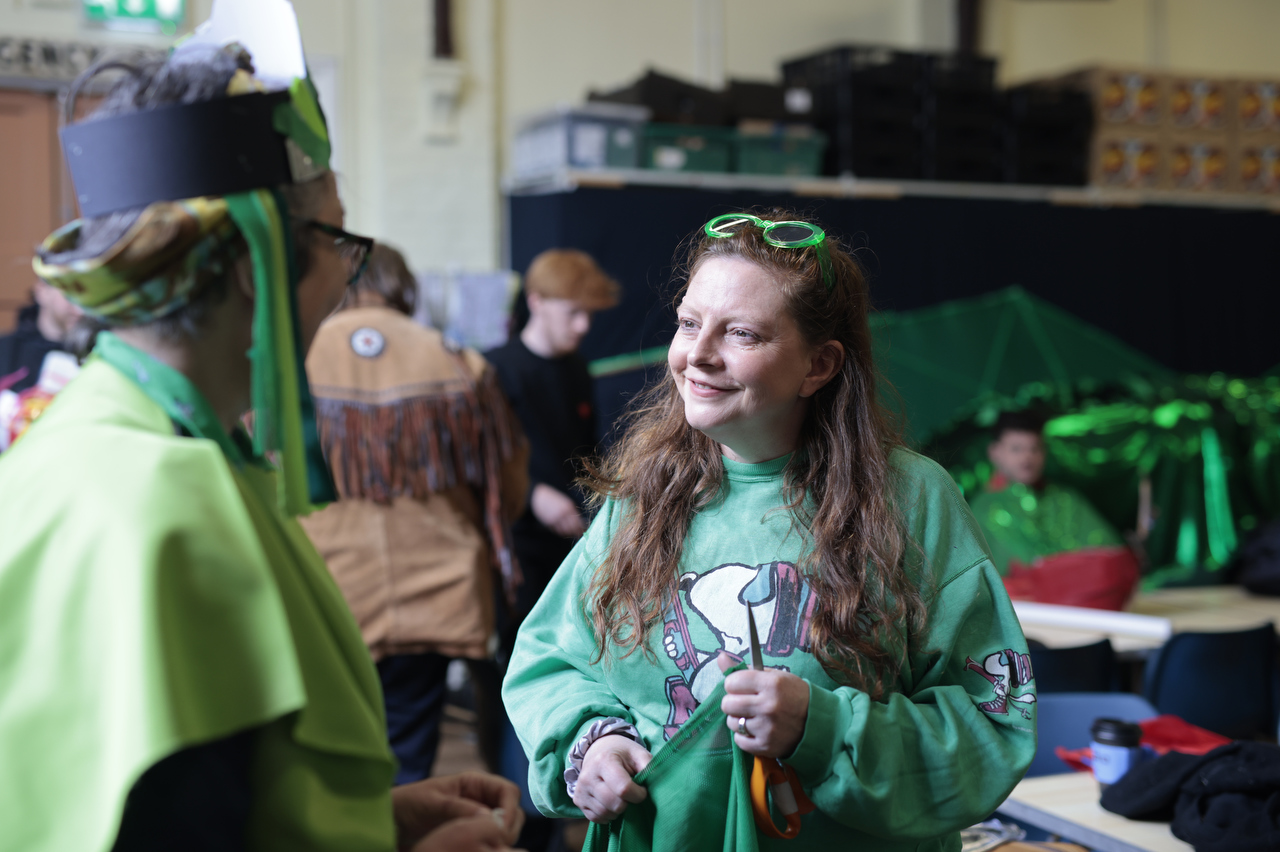
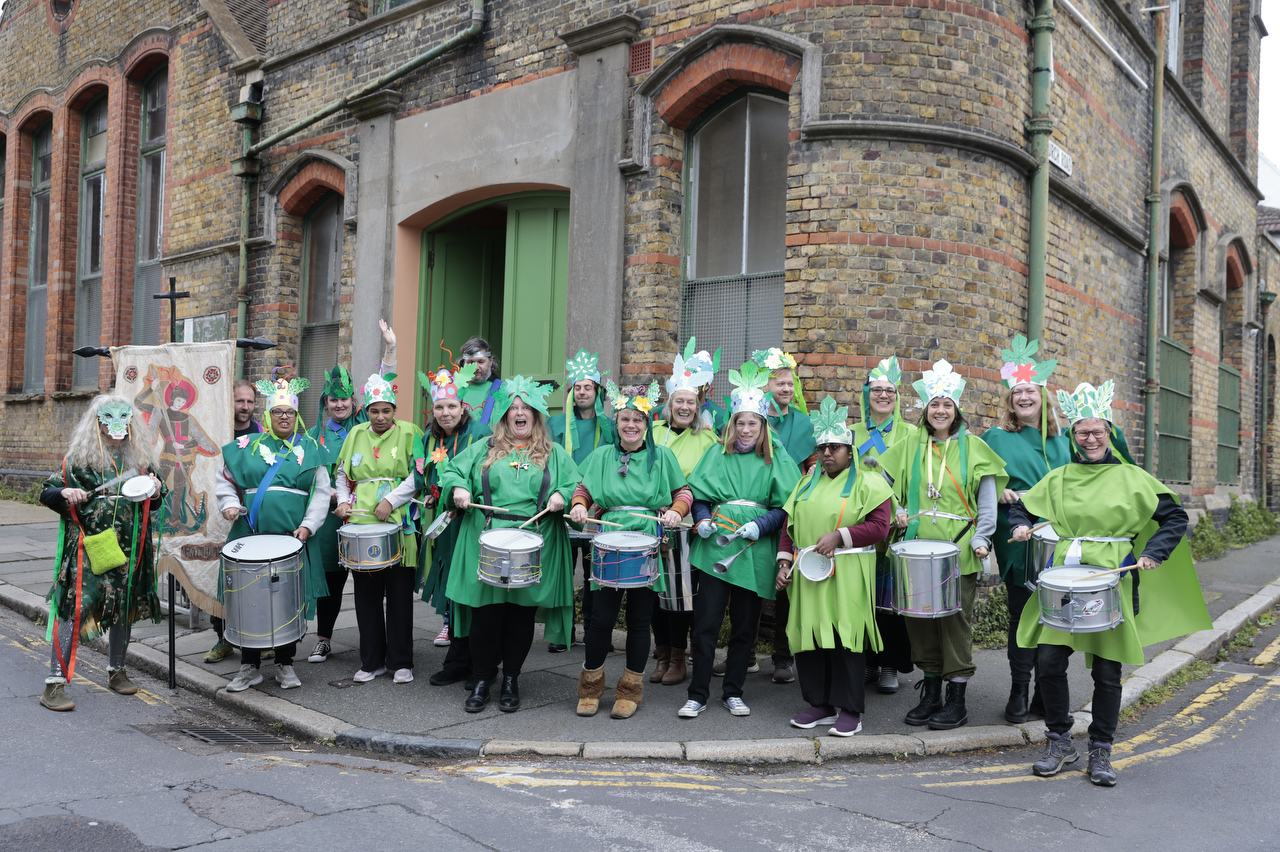
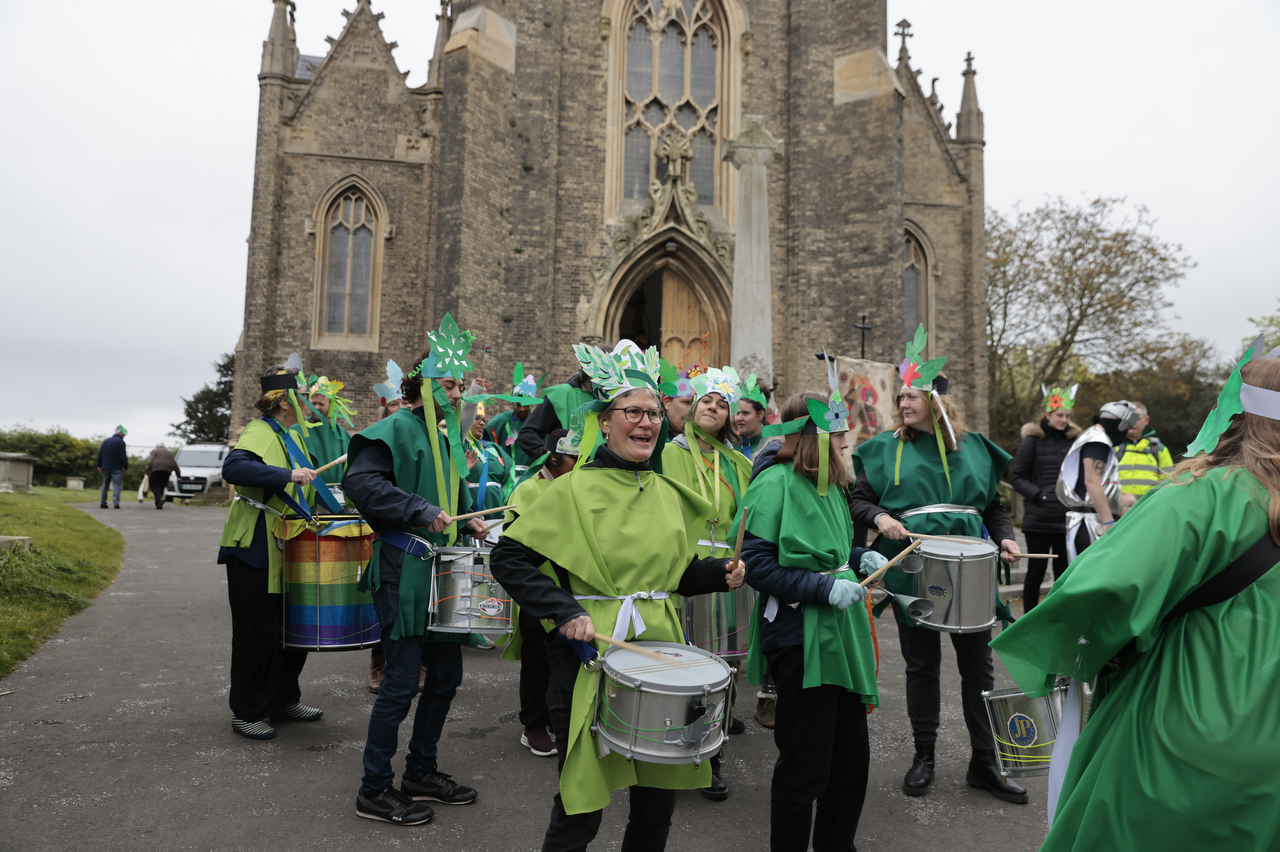
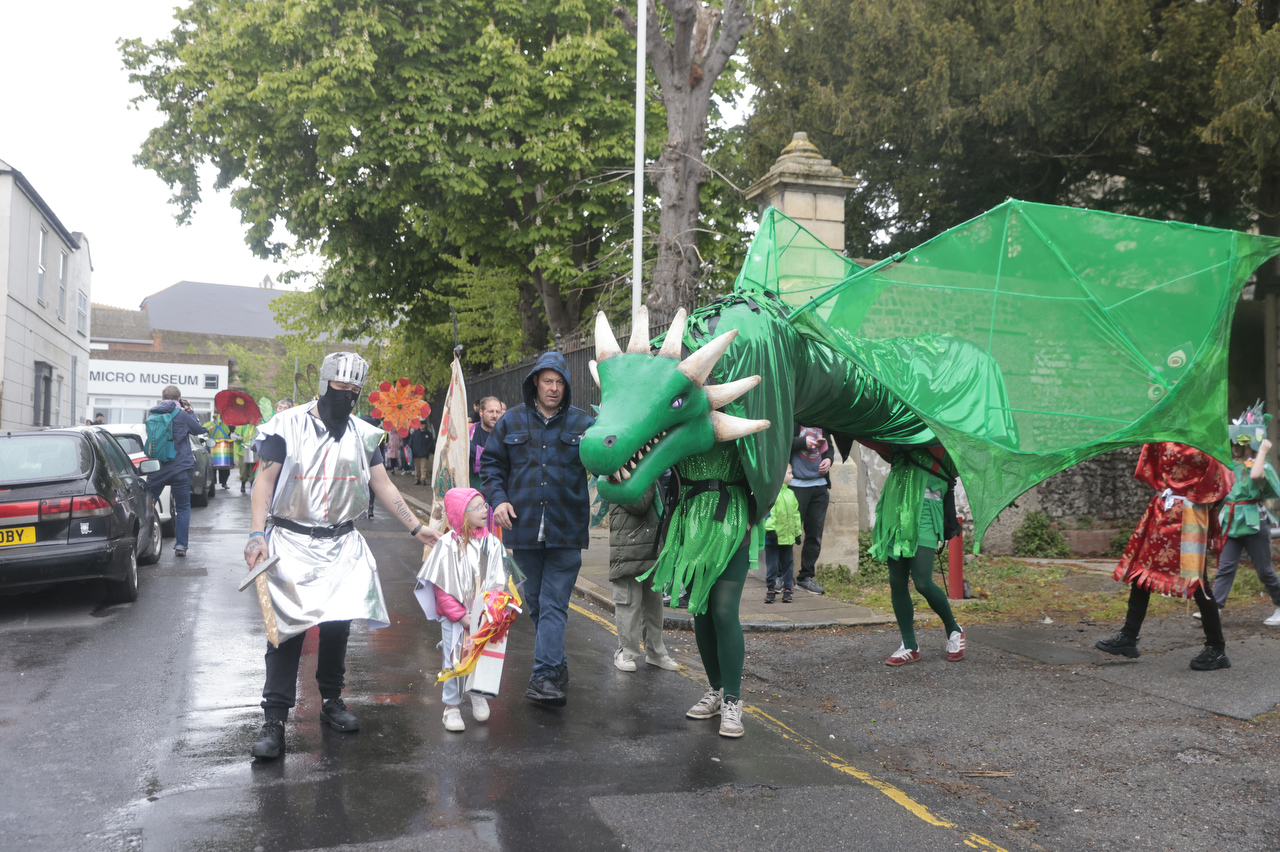
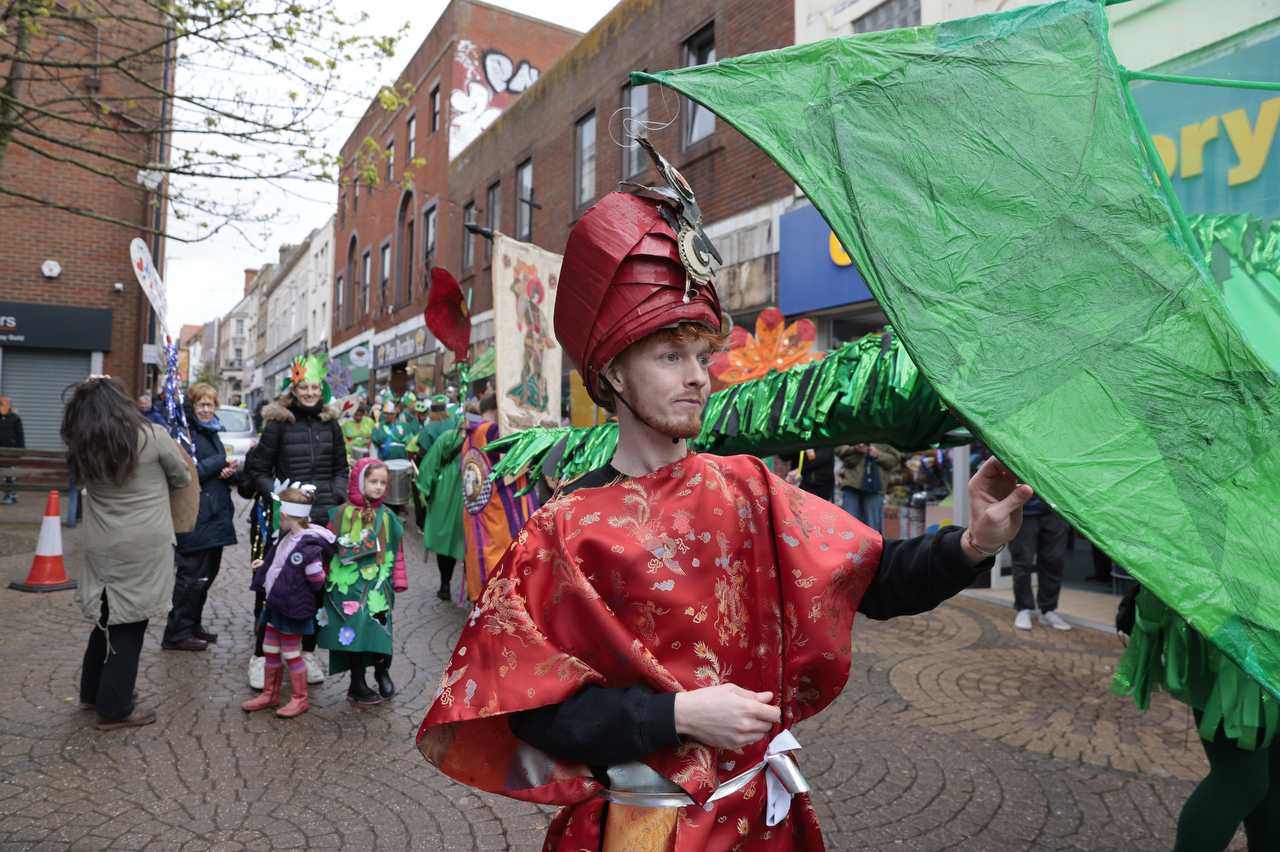
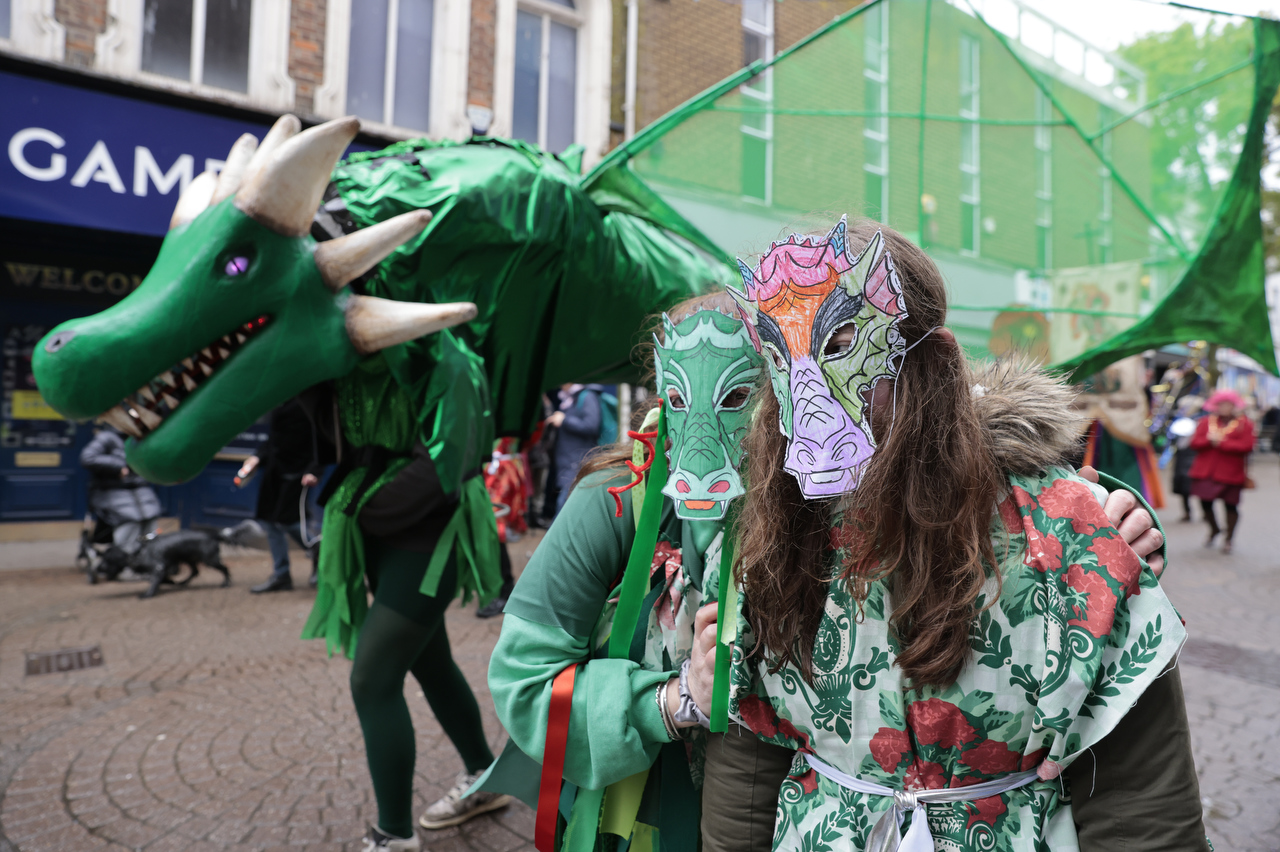
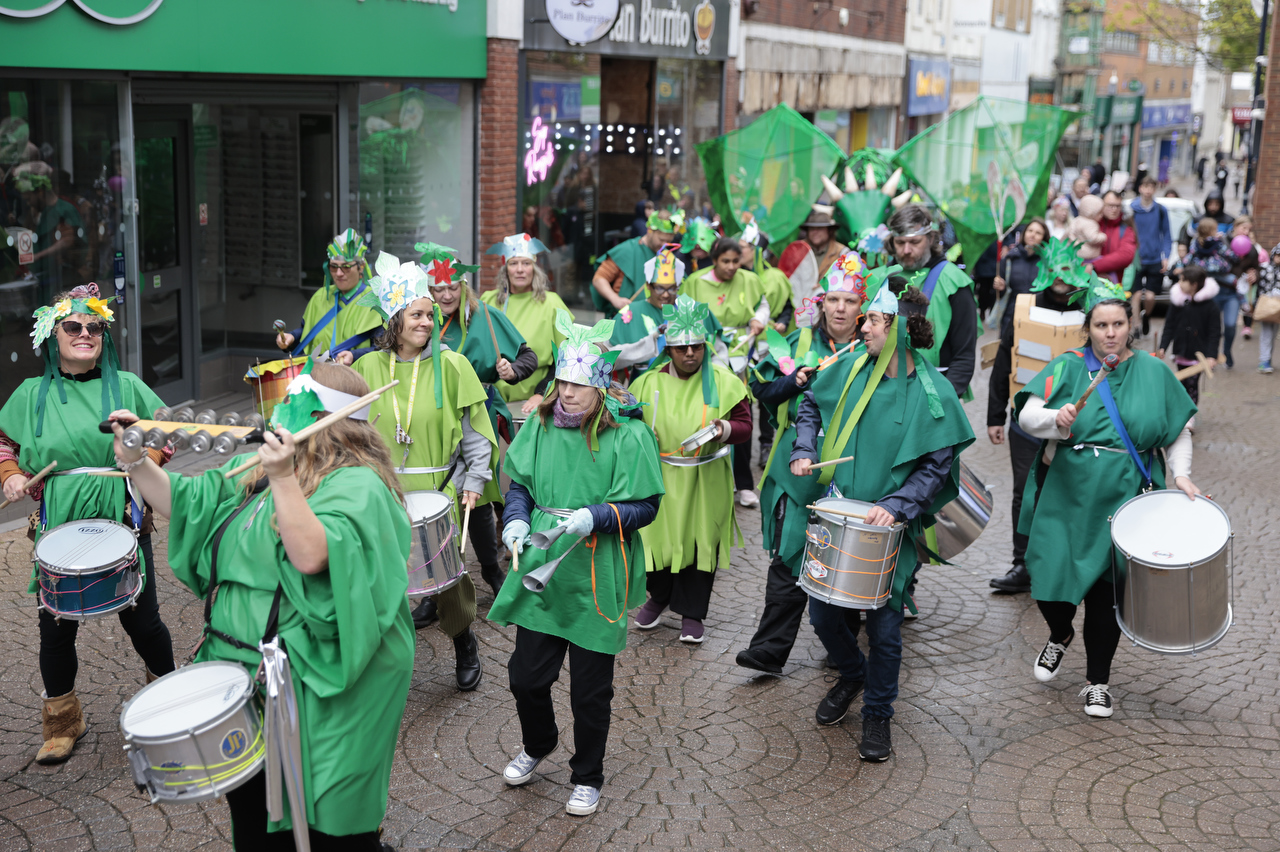
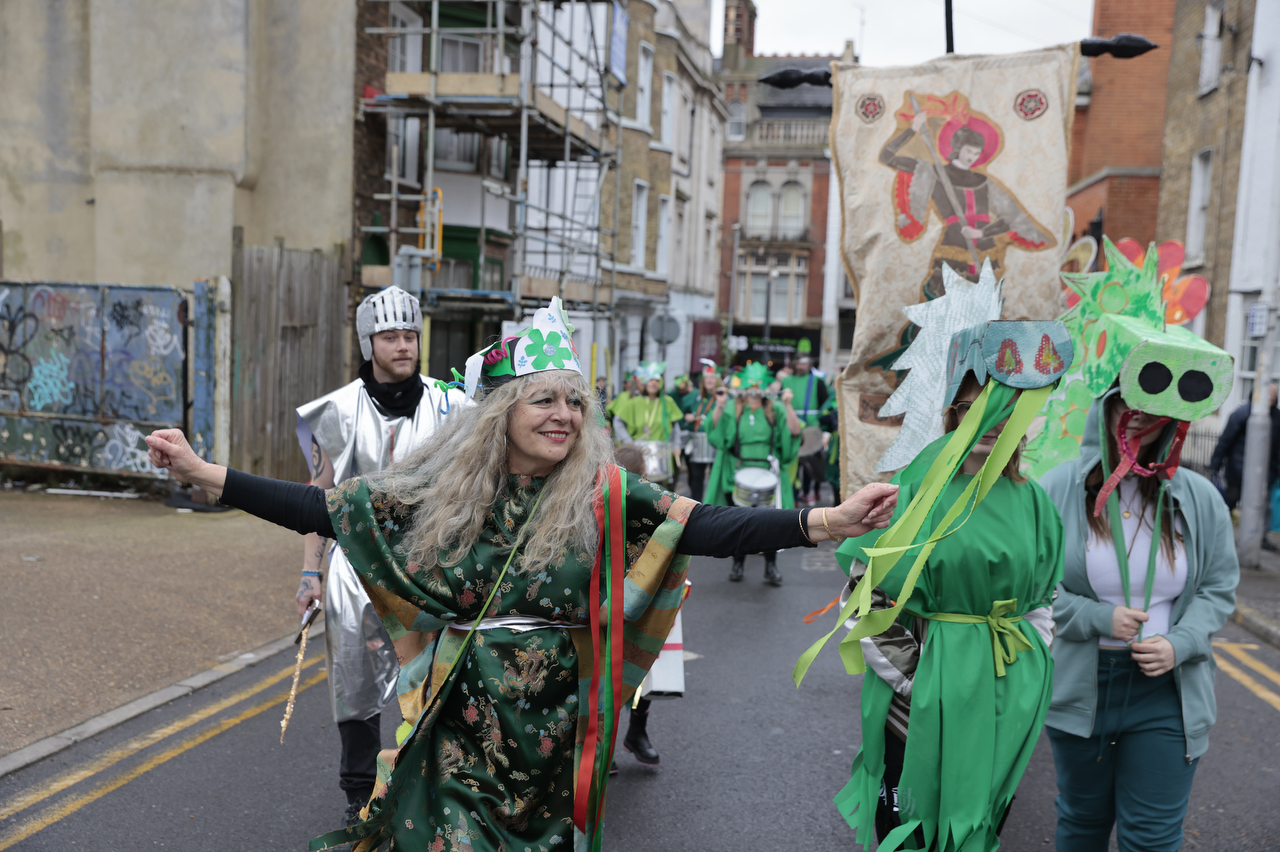
Thanks to all those who made our 2nd Annual St George’s Spring Parade such a special day despite the awful weather. It’s been fantastic to work with GB Carnival again – big thanks to Teresa and all the team, and to Samba Ya Wantsum for providing the beats to keep us all moving along.
After a joint service with St Luke’s the parade set off on a tour of the town centre, led by our enormous green dragon blowing smoke from her nostrils.
Big thanks also go to Jenny Harris for her wonderful soup and delicious onion rings and to the Friends of St George’s for providing cakes and drinks after the parade. Thanks also to our funders – Canterbury Diocese, Ramsgate Town Council, Creative Lives, The Arts Council and UK Government.

















 St. George's Church Ramsgate