The body of Christ (1 Corinthians 12:1-14)

“The body is a unit, though it is made up of many parts; and though all its parts are many, they form one body. So it is with Christ.” (1 Corinthians 12:12)

As we reflect on this passage, we need to ask ourselves how we are enabling every church member to play their part in growing the church, the body of Christ?

As recorded at St. Luke’s

Questions, questions! – 12:1

As you probably know, through Lent we have been experimenting with our study groups looking at the Bible passage we preach on in advance and submitting questions about the passage to me as the preacher. I’ve then tried to answer the questions as part of the sermon each week. This is now the fourth week doing this and there is one week to go.

In a way the letter we have been studying has been appropriate for this process, not only because this part of 1 Corinthians is talking about church life at a time when we are having a year of discernment, but because some of 1 Corinthians is probably Paul answering some questions from the Corinthians.

What about Spiritual gifts?

We see that at the start of our passage, where Paul introduces the topic of ‘Spiritual gifts’ probably in a response to a question about them. The response probably continues all the way through to the end of chapter 14 and includes the chapter on love that we looked at last week.

We are not sure what the question, Paul was answering was, but in these chapters, although he talks about a variety of gifts that different people have, in chapter 12 he emphasises the equal value of all believers and in chapter 14 he emphasises the importance of using the gifts to build the church up. The chapter on love helps to underpin both these points, for love both values the other and wants to build them up.

These ideas remind us of Paul’s point in chapter 8:

“Knowledge puffs up, but love builds up.”

It seems that some in the church were being made to seem ‘spiritual’ because of their ‘spiritual gifts’ and so given greater value than others in the church. Perhaps people were saying things like:

  • “Maximus is so spiritual, he speaks in tongues all the time”
  • “Julius is so spiritual, he prayed for his slave who had a fever and she was healed!”
  • “Agrippina is so spiritual, she spoke words in church that really spoke to me last week.”

The problem here is that some in the church were becoming puffed up by their spiritual prowess, whilst others were feeling unimportant or unspiritual in comparison – that they did not matter to the life of the church. The church was becoming divided between the so called spiritual and unspiritual.

Equality of all believers

Paul’s response is to emphasise that all Christians are spiritual. He does that in four ways in our reading.

  1. Same Spiritual Confession – vs. 2-3

First, Paul emphasises that conversion itself, is a sign that someone has the Holy Spirit powerfully at work in them.

No-one he says, can say, “Jesus is Lord!” unless the Holy Spirit makes that possible. That by itself shows that you are spiritual in the most important and fundamental way.

It is only by the Spirit at work in someone that people can change their heart attitude from rejecting Christ to submitting to Christ. To be a Christian at all is a powerful act of the Spirit. So all Christians are equally spiritual and so valuable members of the church.

  1. Same Spiritual Source: vs. 4-11

Secondly in verse 4 to 11, the constant stress is on the source of the Spiritual gifts: the Spirit, Christ and God. Whatever your gift, Paul is saying, no matter how impressive or unimpressive it seems, no matter how natural or supernatural it appears, it’s source is the same: the Spirit.

Some people may seem more ‘spiritual’ than others. But their abilities, the things they do are a gift of the spirit to them. Not a reward or payment, not because they are any more special or valuable than anyone else, but simply because the Holy Spirit chose to give them that gift.

Again, Paul’s emphasis on the source of the gifts underlines the equal value of all Christian followers.

  1. Same Spiritual Goal: vs. 5,7, chapter 14

Thirdly, all gifts are meant to have the same spiritual goal – and it is not to make one person look more impressive than another.

Rather they are to be used to serve others, as verse 5 says and for the common good as verse 7 says. Chapter 14, emphasises as well that the point of the gifts is to build up the church.

The building up of the church as a community of Christians is not the work of just apostles and prophets, or vicars and preachers, it is the responsibility of the whole church using their various gifts.

We are all gifted, in order that we can all be gifts to the wider community.

  1. Same Spiritual Body: – vs. 12-26

The fourth, argument Paul makes is that as Christians we are all part of the same spiritual body. This argument starts in verse 12 and goes on for most of the rest of the chapter.

Paul compares the community of Christians, the church with a human body. Just as a human body has many different parts, hands, feet, eyes, ears, nose, liver and heart, each distinct and with their own role, so the same is true of the church with its members having distinct parts and roles to play.

Your role may be important, but you still need others in the body to play their roles. They matter just as much. As Paul jokingly says,

“The eye cannot say to the hand, I don’t need you!”

The seemingly more spiritual cannot look down on the seemingly unspiritual and say I do not need you. Everyone is an important and valued part of the body of Christ.

So Paul’s response to the Corinthians question about Spiritual gifts, emphasises the equal spiritual value of every Christian, but he also talks about the variety of gifts. It is this variety that tends to raise questions for us. Indeed, the questions submitted this week, were mainly about the variety of gifts.

Variety of gifts

So, let’s look at the four questions about the Spiritual gifts.

  • Is this an exhaustive list of all spiritual gifts?

The simple answer is ‘No’.

Even chapter 12 contains another list at the end.

The list in verse 7-10 has 9 gifts, but at the end of the chapter in verses 28-30, there is another list of 8 items, four of which are repeated from this list: prophecy, miracles, healing and tongues and four are new: apostleship, teachers, helps and administrators.

One of the groups were concerned that the list in verses 7-11 is a bit limited, because of its focus on gifts to do with speech and the miraculous – what about the need for people to carry out the necessary practical and administrative tasks of church life. Well the ‘helpers’ and ‘administrators’ of the later list show that the gap is plugged! Not all gifts look ‘supernatural’ or ‘spiritual’, seemingly practical gifts are just a much of the Spirit as the others.

There are also other different lists that Paul gives in Romans 12, Ephesians 4 and in 1 Peter 4, there is a very simple lists two broad gifts: those who speak for God and those who serve.

Since they are all different, the lists seem to be illustrative only, giving examples of the variety of gifts that Christians might have. We don’t need to try and fit with one of the gifts on any list or feel upset that gifts we might feel we have aren’t on any of these lists!

Nonetheless, it is helpful to consider what gift you might have, so that you can more effectively play your part in building up the church. This leads us to our second question:

  • How do we discern who has what gift?

This is a harder question to answer, because it is not one that is addressed directly in this passage or any other.

The lack of detailed answer to the question may suggest that in some ways the discernment process is obvious. We just need to get on with the Christian life and it will become clear.

If we are all people of the Spirit and seek to serve one another as part of the community of believers, then as you try different roles out, pray for people, share thoughts and ideas in groups and Bible studies and help out in practical ways, you will begin to discern the roles and gifts that God has given you in particular.

Having said that, I think this is also something that needs to be done with the help of the Christian community. In Acts when the apostles needed some more leaders, they asked the church community to suggest names.

We need to get better at spotting where others seem to be particularly gifted and encouraging them to make more of that gift.

So, you may notice that in a Bible study, someone is particularly good at understanding scripture and explaining it to others. That may be a sign that they have the gift of teaching. Perhaps if you spot that in someone you should tell them and maybe also tell the church leadership.

You may spot that someone has a growing passion for prayer, and notice some amazing answers to their prayers. Again, it would be good to tell them and encourage them to pray more for others.

You may spot that someone is particularly good at organising an event and you might want to encourage or suggest them to help with one of the church committees.

Let’s be more pro-active and deliberate at spotting gifts in others and encouraging them to make greater use of them.

But, if just giving things a go and being helped by the wider community to discern gifts is important, this leads on to the next question:

  • How can we give room for the gifts to be expressed to build up the body?

I think the best answer is to see the importance of both big church and small church.

In big church, we can be encouraged by being part of something big, with the more established preachers, music leaders and so on.

Small church, however, can be much more about one another. Everyone can pray for everyone else. We can all share what we think God is saying to us through the Bible or by the Spirit, we can organise small scale events, and help each other out in practical ways.

In both contexts as one of the groups suggested we need to value everyone equally and encourage people especially when they are trying things out for the first time.

As part of our Year of Discernment, maybe we need to think radically how we can do small church better and encourage more to be involved in small church.

  • How do all matter equally (vs. 25), while some gifts are greater (vs. 31)?

Our last question takes us back to the thrust of Paul’s message. Paul seems to be emphasising that all Christians are equally spiritually valuable in the church.

But at the end of chapter 12 his list suggests that some gifts are greater than others. How can we hold these together?

Paul does want to say that all are equally spiritually valuable, but that there is also a good ambition to want to become more effective as a Christian. Not to become more puffed up, but to be better at building the church up.

Throughout these chapters, Paul lists a number of gifts, but the two that appear consistently are tongues and prophecy. Interestingly, tongues do not appear in any of the lists outside 1 Corinthians. Probably this shows that this was an issue in the church in Corinth and if you read through chapter 14, the suggestion is that some seemed to want to use the gift of tongues in church services. This may be because they felt it made them look more ‘spiritual’, because it came across as more ‘supernatural.’

But back in 12:2, Paul reminds them, that although they used to follow the example of dumb idols, where perhaps ecstatic spiritual experiences were highly valued, we now follow the God who speaks clearly to us. So, in chapter 14, Paul emphasises that the church is built up primarily through the sharing of intelligible words. Tongues may encourage the individual spiritually, but they are no good at building the rest of the church up, whereas prophecy – speaking the words of God – will build up the church powerfully. So, prophecy is near the top of Paul’s list of spiritual gifts and tongues is at the bottom, because what matters is not looking spiritual, but building up the body of Christ with the word of God.

So, let’s value all Christians as equally spiritually valuable, but also pray for, discern and encourage gifts in ourselves and  others that will enable the effective building of Christ’s community here in Ramsgate.

This Week’s Notices – 17th March 2024

and though all its parts are many, they form one body.

So it is with Christ.”

(1 Corinthians 12:12)

In a human body the various parts have different functions. The eye sees, the ear hears, the nose smells, the heart pumps blood and so on. A diversity of roles does not undermine unity, it creates it. Indeed, each body part is essential for the body to function properly. Every part is needed and valued.

So, in the church, there are a variety of members each with distinctive roles. Each one is needed, valued and equipped by the Spirit with a specific gift, which is to be used not for their own good, but for the good of the body as a whole.

As we reflect on this passage, we need to ask ourselves how we are enabling every church member to play their part in growing the church, the body of Christ.  How can we help all Christians to be body builders.

This week’s questions from the groups will help us explore this theme:

  • Is this an exhaustive list of all spiritual gifts?
  • How do we discern who has what gift?
  • How can we give room for the gifts to be expressed to build up the body?
  • How do all matter equally (vs. 25), while some gifts are greater (vs. 31)?

Paul Worledge

Where are the Calendar and the Prayer Requests?

The prayer requests are not put on the website, but are included in the weekly church email. The calendar is now at the end of this post.

Open Church – Saturdays

The Friends of St. George’s will be opening the church every Saturday from 10am to 12noon. Everyone is welcome and entry is free. People are welcome to come for a look around, refreshments a chat or a quiet prayer.

If you are interested in joining a rota of volunteers to help keep the church open, then please see Janet.

Easter Evening Service

What does it mean to be resurrection people? Join us on Easter Sunday evening 6:30pm in St Luke’s church for a celebration service. There will be a time of contemporary worship, space to reflect on what it means to be resurrection people and how that will impact our discernment in the year ahead. All ages welcome.

Request to complete a Questionnaire

A local A-Level student is wrinting an Extended Project Qualification on the question: Is it morally acceptable to be a Christian feminist? Their aim is to create an essay that looks at all points of view towards Christian feminists. Anyone can participate in this questionnaire.  

The questions are based upon the meaning that feminism is the belief that women should be allowed the same rights, power, and opportunities as men and be treated in the same way. 

She has asked that members of our churches anonymously complete the questionnaire to help with her essay. The questionnaire can be completed online. Complete Questionnaire.

Beetle Drive and Games

Friday 19th April, 7:00-9:00pm, St. George’s Church Hall

Tickets are £1, which includes snacks and a drink. They can be bought from Elaine.

From Babylon to New Jerusalem – Exploring the Book of Revelation

A few years ago, Robin Plant who is now minister of Newington Free church gave a series of excellent talks on the Book of Revelation. He is going to repeat these talks at Newington Free over four Tuesday evenings in April (9th, 16th, 23rd, 30th) from 7:30-9:00pm. Everyone is welcome to attend. For more information, see the poster in church.

Depression and Anxiety Self-Help group

We meet this Wednesday, 20 March, from 6-7.30pm in the Perry Room at St Luke’s. Our theme will be Boundaries. All welcome. More details from: davidw.hawthorn1@sky.com.


Links to Share:

The Map and the Mountain

This 12 minute film takes you up and down a mountain, whilst also giving you a brief explanation of the Christian faith. A good video to share and perhaps discuss with non-Christian friends and family? Watch Video

Are smart phones ruining our children?

This article powerfully articulates the dangers of our society where almost every youngster has a smart phone. Read more.

Finally, let’s learn to love as God loved us.

Yours in Christ

Paul Worledge

(Priest in Charge, St. George’s Ramsgate)


Weekly Calendar

Sunday 17th March

Eucharist (St George’s, 9:30am) – Reading: 1 Corinthians 12:1-14

Monday 18th

Daily Prayer (St. Luke’s Church) – 9:30-10:00am

Craft Group (St. George’s Hall, Soup Kitchen) – 2:00-3:30pm

Study Group (Margate Road) – 7:15-9:30pm

Tuesday 19th

Daily Prayer (St. George’s Church) – 9:30-10:00am

Coffee Morning (St. George’s Hall) – 11:00am-12:00pm

Community Meal (St. George’s Hall) – 5:30-7:00pm

Study Group (Lyndhurst Road) – 2:30-4:00pm

Wednesday 20th

Study Group (Langdale Avenue) – 10:00-12:00 noon

Depression & Anxiety Self-Help Group (Perry Room) – 6:00-7:30pm        

Study Group (South Eastern Road) – 7:30-9:30pm

Thursday 21st

Daily Prayer (St Luke’s Church) – 9:30-10:00am

Saturday 23rd

Daily Prayer (St. George’s Church) – 9:30-10:00am

Open Church (St. George’s Church) – 10:00am-12:00pm

Sunday 24th

Eucharist (St George’s, 9:30am) – Reading: 1 Corinthians 11:17-34

Easter Sunday Evening Celebration

What does it mean to be resurrection people?

Join us on Easter Sunday evening 6:30pm in St Luke’s church for a celebration service. There will be a time of contemporary worship, space to reflect on what it means to be resurrection people and how that will impact our discernment in the year ahead.

All ages welcome.

Neptunes Choir

On Friday 22nd March St George’s will be pleased to welcome Neptunes Choir back to the church for their Spring Concert, where the choir will be joined by Thomas Abrahams. Doors open at 6.30pm for a 7pm concert and this year’s proceeds will go to supporting Pie Factory Music.
Tickets are £10 and can be purchased at
https://www.eventbrite.com/e/neptunes-choir-spring-concert-tickets-816777061177

Easter 2024

Easter is the main season of celebration at the heart of the Christian faith. Christ’s death for our sins and the defeat of death in his resurrection brings us peace and hope beyond measure. It is good to focus a fresh on these central truths at this time of year.

This year’s Easter Services include:

Maundy Thursday – 28th March  

Holy Communion (St. Luke’s 12noon or St. George’s 6:30pm)

Good Friday – 29th March

The Easter Story (St. Luke’s, 10:30am) – an interactive telling of the events of Easter for families and small children. This year includes augmented reality!

Churches Together Service (Hardres Street, 10:30am)

Churches Together – Good Friday witness (Town Centre, 12 noon)

Prayer Stations (St. George’s, 12:45-1:30pm)

Good Friday Meditation (St. George’s, 1:30-3:00pm, 15 min. slots)

Easter Sunday – 31st March

Easter Eucharist (St. George’s, 9:30am) ending with Sunday School (from 10:30am)

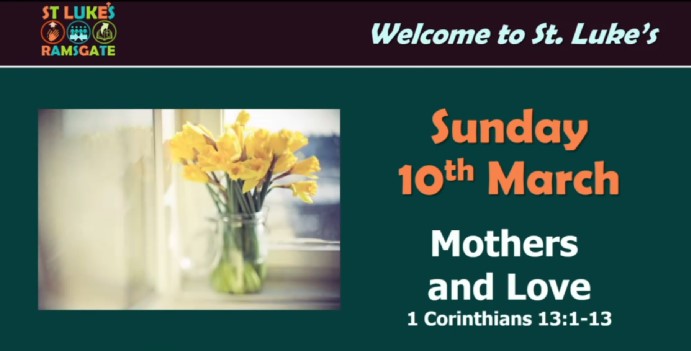
Mothers and Love (1 Corinthians 13:1-13)

“And now these three remain, faith, hope and love, but the greatest of these is love.” (1 Corinthians 13:13)

To become a father takes only a few minutes. To become a mother takes nine months of pregnancy – and that is only just the start of it!

As recorded at St. Luke’s

Mothers and Love

To become a father takes only a few minutes. To become a mother takes nine months of pregnancy – and that is only just the start of it!

Most of us have experienced a mothers love. No mother is perfect and some fail big time, but most show a high and counter-cultural degree of love for their children. They are willing to endure pregnancy, nights with broken sleep, endless changes of nappies, tantrums, school runs, cooking, cleaning, teaching and counselling, not for their own sakes, but for the good of their children.

Most mothers, spend a lot of their lives centred on the other, that is their children and paying the emotional and financial cost for that.

Do you know how much the estimated cost of bringing up a child from 0 to 18 is? Over £200,000!

Yet, we live in a world, where the culture is increasingly individualistic and attitudes more and more self-centred. Do what makes you feel good. Your special. Don’t be constrained by others. Follow your dreams. None of this fits well with the sacrificial love entailed in being a mother.

No wonder that the birth rate is dropping in the West. To maintain the same size of population women need to have on average 2.1 children. In the UK women are now having on average 1.58 children. That means for every 100 adults in the present parental generation, there will be only 62 grandchildren.

In South Korea, things are even worse. The average woman has 0.78 children, which means a 100 adults will have only 15 grandchildren.

Our Western society talks a lot about ‘love’, but is the reality that we are more focussed on self-centred individualism, than the kind of natural love shown by mothers to children or indeed the kind of Christian love that Paul is encouraging in 1 Corinthians 13?

Love is Other-Centred, vs. 4-7

Paul gives a list of 15 things, that love is. He starts with 2 things it is, follows that up with 7 things it is not, what love does not and does rejoice in and four things where love is never-ending.

Patient. The old word is long-suffering. In other words, it keeps going for the sake of the other, even when it is draining for us. Most Mothers do this with children, enduring years of crying, tantrums and dirty nappies, followed later by teenage sulks.

This is what God does with us in our feeble and often half-hearted efforts to live for him, he is patient with us.

Linked with this are two of the negatives:

  • It is not easily angered or irritable. Patient people don’t burst into rage when others upset them.
  • It keeps no record of wrongs or remain resentful. Like God forgives us, true love forgives others the wrong they do.

Also, linked with this are the last four areas, that stress that love persists:

  • always protects, it never gives up finding ways to help us, just as most mothers never give up on wanting to support their children and God never gives up on supporting us.
  • always trusts and hopes. It wants to think the best of others and believe that they will come good in the end.
  • always endures or perseveres. Love never gives up. Just as God never gives up on us and a mother never gives up on her child.

Kind. Kindness, is about wanting to make the other person welcomed, comfortable and happy. Not wanting to upset the other, unless it is necessary for their good. Mothers want to do these things for their children and God welcomes us into his family, offering us joy and peace.

Two of the negatives are the opposite of kindness:

  • It is not rude. Rudeness does not care how your behaviour makes others feel. In a way it is the opposite of kindness.
  • It is not self-seeking. Self-seeking is about doing things for yourself.  Love is not about that. It is about looking out for others.

Not Proud

The other three negatives are focussed on wanting to make yourself good or to feel important.

  • Love is not proud or arrogant. In other words it doesn’t think of yourself as better than others or more important than others.
  • Love is not boastful. It is not about trying to get everyone to think how great you are.
  • Love is not envious. It is not upset when others seem to do better than you or have better things than you.

When you are envious you may be happy when others are caught out for doing wrong. That is probably what is meant by:

  • It does not delight in evil or rejoice in wrongdoing. It is not happy when others prove to be wicked people, because it makes you look better.
  • Instead it rejoices with the truth. Because love is not concerned with making yourself look good, it can embrace the truth and honesty about yourself even if it makes you look bad, because it may encourage and help others. It is also happy with the truth that others may be better or more successful than you, because you are concerned for others.

In all these ways, love is the opposite of self-centred, it is other-centred.

Like a good mum that is focussed on doing everything for the good growth of the child, not because the child is deserving, but because they are her child.

Like God who is focussed on doing everything for our good and our growth in Christian maturity, not because we are already good, but because he loves us and takes us in as his child

We as Christians are called to love others, to seek their good and to build them up, even when it is costly and difficult to do so. Not for our good, but there good.

This already answers the two questions from the group on our notice sheet:

  • How do we continue to serve with love when provoked?

By mimicking the love of God in Jesus Christ. He died for us even when we were still sinners. He loved us not because we are lovable, not because of what we can do for him. He loved us even though it meant dying on the cross.

If we are struggling to serve others, because they are upsetting us, then we need to remind ourselves of God’s love for us and remember that true love is not easily angered and keeps no record of wrongs. Love is patient.

  • What stops us from showing love to everyone regardless?

If love is not self-centred, then we do not love people only because they matter more to us, because they are our family or part of our friendship group or are inately loveable. We love them for their own good, even when we gain nothing in return. The secret to loving everyone regardless is to understand love as being divorced from our own personal gain.

Jesus said, “This is how you will know that you are my disciples – if you love one another.” Let’s work and pray for our churches to be marked by love above everything else.

________________________________________________________________

Paul’s description of love in verses 4-7 does not come, because he was preaching at a mothering Sunday service. His concern was not to give thanks for mothers or encourage good mothering. Neither was he writing particularly with married couples in mind, even though this is a popular passage to be used at weddings and it is important for married couples to learn to be other-focussed if their relationship is to flourish.

1 Corinthians 13, is not a standalone piece of beautiful literature, it is part of this letter to the Corinthians we have been looking at. It stands out from the rest of the letter as a beautiful rhetorical flourish, but it is also at the heart of Paul’s overall challenge to the Corinthian church.

Paul wants to say to the Corinthians, that this kind of love, he describes in the centre of the chapter is both essential and eternal. This is what should mark out our church life together. As he says in 8:1: “Knowledge puffs up, but love builds up!” and in 16:14 “Do everything in love.”

Love is Essential for Church Life, vs. 1-3

In the first three verses, Paul underlines how essential love is to church life.

Next week, we are going to go backwards to chapter 12. Both chapters 12 and 14 talk about the spiritual gifts that church members may have and how they should be used to build up others and in the context of church meetings.

Paul does not want to stop the use of spiritual gifts, but he wants to challenge the attitudes with which they are being used in the Corinthian church. Without an underlying attitude of love such gifts or indeed any church activity become pointless and useless. No matter how wonderful, amazing or spiritually spectacular the Christian ministry are gifts are, if they are not done in love, in order to build up others, then they are pointless.

So an important question to ask ourselves, in everything we do, is am I doing it for the good of others, with patience and kindness, celebrating what is good about them, wanting to help them in their needs and sharing the good news about Jesus with them so that they might be saved, or am I doing it for more self-centred reasons, to preserve the buildings or style of worship I value, to make myself look good or feel important because of the role I am taking on or the gift I am using.

If we want to be more than a clashing cymbal or nothing or gain nothing, then we need to make sure that an attitude of love is at the heart of it all. Love is essential for church life – the Corinthians had not fully grasped that and we need to keep asking ourselves, whether we have.

Love is Eternal, vs. 8-13

Finally, love is eternal. In verses 8-13, Paul wants us to look at our lives and activities from the time after Jesus returns and we are raised with resurrection bodies to live with God face to face for ever more. Then things will be transformed.

This is the point of the child – adult analogy. We speak, think and reason differently as adults than we did when we were children, because we have grown up, where as once we only had a small vocabulary to express ourselves, now we have a full one, where as once we could only just begin to count, now we are able to handle money effectively. As adults, our knowledge and understanding is on a different level to what it was as children.

It is also the point of the mirror analogy. Corinth was famous for bronze mirrors, that could give a reasonably decent reflection. Yet, even such reflections were not the same as looking at someone directly. Some of the details are obscured. We don’t see or understand as clearly as we can when we see face to face.

The Corinthians valued, knowledge and understanding great mysteries. They looked up to Christians who seemed to have more knowledge of these things and perhaps felt that such knowledge was the key to being closer to God.

They also valued spiritual gifts that seemed to help reveal this mysterious spiritual knowledge of God: prophecy, tongues and imparting special knowledge. But Paul says, in eternity, we will see God face to face, we will all have complete knowledge. When that happens, the spiritual gifts of prophecy, tongues and imparting special knowledge will become obsolete, no longer any use. What they may offer in part now, will be fully known by us all then.

What will remain important, however, is love. Because that concern and action for the other is at the heart of God’s eternal nature. When people ask what will heaven be like, the answer is it will be a community of perfect love.

As the church today, we want to reflect something of that eternal kingdom. The main way we do that is by living as people of love.

In our year of discernment let us remember that calling above all.

This Week’s Notices – 10th March 2024

“And now these three remain, faith, hope and love, but the greatest of these is love.”

(1 Corinthians 13:13)

Love is an overused word in our society. We use it to describe things we particularly like: “I love your new jumper!” or activities we enjoy: “I love cycling to Deal and back.” It is a word used to describe our emotional connection with romantic partners in countless pop songs: “Can’t help falling in love.”, but also describes the care and kindness so often shown by mothers to their children.

Love can mean a variety of things, yet there is a common thread. In all these examples it expresses that we put a value on something or someone outside of ourselves (a jumper, cycling, a romantic partner or our children) in such a way that we want to commit ourselves to that thing or person, even if there is cost involved.

The Bible talks a lot about love. In the New Testament, the focus is mainly on God’s love for us and the commands to love God and others: “For God so loved the world, that he gave his only Son…”, “Love the Lord your God…”, “Love your neighbour as yourself.”

God’s love for us was so great, he valued us so much, that he paid the cost of His Son’s sacrificial death on the cross. We are in turn called to value our relationship with God, even when it costs us to do so, but also to see others as equally as valuable and deserving as ourselves.

Love is not always easy, because it is costly. Those we are called to love are not always loveable. Yet, this kind of love that God shows us is the most ultimate of all attitudes. It is love that remains eternally.

A couple of questions from this week’s groups:

  • How do we continue to serve with love when provoked?
  • What stops us from showing love to everyone regardless?

Paul Worledge

Mothering Sunday – This Sunday 10th March

This Sunday is Mothering Sunday. The Sunday School will be joining us (as normal on the second Sunday of the month) at 10:30am for a short All Age section to the service, during which flowers will be distributed to the ladies in the church.


St. George’s Website

  • What’s On – a page which lets you know what is happening this week and gives information about upcoming events.
  • Notices – You can read the latest notices on this page.
  • Sermons – Read a transcript of a recent sermon or watch the YouTube version recorded at St. Luke’s. There are now videos for all the sermons over the summer.


Weekly Calendar

Sunday 10th March

Eucharist (St George’s, 9:30am) – Reading: 1 Corinthians 13:1-13

Sunday School (St George’s, 10:30am)

Monday 11th    

Daily Prayer (St. Luke’s Church) – 9:30-10:00am

Craft Group (St. George’s Hall, Soup Kitchen) – 2:00-3:30pm

Study Group (South Eastern Road) – 7:15-9:30pm

Tuesday 12th      

Daily Prayer (St. George’s Church) – 9:30-10:00am

Coffee Morning (St. George’s Hall) – 11:00am-12:00pm

Community Meal (St. George’s Hall) – 5:30-7:00pm

Study Group (Lyndhurst Road) – 2:30-4:00pm

Wednesday 13th       

Study Group (Langdale Avenue) – 10:00-12:00 noon

Study Group (South Eastern Road) – 7:30-9:30pm

Thursday 14th         

Daily Prayer (St Luke’s Church) – 9:30-10:00am

Saturday 16th    

Daily Prayer (St. George’s Church) – 9:30-10:00am

Open Church (St. George’s Church) – 10:00am-12:00pm

Sunday 17th    

Eucharist (St George’s, 9:30am) – Reading: 1 Corinthians 12:1-14

Open Church – Saturdays

The Friends of St. George’s will be opening the church every Saturday from 10am to 12noon. Everyone is welcome and entry is free. People are welcome to come for a look around, refreshments a chat or a quiet prayer.

If you are interested in joining a rota of volunteers to help keep the church open, then please see Janet.

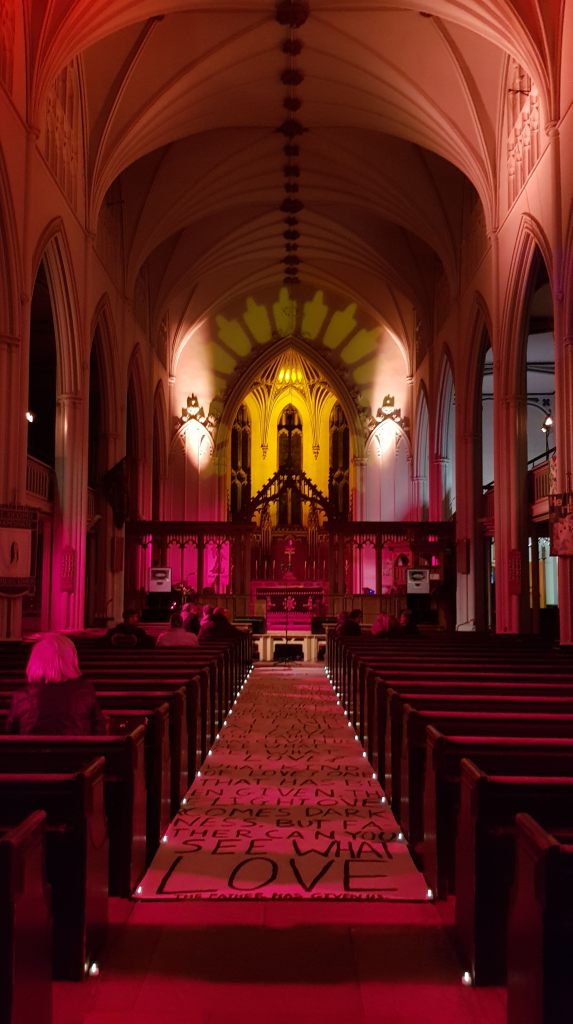
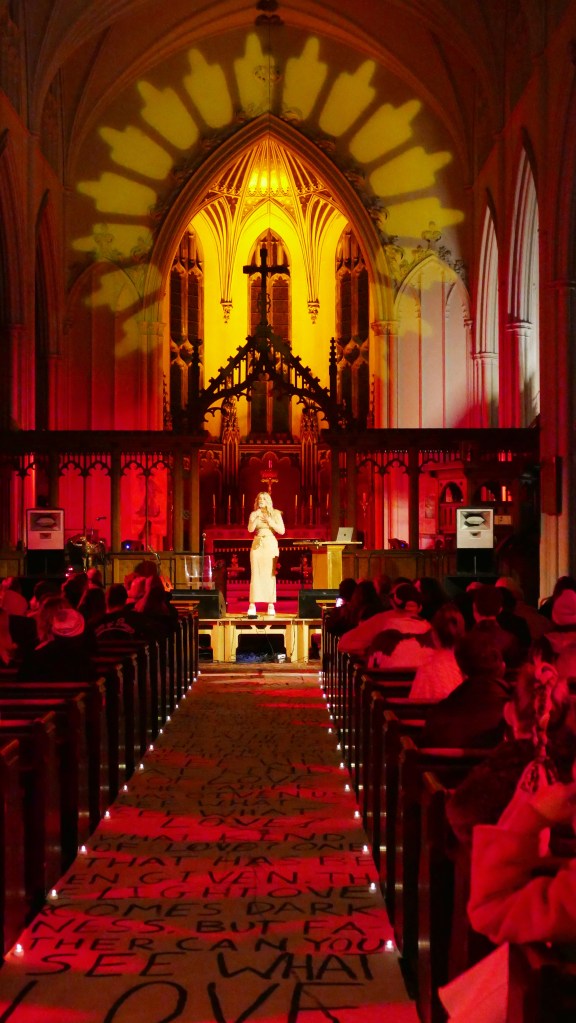
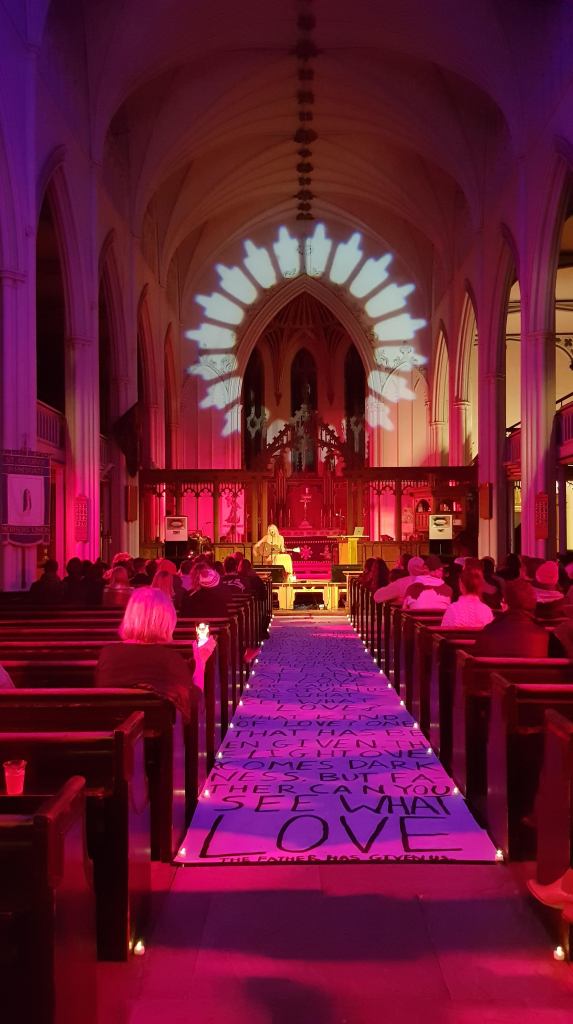
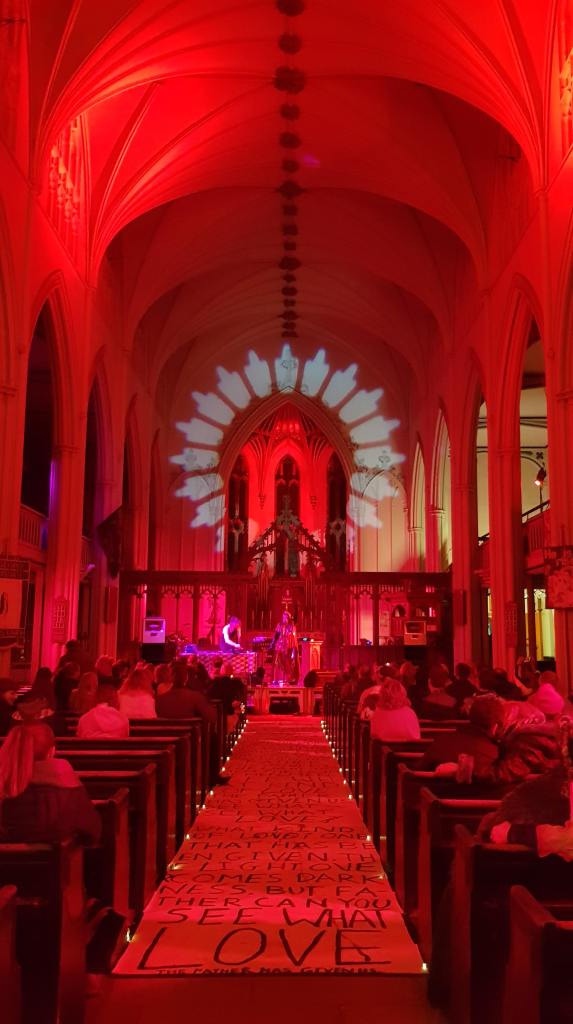
SOLO EXHIBITION: JEMIMA SARA – ‘SEE WHAT LOVE THE FATHER HAS GIVEN US’

Friday 8th, Saturday 9th and Sunday 10th March 2024, 12 noon to 5pm,

St George’s Church

JEMIMA SARA is a multidisciplinary artist merging the fluidity of everyday life experiences and diaristic texts with both figurative and abstract imagery via paintings, installations, and performances. St George’s is pleased to be hosting her installation in the church for 2 weekends at the start of March. Find out more…

Prayer for the Nations

7:30-9:00pm, Friday 15th March, 45 Northdown Road, Cliftonville, Margate, CT9 2RN (ring the bell at the bookshop door). In March they will be praying for the Persecuted Church.

Easter Services

This year’s Easter Services include:

Maundy Thursday – 28th March  

Holy Communion (St. Luke’s 12noon or St. George’s 6:30pm)

Good Friday – 29th March

The Easter Story (St. Luke’s, 10:30am) – an interactive telling of the events of Easter for families and small children. This year includes augmented reality!

Churches Together Service (Hardres Street, 10:30am)

Churches Together – Good Friday witness (Town Centre, 12 noon)

Prayer Stations (St. George’s, 12:45-1:30pm)

Good Friday Meditation (St. George’s, 1:30-3:00pm, 15 min. slots)

Easter Sunday – 31st March

                Easter Eucharist (St. George’s, 9:30am)


Safeguarding Training

If you volunteer in anyway at church the national authorities are strongly encouraging you to take at least the Basic Module in safeguarding training once every three years.

If you have not completed the training in the last three years, then the module can be completed online and takes about ninety minutes. You can access the training by following this link. You will need to first register, to access the training. Once the training is completed, you will be sent a certificate. Please forward that certificate to James (office@stlukesramsgate.org), so that we can keep records of who has done the training.

Links to Share:

Idols or Idiots?

One of the questions in last week’s sermon was: “What idolatry do we need to flee from today?” One answer is idolising celebrtities or sports heroes. In this article, Graham Tomlin explores the problems with this particular form of idolatry. Read more…

Evangelism and Church

In this 15 minute video, Glen Scrivener critiques a US evangelistic advertisement campaign. He argues that their focus on the humanity of Jesus and their avoidance of promoting church is ultimately unhelpful. These are useful issues to think through as we consider how best to reach the people around us with Jesus. Watch the Video

Finally, let’s learn to love as God loved us.

Yours in Christ

Paul Worledge

(Priest in Charge, St. George’s Ramsgate)

Online Forms

Under the ‘Contact’ tab on the website, there are now three forms that you can use to help us in managing the church:

  • Events Application Form. Use this if you are organising a church event that needs a church room booked, advertising or ticketing.
  • Submit a Notice. Use this if you want to ask us to include a prayer request or other notice in the church notice sheet or email.
  • Maintenance Reporting Form.Use this to report any non-urgent issues with our buildings or grounds.

February = Music + Love!

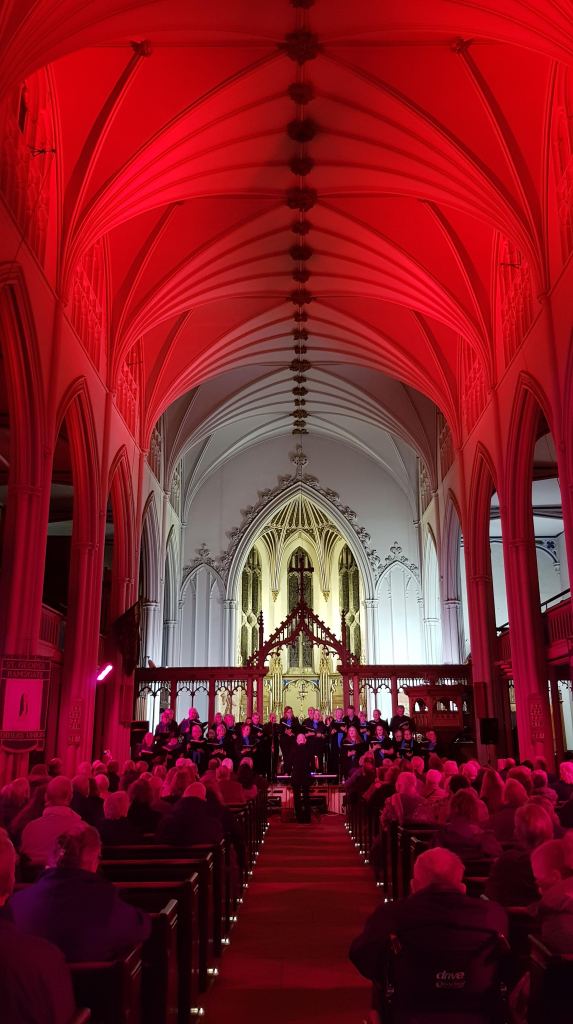
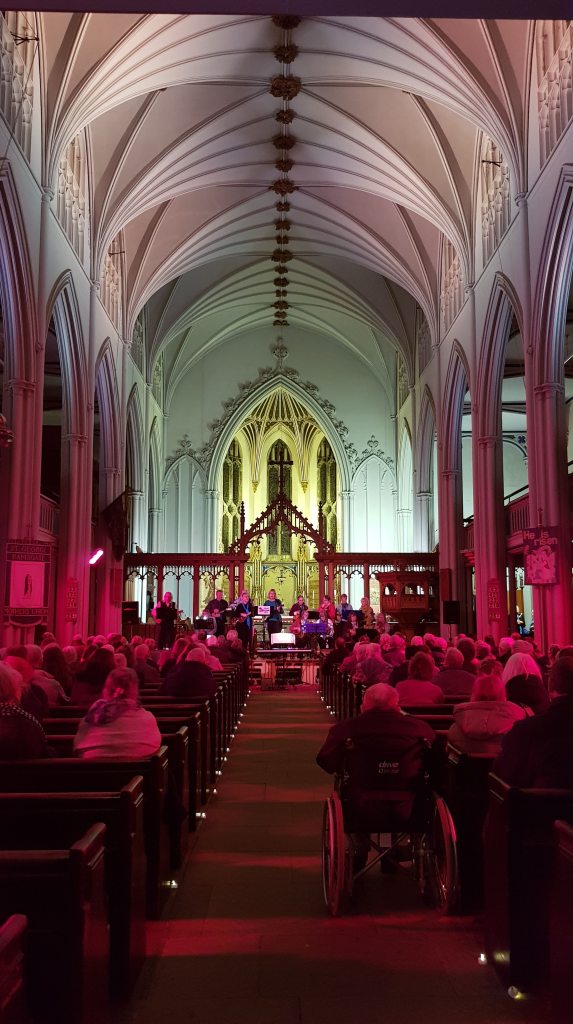
February at St George’s was filled with music and love!
It has been a busy month at St George’s in February, with 2 concerts offering very different takes on the theme of Love.

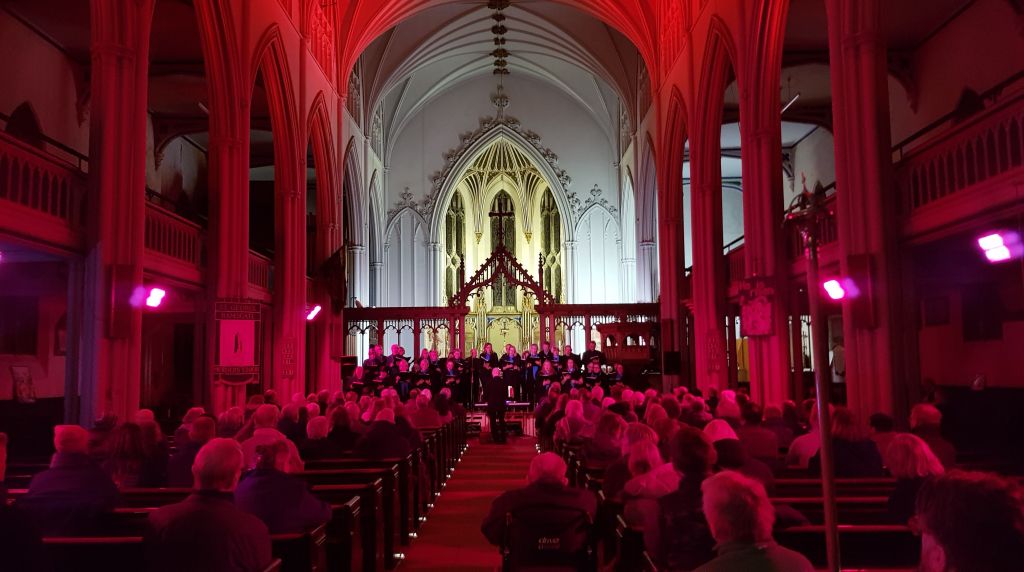
First up on 9th February we were delighted to welcome Coastal Choir and the BradUKES Ukelele group, who put on a fantastic concert of pop, rock, folk and musical theatre, all on the theme of Love. All proceeds from the event have gone to the St George’s Community Meal. Thanks to the enormous generosity of those involved in putting on this event – The OFFY of Whitstable who supplied the bar and James Brown AV who provided the lighting, a total of £2,000 was raised to help us continue to fund the Community Meal. We are truly blessed with love for our community.

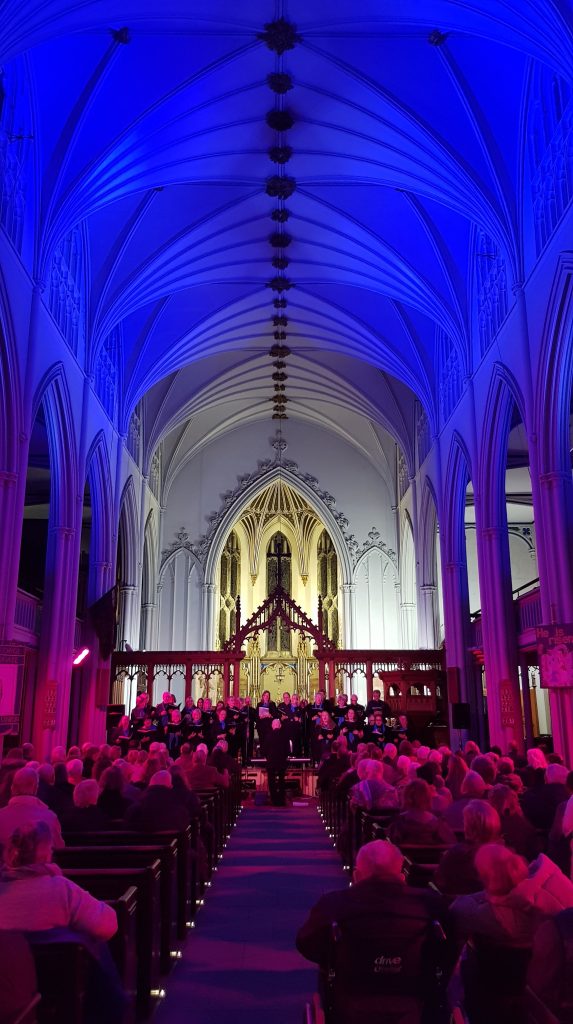
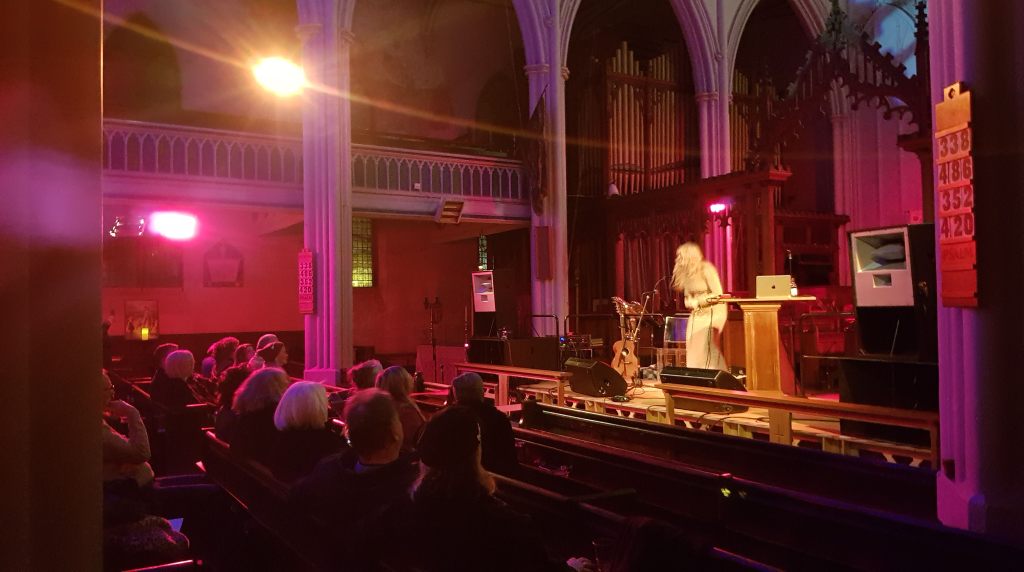
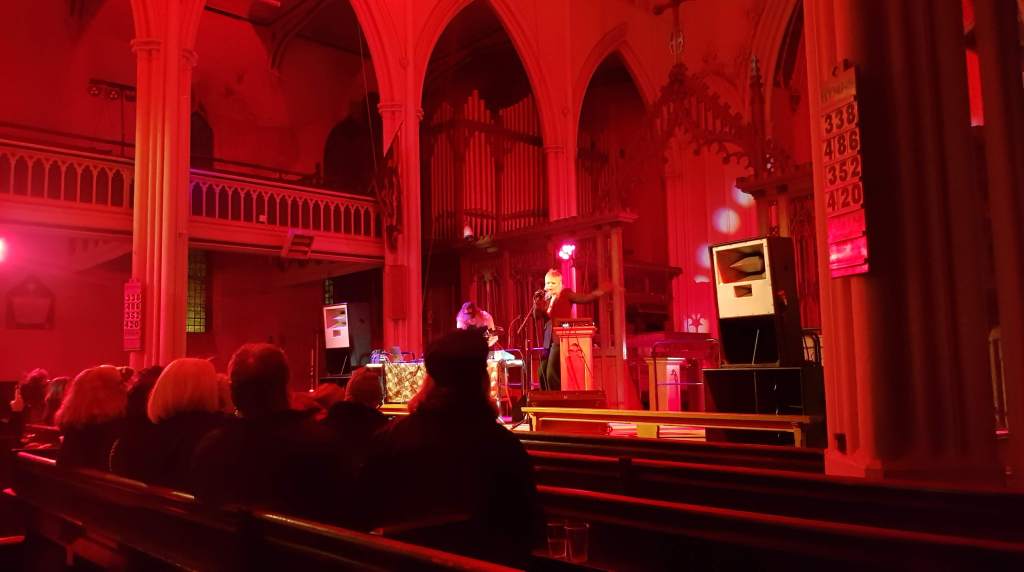
A couple of weeks later on the 24th February, in collaboration with artist Jemima Sara we presented SEE WHAT LOVE, which was an epic night of music featuring Margate’s Social Singing Choir, the beautiful Starlingsworld and the extraordinary Ziah Ziah.
The music and the atmosphere were truly electric – what an amazing night!
Jemima Sara’s solo exhibition continues this weekend on 8th, 9th and 10th March, from 12 til 5
See below for picture galleries of both events. With additional thanks to Frank Leppard for his pictures.

Love is all you need, 9th February 2024

SEE WHAT LOVE, 24th February 2024

Biblical Warnings (1 Corinthians 10:1-14)

“These things happened to them as examples and were written down as warnings for us, on whom the culmination of the ages has come.” (1 Corinthians 10:11)

In 1 Corinthians 10, Paul is concerned that the Christians of Corinth will lose their faith. He is worried that some of them are so complacent about the strength of their own faith, that they are in danger of slipping into idolatry without realising the danger.

As recorded at St. Lukes

Warning Signs

Sometimes warning signs make me laugh.

On Wednesday I saw a warning sign on Broadstairs beach:

“Caution, Plant and vehicles moving!”

I could see the moving JCB digger, but I couldn’t see any moving plants.

Or here is one from when my children were younger:

“Warning free range children!”

I thought it was only chickens that were free range!

Or what about this particularly worrying sign I found online, which I hope is a joke:

“Warning: Unattended children will be captured and used for medical experiments!”

Of course warning signs are no laughing matter. They have an important purpose, to alert us to the dangers that lurk, to call us to be careful and to avoid dangers that might otherwise harm or kill us.

Warnings for the Christian

One role that the Bible plays for us as Christians, is to lay down warning signs for life. It says in verse 11, talking about the Bible stories just referred to:

“These things happened to them as examples and were written down as warnings for us…”

During the week some of our groups looked at our reading from the Bible this Sunday and submitted some questions about it. One group asked a fairly basic question based on the verse that comes just after our reading:

  • What is a mature or sensible Christian? (vs. 15)

Is it someone who has been a Christian for a while? Attends church regularly? Reads their Bible a lot? Prays?

One way of answering that is to ask who would you say is a sensible driver. Probably your answer would include, someone who notices the warning signs on the road and drives carefully in response.

In the same way a ‘sensible Christian’ is someone who understands the warnings given by the Bible and lives out their Christian life taking them into account.

But many non-Christians and indeed many Christians struggle to see how the Bible fits together. Indeed, a couple of our groups raised questions along the lines of:

  • How do we reconcile God’s acts of judgement in the Old Testament with the emphasis on God’s love in the New Testament?

The Old Testament is the part of the Bible that tells of the history of God and his people before Jesus came. Whilst the New Testament tells us about Jesus and the people of God from then on.

To many it feels like the Old Testament is full of God’s judgement, whilst the New Testament talks about his love. So, for example, verse 6 of our reading, which refers back to the Old Testament story says:

“Nevertheless, God was not pleased with most of them, their bodies were scattered in the wilderness.”

That certainly sounds like a lot of judgement!

The first thing to say is that a more careful reading of the Old Testament shows that there is a lot about God’s love, compassion and faithfulness, not just his judgement.

Also, a careful reading of the New Testament, shows that God is still spoken of as judge and Jesus more than anyone else warns people about being shut out of heaven and stuck in hell.

Secondly, love and judgement are not mutually exclusive. A parent who loves their child will punish them when they do wrong out of love, because they want them to grow up into a good person. Also, when people commit acts of evil, we will want them punished to discourage others from doing the same. We do this to protect the community at large. The punishment of criminals is done out of love for the wider community. True love has to involve judgement when confronted by wrongdoing.

Thirdly, if as Paul suggests here the acts of judgement are to serve as warnings for God’s people, then inevitably there will be more judgement at the start of the story, with God hoping that future generations will learn the lessons without having to face judgement themselves.

The God of the Old Testament is the same as the God of the New Testament and that assumption is everywhere in the New Testament and the teachings of Jesus. As Christians we are not to be embarrassed by the Old Testament, but rather we are to learn from it as part of our Spiritual heritage. Which is just what Paul in his writing here wants us to do.

By linking the Christian life today, with the stories of the people of God led by Moses, he sets up a helpful parallel that can help us last as Christians and so experience the fulness of God’s love.

So let’s try to get to grips with what he is saying.

The Christian Life and the Biblical Story

Blessings for All

God Saves

Paul takes us right back to the story of God’s rescue of the people of Israel from slavery in Egypt. There they were oppressed by the Egyptians and forced to do hard labour and even had their newborn boys killed in an attempt to control their population growth. They were desperate to be rescued, so God sent Moses to lead them out and he sent ten horrible plagues on Pharaoh the king of Egypt to force him to let the people go.

When he finally did, God led them out by a cloud and through the Red Sea to escape from the Egyptian army. Israel were freed from being slaves and from the oppression of the Egyptians. God did that freely and lovingly for all who fled Egypt through the Red Sea.

In our reading, Paul in alluding to this story, says ALL the Israelites were baptised into Moses. By using the word, ‘baptised’ he links the story of Israel under Moses, to the story of Christians under Christ.

In a parallel way Jesus has rescued us not from slavery to a human king or power, but from the power of our own sin or wickedness and death. He did that through his death and resurrection. In baptism we are becoming one of the people who Jesus saves.

God Provides

But Paul also reminds us that once Israel were in the wilderness, on their journey to the Promised Land, where they could settle, that although it was tough and difficult, God provided for them. He did this miraculously or spiritually through the provision of a daily supply of food called Manna and by bringing water miraculously out of a rock. Again ALL the Israelites received this support freely out of God’s love for them.

Paul again links this to the Christian life, with the rather weird statement: “Christ is the rock.”  What he means is something like just as God provided water for the Israelites from a rock in the wilderness, so Christ supports and helps us as Christians through life now. Again God does that freely for ALL who come to him out of love.

Loss for Some

Paul in writing to the Corinthians does not want them to lose out on God’s blessings. So he reminds them of the warning stories from the Old Testament about those who although they seemed to have had God’s salvation and blessing, lost it because ‘they set their heart on wicked things.’

We haven’t time to explore the stories he refers to in detail, but the wickedness of their hearts was expressed in two fundamental ways.

Failure of Loyalty

But although ALL the baptised receive these blessings, many lose out. The warnings are for us not to lose out.

The first was a failure of loyalty to the God who had done so much to save them. Instead of making him their one and only God, they fell into the worship of other gods, what we call idolatry.

This leads to another question from one of the groups:

  • What idolatry do we need to flee from today?

Idolatry is something that we allow to take the place of God in our lives. To become the guiding principle by which we live, to be the thing we look to for our ultimate salvation or provision.

In our world, that tends not to be idols worshipped in temples, as it was for the Corinthians Paul was writing to, but things like love of money or pursuing sexual pleasure or putting our trust in some man-made idea, organisation or leader.

At first glance they can seem more appealing, more immediate, more real even than the true and living God, but in the end the salvation and provision they offer is empty and meaningless. Only the God of Jesus Christ can truly satisfy. To abandon him, to risk his wrath and lose the good blessings won for us by Jesus is foolishness indeed.

Let us heed the warning, and remain loyal to the God who truly love us.

Failure of Trust

The second problem was to do with a failure to trust in the God who saved them and provided for them. In verse 10 it says, they grumbled. This led to another question from one of the groups:

  • What’s wrong with grumbling? Is it ever legitimate for Christians to complain? (vs. 10)

Well to answer that question we need to look back at the stories of the Old Testament and see what the Israelites were getting wrong when they were grumbling.

Despite seeing the amazing rescue God had given them, they failed to believe God could provide, they looked back at their old life in Egypt and forgetting the slavery and oppression remembered the better food. They looked forward to the life in the promised land that God was leading them toand did not believe they would be able to defeat the people there at the time. So, they grumbled against God and against Moses.

This grumbling was an attitude of the heart that had fundamentally given up on trusting in God. So, yes complaining is fine for Christians, but when it becomes a heart attitude that fails to trust God, then it becomes an insult to God and a failure of faith, which is a disaster.

Why? Because it is through faith in God’s goodness, salvation and provision that we are saved. When we stop trusting in God’s goodness, then we let go of that salvation.

These then are serious warnings for all Christians. You may be baptised, you may have joined a church, you may call yourself a Christian, but true Christians are those whose hearts remain loyal to and keep trusting in Jesus to the end.

God saves us freely and baptism is a sign of taking hold of God’s act of amazing grace. We don’t have to prove ourselves to God to be saved, but we do have to remain loyal and keep trusting if we are to truly reap the blessings promised in baptism.

That sounds hard. But as it says in verse 13, God will not let you be tempted beyond what you can bear. There will always be a way to remain loyal and trust in him that is within our grasp. But we cannot be complacent, we need to heed the warnings, we need to be sensible Christians and remain loyal to and keep trusting in Jesus.