
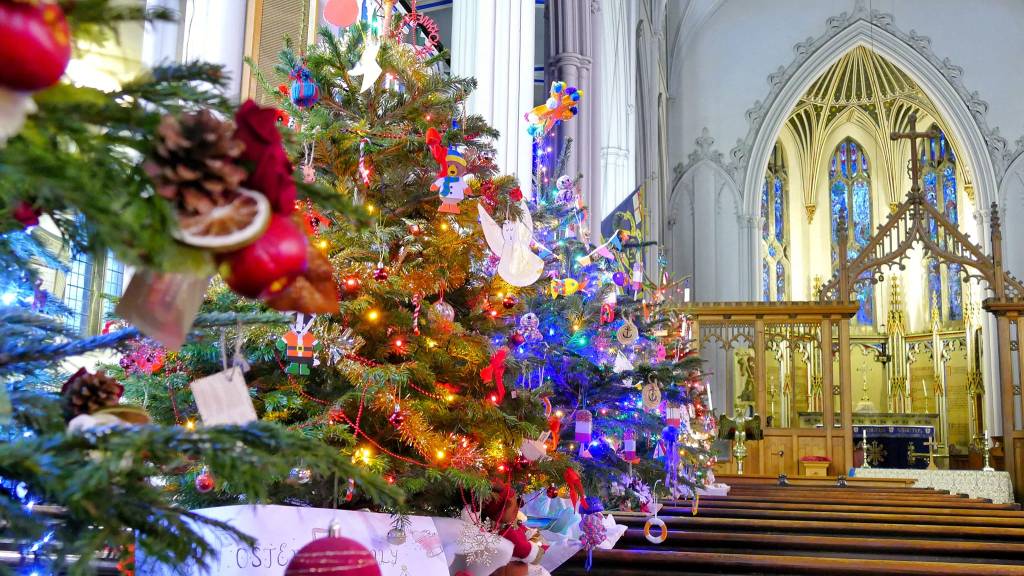
Welcome in Christmas Day itself with this special Holy Communion, surrounded by the trees from our Christmas Tree festival.
An Invitation (John 1:6-8)
This third Sunday of Advent is traditionally one where we remember John the Baptist as the modern prophet who came to testify about who Jesus was. John’s part in God’s stroy was to come and be a witness. He invited people to come and be ready to receive the truth about Jesus in their lives, and to believe in him.
In our carol service this morning we’ve heard about many journeys happening, we have the wisemen, he travelled from the east, we had Mary and Joseph travelling to Bethlehem from Nazareth. Jesus the son of God gave up his God-ness and became a human baby, and the shepherds came down from the hills to find the baby that the angels are talking about. They were invited to come and see this thing that had been done for them and for all mankind, there in a manger they would find a baby that would be the saviour of the world.
We’re going to be thinking about that invitation that the shepherds received, an invitation that is offered to us every Christmas and every day to go on that journey of exploring and finding out about who Jesus is.
I have a suitcase with me this morning, we’re going to unpack the suitcase and as we do it, unpack the importance of the Christmas story, why that invite was the best invite the shepherds were ever going to receive and why the invite to find out about Jesus for ourselves is the best invite we could ever receive so let’s unpack this suitcase.
We have a nice little party frock here but Jesus didn’t come in party clothes, Jesus came as a baby. In Philippians 2 :7, it talks about how Jesus made himself nothing by taking the very nature of a servant and was made in human likeness. Jesus came to earth in human flesh not in kingly robes, he was born as a baby to live among us which is an incredible thing.
What else is in our case?
We have a box of luxury mince pies, maybe it’s to add to the Christmas feast, I don’t know about you but when I go and visit friends at Christmas they might sort the main meal but we might bring extra bits and pieces along and say this might be part of the feast so I think we’re going to have some mince pies afterwards. When Jesus came to earth there was no big celebration, he was born in poverty in a room where animals had been kept and where his bed was an animal feeding trough, so the shepherds weren’t invited to come and see a king in luxury but a baby, flesh and blood and in poverty.
What else do we have. I’ve got a pair of comfy slippers here, it looks like the persons come to relax to put their feet up and enjoy somebody else serving them for a few days. I have to admit when I go and stay with people I quite enjoy being looked after for a bit, I help out but it’s nice isn’t it to be served. Nice for a parent sometimes when we go out for dinner because they don’t have to cook or wash up afterwards. Jesus didn’t come expecting us to serve him he came to serve us as it says in Matthews gospel: the son of man did not come to be served but to serve and to give his life as a ransom for many.
And then finally we have gifts this persons bought, some gifts to give to the people that they come to be with, When Jesus came, he came with a special gift for each one of us. Jesus made an incredible journey Gods son made from the glory of heaven and came to this dark Earth, he came to be with us as a baby, he came to be with us in poverty, he came to be with us to serve and he came to give us a special gift.
Why did he come? Well because God the father loves us, each one of us is deeply precious to God, he loves us with an unconditional love, love that’s not dependent on what we do and don’t do and because God loves us so much he sent Jesus as a precious gift, he sent Jesus to say that we wouldn’t die but have eternal life, he gave Jesus that we could have a restored relationship with God now and for all eternity.
God’s son has come close to us, making the big journey from heaven to earth so that we can come close to him, we are invited to become members of his family and enjoy a life giving and satisfying relationship with him that begins now and goes on for eternity. It might be a little hard to get your head around that God loves you so much he wants you to be close to him, so close that you become his child but it’s the truth and why we celebrate Christmas.
Jesus came to share God’s love with all people: because of his love he gave up his God-ness and became a baby to give us a choice to accept the invite to learn about who Jesus is. The reading from John that we heard says ‘yet to all who did receive him, to those who believed in his name he gave the right to become children of God, and children born not of natural descent nor of human decision or a husbands will, but born of God.’
When Jesus came and became a man he served us in the most amazing way. Too make it possible for us to become children of God, he willingly gave up his life, being nailed to a cross for crimes that he hadn’t committed, rising from the dead three days later. Jesus did this because it was the only way that simple people could come close to a holy God. Jesus willingly came to give you and me a gift that we cannot earn ourselves, the gift of becoming a child of God. Because God loves us and came close to us we can come close to him, what an amazing gift and what an invitation to come and see Jesus.
That’s what the shepherds did that first Christmas, they were chosen to go and see Jesus for themselves and we are invited to come and see Jesus from ourselves and to receive the gift that he’s come to bring us, we won’t find Jesus laying as a baby in a manger, he’s now living with the father God in heaven but his presence is with us now and if we turn to him by faith and put our trust in him we will receive the gift of becoming a child of God whose life will be transformed. I will invite us to come near to God and he will come near to you. (James 4:6)
So this Christmas may we remember Gods story that led up to that first Christmas, when Jesus came as a baby, giving up his God-ness and came into poverty, to serve and to invite us to become children of God, whose lives can be transformed. Let’s keep accepting the invitation to follow Jesus each day and come and see what he’s doing in our lives and in others.
There is No Rose

An evening of Baroque and Tudor Music in the midst of the St. George’s Christmas Tree festival. Sunday 17th December, 7pm at St. George’s Church.
Featuring three amazing professional musicians:
Jay Britton – Soprano
Tom Shelley – Cello
Petra Hajduchova – Harpsichord
Tickets £15 on the door, £12 online. Under 18s are free.
17th December 2023 – The Last Notices of 2023
(John 1:6-7)
This third Sunday of Advent is traditionally one where we remember John the Baptist as the modern prophet who came to testify about who Jesus was. John’s part in God’s story was to come and be a witness. He invited people to come and be ready to receive the truth about Jesus in their lives, and to believe in Him.
The modern worship song Light of the world talks about how Jesus stepped into the dark world to be its light – ‘Light of the world you stepped down into darkness’. Jesus came to bring awareness to the dark things of this world, to illuminate injustice, to convict us of sin that can destroy lives, and to shine on the path of living life in all its fullness, one that is full of compassion and care, one that comes from believing in him.
The song goes on to talk about how for our sake Jesus became poor – ‘all for loves sake became poor’. Jesus gave up his God-ness and came in the form of a baby. Not a baby from a royal palace but a baby in a poor family. There is evidence of this in the bible in terms of what sacrifices his family made at his dedication. Babies have no status, they have no control of their bodily functions, not only that, Jesus was born and laid where animals were – if you’ve been in stables, they aren’t often beautifully fragrant places, they stink. Jesus entered this world in poverty, because He loves us – you and me – the entire world.
Like John, witnessing to the Light, let us also be people (not just this season) who share the good news of Jesus who came in poverty, to bring transformation for all – the greatest gift given – let’s embrace this gift and pass it on.
Claire Coleman
St. George’s Website
- What’s On – a page which lets you know what is happening this week and gives information about upcoming events.
- Notices – You can read the latest notices on this page.
- Sermons – Read a transcript of a recent sermon or watch the YouTube version recorded at St. Luke’s. There are now videos for all the sermons over the summer.
Christmas Services
For a full list of our Christmas Services check out the website. Do consider sharing this page on social media as a way of helping to advertise our services.
Weekly Calendar
Sunday 17th December
Eucharist (St George’s, 9:30am) –Reading: John 1.6-8, 19-28
Christmas Tree Festival (St George’s) 2:00-5:00pm
There is No Rose! – Concert (St George’s, 7:00pm)
Monday 18th
Daily Prayer (St Luke’s Church) – 9:30-10:00am
Craft Group (St. George’s Hall, Soup Kitchen) – 2:00-3:30pm
Tuesday 19th
Daily Prayer (St George’s Church) – 9:30-10:00am
Coffee Morning (St. George’s Hall) – 11:00am-12:00pm
Wednesday 20th
Study Group (South Eastern Road) – 7:30-9:30pm
Thursday 21st
Daily Prayer (St Luke’s Church) – 9:30-10:00am
St George’s Carol Service (St George’s Church) 7:00-8:00pm
Friday 22nd
Sailor’s Church Carol Service (Sailor’s Church) 3:00-4:00pm
Sailor’s Church Carol Service (Sailor’s Church) 5:00-6:00pm
Saturday 23rd
Daily Prayer (St George’s Church) – 9:30-10:00am
Sunday 24th
Midnight Service – Christmas Eve (St George’s, 11:30pm)
Monday 25th
Christmas Day All Age Communion (St. Luke’s Church) – 11:00am-12:00pm
Sunday 31st
Eucharist (St George’s, 9:30am) –Reading: Luke 2:15-21
Please note that this is the last notice sheet until 2024! There are no Prayer Meetings or other meetings between Christmas and 2nd January, apart from the Sunday Services on Sunday 31st January. From 2nd January most normal meetings restart.
There is No Rose! (Baroque Concert) – This Sunday!
Petra and friends will be holding another Baroque concert in the beautiful setting of St. George’s at the end of the Christmas Tree Festival on Sunday 17th December at 7pm. Tickets £15 on the door, £12 online and £10 in church. Under 18s are free. Buy online now. (There appears to be a problem with online ticket sales at present, but we are working to resolve this).
Hope Explored – January 2024
As a follow up to our Christmas services we will be running a short three session course in January called, Hope Explored. This is a great opportunity for people interested in discovering how Christianity can offer hope, peace and purpose in our world. For regular group members it will also be a chance to try out a new evangelistic course that they might want to use with a friend or friends. To sign up, please use one of the cards or the online form.
Christmas Tree Festival – Thank You!
Thank you to everyone who has helped to decorate and sit in the church during our Christmas Tree festival this year. Another great success.
Christmas Fair – Thank You!
A big thank you to all who helped the Christmas Fair last Saturday be such a success. There were many visitors who do not normally come to church and we raised over £900 for St. Luke’s and St. George’s.
Carol Singing at Ramsgate Care Centre
If you would like to be part of a small ‘choir’ to sing Carols at the Ramsgate Care Centre on Monday 18th from 2:15-3:00pm, then please see Paul or Claire.
Planned Giving Reminder
If you have not yet responded to our letter about planned giving to St. George’s then please do as soon as possible. We have seen an increase in committed giving, but we still need significantly more to be able to plan a balanced budget for the church. Remember you can now set up planned giving using the Parish Giving Scheme.
Links to Share:
The Earth-Shaking Consequence of Christmas
The radical uniqueness of the Christmas story can be easily lost in a culture over-familiar with carols, nativity scenes, and Christmas cards. The birth of Jesus is not, for Christians, merely the birth of the founder of their religion… read more.
Christmas with the Cheeky Pandas
The Cheeky Pandas have joined forces with the Church of England to create a fun, faith-based children’s video series for the Advent season!
Join us to explore the Nativity through crafts, sketches and jokes. With the help of CBeebies’ own Gemma Hunt, we bring you this wonderful resource to use in your churches, schools and homes!
Four episodes are now available on YouTube, along with a Christmas craft or activity based on the week’s theme. Why not use them with your children or grandchildren to help them understand the true meaning of Christmas.
Finally, let’s celebrate the birth of Jesus,
Paul Worledge
(Priest in Charge of St. George’s)
Hope Explored

We will be running this three-session course in January 2024 to discover how the Christian message answers our longings for hope, peace and purpose. If you would like an invite to one of the groups looking at the course, please fill in the form below the trailer. (We will only use your information to send you an invite in January 2024).


Be Prepared (Mark:1 1-8)
Last week Paul challenged us in this season of Advent to commit to what will last. We want to be prepared for eternity, Jesus is going to come back and we want to encourage others to be prepared to meet with Him too.
Be prepared is the scouting moto. Skills are taught that are to help mould young minds and give them the ability to grow into self sufficient adults. It equips them with skills to withstand crises, survival skills are also taught. Being prepared is an important skill to have in whatever circumstance.
With regard to Christmas I wonder how prepared you are feeling right now? Christmas is only 15 days away. There are cards to think about if you send cards, making Sure you get them in the post in time. There are presents to think about thinking about what gift would be great for each particular person that you might want to give a gift to. Then with the cost of posting you might think well let’s be prepared and arrange to meet up and exchange presents. If you’re going to attempt a roast dinner on Christmas Day preparation is key. I Quite like Jamie Oliver and he has a plan for Christmas dinner and all the things that can be prepared for in advance and a plan of how to get it all prepared in time on the actual day. If you’re travelling this preparation of your vehicle mode of transport the route that you’re going to take the clothes that you might need snacks for the journey lots to prepare for. The idea is that the better prepared you are the more smoothly things might go.
Advent is the time when in the build up to Christmas we are not only thinking about that first Christmas or counting down to this one but also thinking as Paul touched on last week about being prepared spiritually – thinking about how advent points us to think of when Jesus will come again – are we prepared to meet him. I love the time of advent and lighting the advent candles helps us to think about Gods whole story with hints in the stories of the patriarchs pointing to Jesus – Abraham being told all nations will be blessed through his family and David being promised that there would be a king sitting on the throne from his family forever.
This Christmas are we prepared to relive Gods story in the build up to the good news of Jesus? are we prepared to learn new things about God? about ourselves? are we prepared to put things right?
God wants his people to be prepared.
In our passage this morning, in the NIV Bible, the heading at the start of marks gospel is ‘John the Baptist prepares the way’ and he begins his gospel by saying ‘ the beginning of the good news of Jesus Christ the son of God’ the people who added those headings obviously feel that that sums up this section of marks gospel that it was John the Baptist who came to prepare the way that John came to make sure people are prepared to receive the good news of Jesus Christ and we’re gonna unpack what that means this morning
Marks gospel is action packed. It doesn’t contain much of Jesus’ words and sermons – there’s no sermon on the mount as in Matthew’s gospel or sermon on the plain as in Luke’s. There’s no nativity story. There’s lots of action. And Mark’s action begins by drawing his readers back to what has been written.
Mark includes two prophecies here one for Malachi chapter 3, verse one, and then another from Isaiah 40 verse three here amalgamates, these two prophecies into one. In the second week of advent is lit to remember the profits, and the profits were often pointing God’s people back to him. They said of being prepared was part of the Jewish history, and Mark is framing it a fresh and linking it closely to the good news of Jesus.
He continued to build on this theme by introducing John the Baptist. He describes what John was wearing his appearance that he wore camels hair clothes and a leather belt, and he ate locus and wild honey. It’s very similar to the description of Elijah in second kings chapter 1, verse eight. Again, Mark is using this imagery from the old Testament to make connections between the prophets who were preparing the way and John.
At Saint Georges next week the readings will be focusing again on John as John is the third candle that we light in advent. The purpose of John was that he was a modern age of his time prophet. He was revealing God’s plan and getting people ready.
How was John getting them ready? Well he offered a baptism of repentance and forgiveness of sins? What was the response to that offer? the whole of the countryside and all people are Jerusalem went out, confessed their sins and were baptised. There is a sense that the people needed to be ready to come across their messiah. Their hearts needed to be ready they needed to be right with God. That’s why we confess at the beginning of every service, so that we prepare ourselves to meet with God afresh in worship. John was getting them ready to encounter Jesus when he came.
And we know by his words John didn’t just come and baptise, but he had a message and the message was ‘after me, will come more powerful than I.’ The rest of Mark ‘s Gospel shows us Jesus’ power. Even in the rest of the chapter, we read how Jesus healed many, people from leprosy and how he drove out impure spirits. Just like the hymn I wrote about in our church email this week – There’s power in the name of Jesus. because of Jesus: demons will flee, captives are freed, God’s enemies shall be crushed, we are saved and given the ability to stand in faith. That is the good news of Jesus, and he has the power and not need to give forgiveness, but to transform our lives. Jesus can transform our lives because he has defeated sin and death on the cross at Easter. That is the good news of Jesus that he made a relationship with God possible again by dealing with this in that often gets in the way. John‘s message is pointing to one more powerful than him. John,In the second part of his message says this ‘ I baptise you with water, but he will baptise you with the Holy Spirit.’ The good news about Jesus doesn’t end with his death and resurrection sign posts his followers to the sending of the Holy Spirit. John 14:26, we read that the’ advocate the Holy Spirit, whom the father will send him my name, will teach you all things and will remind you of everything I have said to you. This is the good news of Jesus we are not alone we can be transformed by the power of his Holy Spirit
So, when Mark uses, the Isaiah quote ‘prepare the way for the Lord, make straight paths for him – he’s communicating to his listeners, but Jesus is a fulfilment of God story that repentance forgiveness baptism, part of that journey for Gods people.
What does making straight path look like for you?
How can we be prepared to receive from God today?
We’re gonna do something I’ve never done here I want us to sit quietly for a moment, and to ask God this question, what does making straight Path look like for us? There might be something we need to ask forgiveness for or to even forgive ourselves for there might be behaviours and habits that we need to adopt? You might have never done this before and sat quietly. Some people might be comfortable with this for others It might help you to just read through those eight verses again. I want us to sit there and ask God how do I need to prepare to meet you Jesus?
How do you need to prepare to meet Jesus?
Father help us this season to be prepared to meet with you and to refocus on you.
10th December 2023 – Notices
(Mark 1:7)
Last week Paul challenged us in this season of Advent to commit to what will last. We want to be prepared for eternity, Jesus is going to come back and we want to encourage others to be prepared to meet with Him too.
In our passage this Sunday, Mark begins his account of the good news of Jesus with a reminder about Isaiah’s account of a messenger who was to prepare the way of the Lord. We are then introduced to John the Baptist who is calling his listeners to repentance and forgiveness of sins. And this was his message: “After me comes the one more powerful than I, the straps of whose sandals I am not worthy to stoop down and untie.”
We can look at the current state of the world and our own lives and feel hopeless, but that is not the story of advent. Advent is a time of hope. God’s plan to bring salvation and forgiveness, to bring hope to the hopeless was enacted through the birth of Jesus.
I’m reminded of a worship song by Noel Richards that I sang growing up: There’s power in the name of Jesus. It talks about the power of Jesus and how because of Jesus: demons will flee, captives are freed, God’s enemies shall be crushed, we are saved and given the ability to stand in faith.
Whatever our circumstances, Jesus has power! Are we prepared to trust in the power of Jesus? Do we try and figure out things in our own strength. Jesus gives forgiveness when we don’t always get it right. We can bring every concern, heartache, moment of rejoicing to Him. He has the power. Let’s not forget that.
Claire Coleman
St. George’s Website
- What’s On – a page which lets you know what is happening this week and gives information about upcoming events.
- Notices – You can read the latest notices on this page.
- Sermons – Read a transcript of a recent sermon or watch the YouTube version recorded at St. Luke’s. There are now videos for all the sermons over the summer.
This Saturday (9th) Christmas Fair
The Social Events team will be holding a Christmas Fair in St. Luke’s Church on Saturday 9th December from 10:30am to 2:30pm. Do come along, enjoy the fun and bring friends and family.
Weekly Calendar
Sunday 10th December
Eucharist (St George’s, 9:30am) –Reading: Mark 1:1-8
Sunday School Christmas Party (St George’s, 10:30am)
Christmas Tree Festival (St George’s) 2:00-5:00pm
Monday 11th
Daily Prayer (St Luke’s Church) – 9:30-10:00am
Craft Group (St. George’s Hall, Soup Kitchen) – 2:00-3:30pm
Christmas Tree Festival (St George’s) 2:00-5:00pm
Study Group (Margate Road) – 7:15-9:30pm
Tuesday 12th
Daily Prayer (St George’s Church) – 9:30-10:00am
Coffee Morning (St. George’s Hall) – 11:00am-12:00pm
Christmas Tree Festival (St George’s) 2:00-5:00pm
Community Meal – Christmas Special (St. George’s Hall) – 5:30-7:00pm
Wednesday 13th
Christmas Tree Festival (St George’s) 2:00-5:00pm
Study Group (South Eastern Road) – 7:30-9:30pm
Thursday 14th
Daily Prayer (St Luke’s Church) – 9:30-10:00am
Christmas Tree Festival (St George’s) 2:00-5:00pm
Friday 15th
Christmas Tree Festival (St George’s) 2:00-5:00pm
Saturday 16th
Daily Prayer (St George’s Church) – 9:30-10:00am
Christmas Tree Festival (St George’s) 2:00-5:00pm
Sunday 17th
Eucharist (St George’s, 9:30am) –Reading: John 1.6-8, 19-28
Christmas Tree Festival (St George’s) 2:00-5:00pm
There is No Rose! – Concert (St George’s, 7:00pm)
Sunday School Christmas Party
This Sunday, the Sunday School will be joining us at the end of the service for an All Age section, followed by their Christmas Party.
Christmas Leaflet Distribution
We now have 5,000 leaflets detailing the Christmas Services across St. Luke’s, St. George’s and the Sailor’s church. The aim is to deliver as many as possible through front doors across the three parishes of St. Luke’s, St. George’s and Christ Church. If you can deliver some:
- Choose a road on one of the maps and check no-one else has yet chosen it.
- Cross it off on one of the maps, so no-one else chooses it.
- Pick up a pile of leaflets that you think will give you enough to deliver.
- Deliver to the road and return any spare leaflets next week.
Feel free to also take posters and leaflets to put up in visible spaces.
There is No Rose! (Baroque Concert)
Petra and friends will be holding another Baroque concert in the beautiful setting of St. George’s at the end of the Christmas Tree Festival on Sunday 17th December at 7pm. Tickets £15 on the door, £12 online and £10 in church. Under 18s are free. Buy online now. (There appears to be a problem with online ticket sales at present, but we are working to resolve this).
Links to Share:
Christmas 3-2-1
A clever animated video, that uses words from Christmas Carols to explain the meaning of Christmas. Watch…
In the Bleak Mid-Winter
In a world of devastation, J.S. Averill shares honest feeling of hopelessness – yet is not overcome. Read more…
Finally, let’s look to Jesus for our hope.
Yours in Christ
Paul Worledge
(Priest in Charge of St. George’s)
Jesus’ Word Lasts (Mark 13:24-37)

Jesus said “…Heaven and earth will pass away, but my words will never pass away.” (Mark 13:31). Advent is more than just the lead up to Christmas. It is an opportuniy to reflect on our lives from the perspetive of eternity.
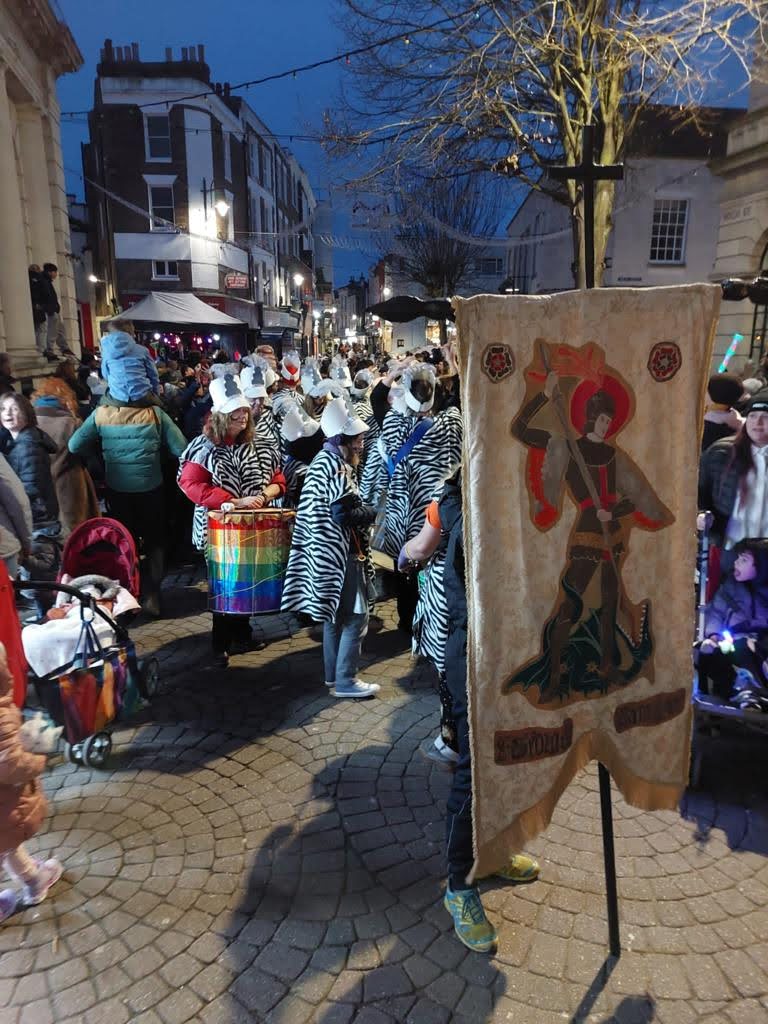
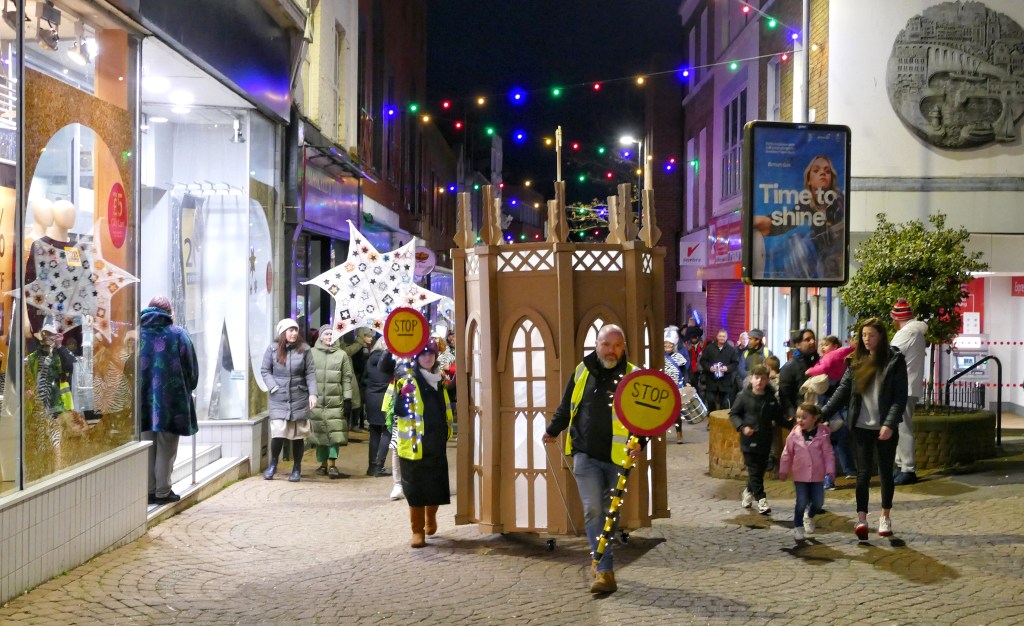
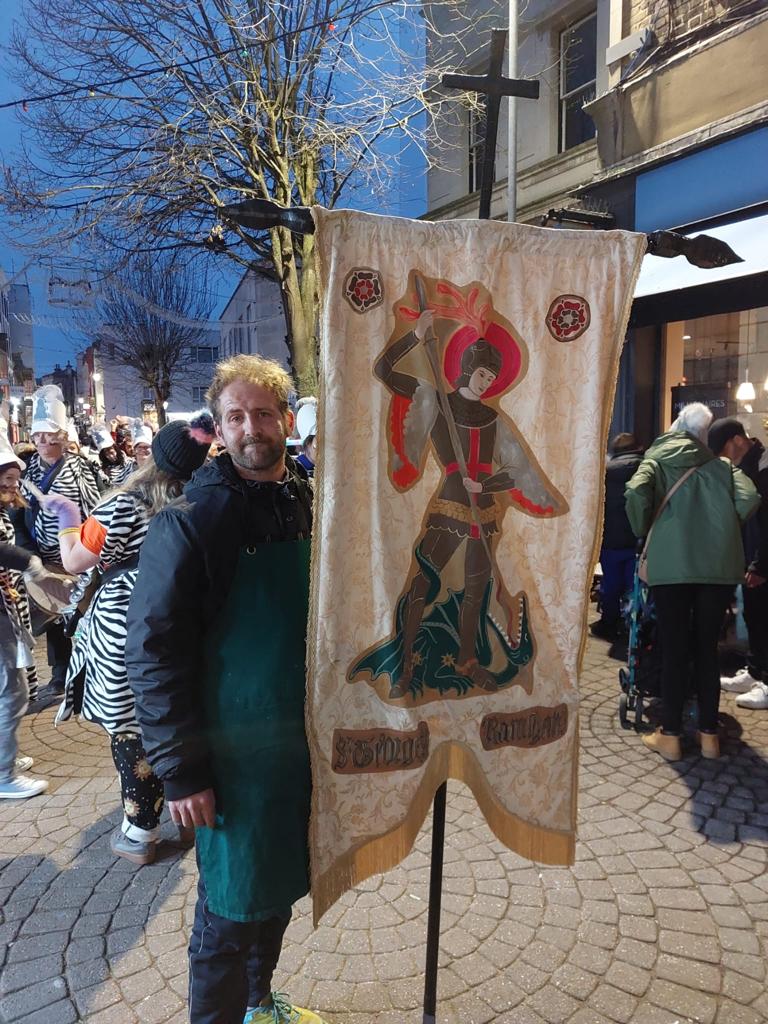
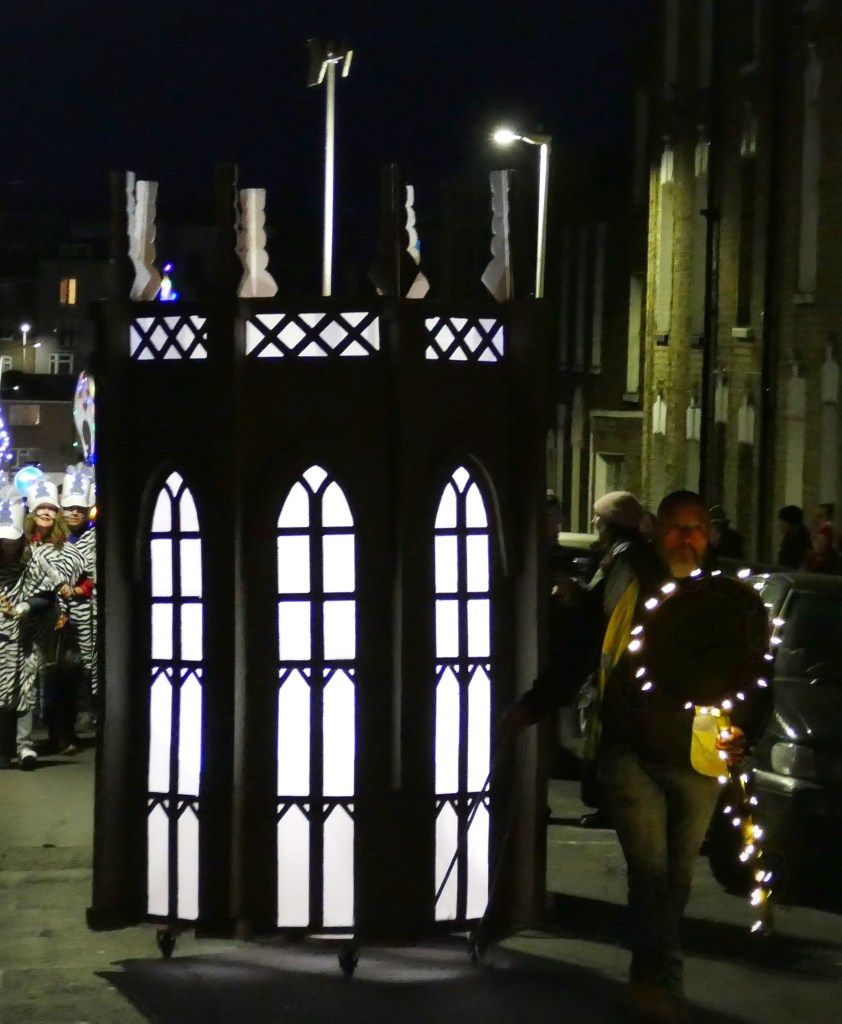
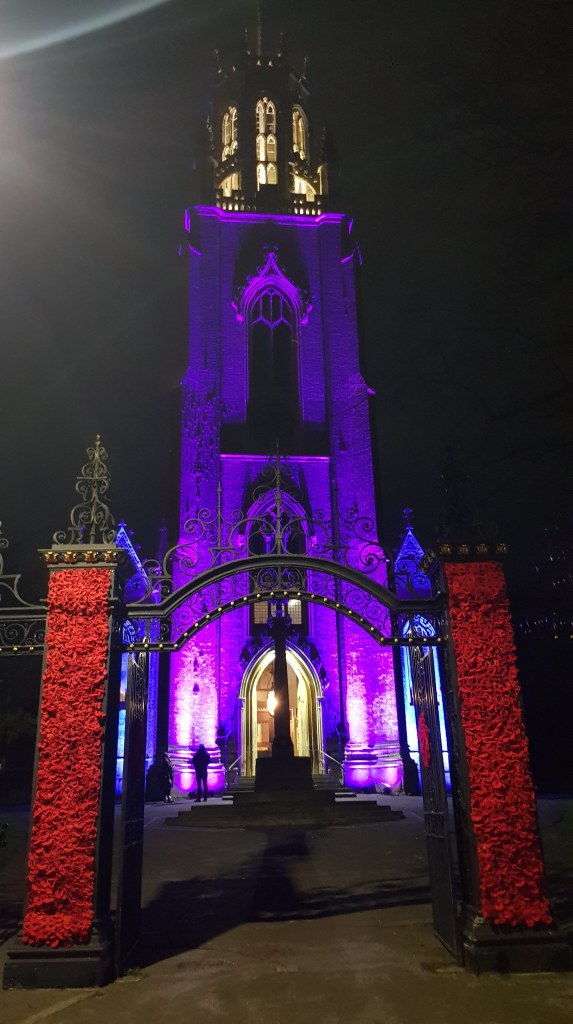
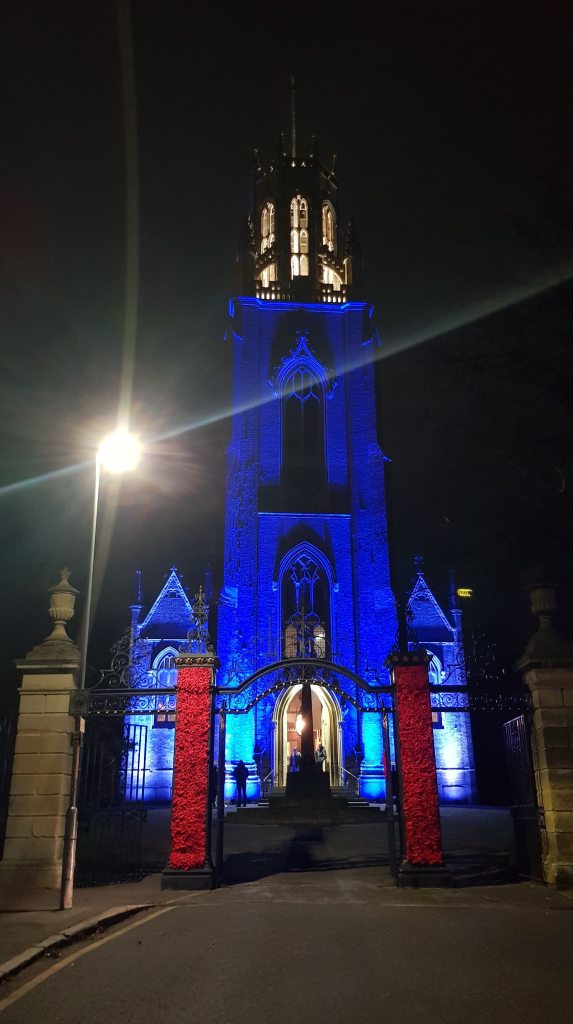
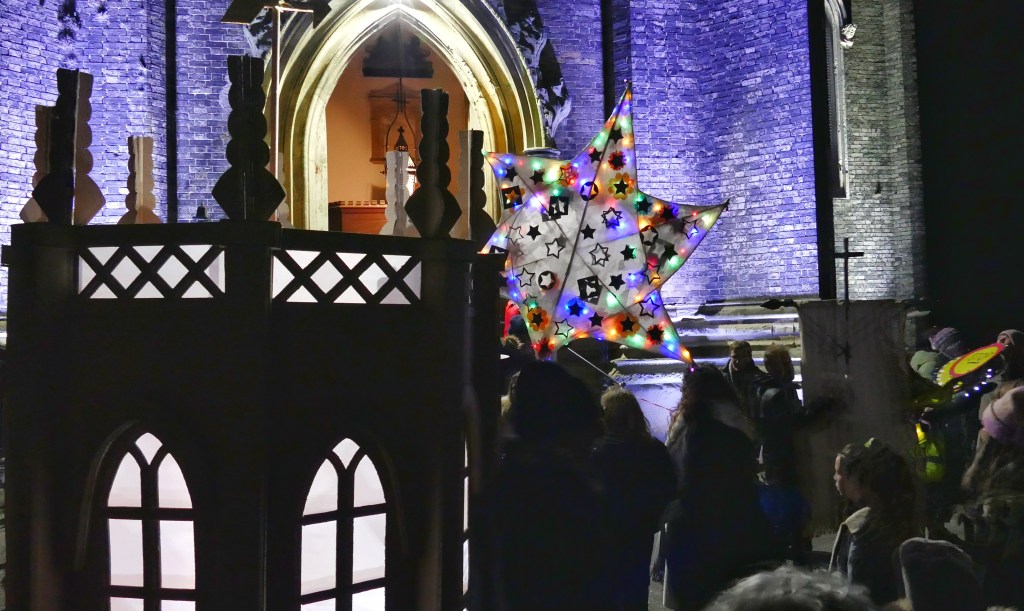
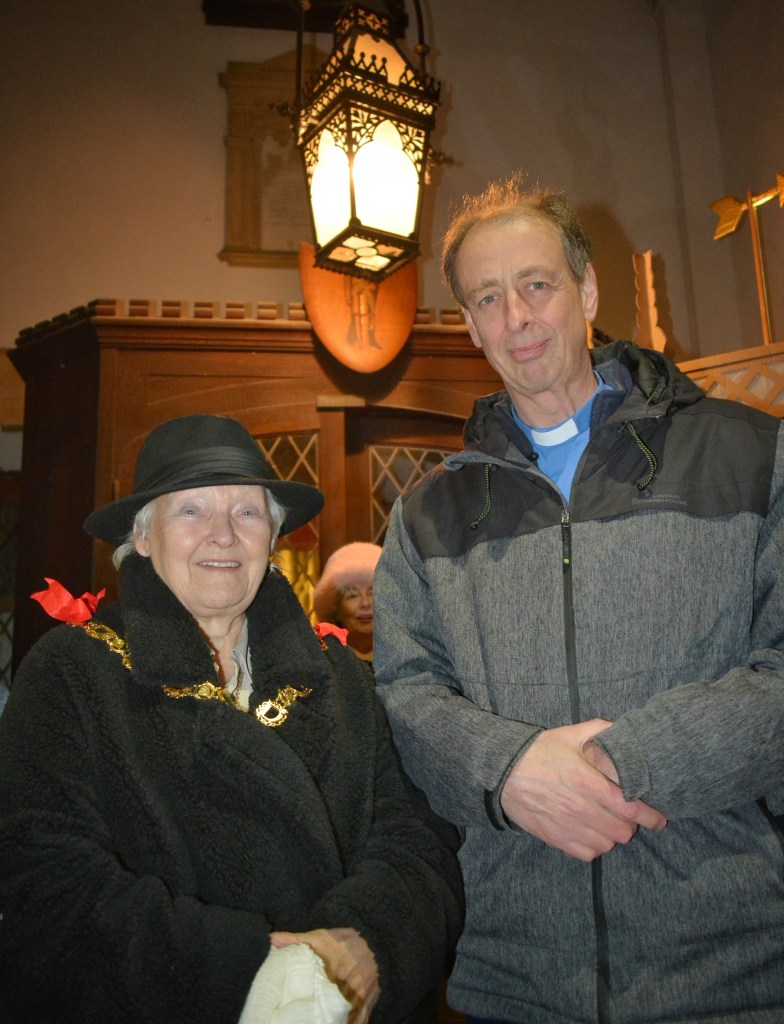
Christmas Lights at St George’s

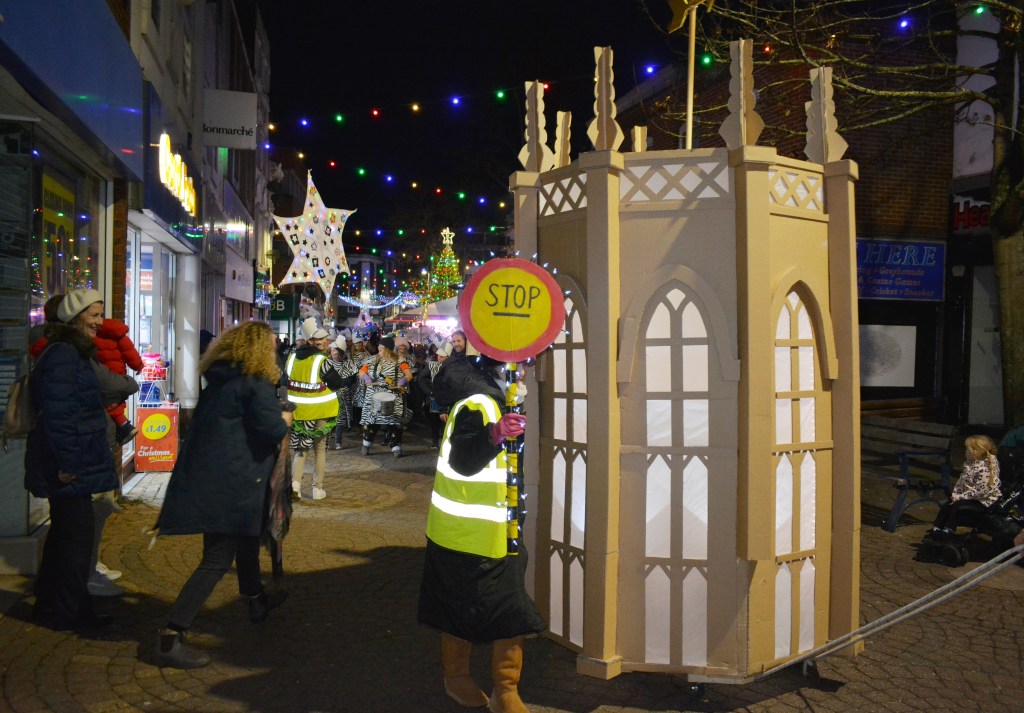
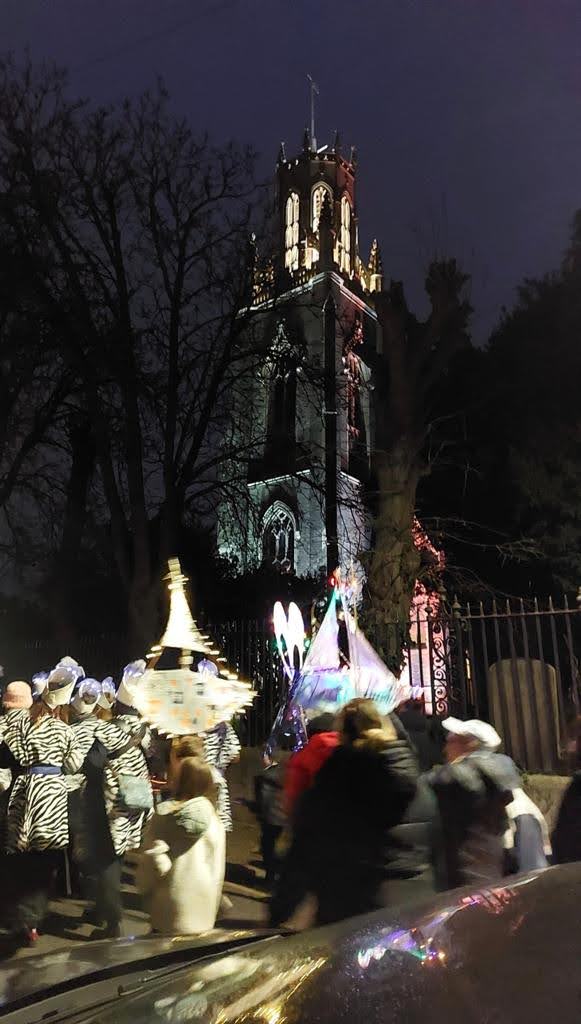
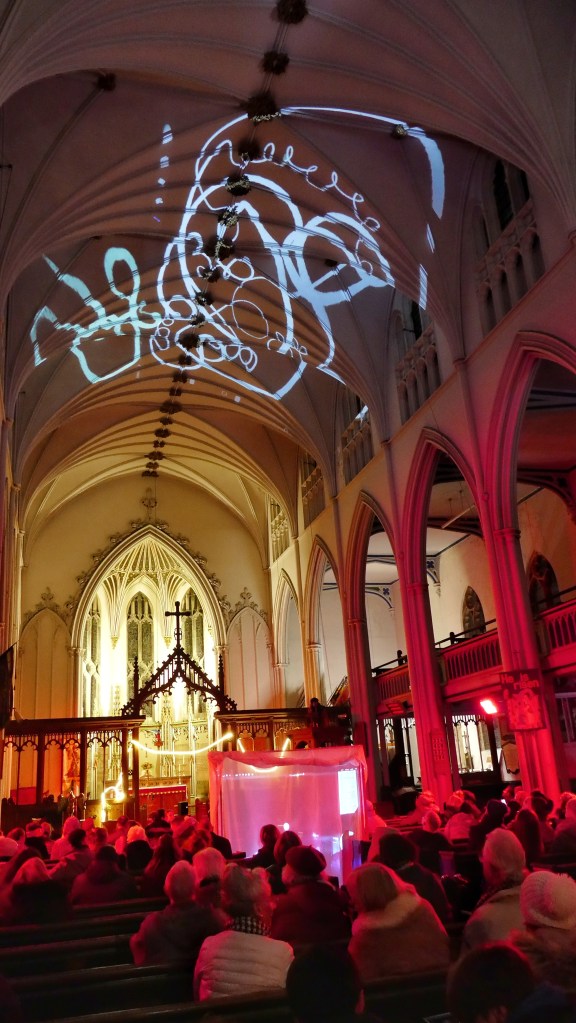
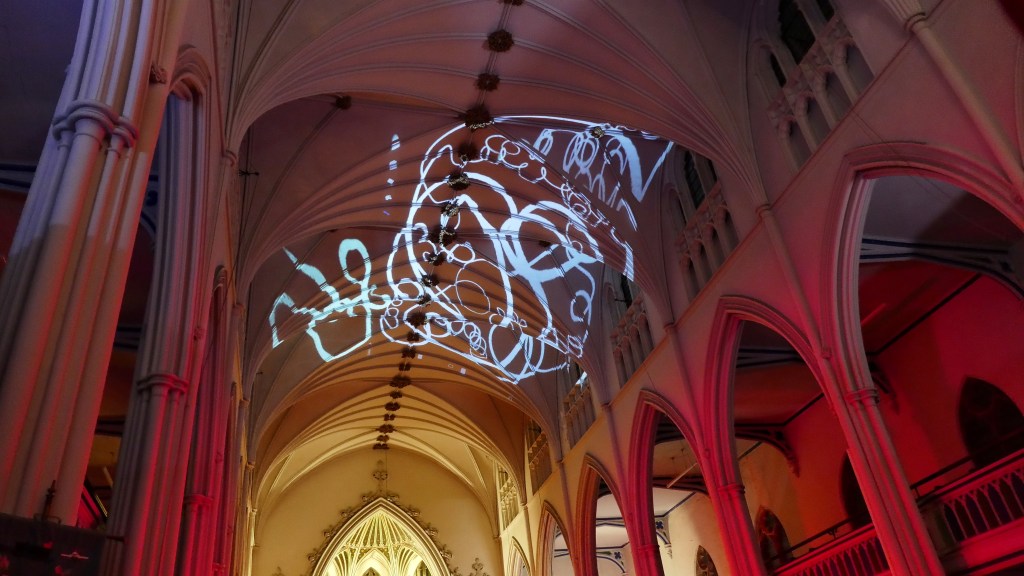
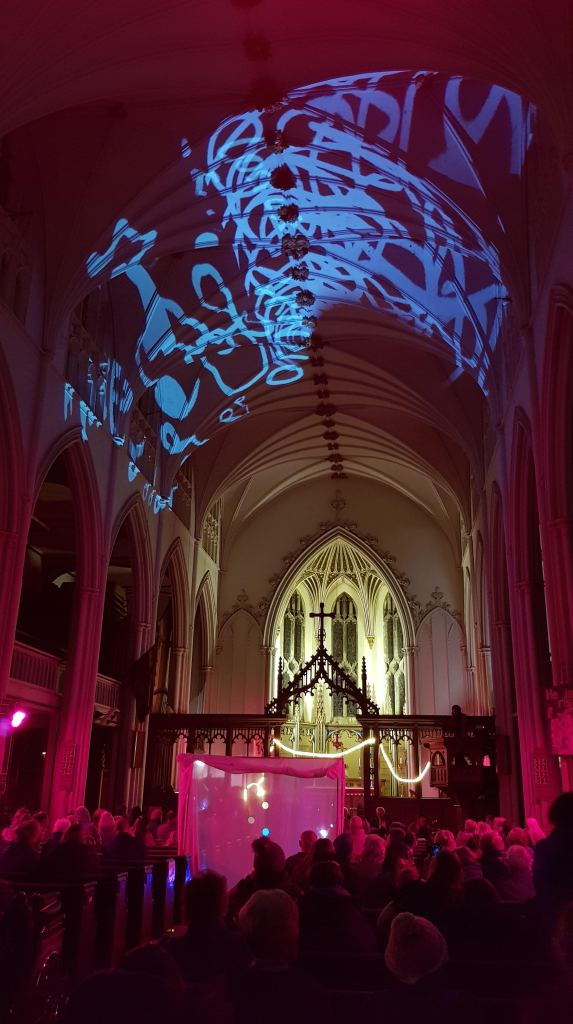
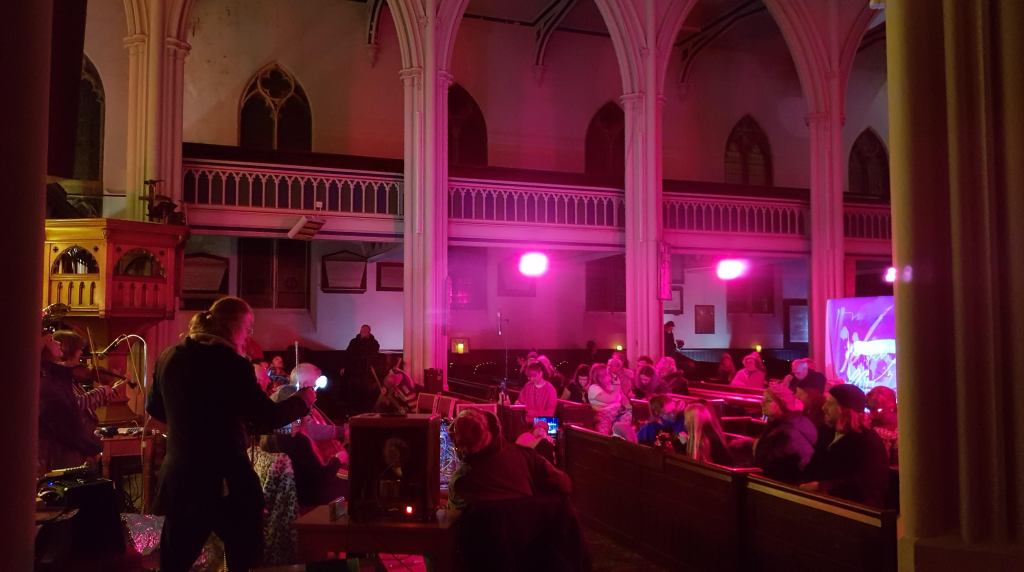
After the Ramsgate Town Christmas lights were switched on, GB Carnival and their band Samba Ya Wantsum led the way from the town centre up to St George’s.
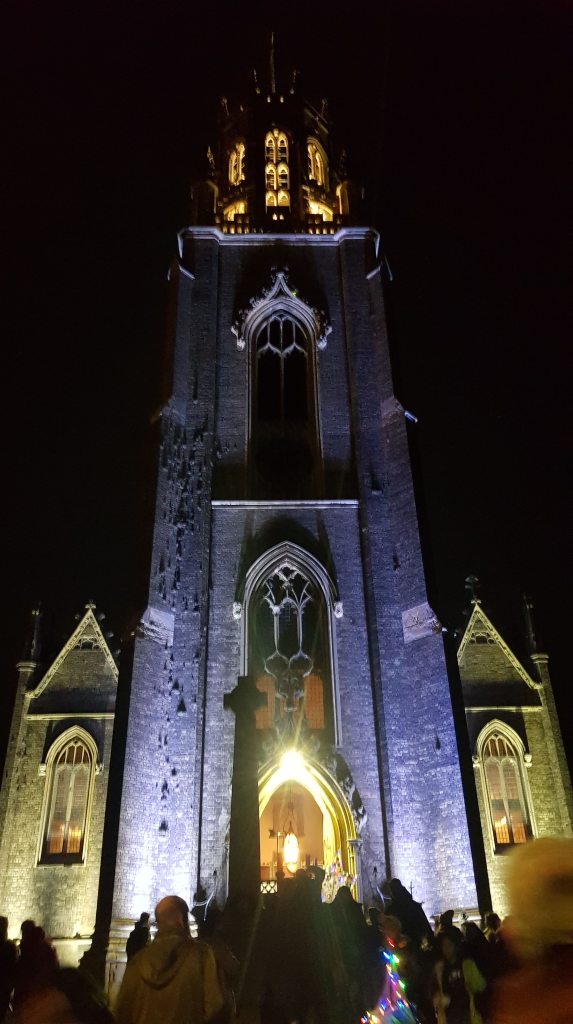
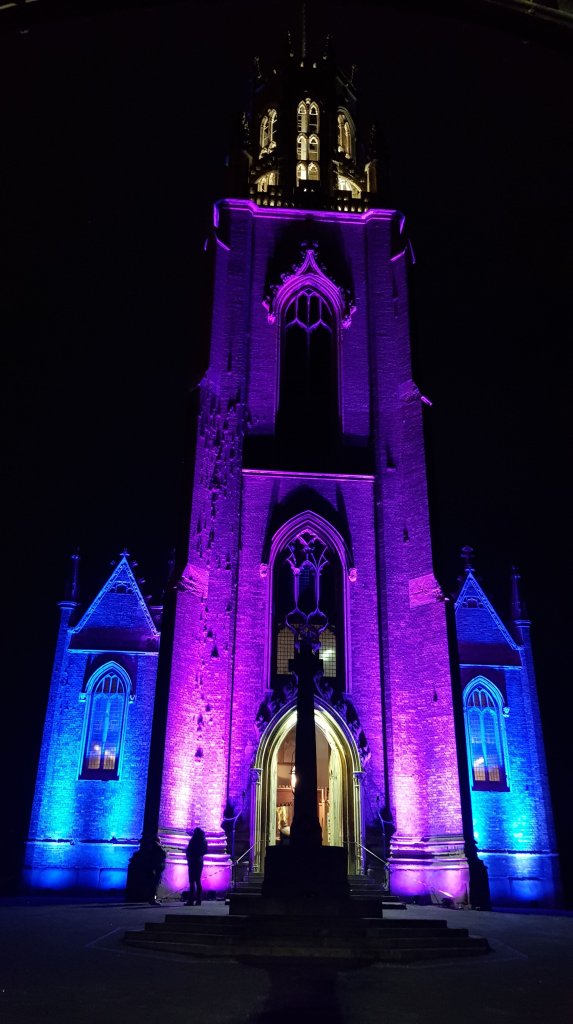
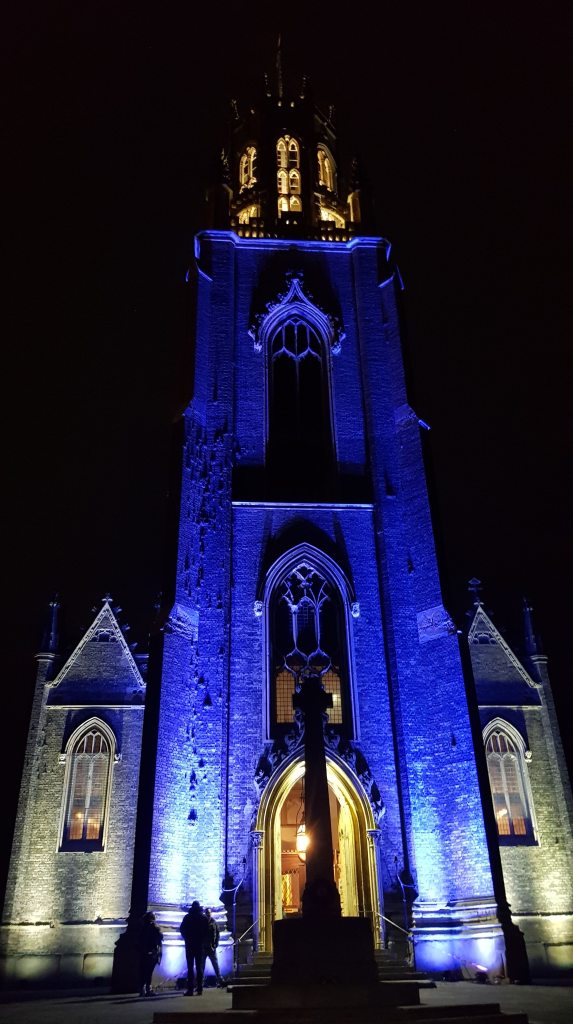
The lantern tower was beautifully lit by James Brown AV and there was a performance by Free Range Orchestra with animations by the students of University for the Creative Arts inside the church.
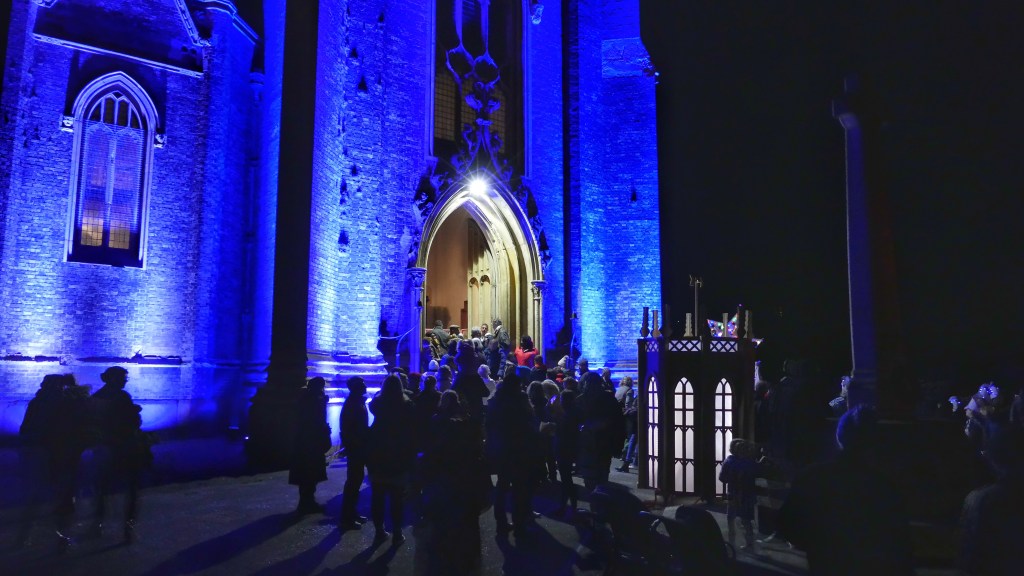
It was wonderful to welcome so many new visitors to St George’s and including the volunteers and performers involved we had a total of 450 people in the church. A big thanks to all involved and to the Friends of St George’s for providing refreshments.
See below for a gallery of pictures. With many thanks to Frank Leppard for his photos of the evening.




Christmas Tree Festival – Starts this Friday!

St. George’s Christmas Tree Festival opens this Friday (8th December) at 2pm. You can come and view the trees anytime from 2-5pm from 8th to 17th December (although there is a RNLI Carol Service taking place 3-4pm on Saturday 9th. It is a sight not to be missed!!

 St. George's Church Ramsgate