“Therefore keep watch, because you do not know on what day your Lord will come.” (Matthew 24:42)
Why not take time this Advent to prayerfully consider whether you are ready for Jesus’ return? The sermons will help. Over the next few weeks, we will be looking at three of the stories Jesus tells to help us in our Advent reflection. They pose the following questions for us to consider: Am I prepared to follow Jesus for the whole of life or is it just a fad? Am I using the gifts and talents God gave me as I should? Do I treat other people, as though they are Jesus?
Key notices: Christmas Publicity, Carol Singing at Care Homes
Coming Up: Let there be light, Meal and Magic Evening, Christmas Tree Festival, Christmas Baroque, Christmas Services at St. George’s
From the Wider Church: Safe Families Events
Interesting Blogs: Resources for Advent
Weekly Calendar
Online Forms: Event application, Submit a notice, maintenance report, access Safeguarding training
Scroll on…
Opening Reflection
The Christmas decorations are already going up. Some have been up for weeks already and it is not December until Monday! However, Sunday marks the beginning of the church’s season that leads up to Christmas: Advent.
Advent is meant to be in part a season to prepare for celebrating Christmas, the festival that marks the Son of God coming among us as a baby. Yet, it is also a time to remember that Jesus will come again, not as a baby, but as the one who will judge, rescue and restore the world, so that God’s kingdom is fully realised and there will be a new heaven and new earth.
As such Advent is meant to be a time of reflection and repentance, when we ask ourselves whether we are ready for Jesus’ second coming. You may think the more urgent question is: “Will I be ready for Christmas? Have I bought the presents, made arrangements to visit family and prepared for the feasting?” Christmas is less than a month away after all.
Yet, not being ready for Christmas is not the end of the world. On the other hand, not being ready for Christ’s return means missing out on the next world. Christmas may feel imminent, but we do not know when Jesus will return. It could be another 2,000 years or it could be today. We need to be ready now.
Why not take time this Advent to prayerfully consider whether you are ready for Jesus’ return? The sermons will help. Over the next few weeks, we will be looking at three of the stories Jesus tells to help us in our Advent reflection. They pose the following questions for us to consider: Am I prepared to follow Jesus for the whole of life or is it just a fad? Am I using the gifts and talents God gave me as I should? Do I treat other people, as though they are Jesus?
Paul Worledge
Key Notices:
Christmas Publicity
The Christmas publicity is now ready to deliver. If you can deliver to one or more roads, please grab enough leaflets from the pile at the back of St. Luke’s (this week, next week we’ll have some at St. George’s). Check the roads are not already taken on the maps, then cross out the road(s) so that others do not deliver there. It would be great to cover as many roads as possible.
Carol Singing at Care Homes
We are planning to go into a couple of local care homes to sing some Christmas Carols for the residents. If you can join us for these events, then please let Paul know:
Keele House, 2:30pm on Wednesday 10th December
Ramsgate Care Centre, 2:30pm on Monday 15th December
Coming Up:
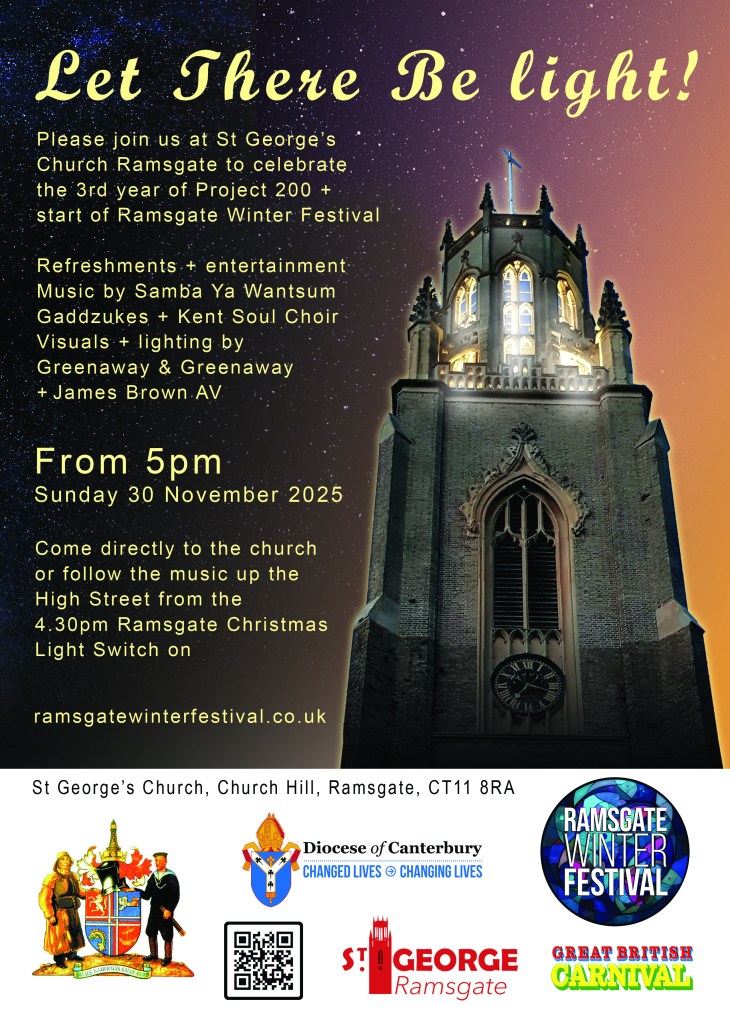
Let there be Light
This evening from 5pm atSt. George’s Church, there will be the Let therebe Light event. This is a free event with refreshments and entertainment (see fliers for more information). Last year we had over 500 attend. If you can offer to help steward then please let Paul know, and come to the briefing at St. George’s at 4pm.
Meal and Magic Evening, Saturday 6th December, 7:00pm
The Men’s group will be hosting this fantastic event at St. Luke’s Hall. It will include a hot meal, a quiz and magic from Colin Hoult. This is open to everyone: children go free, adults only £5. For more information or to buy a ticket see Bruce (07708 682464, bruce.stokes@btinternet.com ) or Peter Erlam.
Christmas Tree Festival
This will be running from 12th December at St. George’s. If anyone would like to decorate a Christmas Tree on behalf of St. Luke’s, then please let Paul know.
Christmas Baroque at St. George’s – 18th December, 7pm
The Baroque Collective warmly invites you to the fifth annual Christmas Baroque Concert at St George’s on 18 December at 7pm. Tickets: £13 in advance, £15 on the door; free admission for children under 16. Find out more and buy tickets.
Christmas Services at St. George’s
Carol Service – Sunday 21st December, 5:30pm (note earlier time than previous years)
This is a time for all our supporters in London and the South East to meet online, to share stories from this year and take part in a quiz (trivia). This will be an opportunity to meet our team and celebrate this year. Totally optional but we’d love to see you if you can make it! RSVP using this form.
Kent Celebration, Saturday 10th January 2026, 2-4pm, St. Christopher’s Newington
Please do bring your friends and family along to our celebration of Safe Families and Home for Good in Kent. There will be fun, food and friends – lots for both children and adults to enjoy and all free! Please do pop in, we would love to see you!
If you volunteer in anyway at church the national authorities are strongly encouraging you to take at least the Basic Module in safeguarding training once every three years.
If you have not completed the training in the last three years, then the module can be completed online and takes about ninety minutes. You can access the training by following this link. You will need to first register, to access the training. Once the training is completed, you will be sent a certificate. Please forward that certificate to James (office@churchramsgate.org), so that we can keep records of who has done the training.
Finally, let’s make sure we are ready for Christ’s return.
Check out our Christmas services below and those at our partner churches below that.
Carol Service (St. George’s)
Sunday 21st, 5:30-6:30pm
Join us in the beautiful setting of the town centre church, for carols and creating a crib scene.
Midnight Service (St. George’s)
Christmas Eve, 11:30pm-12:30am
Welcome in Christmas Day itself with this special Holy Communion.
Christmas Services at our linked churches:
Carol Services (Sailors’ Church, Harbour)
Friday 19th, 3:00-4:00pm and 5:00-6:00pm
Join us for Christmas at the beautiful Royal Harbour’s church. The services is repeated to ensure there is space for everyone.
Tree of Love Service (St. Luke’s, Hollicondane Road)
Saturday 20th, 6:30-7:30pm
Formerly known as the ‘Service of Remembrance’. In partnership with Pilgrims Hospices. A chance to remember and give thanks for the lives of loved ones whom we will be missing this Christmas.
Family Carol Service (St. Luke’s, Hollicondane Road)
Sunday 22nd, 11:00am-12:00pm
A carol service for all ages.
Crib Service (St. Luke’s, Hollicondane Road)
Christmas Eve, 4:00-5:00pm
An interactive retelling of the Christmas story for young children.
Traditional Carol Service (St. Luke’s, Hollicondane Road)
Christmas Eve, 6:30-7:30pm
9 lessons and carols by candle-light, not suitable for young children.
All Age Service and Communion (St. Luke’s, Hollicondane Road)
Christmas Day, 11:00am-12:00pm
An informal Christmas Day celebration for all ages.
“For the Lamb at the centre of the throne will be their shepherd; he will lead them to springs of living water.
And God will wipe away every tear from their eyes.” (Revelation 7:17)
He is also our shepherd. ‘Shepherd’ was a common image in the ancient world for kings. They led the people as a shepherd leads his flocks. In this verse, however, in imagery echoing Psalm 23, we are told that Jesus as our shepherd king will lead us to springs of living water. His rule brings us life, a life where God will wipe every tear from our eyes.
Why not recommit to making Jesus the king of your life, accepting his sacrifice for your sins and allowing him to lead you to eternal life?
What makes Reality TV so appealing to watch? There are probably many reasons, but I think one of them, is that we enjoy the ignorance on display. Whilst we as viewers are shown all the facts, the contestants on these shows are often portrayed as deeply ignorant.
This used to happen in the early stages of X-Factor. Contestants would claim to be amazing singers, but when we watched them perform, they were terrible. They were ignorant of their abilities.
Similarly, shows like the Apprentice, are often edited to highlight someone claiming to be for example a great salesperson and then to show that they fail to make any sales at all.
The most successful recent TV show has been Traitors, where ignorance is almost the whole point of the show. Most of the contestants, ‘the Faithful’, have one task, to find the Traitors, the ones who have the power to ‘murder’ someone each night. But the faithful are ignorant of the identities of the Traitors. Despite this they often become convinced they know who one of the traitors is only to be shocked to discover that they were wrong.
People sometimes say that ignorance is bliss, but the reality is that ignorance is dangerous – not because people may laugh at you, although that is a danger, but because you may not realise you have a serious problem and you may not see your greatest opportunity.
Christ the King?
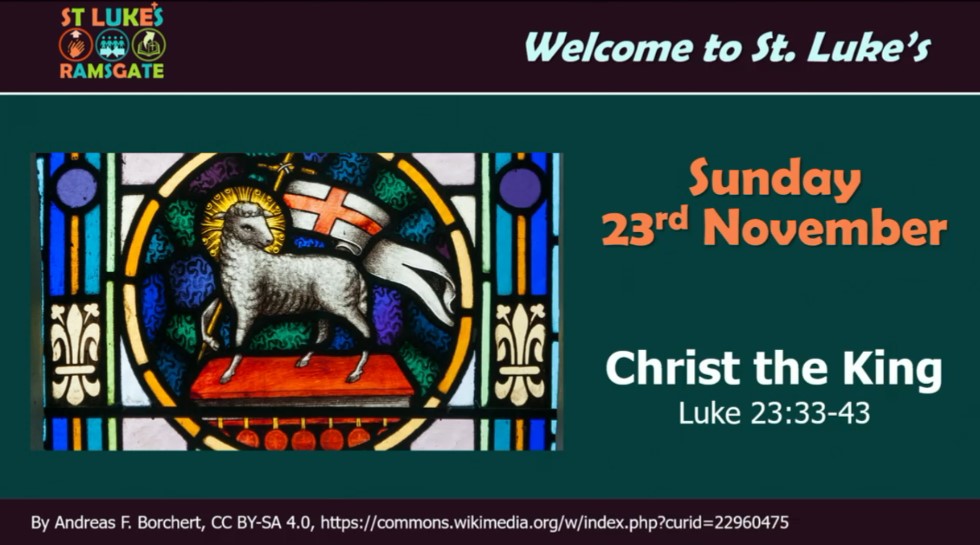
Our passage today is from Luke’s gospel. It is the set gospel reading for the Sunday before Advent, which is called, ‘Christ the King.’
When you think of kingship, normally we imagine, palaces, thrones, adoring cheering crowds and the various symbols of power and majesty. The scene in this passage is completely opposite to that. Jesus is being crucified alongside two criminals and is mocked by the crowds. The cross was designed not just as an instrument of torture or execution, but as a public display of humiliation. Jesus on the cross was as far away from the idea of kingship as you can imagine.
Yet, above his head a placard was placed, which read, simply: “Jesus King of the Jews.” As we read on, we know this statement to be true, but almost everyone else is ignorant of the fact.
Jesus’ Astounding First Words: “Forgive them…”
Jesus’ first words on the cross in Luke’s gospel are astounding:
“Father, forgive them, for they do not know what they are doing.” (Luke 23:34)
Forgiving people is never easy. When we are hurt, upset or abused we naturally want justice to be served, we lash out at our abusers, we want them to hurt as much as we do. Jesus was receiving the most brutal treatment imaginable, but rather than lashing out, he prays for their forgiveness.
But Jesus is doing what he has taught others to do. He said to his disciples:
“But I tell you who hear me: Love your enemies, do good to those who hate you, bless those who curse you, pray for those who ill-treat you.” (Luke 6:27-28)
Forgiving others is not an easy thing to do, yet occasionally we hear of Christians saying that they forgive people who have done them incredible harm. The most recent example of this was Erika Kirk, who announced at the thanksgiving service for her assassinated husband, Charlie Kirk, that she forgave his killer.
How can we forgive people as Christians? The answer is to look again at the cross, not just to the example Jesus shows here by forgiving those who had put him on the cross, but the fact that Jesus was willing to go to the cross so that we could be forgiven. If Jesus paid such a price for our forgiveness, then how can we not pay the lesser price of forgiving others?
Jesus gives another reason why the people who put him on the cross should be forgiven – their ignorance. ‘They did not know what they were doing.’ It was an ignorance expressed through the mockery of Jesus.
Ignorant Mocking:
Luke describes three groups that mock Jesus: the Jewish Leaders, the Roman soldiers and the criminal on the cross beside him.
Ignorant by motive:
The mockery came from a place of ignorance. None of them truly understood who Jesus really was or why he had come. But ignorance is no real defence. Often, we are happy to stay ignorant of the facts, when it helps us achieve our goals. This seems to be true at the cross.
The Jewish Leaders had been publicly criticised by Jesus for their corrupt practices. One way to deal with critics is to mock them. Sadly, we see that tactic used increasingly commonly in our political debate today. Their attitude is that it is better to be ignorant than to allow truth to stop their mockery.
The Roman soldiers mocked Jesus on three separate occasions. For them to mock the King of the Jews was a way to bully the Jews as a whole. It was an expression of racist bullying, that allowed them to feel superior as the conquering Romans. They did not want truth to get in the way of racist bullying – better to remain ignorant.
The criminal was probably just following the crowd. It’s much easier to accept the ignorance of the prevailing view around you rather than risk questioning it and standing out. Ignorance was the easy route to take.
Ignorant of Christ’s role
They had different motivations, but the nature of their ignorance was remarkably similar. They all assumed that God’s special chosen king, couldn’t suffer the humiliation of death on a cross.
All three groups basically say the same thing:
“If you are… the Messiah / the King of the Jews… Save Yourself!”
For them the successful crucifixion of Jesus is evidence that his claims to be the Messiah are unfounded. But this was to judge Jesus in human terms. It assumes that strength is the foundation of power. That death is the end of human ambition.
When Jesus first told his disciples that he was going to die, Simon Peter would not accept it. But Jesus’ response to Peter was strong: “Get behind me Satan! You do not have in mind the things of God, but of men.” (Mark 8:33) That same ignorance was now being expressed by Jesus’ enemies.
Ignorant of Salvation:
They were also ignorant of the power of God to save his anointed King. Psalm 22 is referenced in all the Gospel accounts of the cross. It is a Psalm of David, the archetypal King of Israel, who himself was persecuted by enemies, but saved by God before he eventually became king.
The Psalm particularly emphasises the mockery of those around him, a mockery that is strikingly similar to the mocking of Jesus at the cross.
“All who see me mock me; they hurl insults, shaking their heads: “He trusts in the LORD; let the LORD rescue him. Let him deliver him, since he delights in him.”” (Psalm 22:7-8)
The Psalm even includes details that although written by David 1000 years earlier, match what happened at the cross. In particular, it mentions Jesus clothes being divided up and lots being cast. The Psalm says:
“They divide my garments among them and cast lots for my clothing.” (Psalm 22:18)
So, the Psalm expresses the reality of God’s future king suffering in terrible ways, but it finished with confidence in God’s salvation.
“For he has not despised or disdained the suffering of the afflicted one; he has not hidden his face from him but has listened to his cry for help.” (Psalm 22:24)
It was this hope of salvation that all the mockers at the cross seemed ignorant of. But there was an exception.
Majestic Faith:
Somehow, the other criminal being crucified, sees through the ignorance of all around him in a way that brings him last minute salvation. Rather than ignorance he has a majestic faith. He recognizes what everyone else has missed.
He is Guilty
Firstly, he sees that he is in fact guilty. That should have been obvious, he was being crucified as a criminal after all. His guilt was writ large for everyone to see. Yet, he accepts not just that his punishment is justified, but also that he needs to give an account to God beyond death.
‘Don’t your fear God?’ he says to the other criminal.
We all naturally like to think of ourselves as being basically good people. Or at least not as bad as most. But comparing ourselves to others is to be ignorant of the judgement of God.
Accepting our guilt before God is the first step to overcoming ignorance.
Jesus is King
Secondly, though, this criminal sees the truth about Jesus. Not only does he see that Jesus is innocent and undeserving of crucifixion, but that he is going to come into a kingdom. He sees that Jesus is the Messiah, the Christ, the King.
The next step to being free of ignorance is to recognise the spiritual truth of who Jesus is. Only then are we ready to look to him for salvation.
God saves those who call on him!
Thirdly, this man understands as the Psalmist did, that God saves those who call on him. He understands that Jesus will be saved, he understands also that the only hope of his own salvation is to call out to Jesus.
That is the final step of being free from ignorance to see that Jesus is the way to salvation and crying out to him for help.
Jesus’ Amazing Last Word: “Paradise”
Which brings us to the end of our passage. Jesus’ last word in the passage is addressed to the criminal:
“Truly, I tell you, today you will be with me in Paradise.”
The word ‘Paradise’ comes from the Persian word for garden. In the ancient world, the gods were seen to live in beautiful gardens. The Greek version of the Old Testament uses the word, ‘Paradise’ for the ‘Garden of Eden.’ It was where God walked with Adam and Eve. For the Jews of Jesus time, ‘Paradise’ had come to be seen as the place where people went to be with God when they died, while they waited for the final resurrection.
For Jesus, to tell this man who had been condemned by the world to the most serious punishment imaginable, because of his crimes, that God would nonetheless welcome him to paradise was truly amazing grace.
This man after all, was on the point of death, he had done nothing in life to deserve a place in heaven, and he had no chance to mend his ways and repay God for his wrongdoing. No matter how bad you have been, no matter how late you have left it, you can still cry out to Jesus for mercy. But first you need to deal with your ignorance.
Deal with ignorance
Jesus said he was being crucified because of the ignorance of those who put him on the cross.
Peter in one of his first sermons said to the crowds in Jerusalem:
“Now, brothers and sisters, I know that you acted in ignorance, as did your leaders.” (Acts 3:17)
Later, Paul when challenging the Athenians about their worship of idols said,
“In the past God overlooked such ignorance, but now he commands all people everywhere to repent.” (Acts 17:30)
Ignorance is not bliss and it is no defence. The people who crucified Jesus were ignorant because it suited their agendas. They were ignorant of what God’s Messiah would come to do and they were ignorant of God’s power to save.
But the criminal on the cross who cried to Jesus for help, had a majestic faith. He recognised his guilt before God, the kingship of Jesus, and the possibility of salvation for those who call out to him. For him, faith had dispelled all ignorance.
So, have you dealt with your ignorance? If not, why not look afresh at the gospels of Jesus to see if Jesus is indeed, Christ the King.
And if you believe he is, then let us as a church work to help others deal with their ignorance so they can join us in Paradise.
Coming Up: Advent Sunday, Meal and Magic Evening, Christmas Tree Festival, Christmas Baroque, Christmas Services at St. George’s
From the Wider Church: ACTS Update Evening
Interesting Blogs: Pascal’s Wager, The Homeless Man who moved in
Weekly Calendar
Online Forms: Event application, Submit a notice, maintenance report, access Safeguarding training
Scroll on…
Opening Reflection
Those of us who have recently done the Bible Course, or indeed read through the Old Testament, will have noticed that there are a lot of kings in scripture. Most of them are rubbish. They lead people away from God and are often oppressive and unjust. Even the best ones are murderous. Sadly, it is not difficult to think of world leaders today who are not much better.
This coming Sunday is called, ‘Christ the King’. So, what kind of king is Jesus? The verse above from Revelation beautifully encapsulates an answer to this question. In a wonderful play on imagery, it describes Jesus as both “lamb” and “shepherd”.
Jesus is “the lamb at the centre of the throne”. He is our ruler, but also the sacrificial victim, who died on the cross “to take away the sins of the world” (cf. John 1:36). Jesus does not rule for himself, but gave up everything for his subjects. He is the ultimate servant king, the true king of love, who has our interests close to his heart.
He is also our shepherd. ‘Shepherd’ was a common image in the ancient world for kings. They led the people as a shepherd leads his flocks. In this verse, however, in imagery echoing Psalm 23, we are told that Jesus as our shepherd king will lead us to springs of living water. His rule brings us life, a life where God will wipe every tear from our eyes.
Why not recommit to making Jesus the king of your life, accepting his sacrifice for your sins and allowing him to lead you to eternal life?
Paul Worledge
Key Notices:
Carol Singing at Care Homes
We are planning to go into a couple of local care homes to sing some Christmas Carols for the residents. If you can join us for these events, then please let Paul know:
Keele House, 2:30pm on Wednesday 10th December
Ramsgate Care Centre, 2:30pm on Monday 15th December
Coming Up:
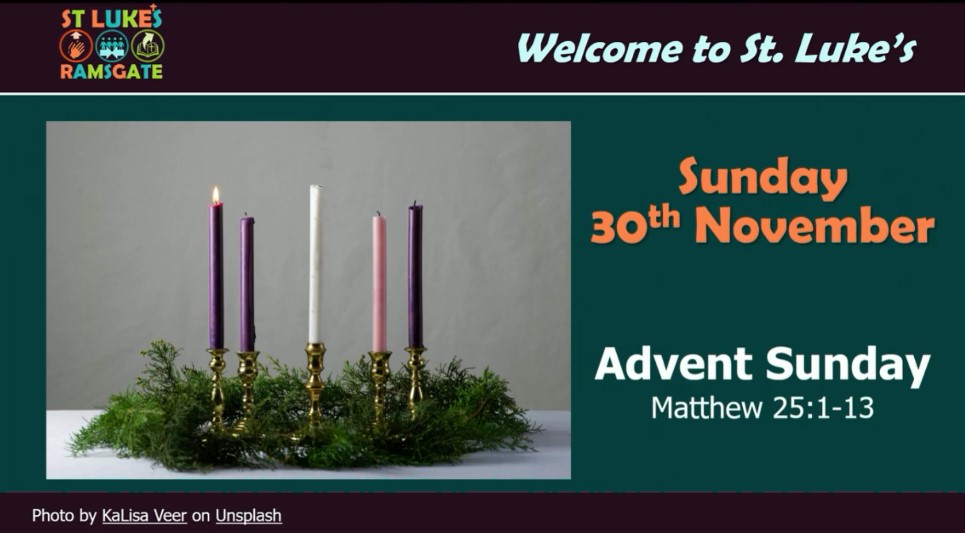
Advent Sunday – 30th November
There will be a joint service for St. Luke’s and St. George’s at St. Luke’s Churchat 11am on Advent Sunday, 30th November.
In the evening from 5pm atSt. George’s Church, there will be Let therebe Light event after the 4:30pm Ramsgate Light switch on. This is a free event with refreshments and entertainment (see fliers for more information). Last year we had over 500 attend. If you can offer to help steward then please let Paul know.
Meal and Magic Evening, Saturday 6th December, 7:00pm
The Men’s group will be hosting this fantastic event at St. Luke’s Hall. It will include a hot meal, a quiz and magic from Colin Hoult. This is open to everyone: children go free, adults only £5. See Bruce for more information, 07708 682464, bruce.stokes@btinternet.com .
Christmas Tree Festival
This will be running from 12th December at St. George’s. If anyone would like to decorate a Christmas Tree on behalf of St. Luke’s, then please let Paul know.
Christmas Baroque at St. George’s – 18th December, 7pm
The Baroque Collective warmly invites you to the fifth annual Christmas Baroque Concert at St George’s on 18 December at 7pm. Tickets: £13 in advance, £15 on the door; free admission for children under 16. Find out more and buy tickets.
Christmas Services at St. George’s
Carol Service – Sunday 21st December, 5:30pm (note earlier time than previous years)
Midnight Service – Christmas Eve, 24th, 11:30pm
From the Wider Church:
ACTS update evening
Join Active Christianity in Thanet Schools for their latest update evening on Monday 24th November, 7pm at St. Philip’s, Palm Bay.
Interesting Blogs to Share:
Pascal’s Wager
Have you ever come across ‘Pascal’s Wager’? It is the argument by 17th century French mathematician and philosopher, that in view of all possible outcomes, you are best off betting on believing in God. The following video was recommended by someone on the Christianity Explored Course. Watch video (26 minutes).
The Homeless Man who moved in
Some of you may have heard of Rob Parsons, from Care for the Family, who has written a number of Christmas books. This article from the Metro is about what happened when he and his wife let a homeless man stay in their home. Read more…
What’s On – a page which lets you know what is happening this week and gives information about upcoming events.
Notices – You can read the latest notices on this page.
Sermons – Read a transcript of a recent sermon or watch the YouTube version recorded at St. Luke’s. You can also listen to the sermon through the podcast website castbox.
Safeguarding Training
If you volunteer in anyway at church the national authorities are strongly encouraging you to take at least the Basic Module in safeguarding training once every three years.
If you have not completed the training in the last three years, then the module can be completed online and takes about ninety minutes. You can access the training by following this link. You will need to first register, to access the training. Once the training is completed, you will be sent a certificate. Please forward that certificate to James (office@churchramsgate.org), so that we can keep records of who has done the training.
“And as for you, brothers and sisters, never tire of doing what is good.” 2 Thessalonians 3:13
Are you tired of doing good? There are all kinds of reasons why people might answer, ‘Yes’ to that question. Continuing our short series of talks on 2 Thessalonians
What do you think the future looks like? With all the advances in Artificial Intelligence, one vision of the future is that we will no longer need to work. Everything will be done by computers and robots. We can laze around on the couch with our robot servants cleaning our house, caring for our sick and farming our food.
Is this a vision of a perfect world?
Perhaps not. Do we really want artificial intelligence and robots to take away our jobs? Don’t we need work? Isn’t there something right about us earning a living? Work can feel like a bind, but surely there is something important about having a job?
Work Matters – What does the Bible say?
The Bible has a lot to say about work. Let’s do a quick whistlestop tour:
Creation: Work is part of God’s Creation
In the Creation narrative, we are told first of all that God himself works and rests from work:
Genesis 2:3 – God works, God rests
“And God blessed the seventh day and made it holy, because on it he rested from all the work of creating that he had done.” (Genesis 2:3)
So, it is no surprise that human beings made in the image of God, are made to work as part of God’s good creation.
Genesis 2:15 – Work is part of God’s good creation.
“The LORD God took the man and put him in the Garden of Eden to work it and take care of it.”
Gospels: Service is the highest calling:
Jesus also puts good work or service to others as one of the highest values for Christians, using himself as an example:
“Not so with you. Instead, whoever wants to become great among you must be your servant, and whoever wants to be first must be slave of all. For even the Son of Man did not come to be served, but to serve, and to give his life as a ransom for many.” (Mark 10:43-45)
Letters: Faith and Works
You might of course say, but aren’t we saved by faith not works. Our salvation comes when we trust in what Jesus has done for us on the cross.
We receive that freely, by grace.
Yes, but although we are not saved by works, we are saved to do good works.
Listen to what Paul says in Ephesians:
“For it is by grace you have been saved, through faith–and this not from yourselves, it is the gift of God– not by works, so that no-one can boast. For we are God’s workmanship, created in Christ Jesus to do good works, which God prepared in advance for us to do.” (Ephesians 2:8-10)
So, work and particularly service of others and good works are a key value for Christians as long as it is accompanied by rest.
But in our reading today, Paul is worried about those who are not working.
Paul’s Strong Intervention:
This was an issue in Paul’s first letter to the Thessalonians, but he only mentioned it briefly in one verse:
“And we urge you, brothers, warn those who are idle, encourage the timid, help the weak, be patient with everyone.” (1 Thes 5:14)
Now in his second letter, he uses 8 verses, but also, some very strong words to deal with the issue:
“In the name of the Lord Jesus, we command you…” (vs. 6)
To the idle… “We command and urge…” (vs. 12)
“If a man will not work, he shall not eat.” (vs. 10)
“We hear that some among you are idle. They are not busy; they are busybodies.” (vs. 11)
What’s going on?
There is clearly a significant problem, which has become worse and is not being dealt with. It involves a group in the church, who appear happy to be fed by the church, but are not willing to do any work. Worse than that, they are meddling in other people’s affairs that have nothing to do with them.
Why is this?
Many commentators link it with a misunderstanding of Jesus’ second coming. Perhaps these people believe there is no point in working if Jesus is about to return. I saw a film a little while ago, about the world when it had just been announced that an asteroid was going to destroy the world in only a couple of weeks. It explored how people might act to such news. Although, some tried to continue life as normal, many just gave up work altogether. What’s the point of working for next month’s pay packet when it will never arrive!
This would fit with Paul’s arguments earlier in the letter making it clear that the return of Jesus is not yet imminent.
However, I am not convinced this was what was making people be lazy. Why would they also be busybodies if they didn’t believe anyone’s business had much of a future?
Others have suggested it may be to do with the Greek culture of the Thessalonians and a kind of upper class Greek disdain for manual labour. This may have been a factor, but the issue seems to be particularly acute in the church.
Paul tells the church to distance themselves from those who are being idle. This suggests that he is concerned about the church’s reputation in the wider culture and does not want it associated with lazy busybodies, because that would destroy its reputation. This suggests that what is going on here is not a common issue in the surrounding culture, but something worse.
A better explanation would be that these people are taking advantage of the church’s natural generosity and kindness. They were freeloaders of the charity that was being provided.
As Christians we believe in a gospel of grace. That Jesus came to serve us by giving himself as an atoning sacrifice free of charge. In turn our highest calling is to serve others. In addition the Old Testament had constantly encouraged God’s people to look out the poor who had no family source of support: orphan’s, widows and migrants.
The early church took all this very seriously. In Acts we are told of the church in Jerusalem:
“There was not a needy person among them, for as many as owned lands or houses sold them and brought the proceeds of what was sold and put it at the apostles’ feet, and it was distributed to anyone as he had need.” (Acts 4:34-35)
In fact, Paul himself, later organised a collection from the wealthier churches in Greece to support the poorer Christians in Jerusalem.
The generous support for those in need was fundamental to the culture of the early church. But, as such it was in danger of attracting freeloaders. People who were capable of working for themselves, but found it easier just to sponge off the generosity of the church and then spend their extra time interfering in other people’s affairs.
That is why Paul says,
“If a man will not work, he shall not eat.” (vs. 10)
He is not saying, the church should not offer care and support to those members in need, but that it should not waste its support on those who are capable, but not willing to work.
What are the lessons for today?
Wise Politics
Our modern society has developed a very strong welfare state, which positively ensures support for everyone in society when they are incapable of supporting themselves, because of unemployment, age or ill-health.
Not everyone is able to work. My son, Jonah, was not able to work for 16 months, recently because he could not find a job, despite applying for several a day. Thankfully, he now has a job!
Fiona, my wife has not been able to work over the last couple of months, because of stress induced by an overly pressurised work place. Hopefully, this will only be temporary, but it has made us more aware of those whose health or mental health struggles stop them working.
Retirement is also a good reason to stop working. As we grow older we have less energy, and it is good to hand on jobs to younger people who need them. In Numbers the Levites were only meant to work in the Tabernacle up to the age of 50!
However, for those who are able to work, who are well enough, young enough and for whom there are jobs, it is right that incentives and support are put in place to encourage them into work. “If a man will not work, he shall not eat.” We too should be encouraging people who are out of work to find a job, and to be looking for governments that can create more good jobs in the economy.
Wise Charity
Secondly, although, in the context of a welfare state, the church is not often the main provider for those in need, in recent years churches have stepped into the gap with the provision of food banks and the like.
But, whilst some will just need this kind of emergency support, we do not want to be taken advantage of by freeloaders or encourage a culture of dependency where people just come to rely on our charity rather than helped to improve their own lives and move on. Some of course will not be in a position to move on, but for those who can be helped to fend for themselves, we need to do what we can to encourage that.
Helping people move on in life, is of course more of a challenge than just feeding them. But perhaps we need to be praying about how our efforts can be more about empowering people into self-support and even support of others, rather than just handing out food.
Of course, there is more to Cafe4All and Community Meal than just handing out food. It is also about building community and combatting loneliness, but are there opportunities here to develop ways of empowering people?
Wise Church
If you see yourself as a member of the church, then are you just coming along and receiving. Being fed spiritually and socially without serving in some way in return? If you are a regular member are you contributing regularly and significantly to pay for the running of the church?
That is really the question we are asking people to consider on our Generous Giving Sunday. The money we are asking for, as some have apparently misunderstood is not to go towards developing St. George’s, it is about the ongoing present ministry of St. Luke’s. That only happens because people generously support the work financially. If that money dries up, then there might not be any church at all in the centre of Ramsgate.
Of course there will be people who cannot contribute much, because of their stage of life or life situation and we want new people to be welcomed generously, rather than asking for money from them straight away.
It’s also not just about money but serving in different ways. A service on Sunday morning, relies on a number of people offering to serve others, whether it be welcoming, setting things up, providing refreshments, manning the audio-visual, taking part in the music or other up-front roles. And we can only meet in this building because of the hard work of a few who make sure everything is safe and maintained, and our finances are properly managed.
How can I respond?
In Thessalonians, Paul addresses both those who are idle and the wider church. The wider church are to discourage idleness and encourage good works. Whilst those who are idle are commanded to work for a living and mind their own business.
If you are someone already involved in helping out in church life, then think about how you might encourage others to be more involved and play their part. Can you share out a role you are already involved in? Do you need to gently challenge someone? Or perhaps just be pro-active in getting to know people, so that you are more aware of who might be able to help out and where they can help out?
If you are someone who is not contributing much to the life of the church yet, then why not try and find out how you can be involved? When volunteers are asked for, why not put your name forward? Give it a go.
And for all of us, whether we are already doing loads, or just thinking about getting stuck in, let’s remember Paul’s final words:
As we come to the end of Year 3 of Project 200, our 5 year regeneration scheme funded by Canterbury Diocese, we are pleased to be co-producing the Ramsgate Winter Festival in collaboration with GB Carnival and JH Events.
Festivities will kick off with ‘Let There Be Light’ from 5pm on the 30th November.
The 2025 festival opens at the Ramsgate Christmas Light switch on. Follow the music up the High Street with GB Carnival’s Samba band to St George’s church for a free event, open to all, with music, lightshows and refreshments.
Samba Ya Wantsum, Gaddzukes Ukulele band and Kent Soul Choir will all be performing on the night and the church will be illuminated by Greenaway and Greenaway video projections and lighting by James Brown AV. Refreshments including soup, hot drinks and mince pies will be provided for a festive celebration marking the beginning of the Christmas period.
Key notices: Dare to Pray, Planning for new Youth Club, Carol Singing at Care Homes
Coming Up: Advent Sunday, Meal and Magic Evening, Christmas Tree Festival, Christmas Baroque, Christmas Services at St. George’s
From the Wider Church: United Prayer, Thanet Winter Shelter
Interesting Blogs: Moving from casual to meaningful to spiritual conversations, Two Structures for Mission
Weekly Calendar
Online Forms: Event application, Submit a notice, maintenance report, access Safeguarding training
Scroll on…
Opening Reflection
Are you tired of doing good? There are all kinds of reasons why people might answer, ‘Yes’ to that question.
One reason may be that someone is too tired. Life can be exhausting, whether through overwork, emotional strain or ill health and at times that can leave us utterly shattered. At such points we just do not have the energy to do anything extra, whether a good deed or not. We should not feel guilty, but remember that we are not God and we need to leave what we cannot do to Him. After all, ‘God grants sleep to those he loves.’ (Psalm 127:2)
However, other reasons may not be so positive. Some may feel weary of doing good, because they have worked hard to do good in the past, but have been left feeling unrecognised or even put upon. Such feelings, can lead to anger and bitterness manifesting in a refusal to help anymore. If this is the case, then we need to rediscover God’s grace to us, and learn to share that grace with others.
Others, may be afraid of overcommitment if they offer to help out. Perhaps they have done so before, only to be left with too much to do and little support. There are no guarantees that this may not happen again, but rather than withdrawing altogether, we need to find courage to challenge the systems and attitudes that lead to such situations. Negatively, that can include questioning whether organisations are trying to do too much, whilst positively it may mean encouraging others to engage to spread the load.
Perhaps you can think of other reasons why people tire of doing good? Maybe there are other ways to help tackle these issues?
Paul Worledge
Key Notices:
Dare to Pray – This Saturday, 9:30-10:30am
With the need for more funds at St. Luke’s, exciting plans to develop our youth work and move forward with the bigger Vision 2030, Christianity Explored running and Christmas coming up, there is lot that needs prayer! Come and join us for the key monthly prayer meeting. “Unless the Lord builds the house, the builders labour in vain!” (Psalm 127:1)
Planning for a new Youth Club
We are inviting families with Year 6 children or older to a lunch on Sunday 23rd November to discuss plans for a new youth club to start in January. If you are in this category or would like to offer to be a leader, then please let Tonya or Paul know that you are coming to the lunch asap.
Carol Singing at Care Homes
We are planning to go into a couple of local care homes to sing some Christmas Carols for the residents. If you can join us for these events, then please let Paul know:
Keele House, 2:30pm on Wednesday 10th December
Ramsgate Care Centre, 2:30pm on Monday 15th December
Coming Up:
Advent Sunday – 30th November
There will be a joint service for St. Luke’s and St. George’s at St. Luke’s Churchat 11am on Advent Sunday, 30th November.
In the evening from 5pm atSt. George’s Church, there will be Let therebe Light event after the 4:30pm Ramsgate Light switch on. This is a free event with refreshments and entertainment (see fliers for more information). Last year we had over 500 attend. If you can offer to help steward then please let Paul know.
Meal and Magic Evening, Saturday 6th December, 7:30pm
The Men’s group will be hosting this fantastic event at St. Luke’s Hall.
Christmas Tree Festival
This will be running from 12th December at St. George’s. If anyone would like to decorate a Christmas Tree on behalf of St. Luke’s, then please let Paul know.
Christmas Baroque at St. George’s – 18th December, 7pm
The Baroque Collective warmly invites you to the fifth annual Christmas Baroque Concert at St George’s on 18 December at 7pm. Tickets: £13 in advance, £15 on the door; free admission for children under 16. Find out more and buy tickets.
Christmas Services at St. George’s
Carol Service – Sunday 21st December, 5:30pm (note earlier time than previous years)
Midnight Service – Christmas Eve, 24th, 11:30pm
From the Wider Church:
United Prayer, This Sunday, 6:30pm, Birchington Baptist Church
Join Christians from all over Thanet for this united prayer meeting.
Thanet Winter Shelter
Some of you will remember that in 2016 the churches in Thanet under the leadership of Ramsgate Salvation Army provided a winter shelter for rough sleepers. This was eventually taken over by the council with government funding. However, there is now a need for the churches to step up again. On Monday 6th October, a winter shelter for rough sleepers at St. Laurence Church Hall was started. Numbers attending are small at present, but expected to grow. Volunteers are urgently needed. If you want to offer some kind of support please go to the Volunteer Portal to sign up: https://portal.thanetsheltersupport.org If you have trouble with the online portal, then you can ring Carl on 07900 49 73 26.
Interesting Blogs to Share:
Moving from Casual to Meaningful to Spiritual Conversations
This short article gives advice on how to build deeper relationships with people we know, that may then allow discussions on Spiritual topics. Lots of wise guidance and good questions to ask. Read more… (5 minutes)
Two structures needed for mission
This article explores the tension between organised and hierarchical structure and mission focussed structures. It shows how both have been important through church history to enable mission. Read more… (5 minutes)
Weekly Calendar
Sunday 16th November – Second Sunday before Advent
What’s On – a page which lets you know what is happening this week and gives information about upcoming events.
Notices – You can read the latest notices on this page.
Sermons – Read a transcript of a recent sermon or watch the YouTube version recorded at St. Luke’s. You can also listen to the sermon through the podcast website castbox.
Safeguarding Training
If you volunteer in anyway at church the national authorities are strongly encouraging you to take at least the Basic Module in safeguarding training once every three years.
If you have not completed the training in the last three years, then the module can be completed online and takes about ninety minutes. You can access the training by following this link. You will need to first register, to access the training. Once the training is completed, you will be sent a certificate. Please forward that certificate to James (office@churchramsgate.org), so that we can keep records of who has done the training.
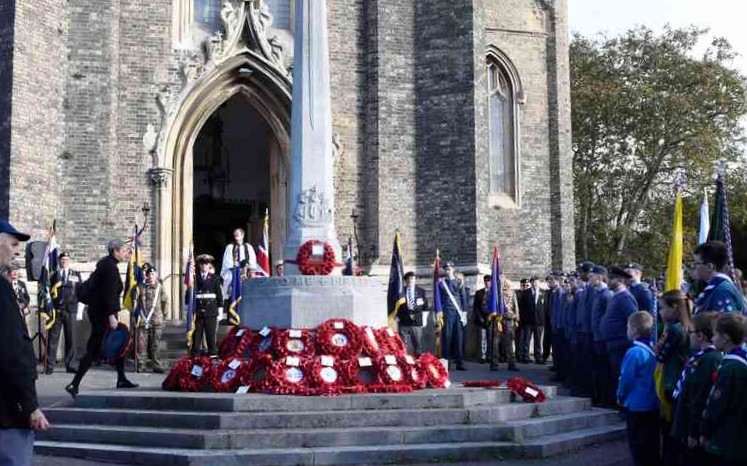
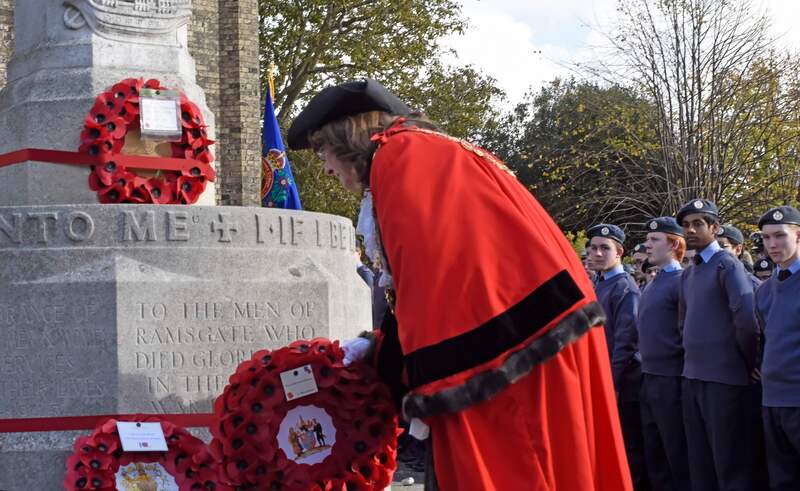
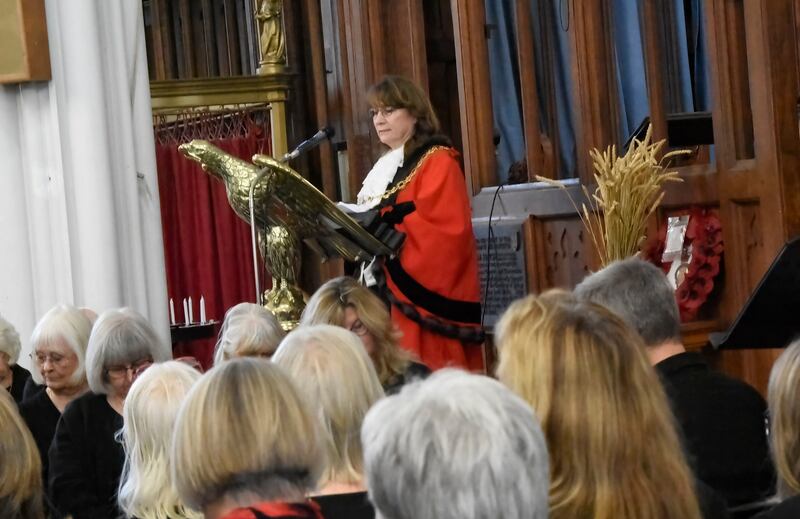
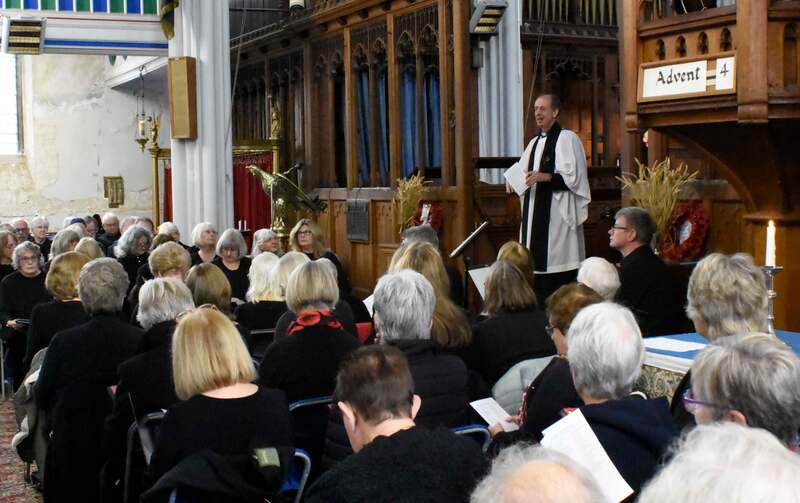
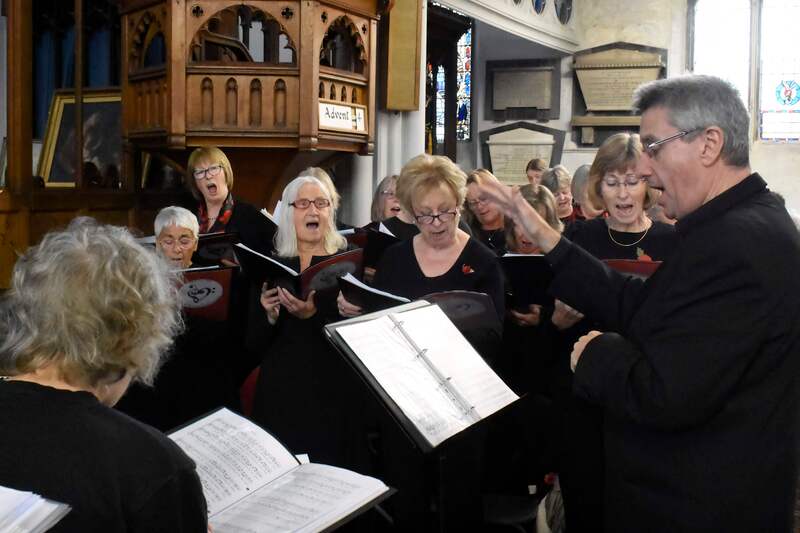
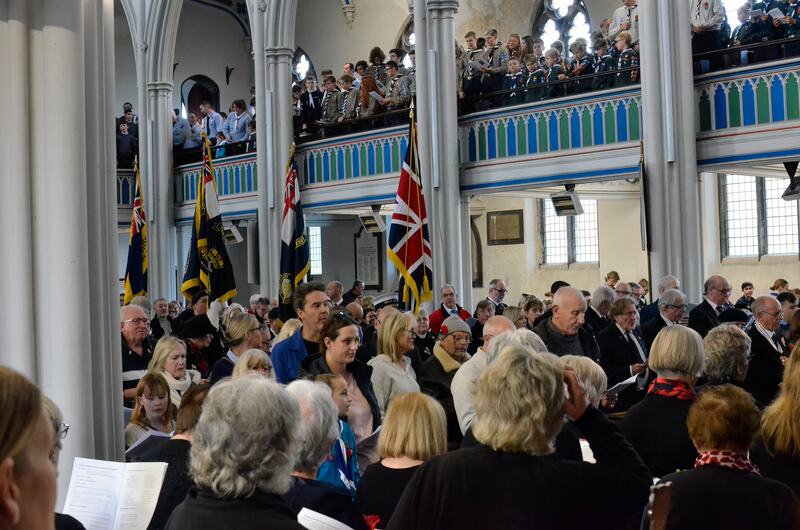
With thanks to Colin Lunt, Photographer, here are some photos from the Remembrance Day service and parade last Sunday.
A big Thank You to the Mayor’s office, Royal British Legion and the various military and uniformed organisations for their part in making the day so special. Thanks too, to the Thanet Big Sing Community Choir, for helping lift the service with their beautiful singing.
Job 19:25: ” I know that my Redeemer lives, and that in the end he will stand upon the earth.”
This Sunday is Remembrance Sunday, when we celebrate the courage and bravery of those who risked and gave their lives protecting our country and freedom. It is also a time to remember the horrors of war, which helps to encourage us to do all we can to avoid war breaking out in the future.
There are some things that are impossible to explain or to understand. On the afternoon of Sunday 19 March 1916, at the height of the First World War, bombs landed near the junction of St Luke’s Avenue and Dumpton Park Road, as part of an air raid. Five children who were on their way to Sunday school class at St Luke’s Church were killed: Ernest Philpott, aged 12, Herbert Gibbens, aged 9, Francis Hardwick, aged 7, Gladys Saxby, aged 6, and James Saxby, aged 4. The bombs also killed a 49 year old man driving his car down the road, Henry Divers, and mortally wounded a 23 year old woman, Gertrude Bishop. Several other children were injured in the attack. Funerals took place here at St Luke’s Church four days later. The building was packed to capacity, and crowds silently lined the streets from the church to the cemetery. There are some things which are impossible to explain or to understand. The preacher at the funeral simply said that ‘Creation never groaned and travailed in pain so much as it does today’.
The Bible readings we have heard this morning highlight two issues that are impossible to explain or understand, not just in terms of logic and philosophy, but also in terms of emotion and experience. Both of these issues are part and parcel of the story of the St Luke’s Avenue bombing. They are part and parcel of any thoughtful remembrance of war, and they continue to confront us today. The first issue, which is treated in the Old Testament book of Job, and which we will consider first, is the issue of the meaningless suffering of the innocent. The second issue, which is at stake in our reading from the apostle Paul’s second letter to the Thessalonians, and which I will speak about later, is the issue of purposeful, personal evil. We cannot explain or understand these issues, either from a philosophical or emotional point of view, and yet we are forced to live with them as realities of this world. These Bible readings certainly do not provide explanations for the existence of suffering or evil, but they do indicate how Christians may live in a world in which they exist, which is the only world we have ever known thus far.
So first of all, let us turn back to the book of Job, chapter 19, verses 23 to 27, to consider this problem of the meaningless suffering of the innocent. It’s worth noting at the outset that we are reading from the middle of the book of Job, in which the words of Job and his companions are set out at length. When we think of the book of Job, we often think of the narrative prologue of the first two chapters, and the epilogue of the last chapter, and just the events that are recorded in those chapters. However, the guts of the book is not in the prologue or epilogue, but really it is in the back-and-forth of the arguments between Job and his companions, a conversation in which “they cannot all be right, but neither [are any of them completely and totally] wrong”.1 Finally, the guts of the book is in the intervention of God and the response of Job recorded in the penultimate chapters. The book of Job has been described as ‘a pure marvel of truth and authenticity from beginning to end’,2 but relatively few people have had the patience to read it from the beginning right through to the end. Yet it is in the middle of the book that we engage with the issue of innocent suffering at the deepest level.
If we only had the prologue to go by, we might be tempted to resolve the issue of innocent suffering by simply attributing it to the action of the devil and evil spirits, inspired perhaps by the story of the permission given by God for the sincerity of Job’s faith to be tested by Satan. But by no means would this be a complete or satisfactory explanation for the problem of suffering. Try telling the parents of the children killed in St Luke’s Avenue that their tragedy, while in itself evil, must have been permitted by God as a test of faith. Such a suggestion would be callous as well as mistaken. It is noteworthy that such an explanation is never offered to Job himself. From the beginning to the end of the book that bears his name, he remains altogether unaware of, and uninformed about, events in the courts of heaven, and he cannot look for answers there.
If we only had the monologues of Job’s three companions Eliphaz, Bildad, and Zophar, to go by, we might try to find a way to account for his suffering in terms of his previous choices, harbouring the suspicion that Job must have done something wrong to deserve all the misfortune that befell him.
Or, if we only had the monologues of Elihu to go by, who appears as a newcomer to the conversation in chapter 32, we might favour an explanation of suffering that asserts that what weregard as suffering, might in fact be an essential building block of some greater good of which we are ignorant because of the limitations of our human knowledge. But these explanations are likewise unsatisfactory. Imagine the bereaved parents of St Luke’s Avenue being told that their children must have somehow been at fault, or that what happened was somehow for the greater good! Mercifully, they weren’t told that. Instead, the preacher at the funeral simply said that ‘Creation never groaned in pain so much as it does today’. To his credit, he did not propose any explanation for the dark shadow that enveloped Ramsgate on that day.
Neither did Job propose an explanation for his own suffering in chapter 19, verses 23 to 27. Instead, he made three statements: one about his words, one about his Redeemer, and one about his own self.
In verses 23 and 24, Job says: “Oh, that my words were recorded, that they were written on a scroll, that they were inscribed with an iron tool on lead, or engraved in rock forever!” This is a deeply poignant statement, in light of the fact that we are reading it now, thousands of years later, as part of a collection of books that orthodox Christians as well as Jews regard as a sacred vehicle of communication from God himself. The wish expressed in these verses has come true: Job’s words have indeed stood the test of time.
Then verse 25, Job says: “I know that my Redeemer lives, and that in the end he will stand upon the earth”. A lot of ink has been split by biblical scholars on the precise meaning of the word translated here as ‘Redeemer’, or as ‘Defender’ in the footnotes. Was Job actually describing a prophetic vision of the risen Jesus Christ standing at the apex of human history? Or did Job’s words simply help form the background for the New Testament concept of redemption and forgiveness of sins through the cross of Christ? Either way, it is clear that Job is looking forward to a vindication to be brought about by God at the end of time.
This idea continues in Job’s third statement in verses 26 and 27, one about himself: “After my skin has been destroyed, yet in my flesh I will see God; I myself will see him with my own eyes”. When put alongside ‘I know that my Redeemer lives, and that in the end he will stand upon the earth’, these words form a prelude to the Christian doctrine of the resurrection of the body, and the idea that Christ’s resurrection is the guarantee of ours.
A final vindication, in fact a final resurrection, does not serve in any way as an explanation for the meaningless suffering of the innocent, but it does function as a meaningful response to it. It does do something to offer comfort and hope, and to lessen doubt – if not anguish – in the face of that suffering. Of all the characters in the Old Testament, Job is of course the absolute icon of meaningless, innocent suffering. And the pinnacle of meaningless suffering was reached in the New Testament by Jesus Christ himself, who went not up to joy but first he suffered pain, who entered not into glory before he was crucified, and whose suffering was vicarious. He suffered, the Bible tells us, in our place.
Have you ever thought about the difference it makes that Jesus was scourged, mocked, shamed, and brutally tortured by crucifixion before he died? It makes a difference, I think, to anyone who has had to face situations themselves, or helplessly stand by and watch situations involving others, of senseless cruelty, unnecessary pain, suffering, humiliation or degradation. At the foot of the cross, we learn that suffering is not a problem to be solved, but actually it is an aspect of God’s very being, and it is his means of identifying with and redeeming or defending the human race. God is love, and love always involves suffering. We may pray that fellowship in Christ’s suffering made a difference in 1916 to the parents of the children of St Luke’s Avenue. We may pray that it has made a difference to all who have been exposed to the horrors of the wars that we remember today, whether soldiers or civilians, combatants or bystanders. We may pray that the fellowship of Christ’s suffering makes a difference to us in the face of suffering in whatever form it comes across our path, and across the paths of those who know and love.
So the issue at stake in our first reading was that of innocent suffering, and albeit that there can be no satisfactory explanation of it, there is a meaningful response to it in the vicarious suffering of Christ.
The presenting issue is the second letter to the Thessalonians is, as I have said, the issue of purposeful, personal evil. Like the suffering of the innocents, this evil is impossible to explain or understand. It is a dark mystery why despots and tyrants should ever have been permitted by the Lord to prosper, given that we know the Lord to be entirely loving, and all-powerful. At the same time, it is undeniable that tyrants and despots stalk the pages of the Bible from beginning to end. Absolute power corrupts absolutely. From Exodus, we know that Pharaoh decreed the murder of all male Hebrew infants. From Matthew, we know that Herod ordered the slaughter of all boys in Bethlehem aged two and under. These are horrors, but no kind of surprise. This is just how tyrants roll. From the Bible, we learn of the cruelty of the Babylonians, the Assyrians, and the Romans. And from history, we learn of cruelty in every age. What we learn is that this cruelty is purposeful, and it is personal. Behind the attack on St Luke’s Avenue in 1916, stood a deadly military-industrial complex involving thousands of identifiable human agents, and with one man at its apex. This was no natural disaster, it was the result of careful and malicious human planning. The First World War was one of the first of many twentieth-century conflicts in which civilian populations were deliberately and routinely targeted, something which had previously been commonly recognised to be contrary to all the conventions of warfare.
In the hundred years since, it has proved impossible to put that genie back in the bottle. Like it or not, as the result of deliberate human choices, innocent civilians are now fair game in any total war. And in the century or so since the end of the so-called ‘War to end all Wars’, there have been and there continue to be a dizzying number of total wars and genocides. Likewise, over the last century there has been, and there continues to be, a lengthy procession of dictators and demagogues standing behind these ferocious wars and genocides. I don’t have time to name them, and I don’t think I need to name them. A moment’s thought is all that is required for half a dozen names to spring to mind. Think a little longer, and we would be able to come up with even more names. They all stand in a ghastly line of succession that started with Pharaoh and Herod.
As terrifying as the thought of this unending procession of dictators and demagogues is, none of it should actually surprise us. The Lord himself told his disciples: “When you hear of wars and rumours of wars, do not be alarmed. Such things must happen, but the end is yet to come. Nation will rise against nation, and kingdom against kingdom. … Brother will betray brother to death, and a father his child. Children will rebel against their parents and have them put to death. … When you see ‘the abomination that causes desolation’ standing where it does not belong, then let those who are in Judea flee to the mountains … At that time if anyone says to you, ‘Look here is the Christ!’, or ‘Look, there he is!’, do not believe it. For false Christs and false prophets will appear and perform sign and miracles to deceive the elect – if that were possible.” (Mark 13:7-8, 12,14, 21-22). Likewise, John warned his readers: “as you have heard that the antichrist is coming, even now many antichrists have come” (1 John 2:18).
“Throughout history, [many] have been [found willing to do] Satan’s evil work”, and “from time to time we must expect that outstandingly evil men will appear”.3 The apostle Paul’s concern in 2 Thessalonians chapter 2, “however, is not with them, but with the most infamous of all, who will appear in the last days”.4 Until that time, we live in an era in which “the secret power of lawlessness is already at work” – not only in the existence of suffering in the world, but actually in purposeful, personal evil – but in our own time the Lord restrains that power of lawlessness within certain bounds, according to Paul (cf. 2 Thessalonians 2:7). The Lord holds lawlessness back, so that even when things are at their very worst, they are never quite as bad as they could imaginably be.
Paul assures the Thessalonians that the day of the Lord had not yet come, and likewise we can be assured that it has not yet come. All the wars and all the warmongers, all the terrorism and all the terrorists, are signs not that it has come, but that it will come one day. Why things should be this way, we cannot say. We cannot fully explain or understand this purposeful, personal evil. The fact that things actually are this way is, however, undeniable, and what we may yearn for and expect from the Lord, more than a philosophically satisfying explanation, is a response. The Lord’s response is to restrain evil within certain bounds for the time being, and later, when the time is right, his response will be in his coming, and in us being gathered to him. At that time, the Lord will overthrow the lawless one with the breath of his mouth and destroy him by the splendour of his coming, according to 2 Thessalonians chapter 2, verse 8. In other words, just him turning up, and blowing a single puff of air from his lungs, will be sufficient for him to overcome his greatest opponent. No wonder the worst tyrant in all of history is described in verse 3 as already “doomed to destruction”.
If we ask the question, ‘how did God obtain this power over evil?’, the answer lies in the fact that we are talking in verses 1 and 8, not about just any generic God, but about the Lord Jesus Christ, who, in rising from the grave, conquered death, which is the last and greatest enemy of humankind.
The issue at stake in this second reading is that of purposeful, personal, fearful evil, for whose existence there can be no satisfactory explanation, but to which there is a meaningful response in the resurrection power of Christ, and in the assurance of his return to set right all that is wrong with the world as we know it. In 1916, the children and adults of Ramsgate were in head-on confrontation with that evil. Today we remember that creation never groaned in pain more than it did at that time. The knowledge of the power of Christ, the literally death-defying resurrection power of Christ, made a difference to all those who gathered in this building one hundred and nine years ago. In hot and cold wars since there have been a series of face-to-face encounters with that evil. We may pray that the knowledge of the power of Christ made a difference to all those, soldiers or civilians, combatants or non-combatants, whose task it was to make a stand against that evil. And purposeful, personal evil still crouches near today, ready to strike us or our loved ones at a time when we are least prepared for it.
Suffering and evil cannot be explained or understood. Yet we have already noted that the issue of innocent suffering could nevertheless be met by and absorbed within the loving, sympathetic suffering of Christ. And when the problem we face is actually the mystery of iniquity, it is given us to know not only the fellowship of sharing in Christ’s sufferings, becoming like him in his death, but also the power of his resurrection, so as to ourselves attain to the resurrection of the dead (cf. Philippians 3:10). And this makes all the difference in the world to us. This is the true comfort and glorious hope of the gospel for the children of God, in the face of all war, hardship, ill-fortune, trouble, loss, and danger.
1 David Ford, Christian Wisdom: Desiring God and the Book of Job, Kindle loc. 1993.










 St. George's Church Ramsgate
