This week at YI, our group for the young people of St. George’s and St. Luke’s, we are continuing using Rebecca McLaughlin’s book and exploring why Christians believe the bible is true and why this is important.
Supper this week is pizza, salad and chips.
Then at 6:30 our doors remain open for anyone who this week fancies sharpening their table tennis skills.
We’d be delighted to welcome any young people from Year 6 to 13.
Our first MOPP on Monday 27th February was a great event, with over 30 people from St. Luke’s and St. George’s meeting together for a meal to listen to the options for small groups this term and to join together in praising God and praying for our work.
If you would like to try out a study group this term, then please use the form below and we will be in touch with more details.
The options for study groups this term are:
The Lord’s Prayer (Monday evenings). Using study sheets to follow up from the sermon series in church.
Practice the Way: Prayer (Wednesday afternoons). A 4 week course, which explores and encourages a deeper prayer life.
The Life of Peter (Wed evenings). A different type of study looking at the Apostle Peter and different incidents in his life.
Also, if you are interested in looking at the basics of faith, perhaps because they are interested in being baptised or confirmed or have lots of questions to ask, then we may also be able to offer a Christianity Explored course.
Express Interest
Please let us know which group you are interested in attending and give us your contact details and we will be in touch.
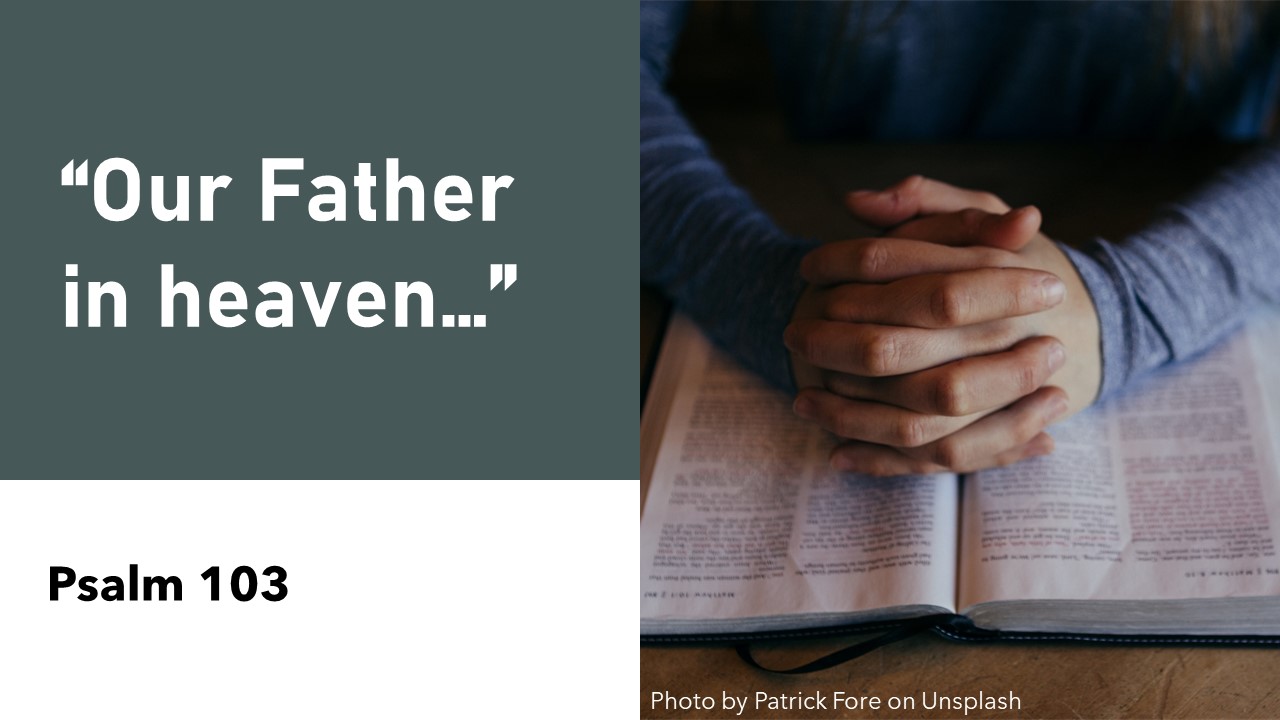
The key thing to understand when we pray, is who it is we are praying to. Jesus helps us with this in the Lord’s Prayer by starting with a reminder of who we are praying to… “Our Father in heaven…”
Sermon as preached at St. Luke’s on 26th February 2023
How you speak depends on the question: Who am I speaking to?
The way you speak depends on who you are speaking to.
If you are speaking to a child, then you will tend to speak more softly and in much simpler language, than if you were speaking to a group of students at a university, when you would speak boldly and with probably lots of technical words to do with your subject.
If you are talking to someone who is deaf, then you will need to speak up or possibly use sign language or write down words.
If you are speaking in court, then you would have to address the judge with the correct deference, and address them, as, ‘My Lord or Lady.’
What you talk about may well also be effected by who you are speaking to. I often use jokes in wedding talks, but it would be inappropriate to start a funeral talk with a joke!
In all kinds of ways, the way we talk and what we talk about are determined by who it is we are talking to.
Prayer: Who are you speaking to?
This week we start a series in Lent on the topic of prayer and specifically the Lord’s prayer. Each Sunday we will be taking a line or two from the Lord’s prayer and thinking about what it teaches us about prayer.
Today we start with the opening line: “Our Father in heaven…” As the start of the prayer it may be something you have not really thought about. It is not a part of the prayer asking for anything. However, it is arguably the most important part of the prayer, because it reminds us who we are talking to when we pray and tells us something about what he is like.
Very simply prayer is talking to God. That’s basic. But how we pray, whether we pray and what we pray will be profoundly influenced by who we think it is we are praying to. If our vision of God is too small or if God seems too distant and uninterested in us, then we will probably not bother to pray or it might become a bland routine or ritual. But, the more we come to believe and understand how big and mighty God is and how profoundly interested he is in us, then the more our prayer life will come alive and gain meaning and relevance.
In other words, the secret to prayer is not being able to use clever or flowery language, or make our prayers sound poetic or find particular ways of sitting as we pray. The secret to prayer is to realise who it is we are speaking to.
And so Jesus says, when you pray start with: ‘Our Father in heaven.’ In other words remember who it is you are praying to!
So, let’s take those words two key words, about God, ‘Father’ and ‘in heaven’ and think more deeply about who it is we are praying to and how that helps our prayer. Helpfully, both of those words are found in Psalm 103, a Psalm that is about not forgetting who God is or what his benefits are!
…In Heaven – Is your God too small?
We’ll start with the second word: ‘Heaven.’ God is in heaven. He is not limited like anyone on earth, he is in heaven. He is the creator of the universe, he is not part of the universe or restricted to the universe. When you think of God in heaven, ask yourself is your vision of the God you pray to, too small?
There’s two things about God we can say in relation to the fact he is in heaven.
The Powerful One
First, he is the The Powerful One. Look at verse 20 it says,
“Praise the LORD, you his angels,
you mighty ones who do his bidding, who obey his word.”
(Psalm 103:20)
Angels in the Bible are mighty miracle working beings. But powerful as they are, they are there to do God’s bidding. Nothing is impossible for our God.
If nothing is impossible for God and God is the one we speak to in prayer, then the possibilities of prayer are limitless.
Jesus wanted to make this point to his disciples.
“He replied, “Because you have so little faith. I tell you the truth, if you have faith as small as a mustard seed, you can say to this mountain,`Move from here to there’ and it will move. Nothing will be impossible for you.”” (Matthew 17:20)
The point Jesus is trying to make is this. Prayer is not about the size of our faith. It is about who we pray to. Our faith may be tiny, but because we pray to the God for whom nothing is impossible, our prayers can achieve anything.
If you have a button, that is attached to an enormous bomb under a mountain, then even if you are so weak that you can hardly move, you can still press the button and the mountain will explode.
The more you understand the power of the God you are praying to, then the more you can understand what can be achieved through prayer.
I remember as a teacher one of the loveliest students I had fell out of a tree and was left in a coma. I remember going to the park that summer evening and praying to God for the student, hardly believing that God could do anything. The next day the boy was back in school right as rain! My faith was weak, but God is the God of the impossible!
The Ruling One
The God in heaven is the powerful one, but he is also the ruling one.
It says in verse 19:
“The LORD has established his throne in heaven,
and his kingdom rules over all.” (Psalm 103:19)
When we pray to God, we need to understand that he is the one who is in charge, and he is the one who deserves to be in charge. He is our boss, and so we should be more concerned for his priorities, rather than him being concerned for ours.
God is not like a genie, ready to give us whatever we want when we rub the magic lamp. We are his servants, not the other way around.
So, the Lord’s Prayer begins with God’s priorities, not our priorities: “Hallowed be your name, your kingdom come, your will be done, on earth as it is in heaven.”
When we pray and God does not give us what we ask for, we can be tempted to believe that it is because God is not able to do it. That we were just asking for something too big.
There are some things that are within God’s power, but not within his will. Sometimes this is obvious. After all if you try praying for a literal mountain to move, it probably will not happen, because it is unlikely to be in God’s will!
Sometimes, it is not obvious why it is God’s will. We may never understand why some people we pray for are never healed, when some others are. Yet, we trust that God knows best.
God is in charge not us. That’s not always easy, but it is certainly for the best and we need to remember who it is we are praying to.
… Our Father – Is your God too distant?
It may be, though, that when God does not give us what we want that we are tempted to believe that he does not care, that he is not interested in us, that he is distant. This is where the second word, ‘Father’ is so important.
The God we are praying to is ‘our Father.’ Not a distant uncaring father, but a perfect father, who loves us more than we can imagine. What does this mean?
The Compassionate One
Firstly, it means that he is the Compassionate One. It says this clearly in verse 13 of our Psalm:
“As a father has compassion on his children, so the LORD has compassion on those who fear him;” (Psalm 103:13)
Jesus himself, illustrated this when he came to earth. Jesus was God come to be with us. That in itself, shows that God is not distant. But Jesus did not just come to live as a man, he came and helped and supported the most needy and desperate in society. This powerfully shows us the compassion of God.
When needy, ill people came to Jesus looking for healing, he never said, ‘No.’ Take the example of the man with leprosy in Mark 1:
“A man with leprosy came to him and begged him on his knees, “If you are willing, you can make me clean.”
The man understood the power of God at work in Jesus. What he was not sure of, as someone who people kept their distance from was whether God in Jesus would keep his distance from him, whether God cared for him. He soon found out the answer:
Filled with compassion, Jesus reached out his hand and touched the man. “I am willing,” he said. “Be clean!” (Mark 1:40-41)
Jesus showed by touching him, that God is not distant. In compassion, Jesus brought him healing, he met the man’s need.
Even in the Old Testament, compassion is seen as a fundamental characteristic of God. When God agrees to appear to Moses, he declares about himself:
“And he passed in front of Moses, proclaiming, “The LORD, the LORD, the compassionate and gracious God, slow to anger, abounding in love and faithfulness,” (Exo. 34:6, cf. Psalm 103:8)
It’s a statement about God echoed in verse 8 of the Psalm.
So, when we pray we need to know we are praying to someone who cares about our basic needs and concerns. That is reflected in the Lord’s prayer by the line: “Give us today, our daily bread.”
No need is too big or too small. God cares about every one of them. We can bring them to him. That’s what it means to pray to God as our Father.
The Forgiving One
The second thing that the Psalm emphasises about the God we pray to is that he is the forgiving one.
It says in Psalm 103:3: “who forgives all your sins…”, then it expands on this in a big way.
“The LORD is compassionate and gracious, slow to anger, abounding in love. He will not always accuse, nor will he harbour his anger for ever; he does not treat us as our sins deserve or repay us according to our iniquities. For as high as the heavens are above the earth, so great is his love for those who fear him; as far as the east is from the west, so far has he removed our transgressions from us.” (Psalm 103:8-12)
In one of the Parables Jesus tells, he illustrated God as a Father of two sons. One of the sons, takes all his money and runs off to waste it with wild partying. His life becomes a mess. But eventually, he decides to return to his father in the hope that he might be able to come one of his servants.
As he comes back towards his Father’s home, the big question would have been hanging in the air. Will he forgive me?
Jesus says, the Father, representing God, sees his son, and runs too him, throws his arms around him, kisses him and throws a party for him. He is completely forgiven!!
This Jesus says, is what Psalm 103 means when it says, God forgives your sins!
The Lord’s Prayer of course also reminds us of this, by teaching us to pray: ‘forgive us our sins…’ We can pray that, because we know who it is we are praying to, the Father who forgives our sins.
God can sometimes seem distant, because we are acutely aware of our sin. We may feel that in some way, in the way we’ve treated others or let people down, God will not accept us or welcome us back. But we need to remember who it is we are praying to, the one who forgives our sins, who sent his only son to die for us so that we can be forgiven.
The Generous One
God is our Father, the compassionate one, the forgiving one, but also the generous one.
Look at what it says about him in verses 4-5 of the Psalm:
“who redeems your life from the pit and crowns you with love and compassion, who satisfies your desires with good things so that your youth is renewed like the eagle’s.” (Psalm 103:4-5)
Sometimes in prayer we may ask for things, that we think we need, but God knows are bad for us. We may feel, that God is being stingy, but he is actually protecting us. The truth is that he longs to give us good things.
Jesus says later I the Sermon on the Mount:
“”Which of you, if his son asks for bread, will give him a stone? Or if he asks for a fish, will give him a snake? If you, then, though you are evil, know how to give good gifts to your children, how much more will your Father in heaven give good gifts to those who ask him!” (Matthew 7:9-11)
So, when you come to God, know that he is generous. He longs to give you good things, so don’t be afraid to ask for them. For example, you may discover that in the end they are not good for you, God may not let you get the job you apply for, because he has a better one lined up for you.
Priority of Praise
Who is it you are praying to? The secret to a flourishing prayer life, is a deeper understanding of who it is you are praying to. This comes about through reading and reflecting on the Bible and is deepened through a life of praise.
Psalm 103 is all about the benefits we find in belonging to God, but it begins and ends with a call to praise. As is says in verse 2:
“Praise the LORD, O my soul, and forget not all his benefits–” (Psalm 103:2)
The more we make praising God a priority in life, the more we will understand who we are praying to and the more our prayers will be shaped by his priorities and his character and the more confident we will be to pray.
This year’s World day of prayer has been prepared by women from Taiwan and is entitled – ‘I have heard about your faith’ based on Ephesians 1:15-19.
The above painting is by Hui-Wen HSAIO, who uses several motifs that highlight Taiwan’s best-known features to express how the Christian faith brings peace and a new vision to Taiwan.
As Christian’s in Ramsgate we have an opportunity to gather together from various churches on Friday 3rd March at 10am at Hardres Street United Church, to pray with our sisters and brothers from Taiwan and all around the world.
There will be refreshments following the service.
So do come and join us as we worship God, reflect on Paul’s letter to the Ephesians, learn more about the faith of the Taiwanese church and pray for their needs and spiritual growth, as well as our own.
This week YI will not be meeting in St. Luke’s church hall Sunday evening but will instead will be joining other Youth groups in Thanet at ‘The Event’.
Games, food, worship and bible teaching still feature, but we’ll be together with other friends from the area. This month we are at The Corner, Community church Ramsgate, on the junction of Newington Road and Whitehall Road, 6pm – 8pm.
Leaders from YI will be there. Do contact Claire if you would like a lift.
As Ash Wednesday marks the start of Lent, we gathered tonight for our Ash Wednesday service. Below are words that Claire shared with us from our lectionary readings today – Joel 2:1-2,12-17 and Matthew 6:1-6, 16-21.
Today we begin the Season of Lent. The word ʺLentʺ comes from an old English word ‘lencten’, of Germanic origin, which means ‘long’, perhaps with reference to the lengthening of the day in spring and the new life it ushers in. It is a period of forty days, reminding us of the forty days and forty nights that Jesus spent in the desert, praying and fasting, in preparation for His public ministry.
The emphasis of this season is on repentance, sacrifice and faith in Jesus’ death and resurrection for the forgiveness of sins.
The ashes we are crossed with come from the palm branches blessed on Palm Sunday from last year. Their imposition on our foreheads reminds us, first, of the ugliness of sin. Secondly, to remind us of our human frailty and the brevity of life: “ashes to ashes dust to dust” And finally, to express our sincere sorrow for our sins and our desire to follow Jesus more closely and faithfully: In short, as a famous quotation says, “We don’t wear ashes to proclaim our holiness but to acknowledge that we are sinners who are in need of repentance and renewal.”
In our passage from Joel prayer and fasting are seen as a sign of returning to God, an act of worship to a compassionate God, slow to anger, who is longing for the people he chose to be his people once more, living in obedience and relationship with Him.
In Matthew’s Gospel, we see three important practices associated with Lent: prayer, fasting and giving to the needy. In these verses Jesus warns that these must not be done for show and public praise, like the scribes and Pharisees, but with sincere intent and motivated by a love of God and sorrow for sins.
The first practice in these verses we’re going to focus on is prayer. Our constant communication with God. Prayer is essential in our Christian life so that we can grow in our relationship with God. Think of your earthly relationships. The ones that are strong come about through spending time together, talking, getting to know each other. The same is true with us and God. Getting to know him, understanding him, listening to his desires for us and his world. But prayer can sometimes become self-motivated and self-centered. Sometimes we view prayer as asking God for help, coming to him with a list of requests.
Prayer is more than us talking to God.
How are we going to grow in our prayer life with God this Lent season and on in to another year – is there anything we can add or explore?
The second practise is fasting. It is a form of sacrifice so that we will learn to control our desires by the practice of self-denial. At the same time, fasting helps us feel the pain and the suffering of the poor and the hungry, making us more compassionate and sensitive to their needs. Fasting, however, is not only abstaining from food, but also from anything that distracts us from keeping our eyes focussed on God.
What things get in the way of us spending time with God? What might we fast from this season to enable more time with Him?
The third practise is giving to those in need, our time and resources. This practise is really about extending a helping hand to anybody in need, especially the poor, the sick, the orphans and the destitute. Making our heart for others match up with Gods love for everyone he has created. Maybe we need to reflect on how we spend our time and money, re-evaluate it and our motives. Not as Matthew says so that others notice, but that our Heavenly Father through our actions knows our love for him.
The season of Lent helps us to refocus on God, returning to him, redeploying our resources, going deeper. Recognising our sin and need for God and being his presence in the world. Being ready for the joyous celebration of Easter when we remember all that God has done for us through Jesus.
During the season of Lent, we are given the opportunity to pause for a while, to slow down with our worldly activities and concerns. No matter how busy we are, we must never lose sight of our relationship with God and our true home with God for all eternity. So how might we individually this season of Lent grow our prayer life, fast in order to have time to refocus on God and give of our love time and resources in a way that reflect Gods heart for others and his concern for the whole world.
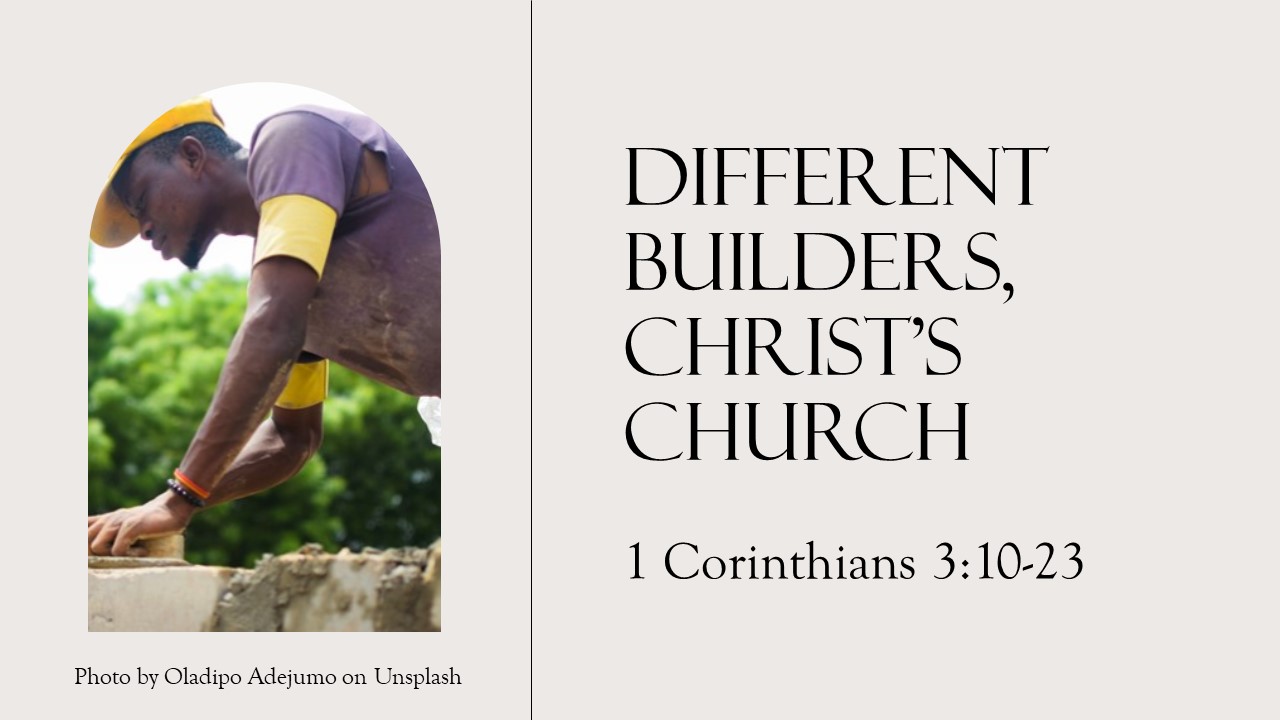
Paul compares the church to a building. But what points is he trying to make about the building and its builders? This really helps us understand what it means to be built together as Christ’s church. The service in which this was preached also included a commissioning for Ramsgate’s Community Pastors.
Version of the sermon recorded on the same day as preached at St. George’s.
When it comes to building people’s homes, it matters that you build them well.
That is illustrated in two ways by two news stories this week. One is the news of the aftermath of the terrible earthquake in Syria and Turkey. Tragically, whole apartment blocks collapsed killing most of the residents. Yet, other apartment blocks remained standing. Why? Because some were built well and some weren’t. In a bid to cut costs and to build quickly, the builders had failed to build the homes strong enough to withstand earthquakes in a region where earthquakes are common. The results were tragic. It matters that you build well.
The other item in the news, was that the BBC are going to make a drama series about the Grenfell Tower tragedy. Once again, this was a tragedy brought about by builders, trying to save money rather than build buildings that were safe. Cladding had been added to the tower that proved to be flammable. So when a fire broke out in one of the flats, the whole block caught fire and 72 people died as a result. It matters that you build well.
The Church as a Building
In our passage from 1 Corinthians, a letter the apostle Paul wrote to the church in Corinth, Paul pictures the church, the people of God as like a building and those, like himself, who teach about the word of God as builders.
As we go through this passage, there are 5 things we can learn about what it is to be part of the church and how we should be helping to build it. This is important, because it matters that you build well.
One Community
The first thing to say is that in calling the church a building, Paul is emphasising, that it is one community that needs to hold together if it is to fulfil its purpose.
This goes back to the main issue that Paul is teaching about in this part of the letter. Back in 1:10 he said,
“I appeal to you, brothers, in the name of our Lord Jesus Christ, that all of you agree with one another so that there may be no divisions among you and that you may be perfectly united in mind and thought.”
( 1 Corinthians 1:10)
Unity in the church matters. We need to see ourselves as part of a community, rooted in the teaching of the Bible, so that we can be united in mind and thought. Yet, such ideas fly against the culture of our day, as they did against the culture of the Corinthians. They and we do not like being told what to do, we would rather choose our own way and listen to our own choice of speaker.
Perhaps it is the 1970s British Psychedelic Rock Band, Pink Floyd, perhaps caught this idea brilliantly in the song, Another brick in the wall…
The chorus includes the three memorable lines:
We don’t need no education…
Hey! Teacher, leave them kids alone…
All in all you’re just another brick in the wall…
We don’t want to be a brick in the wall, we want to be free.
But, if you are a brick, what is better? To be part of a pile of rubble or helping to make a beautiful building? When we reject all direction and teaching and want to be free of any constraints, we lose the opportunity to be a part of something amazing.
Paul says to the church in Corinth and to us, you are meant to be a part of something amazing. You are meant to be built into an amazing building, a wonderful temple that glorifies God.
The point of all this and arguably of the whole letter is to encourage the Corinthians to take the unity and building up of their Christian community seriously. To allow themselves to be built into this wonderful temple, that brings glory to God and offers a point of connection between God and the world.
To be a community pastor is to accept being part of a team and working with others. It is to accept some constraints on how you operate in order to be part of a team that works together as Christ wants you to. In so doing you are able to provide a point of contact between God and those you come across on a Saturday night in Ramsgate.
One Foundation
The church is compared with a building to stress the need for unity. But Paul also is keen to emphasise that the foundation of the building matters. The foundation of the church is Jesus Christ.
Paul was the one who started the church in Corinth. He laid the foundation, he says as a ‘wise builder.’ The word ‘wise’ here picks up on some of the teaching back in chapter 1. There he had shown that worldly wisdom was unable to grasp the message about Jesus’s crucifixion. To the world it seemed foolish, but Paul says:
“but we preach Christ crucified: a stumbling-block to Jews and foolishness to Gentiles, but to those whom God has called, both Jews and Greeks, Christ the power of God and the wisdom of God.”
(1 Corinthians 1:23-34)
This wisdom of God, Christ crucified, is the foundation, that Paul as a wise leader had laid.
The point Paul wants to make here, though, is that everything about the church has to be built on this foundation. But what does it mean to build on this foundation?
I think it means that we need to think about all that we do and say as a church and seek to root our motivation on the cross of Christ. If we cannot, then we need to ask ourselves if we should be doing it!
So for example let’s take Community pastors. Why do you go out on a Saturday night? There may be different motives, but the best motive to have is for it to be rooted in Christ crucified.
After all, Christ crucified was about Jesus giving himself up as a sacrifice for the world, not because we deserved it, but because he loved us. As community pastors, you make the sacrifice of going out late on a Saturday night, in order to offer support to people who probably don’t deserve your help, they’re not paying for it and often they need help because of their own foolishness, but you give it out of love, just as Christ loved us.
Many Builders
So Paul uses this picture of the church as a building to show that we are one community that needs to be rooted on one foundation of Christ crucified. But Paul also wants to talk about the builders to show that God uses many builders to build up the church.
This is a direct challenge to the Corinthians who were splitting into groups, each one dedicated to one of the key Christian teachers they knew. Back in 1:12 they said:
“What I mean is this: One of you says, “I follow Paul”; another, “I follow Apollos”; another, “I follow Cephas”; still another, “I follow Christ.””
(1 Corinthians 1:12)
Why did they do this? In deciding on one preacher over another, they saw themselves as judge and jury, thinking they were wise to choose one teacher and reject the others.
But, Paul says:
“Do not deceive yourselves. If any one of you thinks he is wise by the standards of this age, he should become a “fool” so that he may become wise.” (1 Corinthians 3:18)
In other words, they need to stop seeing themselves as wise enough to decide which leader is best and instead to see that they are fools in need of good teaching from all the teachers.
Paul is saying that it takes many teachers to build the church. He may have laid the foundation, but others have come along and built on it. Constructing the church is a team effort.
So, they need to stop choosing between different leaders and make the most of having all of them, so that they can be properly built up as a church:
“So then, no more boasting about men! All things are yours, whether Paul or Apollos or Cephas or the world or life or death or the present or the future–all are yours…”
As part of the church, then we need to make the most of all the resources God has provided to help us grow as Christians. Yes, there is some discernment needed to work out what is false teaching and who are the false teachers, but at the same time we can’t just restrict ourselves to the parts of the Bible we like, or the Christian speakers we like. We need to make the most of all that God has given us, so that we can be properly built as a church.
Build to Last
Fourthly, we need to be concerned that the church is built to last, that it is built well.
Buildings in Turkey and Syria looked fine, until the Earthquake came, then you could tell, which were built well and which weren’t.
Grenfell Tower cladding looked fine, until the fire started, then you discovered the horrifying truth of what the work really was.
In the same way Paul says, ministers may be working to build the church now, but we will only really discover if it is being built well when the day of judgement comes.
This is both a challenge and an encouragement.
It is a challenge, because it means that what we should be working for is not instant or quick success in growing the church, but seeking to build something that will hold firm on the day of judgement. We need to be about bringing people to a true and lasting faith in Christ not just about gathering a large crowd. What might look like church growth, may in fact just be building with straw, whilst slow steady growth investing in discipling individuals, with love, care and the gospel of truth is building with gold.
The encouragement comes in that we may not see any fruit to our labours now, but that doesn’t mean it will have no effect on the last day.
Community Pastors, you may not see people come to faith on the streets, but perhaps on the last day, you will see people there whose journey to faith and eternal life, began because of the witness, care and love you showed one Saturday night.
Holy Building
But, why does building with care matter when it comes to the church? Because it is a holy building.
Building with care mattered to the residents of the buildings in Turkey and Syria and the Grenfell Tower, because these were their homes. Shoddy building had devastating effects on them personally.
In Ancient Society, temples were seen as the homes of gods. To destroy the temple would be seen as an attack on the god. It was sacreligous.
100 years before Paul, Pompey, the great Roman General, had not destroyed the temple in Jerusalem, but he and his men had gone right into the Holy of Holies, where men are not allowed to go. A few years later, Pompey died an ignoble death for a Roman soldier, he was assassinated in the marshes of Egypt fleeing from Julius Caesar after losing a key battle in the Civil War with him. The Jews saw Pompey’s tragedy as judgement for his defilement of the temple.
Paul says, if you destroy God’s temple, God will destroy you. But for Paul the temple was no longer the building in Jerusalem, it was the church of God. It was the people who were splitting the church because of their worldly wisdom, not rooted in the cross of Christ that were destroying the church.
Paul wanted them and us to see that this is serious, because the church is where God, himself dwells by his spirit. To destroy the church is destroy God’s home.
The church is meant to be a holy temple, the dwelling place of God,
So let’s value belonging and playing our part in this community
Let’s build on the foundation of Christ crucified
Let’s make the most of all the resources and people God has given to help us grow
What is MOPP? It is a new idea for a once a term meeting (six times a year) to introduce opportunities at St. Luke’s and St. George’s to explore the Christian faith and grow as a disciple.
The first MOPP meeting will be at 7pm of Monday 27th February in St. Luke’s Church Hall. Please click the button below to book a ticket, so that we can plan for the catering (free of charge, donations for food welcome on night).
Meal (7pm) – The meeting will be a chance to relax together over food.
Options (8:00pm) – We will share different options for meeting in small groups in the term ahead. The options for the coming term will include studies on prayer and a Christianity Explored course.
Prayer and Praise (7:45-8:00pm for praise and 8:20-9:00pm for prayer) – For those who want to stay on the second half of the meeting will include a time of praising God and praying for his work in the church.