
As a church, in our sermons and small groups, we are studying over the next six weeks the book of Proverbs. Here is a really good overview of the book and has been recommended to watch for those particularly beginning the small group studies this week – Proverbs: Wisdom for the whole of life. It’s a great overview, so, enjoy!
Wisdom Calling (Proverbs 8)

Wisdom Calling (Proverbs 8)
In Proverbs 8, wisdom is described as a person calling us to follow her. But where does she call from and who is she and why does it matter so much that we follow her?
Let the words of my mouth and the meditation of my heart be acceptable to you, O LORD, my rock and my redeemer. Amen
It’s always encouraging when preparing for a sermon when you read: ‘chapter 8 is the most difficult and profound chapter in the book of proverbs’ no pressure.
But let’s not be put off by its complexity and difficulty at face value, because it is worth exploring the riches that are inside this book and this chapter helps us as we begin a series on wise living to think carefully about wisdom. Wisdom herself is speaking.
In starting a series on wise living, it helps us to ask questions about Where we seek our advice from, where is our compass set, what directs the choices we make. What voices do we listen to? The Sunday school answer is Jesus. But are other voices louder, do other voices capture our attention more?
The world around us is full of advice, self-help books, different religions. But here in proverbs we have a wisdom from God to listen to. A wisdom for the whole of life, a wisdom for everyone. It might have been written in the ancient world, but it is as relevant for us now.
Chapter 1 sets the scene for the entire book of proverbs – The NIV gives these verses I’m about to read the title – purpose and theme – these are the words: from chapter 1 verses 1-7.
The proverbs of Solomon son of David King of Israel: for learning about wisdom and instruction, for understanding words of insight, for gaining instruction in wise dealing, righteousness, justice and equity; to teach shrewdness to the simple, knowledge and prudence to the young – let the wise also hear and gain in learning, and the discerning acquire a skill, to understand a proverb and a figure, the words of the wise and their riddles. The fear of the Lord is the beginning of knowledge; fools despise wisdom and instruction.
The verse that comes just after our proverbs reading today, (our opening verse), echoes that sentiment found in the opening chapter – listen to my instruction and be wise do not disregard it.
In ch. 7 the author urges its readers to shun the strange woman whose words are folly and then here we are in ch. 8, being told to listen to wisdom. This wisdom is far beyond anything else or anyone else.
In v1-3 it is announced that wisdom is calling. She has a message. We’re told that wisdom is all around them – on the heights (the highest point on the way), at the crossroads (where the paths meet), beside the gates leading into the town. She is there. Wisdom is calling, let’s not be foolish let’s listen to what she says.
The writer wants us to pay attention to the location of wisdom in these opening verses. the use of path has been used earlier in the book and is used as a metaphor for our life journey. It is telling the readers that wisdom can be met and encountered in their daily lives. The entrance to the cities marks the border between city and countryside and encompasses all those in those regions. This tells us that Her message is for everyone. The gate also in the ancient world was a place of important decision making. This is from where wisdom speaks. The scene is being set about the importance of encountering wisdom.
So wisdom is calling to those in her hearing. It’s not a whisper, she cries out. And In verses 5-11 which we haven’t read this morning wisdom talks about her desire for humans to acquire for themselves prudence (cautiousness – being cautious), intelligence, instruction and wisdom. Throughout the book of proverbs there are comparisons between wisdom and folly (lack of good sense – foolishness).
In v12-21 she introduces herself and shows her character – in v14 she says she owns good advice, resourcefulness, understanding and strength. They are part of her. These are characteristics of God. Wisdom and God are connected by their very nature.
In v17 we are informed that wisdom is not hard to find, not hard to attain but must be pursued.
Do we pursue wisdom.? This to my mind Rings a bell with Jesus own words ‘Matthew 7:7-8’ Ask and it will be given to you; seek and you will find; knock and the door will be opened to you. For everyone who asks receives; the one who seeks finds; and to the one who knocks, the door will be opened. Jesus words are in relation to prayer. But Wisdom also here is something we’re told to pursue – to ask God for. King Solomon asked God for wisdom so that he would rule his people well. (1 kings 3:1-15) Wisdom wants her hearers to pursue her to ask for her.
Who is wisdom? Wisdom is aligning herself with God and creation In v22-31. The words are beautifully poetic. Describing creation and wisdoms presence within it.
In V 23 Wisdom says she was around before the creation of the world. This reminds me of the beginning of Genesis ‘In the beginning God created the heavens and the earth. Now the earth was formless and empty, darkness was over the surface of the deep, and the Spirit of God was hovering over the waters.’
In verses 24-29 she talks about her presence when God created – when there were no deeps, when the mountains were settled.
And in verse 30 to 31 she goes further and says she was the architect of creation – ‘then I was beside him like a master worker and I was daily his delight rejoicing before him always, rejoicing in his inhabited world and delighting in the human race.’
What are the reasons given as to why we should listen? Who is she? Wisdom has been personified in this chapter and there is much belief and evidence that wisdom is used to depict God the Holy Spirit. At work in the world in and around us.
Wisdom shares God’s characteristics and was with him in the beginning. There is also a connection between wisdom and Jesus. In the NT Jesus is seen as personification of Old Testament wisdom – Jesus was God’s word/wisdom made flesh (John 1:1-3), he too was involved in creation and sustaining the world (Col. 1:15-20; Hebrews 1:2-3) just as wisdom is depicted as doing here.
Our God is father, son and Holy Spirit and proverbs 8 gives insight into the work of the Holy Spirit. Wisdom in the world. God’s wisdom through his Holy Spirit is in you, it’s in me, it’s in all of us who have asked Jesus to be king of our lives, to have his spirit in us. The bible shows us who He is and the wisdom he imparts.
Another aspect of Wisdom being Gods spirit in the world and one that excites me is the phrase used in v24 for wisdom being bought forth – it is translated as whirling, dancing. I like the idea of Wisdom, Gods spirit dancing throughout creation, throughout our lives. Guiding us and being God with us.
These words of wisdom that we’ll discover in proverbs and elsewhere in the bible for that matter don’t come from a stuffy kill joy God but a God who through the Spirit is actively at work, dancing with us weaving her wisdom through the tapestry of our lives. Gods spirit is within us. And because of that we have access to this wisdom and we are to use it to encourage each other, build each other up, help each other in this journey of life. Making wise choices in every aspect of life we live.
From digging into this passage in proverbs I’m reminded of these words from the letter to the Ephesians.
Ephesians 4:11-16 So Christ himself gave the apostles, the prophets, the evangelists, the pastors and teachers, to equip his people for works of service, so that the body of Christ may be built up until we all reach unity in the faith and in the knowledge of the Son of God and become mature, attaining to the whole measure of the fullness of Christ. Then we will no longer be infants, tossed back and forth by the waves, and blown here and there by every wind of teaching and by the cunning and craftiness of people in their deceitful scheming. Instead, speaking the truth in love, we will grow to become in every respect the mature body of him who is the head, that is, Christ. From him the whole body, joined and held together by every supporting ligament, grows and builds itself up in love, as each part does its work.
That is why we need wisdom – Gods voice is to be the loudest guiding and directing – so let’s listen and let’s act on it – that we would be transformed in the priorities of our lives and how we live them, with Gods spirit weaving through life with us. Let’s spend time studying reflecting praying.
Cantate Concert

As part of this year’s Art Exhibition in St. George’s (13th to 24th July), we will be having a concert with Cantate on Saturday 23rd July at 7pm. Save the date, more information to follow.
Proverbs 8:33
“Listen to my instruction and be wise; do not ignore it.”
Wise Up!
In June and July the main focus of our Sunday sermons will be on the book of Proverbs. It is a book that is dominated by short pithy sayings, which its introduction tells us will help both the young and the already wise gain increasing wisdom to make good choices in our day to day lives.
There are of course similar sayings in our English culture: “Many hands, make light work.” or “A bird in the hand is worth two in the bush.” However, the Old Testament Proverbs are distinctive in that they follow the Hebrew poetic style of having two separate lines, that usually either contrast or compliment each other.
Many of the Proverbs contain a contrast:
“The way of fools seems right to them,
but the wise listen to advice.” (Proverbs 12:15)
In doing so they present us with a choice between two ways of living or two ways of being. Do we want to be fools or wise; righteous or wicked; humble or proud?
In fact, rather than diving straight into the pithy sayings, the opening chapters of Proverbs are couched as a parent presenting their son, who is approaching adulthood, with the choice of two ways to live and urging him to choose the way of wisdom. In chapters 8 and 9 this choice is personalised as two women: Wisdom and Folly. Both invite the young man to come and dine with them, but whereas Wisdom’s meal will bring life, Folly’s will lead the young man to his grave.
Wisdom is also very closely associated with God himself. Indeed, Wisdom’s claim is that ‘The LORD brought me forth as the first of his works…” (8:22). To accept Wisdom’s call is to choose to fear the LORD. After all, “The fear of the LORD is the beginning of wisdom, and knowledge of the Holy One is understanding.” (Proverbs 9:10).
Some Proverbs do not contain a contrast, but the lines compliment each other. For example:
“The one who gets wisdom loves life;
the one who cherishes understanding will soon prosper.” (Proverbs 19:8)
When we have two lines that say similar things, we are invited to think more carefully as to how each line interprets the other one. As we do so, we are led into even deeper wisdom.
Indeed, we need to not just compare one line with each other, but the Proverbs with each other. Sometimes it seems the Proverbs contradict each other. The clearest example is:
“Do not answer fools according to their folly, or you will be a fool yourself.” (Proverbs 26:4)
“Answer fools according to their folly, or they will be wise in their own eyes.” (Proverbs 26:5)
Despite, the apparent contradiction, we can see that both of these Proverbs can be true sometimes. Deeper wisdom comes from knowing when to follow one Proverb and when the other. This also helps us to see that the Proverbs do not claim to state what is always true, but rather what is normally true. For example, they often state that the lazy will be poor, which is normally the case. Yet, in exceptional circumstances a lazy person may inherit a fortune or win the lottery! These exceptions do not undermine the teaching of Proverbs, they just show us that we should read them with care.
Have you chosen the way of wisdom? Come and join us for this series from 12th June.
Paul Worledge
Platinum Jubilee Celebrations
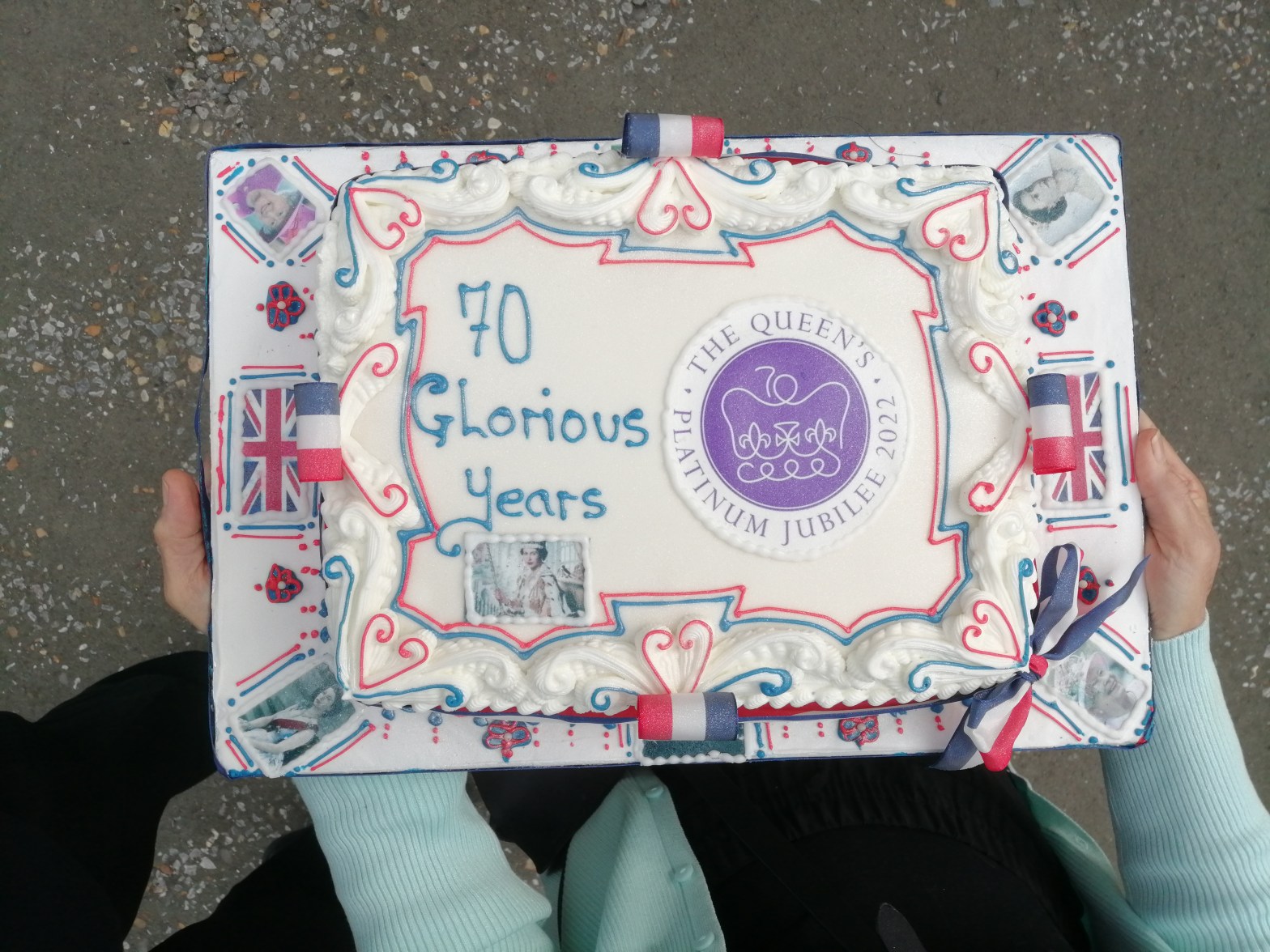
Thank you to all those who helped to make our Platinum Jubilee thanksgiving service and big lunch such a success. It was a great celebration with St. Luke’s and St. George’s coming together and welcoming other visitors as well, especially Ramsgate’s mayor, Raushan Ara. Check out this video which features our service on Ramsgate Town Council’s YouTube Channel:
During the service children read six quotes from the queen over the years that spoke about how her faith had inspired her to service. Petra, our organist, played for our first hymn, Praise my Soul, the King of Heaven. The St. Luke’s music group also sang a modern song: Great is your faithfulness, celebrating God’s faithfulness, but very appropriate as we gave thanks for the queen’s faithfulness. We also had interviews with three people who grew up in different commonwealth countries (Brenda from Jamaica, Malcolm from India and Sue from Australia) and sang the great hymn, All People that on Earth do Dwell.
The main theme of our time, though, was ‘SERVICE,’ as we gave thanks for the queen’s 70 years of service to our nation and reflected on this as a principle taught and lived out by Jesus, himself (Luke 22:24-30). We then sang, the Graham Kendrick hymn, Servant King.
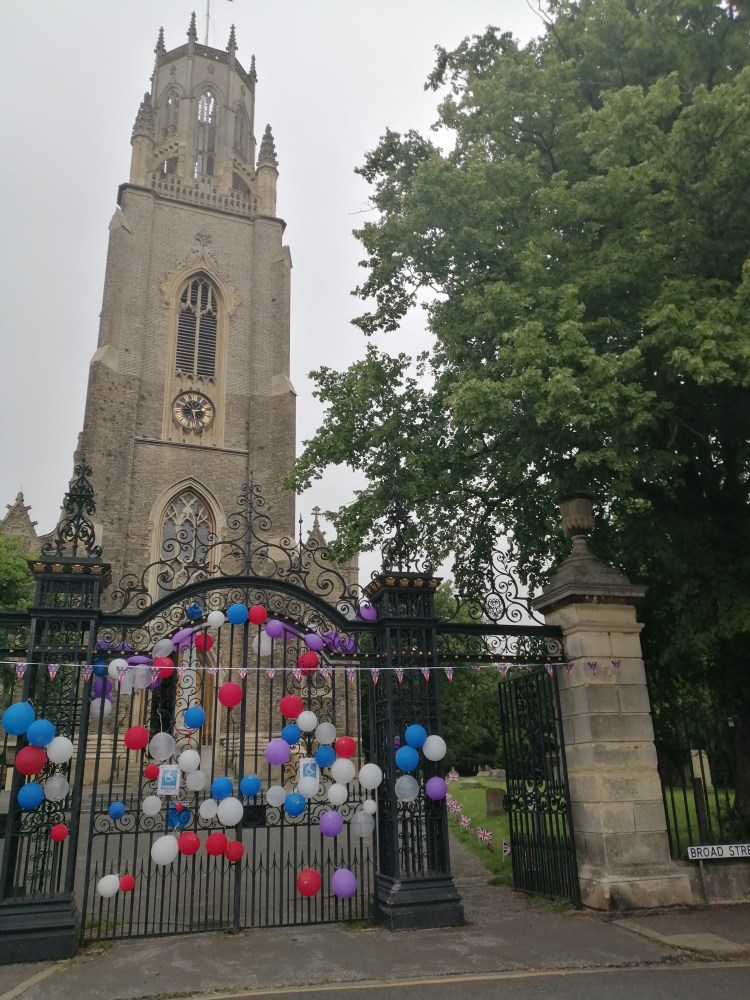
Our service finished with everyone writing some prayers and placing them in a balloon. The balloons were then blown up and tied to the gate outside the church (thanks to Bruce and Loise for helping with this). We finished the service, by singing the National Anthem, which is itself a prayer that God has wonderfully answered: “…long live our noble Queen…”.
You can checkout the order of service at the end of this post…
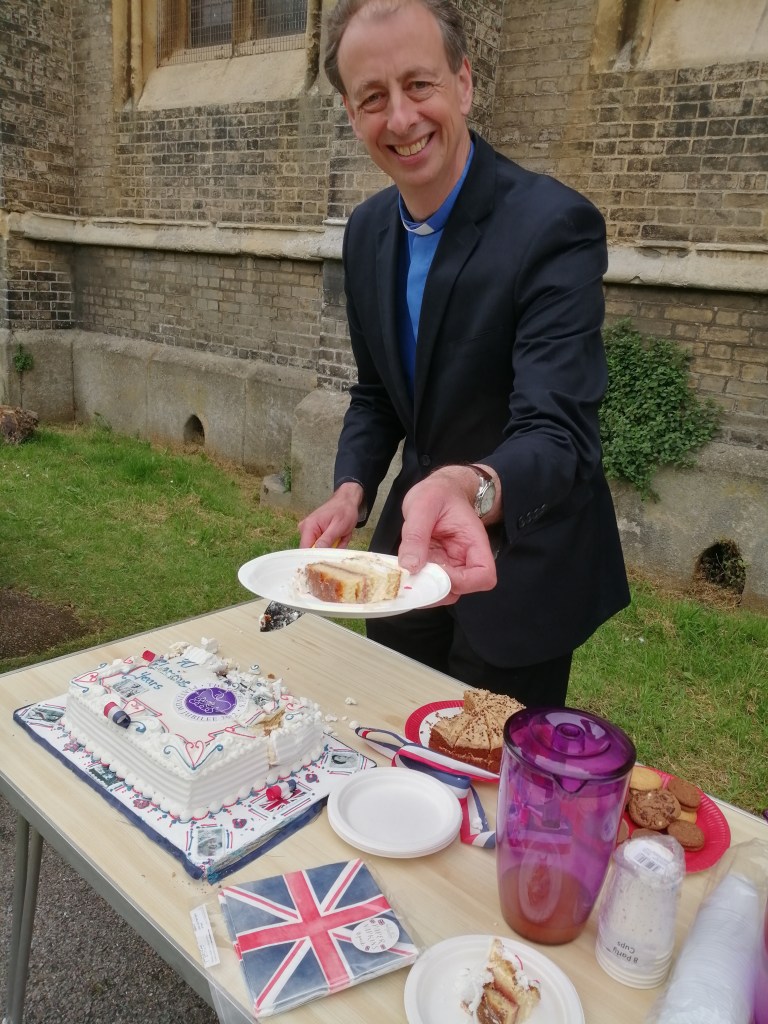
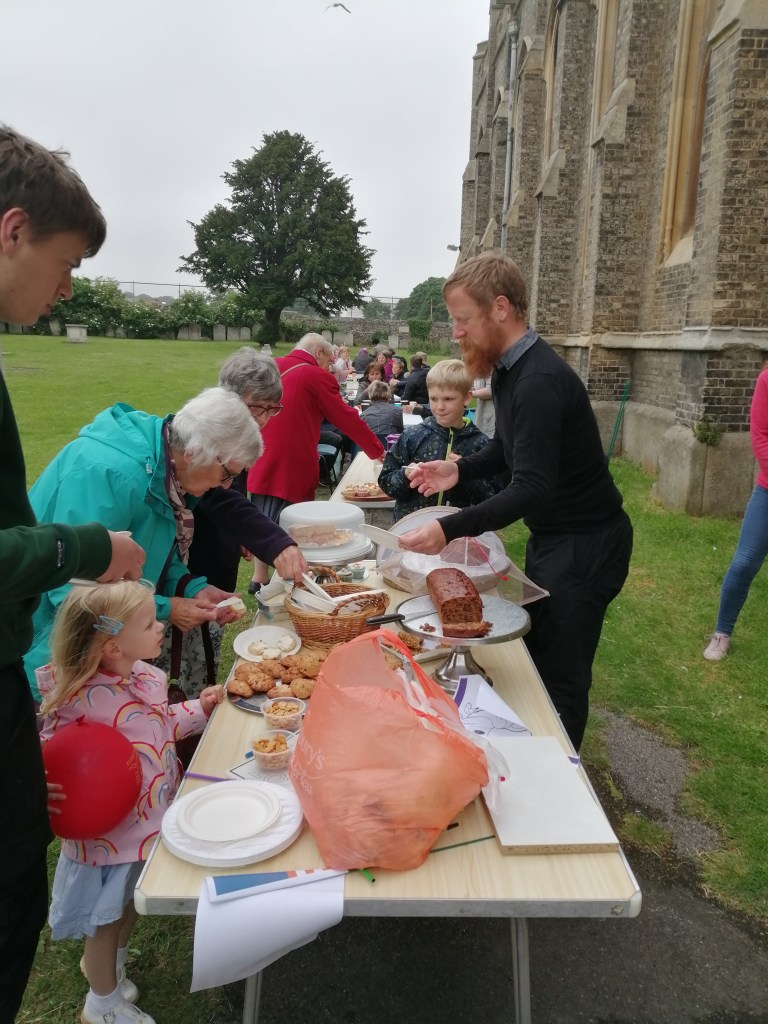
After the service we went out into the church grounds and enjoyed, a treasure hunt (set up by Claire and Amanda), a BBQ funded by a grant from our East Cliff Councillors (and run by Richard and Luke) and lots of cakes made by members of the churches (thanks especially to Pauline for making and decorating the featured cake). As well as people in the service others joined us for the lunch, including local resident and those who attend St. George’s Tuesday Community Meal.
We are grateful to all those who worked so hard behind the scenes to plan and set everything up, especially to Mark and Sue the church wardens at St. George’s, but also to Andrena, Oliver and Alice and Gemma and Gus, Giny, Brenda and Margaret and also to those who helped clear away afterwards, including Peter, Brenda and Derek.
Wise Up! Study Groups
It is so important to grow in Wisdom, to be able to make good decisions for a flourishing life in a complex world. Trusting Jesus and choosing to follow him in life is the greatest foundation to wisdom, but the Bible has the resources to help us to build on that foundation. One of those resources is the book of Proverbs.
On 12th June we will be starting a six week sermon series on Proverbs and from that week, we will also be running Study Groups on Proverbs. These will complement what we learn through the sermons.
There will be four or five groups running between St. Luke’s and St. George’s. We will be using the LICC booklet: Proverbs: Wisdom for the Whole of Life.
To let us know which Study Group you may like to join please click the button below.
Breaking Chains (Acts 16:16-40)

God breaks the chains of Paul and Silas thrown in jail for proclaiming the gospel. However, in this story other ‘chains’ are being broken. The chains based on making the wrong things important in our lives: money grabbing, people pleasing and success.
What are the chains that control your life?
Later on we are going to hear a story of Paul and Silas being in jail and chained up. Then God sends an earthquake, their chains are broken and they are set free.
Most of us will never be chained up or handcuffed or put in prison. But sometimes we can talk of invisible chains that control our life and stop us becoming the kind of people God has made us to be.
I want us to think about three of these kinds of chain this morning.
Money Grabbing Chain
Firstly, there is the money grabbing chain.
If you are someone that thinks that having more money is really important in life, then this may be a chain that is holding you down.
Of course we all need to have some money and we need to be sensible about how we use our money, but for many people a desire to have lots more money is something that controls their life. This may be true of people that already have lots of money or those who have very little. When you think that having more money is the one thing that will make you happy or solve all your problems, then it has become a chain for you.
Jesus and the Bible constantly warn us about the dangers of being greedy or wanting to have more and more money. It says that this desire for money, will stop us loving God and stop us living the way he has made us to live.
For example in 1 Timothy it says:
” For the love of money is a root of all kinds of evil. Some people, eager for money, have wandered from the faith and pierced themselves with many griefs.” (1 Tim. 6:10)
- A chain because it leads to the fear of losing money
And when we love money, when we think that the best thing we can do is have more of it, then we will have a fear of losing the money we already have. This fear can act like a chain on our life, stopping us being good and generous as God calls us to be.
People Pleasing Chain
Secondly, there is the people pleasing chain.
If you are someone that thinks that it is important to have everyone like you no matter what, then this also can act as a chain on your life.
Of course we shouldn’t want to upset people unnecessarily and we should try and be friends with people, but if pleasing people is the most important thing, you may end up doing things you know are wrong, because others are doing those things and you want to please them by joining in. You may end up failing to do what is right, because you are worried it might upset people.
In the parable of the sower, Jesus said that one of the seeds that did not grow and bear fruit, was like people who were excited about being a Christian to start with, but gave up being a Christian, because it made other people not like them.
- A chain because it leads to the fear of being disliked, rejected, bulllied
Like the Money Grabbing chain, this chain leads to fear that controls us and stops us doing what is good and right, because we are afraid of being disliked, rejected or bullied.
Success Focused Chain
Thirdly, there is the success focussed chain.
If you are someone who wants more than anything else to be successful, to do well in your exams, be the best in your class or at your sport, then this may be a chain that ties you down.
Again, it is good to make the most of the talents God has given you, but if you desire for success is all that matters, then it may lead you to do things that you know are wrong in order to be successful. It can also make you envious of people who are more successful than you.
In James it warns us:
“For where you have envy and selfish ambition, there you find disorder and every evil practice.” (James 3:16)
- A chain because it leads to the fear of failure.
Again the success focussed chain leads to fear. In this case, fear of failure. Failing your exams, failing to win the competition, failing to get a promotion… Such fear can end up controlling your life.
Breaking the Chains:
So, we’ve looked at some of the chains that can control people and stop us being the kind of people God wants us to be. In the story from Acts this week, we see Paul escape from prison, his chains are literally broken by an earthquake God sends.
But actually, we also see that what is even more important in the story is a breaking free from the chains we have been talking about. So, let’s think about the story and how this happens.
Paul and the Slave Girl – Breaking the Money Grabbing Chain – 16:16-19
The first part of the story involves a female slave who had an evil Spirit that enabled her to predict the future. Luke tells us that this was important because her ability to predict the future earnt a lot of money for her owners as a fortune teller.
Anyhow this girl starts following Paul and his friends around shouting, “These men are servants of the Most High God, who are telling you the way to be saved.” This kept happening day after day and although what she was saying was true, Paul probably realised that having an evil spirit point people to you was not helpful and also it was not good for this girl to have an evil Spirit.
So eventually, he turns around and says to the Spirit, “In the name of Jesus Christ, I command you to come out of her!” Immediately, the Spirit left her!
But so also did her ability to make money for her owners!
Paul cared more about sharing the riches of the good news of Jesus and the freedom from evil spirits of this slave girl, than the riches of her masters. Paul was free of the money grabbing chain.
For him the money did not matter as much as people being set free and being saved by Jesus. Paul was free from the money grabbing chain and in a way he had not just freed this girl from and evil spirit, but from her role in making money for others.
However, her owners did not see it as a good thing. They were money grabbers and cared more about their profits than the girl. So they became really angry with Paul and Silas!
The story shows us that we have a choice to make between serving money and God. Jesus says,
“”No-one can serve two masters. Either he will hate the one and love the other, or he will be devoted to the one and despise the other. You cannot serve both God and Money.” (Matthew 6:24)
Paul and the Magistrates – Breaking the People Pleasing Chain – 16:20-23
In setting the girl free from this slave, Paul showed that he also wasn’t afraid of upsetting people by doing what was right. He wasn’t chained by the people pleasing chain.
In fact it was not just this that upset people. They were also upset, because they didn’t like what Paul and his friend Silas were teaching. Philippi was a Roman colony in Northern Greece. Those that lived there saw themselves as Romans, but knew that most of the people in the area around them were Greeks. As a result they were very loyal to Rome and Roman customs. Paul’s message about Jesus seemed to challenge these Roman customs and so people were very upset and angry at Paul and Silas.
So, they had Paul and Silas stripped and beaten with rods and locked up in jail. The point was to scare them and bully them into not talking about Jesus anymore.
But, despite this bullying and their threats, Paul and Silas were not afraid. They were not chained by the People Pleasing Chain. Instead they praised God and sang hymns and songs to God in jail. They cared more about pleasing God, than pleasing people.
Paul and Silas had really taken to heart the teaching of Jesus about this:
“Blessed are you when people insult you, persecute you and falsely say all kinds of evil against you because of me. Rejoice and be glad, because great is your reward in heaven, for in the same way they persecuted the prophets who were before you.” (Matthew 5:11-12)
Paul and the Jailer – Breaking the Success Focussed Chain – 16:24-34
But the story does not end there. The focus of the story now turns to the jailer. He is keen to follow the orders and do his job well. Taking Paul and Silas he locks them in the most secure part of the prison.
Then later that night as Paul and Silas are singing praises to God, there is an earthquake and the foundations of the prison are shaken. All the prison doors are opened and everyone’s chains are loosed.
For the jailer this appears to be an utter disaster. When he saw the doors open, he assumed that all the prisoners had escaped. He thought he had utterly failed at his job and probably because he was a success focussed person, he could not bear to live with the consequences of this failure, so he decided he was going to kill himself.
But just as he draws his sword, Paul shouts out and assures him that they haven’t all run away.
Then Paul and Silas are able to explain to the jailer that true salvation comes not through success, but through what Jesus has done for them and the power of God. The jailer and all his household believe and are baptised and are filled with joy. As a result!
The jailer has been set free from the success focussed chain and learnt the importance of serving Jesus. Jesus says:
“Come to me, all you who are weary and burdened, and I will give you rest. Take my yoke upon you and learn from me, for I am gentle and humble in heart, and you will find rest for your souls. For my yoke is easy and my burden is light.” (Matthew 11:28-30)
How can we break free from these chains?
So how can we be free from the money grabbing chain or the people pleasing chain or the success focussed chain.
Paul and Silas and in the end the jailer showed they were free from these chains because they put Jesus as number one in their life. In following Him we find freedom from these other chains and freedom to be the people God wants us to be and have the life God wants us to have. Paul later wrote to the church in Rome and said:
“But now that you have been set free from sin and have become slaves to God, the benefit you reap leads to holiness, and the result is eternal life.” (Romans 6:22)
When we have that freedom in Christ, like Paul and Silas praising God despite being beaten and in jail, and the jailer discovering the salvation in Christ for the first time, we can discover a new joy, one focussed not on having money or being popular or successful, but in knowing Jesus as our Lord and saviour. As Paul later writes to the church in Philippi:
“Rejoice in the Lord always. I will say it again: Rejoice!” (Philippians 4:4)
Have you discovered the joy of being free from chains by trusting and following Jesus as number one in your life?
Platinum Jubilee Service and Celebrations

Sunday 5th June, 11am
St. George the Martyr, Church and Grounds
There will be a celebration service for the Queen’s Platinum Jubilee on 5th June at 11am in St. George’s church (please note the different time to normal!) This will be a joint service between St. Luke’s and St. George’s and will be for all ages. The mayor will also be joining us.
All are welcome to join us at the service and in the church grounds afterwards for continuing celebrations. Everything is free:
- the construction of a balloon prayer arch (approx. 11:45am) around the church gate,
- a treasure hunt in the church grounds (from 12noon)
- a BBQ (from 12 noon)
- tea and cakes (from 12noon)
Claire’s Ordination – Saturday 2nd July

Claire our curate is being ordained as ‘Priest’ at 5:30pm on Saturday 2nd July at Canterbury Cathedral. This is an important moment in her journey of ministry and it would be great if a good number from both churches could come to support her at the Cathedral. We will also look to see if we can organise some kind of social celebration on Sunday 3rd July for all to join in.
 St. George's Church Ramsgate