
“Finally, brothers, we instructed you how to live in order to please God, as in fact you are living. Now we ask you and urge you in the Lord Jesus to do this more and more.” (1 Thessalonians 4:1)
The Rich Fool (Luke 12:13-21)

“For you know the grace of our Lord Jesus Christ, that though he was rich, yet for your sakes he became poor, so that you through his poverty might become rich.” (2 Corinthians 8:9)
Faith and Love (1 Thessalonians 3:6-13)

“For now we really live, since you are standing firm in the Lord” (1 Thessalonians 3:8)
We continue the series learning from 1 Thessalonians.
Love and Fatih (1 Thessalonians 3:6-13)
What is your ambition for the church?
Interview question
This week my son, Jonah had an interview for a job. He says it went well, but he won’t hear whether he has the job until next week.
However, one of the questions he was asked, was “Where do you see yourself in five years time?”
It’s a classic interview question and a good one, because it reveals something about the interviewees ambition. What they want to see change for the better for them in the coming years.
Our Vision: Dare to Share
At St. Luke’s and St. George’s we spent last year in discernment for what our ambition should be for the coming five years. We prayed and sought from God a vision for 2030, what we should be wanting to change for the better in the next five years.
The vision we have is called, Dare to Share. Perhaps because the controversial parts of the vision are to do with selling and developing buildings, the danger is that we think the vision is all about buildings. But the vision is really about seeking to release us from the burden of too many buildings so that we can focus on growing communities of faith. We want to be ambitious about growing people and less concerned about buildings.
Paul: Relief turns to Ambition
Our reading today comes from the middle of Paul’s letter to the fledgling church in Thessalonica. Up to this point the letter has been a celebration of what God had done amongst the Thessalonians through the ministry of Paul and his team.
But, Paul had been forced to leave Thessalonica because of the persecution of the Jews and had not been able to return to them. So, he had sent his colleague Timothy to them. As he did so, he was worried, had the persecution in Thessalonica caused them to give up on their faith?
Look at what he says in 3:5:
“For this reason, when I could stand it no longer, I sent to find out about your faith. I was afraid that in some way the tempter might have tempted you and our efforts might have been useless.” (1 Thessalonians 3:5)
As a leader in the church and actually just as a Christian, one of the greatest sadnesses is to see those who used to be Christians giving up on their faith. It is so sad when people who seem to have grasped the wonderful truths of what Jesus has done for them fall away. They have seen that the God who created the whole universe loves them so much and wants to call them his children and give them eternal life but have decided it is not true and walked away from church and faith. Sadly, it happens far too often.
Recently, however, I met someone from a church in another part of the country and after talking to them for a while, I realised they were from the same town as one of my best school friends who had come to church with me. But we haven’t really been in touch for many years apart from Christmas letters and I did not really know whether he was still taking his faith seriously or not. So, on meeting this Christian from the same town as my old school friend, I asked tentatively, whether they knew my friend and his family. “Oh yes”, he said, they’re a key part of our church! It was wonderful and joyful to hear that this friend was still continuing in their faith.
In the same way, Paul tells the Thessalonians how overjoyed he was when he learnt on Timothy’s return after week’s of anxious waiting for the news that they were indeed continuing in the faith. Look at how ecstatic Paul is in verses 8 and 9:
“For now we really live, since you are standing firm in the Lord.
How can we thank God enough for you in return for all the joy we have in the presence of our God because of you?” (1 Thessalonians 3:8-9)
But Paul does not just sit back and celebrate. His relief and joy, drives him on to ambition.
What is Paul ambitious for? Their growth in faith and love.
So, what can we learn from Paul’s ambition? What does it mean to be a church that seeks people’s growth in faith and love?
Ambitious for their Faith – vs. 10
When Paul talks about faith, he is talking about faith in the God and Father of Jesus Christ. Faith is trusting that the good news about Jesus, that he opens a way to become part of God’s family, that his directions for life are true and that in him is the gift of eternal life. Faith deepens the more we discover that God is trustworthy.
Faith is not easy. It can be hard having faith in God, when others around us don’t. It can be even harder if people actively ridicule or mock us for that faith and harder still, if like the Thessalonians you are hated and threatened because of your faith. Under such pressure many people’s fledgling faith can wither and die.
Faith is standing firm – vs. 8
But Paul says in verse 8, that the Thessalonians are standing firm in the faith. Despite the pressure from those around them, they are sticking to their guns about Jesus and God. Those who were Jews are not returning to the Synagogue that had rejected Paul’s message about Jesus, and those who were not Jews are not turning back to the idols that they used to worship and no doubt many of their friends and neighbours still worshipped.
They believed that Jesus is trustworthy, that he would not let them down. They believed the life he promises is worth all the pressures, ridicules and threats they were facing for following him and rejecting their old ways.
Does that describe your faith? Have you grasped that God is trustworthy, that you can be confident of his promises? Have you also grasped that following him is definitely worth it no matter how costly it is in this life?
That is the kind of faith that stands firm, that is the kind of faith that shows you are truly a Christian. Are we ambitious to see more and more people hold this kind of faith?
Faith needs completing – vs. 10
So, faith is standing firm. But Paul says in verse 10, he also wants to come to them and ‘complete what is lacking in their faith’. The same Greek word is used in the gospels of Peter, Andrew, James and John repairing their fishing nets.
A net with holes in it, needs sorting out, if you are going to use it for maximum effect. So, to complete the net is to plug the holes. A net with holes, will catch fish most of the time, but if the fish swims at the hole, it will slip through.
In the same way our faith needs completing. This will involve learning more about God and what it means to live as a Christian in this world, so that we can have increasing confidence in him, in every situation that life might throw at us. An incomplete faith may keep you standing firm most of the time, but you may not be equipped to stand firm in every situation in life, or every doubt that may arise in your mind. The more we learn about God from the Bible and being with other Christians the more we are equipped to see God’s trustworthiness and to stand fast in every difficulty we may face in life.
So, do you want to see people stand firm in faith. Are you investing in helping them to be fully equipped so that their faith will hold firm no matter what? That is why we need to invest in the church by sharing our gifts, our resources, ourselves and God’s word with the others in the church. We should be ambitious to see one another’s faith made more and more complete.
Ambitious for their Love
But Paul is also ambitious for their love to grow. Look at what he says in verse 12:
“May the Lord make your love increase and overflow for each other and for everyone else, just as ours does for you.” (1 Thessalonians 3:12)
Love in the Bible is exemplified by Jesus’ love. He loved us so much that he died for us. It is a sacrificial love. A willingness to share what I have, for the sake of others. Paul’s ambition that their love increases and overflows is an ambition that they would share what they have more and more abundantly as their love grows.
The marriage service includes the lines: “all that I am I give to you, all that I have I share with you.” Love is about sharing.
Let’s think about this in terms of our vision. Our vision is to dare to share:
- our Gifts. God has given all of us talents and abilities, some natural, some from the Spirit, but we are to use them for the good of others. In fact when Paul talks about the gifts in the church in Romans, he follows it up with a call to sincere love. When he talks about Spiritual gifts in Corinthians, he follows it up with 1 Corinthians 13, one of the most profound chapters about love ever written. We are to use our gifts with an attitude of love, for the good of one another. Using or sharing our gifts is a fundamental part of what it means to love one another.
- our Resources. The bottom line here is money. Unless people share a significant portion of their finances to support the work and life of the church, it will decline. We recently asked people to consider their giving to support St. Luke’s ministry. It wasn’t for building work at St. George’s or even to fund any of the aims of the vision, we need £10,000s more giving per year in order to sustain what we are doing now. Without a greater generosity there is a danger that our ambitions to grow the people of the church will fail. But, a growth in love, must surely result in a growth in generosity.
- Ourselves. For Paul love is not just about doing things with his gifts, or giving financially, it is a deeply personal engagement with the people he works with. That is why he longs to see them again. Sharing ourselves means wanting to meet with and be with others. Please do not underestimate the importance of coming weekly to church on Sundays and meeting with others once or twice at other times in the week. Doing this too is a sign of growth in love.
- God’s Word. Finally, if we are growing in love for others, we will want them to hear God’s word. We will want to spend time with other Christians discussing God’s word so that their faith may be made complete. We will want to take opportunities when interest is shown to share our faith with people we meet or friends and family, perhaps inviting them to hear more at a church service. If some come to know Jesus and find life in him as a result, is there any more of a loving gift you could have given to them?
So, are we ambitious for our own love to increase and overflow? Are we ambitious that the same is true for those in the rest of the church? Do we pray for it?
Ambitious
Paul was ambitious for the Thessalonians that they would grow in faith and love. But his ambitions did not stop there. In verse 13 he also says he is ambitious for their holiness and hints at the idea of hope as well. But this is really the introduction to the next two sections of his letter. We will look at the section on holiness in a couple of weeks and the section on the hope we have in Christ, the week after that.
In all these ways let’s be ambitious for the growth of the church like Paul.
Our Hope, our Joy, our Crown (1 Thessalonians 2:13-3:5)
“And we also thank God continually because, when you received the word of God, which you heard from us, you accepted it not as a human word, but as it actually is, the word of God, which is indeed at work in you who believe.” (1 Thessalonians 2:13)
The Good Samaritan (Luke 10:25-37)
“He answered, “‘Love the Lord your God with all your heart and with all your soul and with all your strength and with all your mind’; and, ‘Love your neighbour as yourself.’” (Luke 10:27)
The Good Samaritan
The Lion and the Mouse, The Boy Who Cried Wolf and The Tortoise and the Hare are just some of the fables attributed to Aesop, a Greek fabalist traditionally known to be a slave in ancient Greece.
As fables often have one key point, the boy who cried wolf teaches not to lie, the parables of Jesus have intrigued people to this day with how to interpret them, how deep their meaning runs, how many layers the stories have and whether they should be interpreted in multiple different ways or seen simply with one moral takeaway.
In our story of the Good Samaritan, we could see it simply, as scholar Adolf Jülicher did, as a story with the message to ‘be kind and help others whoever they are’ and nothing more. However, we could understand it on the other extreme, how St Augustine of Hippo writes about it, that it’s a parable where every element and character is symbolic, serving together as an allegory for the fall of man.
However, there’s a significant challenge here when we consider the context in which Jesus shares this story. Jewish Scholar Amy-Jill Levine suggested a more balanced approach between the two above, highlighting the importance of context in understanding parables and their nuanced meanings. Before sharing this parable Jesus is asked ‘Who is my neighbour?’ Jesus responds with the parable of the Good Samaritan. It shows kindness, compassion and neighbourly love between enemies, between people that are not similar in their beliefs, culture or location. This raises a difficult question for us today: who are the people we, both individually and collectively, would be tempted to exclude, ignore, or turn a blind eye to in their suffering, and how do we truly love our neighbour?
This Summer 2025
(Luke 10:27)
This week, the sections of the email are:
- Opening reflection
- Key notices
- Over the summer
- Beyond the summer
- Interesting Blogs
- Prayer Requests
- Weekly Calendar
- Online Forms
Scroll on…
This is the last email until the beginning of September – so do pay close attention!
Opening Reflection
The Lion and the Mouse, The Boy Who Cried Wolf and The Tortoise and the Hare are just some of the fables attributed to Aesop, a Greek fabalist traditionally known to be a slave in ancient Greece.
As fables often have one key point, the boy who cried wolf teaches not to lie, the parables of Jesus have intrigued people to this day with how to interpret them, how deep their meaning runs, how many layers the stories have and whether they should be interpreted in multiple different ways or seen simply with one moral takeaway.
In our story of the Good Samaritan, we could see it simply, as scholar Adolf Jülicher did, as a story with the message to ‘be kind and help others whoever they are’ and nothing more. However, we could understand it on the other extreme, how St Augustine of Hippo writes about it, that it’s a parable where every element and character is symbolic, serving together as an allegory for the fall of man.
However, there’s a significant challenge here when we consider the context in which Jesus shares this story. Jewish Scholar Amy-Jill Levine suggested a more balanced approach between the two above, highlighting the importance of context in understanding parables and their nuanced meanings. Before sharing this parable Jesus is asked ‘Who is my neighbour?’ Jesus responds with the parable of the Good Samaritan. It shows kindness, compassion and neighbourly love between enemies, between people that are not similar in their beliefs, culture or location. This raises a difficult question for us today: who are the people we, both individually and collectively, would be tempted to exclude, ignore, or turn a blind eye to in their suffering, and how do we truly love our neighbour?
Beth Keenan
Key Notices:
Thanet Christians Prayer Diary
Copies of the July and August prayer diary are available at the back of church or here.
Charity Support
At our last PCC meeting, we decided rather than paying from church funds into a few chosen charities, we would seek to promote the charities at special services through the year and encourage people to donate generously at those times.
In order to start this, we want people to suggest charities to support. We will choose three charities: one with an international focus, one with a national focus and one with a local focus. Ideally, the charities should be Christian. Please send suggestions for charities to support to Sue Martin by the end of July, so that the PCC can consider which three to choose.
Safeguarding Training
If you volunteer in anyway at church the national authorities are strongly encouraging you to take at least the Basic Module in safeguarding training once every three years. This only takes 45minutes to an hour to complete. If you are involved in working with children or vulnerable adults you also need to do the Foundation Module, which takes a similar amount of time.
If you have not completed the training in the last three years, then the module can be completed online and takes about ninety minutes. You can access the training by following this link. You will need to first register, to access the training. Once the training is completed, you will be sent a certificate. Please forward that certificate to James (office@churchramsgate.org), so that we can keep records of who has done the training.
Why not find time over the summer to complete these courses and help us ensure we are a safe church for all?
Over the Summer
Dare to Pray, St. George’s, Saturdays 19th July and 16th August
It was great to have 18 people from both churches at the first of these last month. Join us as we gather to pray for our plans as we move towards Vision 2030 from 9:30-10:30am.
Ramsgate Carnival – 27th July
It’s that time of year again! Ramsgate Carnival on Sunday 27th July, which means that our Regeneration Officer, Jemima is looking for volunteers to pull the St George’s lantern and carry our flag. The route is shorter than last year so it shouldn’t be such a slog. We need a minimum of 4 pulling the lantern at any one time, but if there are more we can share the work and take turns.
We’ll be getting start time details etc shortly but last year we gathered at Government Acre at lunchtime/ early afternoon.
Please let Jemima know if you are interested by WhatsApp message or text to 07971782477.
Vicarage BBQ – 5-8pm, 27th July
If you did not make the last vicarage BBQ on 5th July and are able to come on 27th, then please sign the sheet at the back of church and come along with some meat or equivalent to be cooked.
Small Groups
If you are interested in connecting with one of our small groups over the summer, please contact:
- Monday evenings: Trevor Clarke – 07899 318952
- Tuesday afternoons: Mark Ogden – 07896 111159
- Wednesday mornings: Vanessa Shingles – 07969 207887
- Wednesday evenings: Mike Turner – 07971 601364
Beyond the Summer
Deanery Roadshow – 7pm, 3rd September, St. Luke’s Church
Everyone is welcome to hear from Diocesan Officers on various themes around the theme: The Next Steps to Growth. Refreshments from 6:30pm.
The Bible Course – Coming in September
Starting on Monday 8th September, 7:30pm in St. Luke’s Hall, we will be running The Bible Course (new edition), a great opportunity to understand how the Bible fits together as a whole. It is ideal for both those new to the faith and those who have been Christians for years. This will last for eight weeks and replace the small groups for September and October.
Ride and Stride
The annual Friends of Kent Churches ride and stride event takes place on Saturday 13th September. People can be sponsored to cycle and walk around as many churches as they can on the day. Alternatively, you can volunteer to welcome people into the church. See Jennifer Smith for more information.
Kent Women’s Convention, 4th October, Canterbury
The Kent Women’s convention is to be held in Canterbury this year. 4th October, St. Mary Bredin. Tickets cost £10. See flier in church. Book early!
The Birth of St. George’s, 3pm, 4th October
Join us at St. George’s Church to hear our very own historian, Margaret Bolton, share the history of the original setting up of St. George’s church nearly 200 years ago. Tickets, £5. More information to follow.
Interesting Blogs to Share
Letter from Istanbul: How many neighbours is it possible to love?
In this 6 minute read, Becky Ruth shares her experience of living in Istanbul and the enormous pressure of immigration in Turkey as she ponders the parable of the Good Samaritan. Read more…
Line Judges replaced by robots? You cannot be serious!
In this 3 minute read, Matt Lewis bemoans the loss of line judges at Wimbledon, wondering if our humanity is being lost to technological efficiency. Read more…
Weekly Calendar through the summer
Mondays
Prayer Meeting (St. Luke’s Church) – 9:30-10:00am
Tuesdays
Prayer Meeting (St. George’s Church) – 9:30-10:00am
Community Meal (St. George’s Hall) – 5:30-7:00pm
Wednesdays
Community Soup (St. George’s Church) – 12:00-2:00pm
Thursdays
Prayer Meeting (St. Luke’s Church) – 9:30-10:00am
Saturdays
Prayer Meeting (St. George’s Church) – 9:30-10:00am
19th July and 16th August – DARE TO PRAY. Join together to pray for our plans as we move towards Vision 2030. 9:30-10:30am, St. George’s Church.
Community Soup (St. George’s Church) – 12:00-2:00pm
Sunday Services – 09:30am – St George’s Church
Sunday 13th July – Fourth Sunday after Trinity
Eucharist – Luke 10:25-37; Sunday School (10:30am)
Thanet United Prayer Meeting – 6-7:15pm, Queen’s Road Baptist
Sunday 20th July – Fifth Sunday after Trinity
Eucharist – 1 Thessalonians 2:13-3:5
Sunday 27th July – Sixth Sunday after Trinity
Eucharist – 1 Thessalonians 3:6-13
Sunday 3rd August – Seventh Sunday after Trinity
Eucharist – Luke 12:13-21
Sunday 10th August – Eighth Sunday after Trinity
Eucharist – 1 Thessalonians 4:1-12; Sunday School (10:30am)
Sunday 17th August – Ninth Sunday after Trinity
Eucharist – 1 Thessalonians 4:13-18
Sunday 24th August – Tenth Sunday after Trinity
Eucharist – 1 Thessalonians 5:1-11
Sunday 31st August – Eleventh Sunday after Trinity
Eucharist – 1 Thessalonians 5:12-28
Online Forms
Under the ‘Contact’ tab on the website, there are now three forms that you can use to help us in managing the church:
- Events Application Form. Use this if you are organising a church event that needs a church room booked, advertising or ticketing.
- Submit a Notice. Use this if you want to ask us to include a prayer request or other notice in the church notice sheet or email.
- Maintenance Reporting Form.Use this to report any non-urgent issues with our buildings or grounds.
St. George’s Website
- What’s On – a page which lets you know what is happening this week and gives information about upcoming events.
- Notices – You can read the latest notices on this page.
- Sermons – Read a transcript of a recent sermon or watch the YouTube version recorded at St. Luke’s. There are now videos for all the sermons over the summer.
Finally, let’s make sure we love whoever we come across as our neighbour!
Yours in Christ
Paul Worledge
(Priest in Charge, St. George’s Ramsgate)
Dare to Share (1 Thessalonians 2:1-12)

“We loved you so much that we were delighted to share with you not only the gospel of God but our lives as well, because you had become so dear to us.” (1 Thessalonians 2:8)
We will be considering how Paul and his team went about sharing the good news of Jesus in the early days of the church and what lessons we can learn today.
This Week’s Notices 6th July 2025
(1 Thessalonians 2:8)
This week, the sections of the email are:
- Opening reflection
- Key notices
- Over the summer
- Beyond the summer
- Interesting Blogs
- Prayer Requests
- Weekly Calendar
- Online Forms
Scroll on…
Opening Reflection
“We loved you so much that we were delighted to share with you not only the gospel of God but our lives as well, because you had become so dear to us.” (1 Thessalonians 2:8)
In 1982 Bananarama, a female pop trio, released a hit called, It Ain’t What You Do, It’s the Way That You Do It. Something of that senitment comes across in what Paul writes in 1 Thessalonians.
When Paul and his team came to the city of Thessalonica, they came with a mission: to share the good news or gospel of Jesus Christ. They felt driven by God to travel from city to city letting people know about Jesus’ death and resurrection and the resulting salvation and new life available to those who put their trust in him. Their mission was tough, but not in vain.
In his letter to the church birthed in the successful mission to Thessalonica, Paul does not just remind them what he did, but more importantly he stresses the way that they did it. In particular, he says that as well as sharing the gospel with them, they also shared their lives. The gospel offers people a share in the family of God. So, to share the gospel authentically requires authentic relationships with those with whom we are trying to reach. This matters not because we want to be successful in our mission, but because we delight to love the people God calls us to reach.
So, Paul reminds them how hard they worked for them, how much they cared for them and how authentically they lived out the Christian life among them. For Paul, sharing the gospel was an important thing to do, but the way that he did it mattered even more. If we are to fulfill God’s mission today, we need to delight to share not just the gospel, but our lives as well.
Paul Worledge
Key Notices:
Thanet Christians Prayer Diary
Copies of the July and August prayer diary are available at the back of church or here.
Charity Support
At our last PCC meeting, we decided rather than paying from church funds into a few chosen charities, we would seek to promote the charities at special services through the year and encourage people to donate generously at those times.
In order to start this, we want people to suggest charities to support. We will choose three charities: one with an international focus, one with a national focus and one with a local focus. Ideally, the charities should be Christian. Please send suggestions for charities to support to Sue Martin by the end of July, so that the PCC can consider which three to choose.
Over the Summer
Small Groups
If you are interested in connecting with one of our small groups over the summer, please contact:
- Monday evenings: Trevor Clarke – 07899 318952
- Tuesday afternoons: Mark Ogden – 07896 111159
- Wednesday mornings: Vanessa Shingles – 07969 207887
- Wednesday evenings: Mike Turner – 07971 601364
Children and Youth on Sundays
We have plans for more interactive fun games for the children and young people attending church over the summer. If you can sign up to help on one week from 20th July, please do so on the list at the back of church.
Art Exhibition – Now on at St. George’s Church until 13th July
Visit St. George’s to view a lovely display of local artwork. Find out more…
United Prayer Meeting
Join Christians from around Thanet to pray for our Island: Queen’s Road Baptist, 13th July, 6-7:15pm.
Beyond the Summer
The Bible Course – Coming in September
Starting on Monday 8th September, 7:30pm in St. Luke’s Hall, we will be running The Bible Course (new edition), a great opportunity to understand how the Bible fits together as a whole. It is ideal for both those new to the faith and those who have been Christians for years. This will last for eight weeks and replace the small groups for September and October. Find out more…
Kent Women’s Convention, 4th October, Canterbury
The Kent Women’s convention is to be held in Canterbury this year. 4th October, St. Mary Bredin. Tickets cost £10. See flier in church. Book early! Find out more…
Interesting Blogs to Share
The Secret to workplace evangelism
Sharing your faith at work can be a scary prospect. We often worry about saying the wrong thing, giving offence, or being caught out by a tricky question we can’t answer perfectly.
But the truth is, evangelism in the workplace isn’t about having all the answers or delivering a perfect speech. Instead, it’s about having good conversations – listening well to the people around us, engaging with them as unique children of God, and being open and honest about our own experiences. Read more and watch…
Responding to ‘the Quiet Revival’
There is a lot of talk about the recent report from the Bible Society about a possible ‘Quiet Revival’ among younger people. If that is happening, how should we respond? Robin Ham has no less than ten suggestions. Read more…
Weekly Calendar
Sunday 6th June – Third Sunday after Trinity
Eucharist – (St George’s, 9:30am), Reading: 1 Thes. 2:1-12
Monday 7th
Prayer Meeting (St. Luke’s Church) – 9:30-10:00am
Tuesday 8th
Prayer Meeting (St. George’s Church) – 9:30-10:00am
Community Meal (St. George’s Hall) – 5:30-7:00pm
Wednesday 9th
Community Soup (St. George’s Church) – 12:00-2:00pm
Thursday 10th
Prayer Meeting (St. Luke’s Church) – 9:30-10:00am
Saturday 12th
Prayer Meeting (St. George’s Church) – 9:30-10:00am
Community Soup (St. George’s Church) – 12:00-2:00pm
Sunday 13th June – Fourth Sunday after Trinity
Eucharist – (St George’s, 9:30am), Reading: Luke 10:25-37
Sunday School (St George’s, 10:30am)
Small Groups
We have four small groups that meet regularly for Bible Study, prayer and mutual support. If you are interested in joining one of them, then please contact one of the people below:
- Monday evenings: Trevor Clarke – 07899 318952
- Tuesday afternoons: Mark Ogden – 07896 111159
- Wednesday mornings: Vanessa Shingles – 01843 592857
- Wednesday evenings: Mike Turner – 07971 601364
Online Forms
Under the ‘Contact’ tab on the website, there are now three forms that you can use to help us in managing the church:
- Events Application Form. Use this if you are organising a church event that needs a church room booked, advertising or ticketing.
- Submit a Notice. Use this if you want to ask us to include a prayer request or other notice in the church notice sheet or email.
- Maintenance Reporting Form.Use this to report any non-urgent issues with our buildings or grounds.
St. George’s Website
- What’s On – a page which lets you know what is happening this week and gives information about upcoming events.
- Notices – You can read the latest notices on this page.
- Sermons – Read a transcript of a recent sermon or watch the YouTube version recorded at St. Luke’s. There are now videos for all the sermons over the summer.
Safeguarding Training
If you volunteer in anyway at church the national authorities are strongly encouraging you to take at least the Basic Module in safeguarding training once every three years.
If you have not completed the training in the last three years, then the module can be completed online and takes about ninety minutes. You can access the training by following this link. You will need to first register, to access the training. Once the training is completed, you will be sent a certificate. Please forward that certificate to James (office@stlukesramsgate.org), so that we can keep records of who has done the training.
Finally, let’s dare to share our faith and our lives with those God has called us to.
Yours in Christ
Paul Worledge
(Priest in Charge, St. George’s Ramsgate)
St. George’s Art Festival
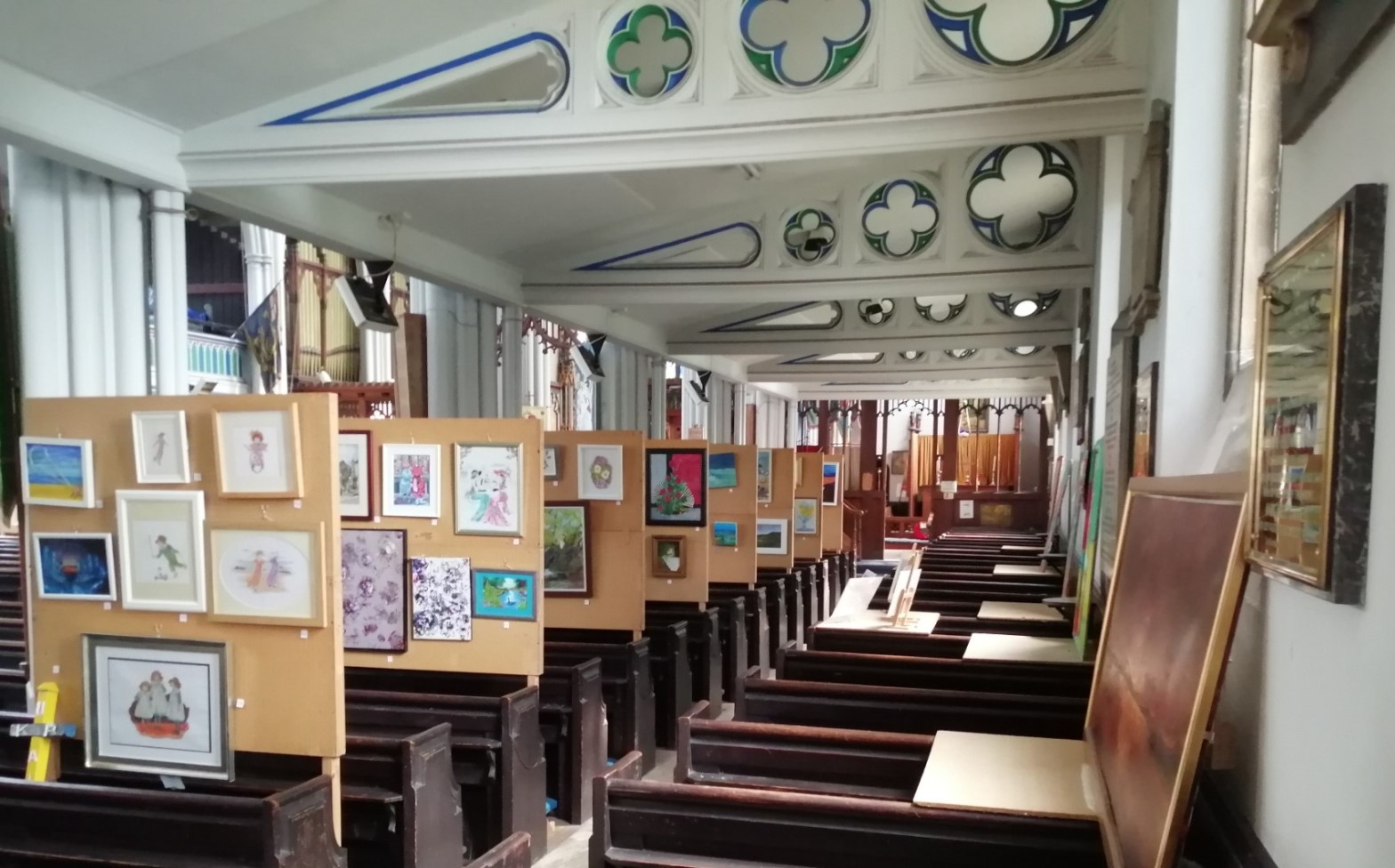
The Friends of St George’s Restoration Appeal are holding their annual summer Art Exhibition in St George’s Church, Ramsgate . The Friends will open the Church to display the wonderful variety of art works to the public for them to appreciate and possibly buy if they choose to.
The Art Exhibition will be displayed in the historic grade 1 Listed Church between 2-5 pm ( from 12 pm on Saturday ) from the 4th to the 13th of July. Light refreshments will be available . All donations to St George’s Restoration Appeal are greatly appreciated to maintain the beautiful church.
For more information, see this post.
True Discipleship (1 Thessalonians 1:1-10)

“We remember before our God and Father your work produced by faith, your labour prompted by love, and your endurance inspired by hope in our Lord Jesus Christ.” (1 Thessalonians 1:3)
Why do you do what you do? It is not an easy question to answer. We all have mixed motives for our actions in life, but some will be more important to us than others.
So, what drives your life? A desire to seek pleasure or comfort for yourself? A belief that life will be much better and more secure if only you had more money? Wanting to please others? To look good in front of the crowd? To please a loved one, a boss or someone you admire? Perhaps it is a desire to feel that you have made a success of your life or that you have achieved something meaningful or lasting?
As Paul writes to the baby church in Thessalonica, he starts by giving thanks for what is driving their actions: faith, love and hope. These new Christians have found a new reason for living: Jesus Christ. Knowing that they have been saved through his death and resurrection, they have re-oriented their lives to live for God and to live like Jesus. Their faith has not just changed the way they think it has led to a life of action that is prepared to put in the hard graft and to keep going despite the challenges.
For us this raises two questions: “Does our faith lead to action?” and “Are our actions motivated by our faith?” The more we can honestly say, ‘Yes’ to both these questions, the closer we are to being true disciples of Christ.
Is there enough evidence to convict you for being a Christian?
C.S. Lewis once asked, “Is there enough evidence to convict you of being a Christian?” It’s a challenging question. But what evidence would you look for. What do you expect to see a Christian doing?
The Letter to the Thessalonians
Today, we are beginning a series on Paul’s letter to the church in Thessalonica, which was an important Roman city at a key crossroad in what is now Northern Greece but was then part of the region of Macedonia.
He starts his letter as most letters with a thanksgiving. Paul is clearly delighted with what God has done in this brand-new church that Paul, Silas and Timothy had planted. But, in thanking God for what is good he is also setting expectations of what a true disciple of Christ looks like, in the hope that he may encourage them to live up to those expectations more and more. If you want to know what kind of evidence shows someone to be a Christian, here is a good place to look.
The Triad of Inner Change
But before we look for outward evidence, we need to remember that true discipleship is about inward change. Paul starts by giving thanks for three inner attitudes of the heart in the new Christians: faith, love and hope. Then at the end of the thanksgiving he gives three inner changes that have happened to the Thessalonians. I think these triads are linked:
Faith = comes from turning from idols to God – vs. 9a
Firstly, faith is what you put your trust in. We all have faith in something. But the key question is: what is the object of your faith? In verse 9, Paul says that the Thessalonians had turned from idols, to the true and living God. The object of their faith had changed. To become a Christian does not mean just adding Jesus to a list of possible people or things to guide your life. A true disciple puts Jesus as the ultimate person to trust, recognising that he is the living and true God and all the other things people trust are ultimately dead and false.
Love = comes from a desire to serve God – vs. 9b
Faith trusts that Jesus will save us and lead us in the best way. But, when we have truly understood that that salvation comes about through Jesus’ deep act of service, his death on the cross, then we will want to respond with a desire to serve God. But Jesus served us because he loved us. Christian love is not ultimately about nice feelings, but a desire to serve.
Hope = waiting for Christ’s return – vs. 10
Finally, there is hope. Hope is forward looking. It believes that even though things may be tough now, one day they will be a lot better. Christian hope is based on the promise of Christ’s return, a promise underlined by Jesus’ resurrection. For Christians there is hope for life beyond death, there is hope for our world that one day God will restore all things and make them good. To hope means to wait for something better, to wait for Christ’s return.
The Triad of Outward Action
So, we should expect to see these three inner attitudes growing more and more in a true disciple of Christ. Except you can’t see inner attitudes. But what you can see is the result of those inner attitudes, the outward action that flows from them. And this is what Paul gives thanks for in verse 3. But what is the work of faith, the labour of love and the endurance of hope?
Faith – sharing the good news – vs. 8
If faith is believing the good news that Jesus has died for us, risen again and will one day return and that he is the true and living God, far better than all the dead and false things people normally trust in, then isn’t the work of faith sharing the good news we believe in?
That is what the Thessalonians were doing. Paul puts it powerfully in verse 8:
“The Lord’s message rang out from you not only in Macedonia and Achaia–your faith in God has become known everywhere. Therefore we do not need to say anything about it,” (1 Thessalonians 1:8)
True disciples don’t hold on to the good news for themselves, they share it.
Love – loving others because God loved us – 4:10
If love is a desire to serve God, then it will include prayer in its broadest sense: praising God, listening to God, asking for God’s help. It will include sharing the good news so that God is glorified. But it will also include caring for others. Love for God should lead to love for others.
This is what the Thessalonians were doing. Later in the letter Paul says:
“And in fact, you do love all the brothers throughout Macedonia. Yet we urge you, brothers, to do so more and more.” ( 1 Thessalonians 4:10)
Hope – enduring suffering with joy – vs. 6
Finally, there is hope. Hope leads to endurance. If you know that God will see everything right in the end, then you can keep going even while things are tough – you can endure. More than that you can endure with joy. Before coming to Thessalonica, Paul and Silas had been arrested, flogged and thrown into jail in Philippi. Their response was to sing hymns of joy to God as they were chained in their cell.
In turn the Thessalonians were following their example:
“You became imitators of us and of the Lord; in spite of severe suffering, you welcomed the message with the joy given by the Holy Spirit.” (1 Thessalonians 1:6)
Triad of Questions:
Paul gives thanks for the Thessalonians for these attitudes not because they were perfect, but to encourage them to grow in the inner attitudes of faith, love and hope and to live them out more and more in their lives.
So, what is the evidence of our discipleship? To help you reflect on that, a triad of questions for you to consider:
- Does my faith lead to action?
- Are my actions motivated by faith, love and hope?
- Can I say, “Yes” to both questions?
 St. George's Church Ramsgate